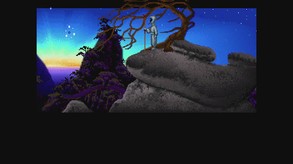
Long after the passing of the Second Shadow, when dragons ruled the twilight sky and the stars were bright and numerous, came the Age of the Great Guilds. Blacksmiths. Shepherds. Clerics. Each dedicated to the absolute control of secret knowledge. Another such Guild was the Weavers.
Modeled estimate, not a reported figure. How we estimate →
Media

About
Genres
Stats
All-time low is the lowest price we've recorded for this game since we started tracking it.
Languages: English**languages with full audio support
Engagement
Hours played at review time, across 41 reviews with recorded playtime.
Reviews
Themes across 41 recent reviews and how positive each mention is. A keyword signal, not full sentiment analysis.
positive critical· bar length = how often the theme comes up
Reviews
Once more, a reminder that it takes a simple press of Alt+S to remove that ugly "modern" filter. [b]Loom[/b] may have been the first title to make young me realize that, yes, video games can be art. A highly experimental "anomaly" in the Lucasfilm/LucasArts catalogue, it is concentrated on story and atmosphere rather than puzzles, and it also features a very original approach to the latter, based on musical magic spells made up of four notes. Experimentation is key, as these spells are obtained from interactions with other objects and also work when played in reverse. It's short, but it takes the player through some of the most "magical" locations drawn at the time, especially the glass city. Unfortunately, the version offered here is the relatively worst of the existing ones. It's not about the VGA graphics, even if the higher quantity of detail doesn't necessarily equal a better art direction, losing the sharpness and the amazing use of the limited EGA palette, on top of all the close-up portraits. Rather, it's about technical limitations of the time that forced content cuts: as this version originally made use of CD audio tracks, many dialogues ended up cut or simplified to fit everything, and locations that originally had music now have silence or just sound effects. This version is also voiced, but the voice acting is less than stellar, which is a further strike against the game's atmosphere. Besides the simple beauty of the original EGA version, there's also a Japanese FM Towns version that mixes the best aspects of it and the VGA version (close-ups in 256 colors!). Alas, unlike the release of [b]Zak McKracken[/b], which includes its FM Towns version, nothing of the sort has been done here. Another classic, but not in its "optimal" form, so don't feel ashamed of looking up those other versions online.
It’s almost 40 years, and I still haven’t finished this ♥♥♥♥♥♥♥ game… 😅🎮
It's definitely a good game, love the magic system, my only complaint is that the plot felt too short and ends on a cliffhanger. I understand that like Inherit the Earth, there was talk of sequels for this that never came, but this feels like it ends on a more "Give me more! How can you end the plot here?!" kind of point. Anyways thanks for listening to my rant, good game, definitely recommend.
А ти вже чув про найновіший шедевр фентезійного оповідання від Браяна Моріарті з Lucasfilms? Це ж надзвичайна пригода з магічним інтерфейсом, приголомшливими 3D-пейзажами високої роздільної здатності, вишуканою музикою та музичними ефектами. Не кажучи вже про детальну анімацію та спецефекти, елегантне керування персонажами, об'єктами та магічними заклинаннями за допомогою революційної механіки «вкажи та клацни». Тож не зволікай! Сходи і купи Loom вже сьогодні.
this looks interesting but it plays awful. can't seem to adjust the tiny window, the audio clips in and out, and then the game just kinda stopped taking my inputs when I was 15 awkward minutes in and I had to restart the whole thing. I usually don't say this but it would probably be better to watch it than to try to play it. A long play of it is less than 2 hours long lol
Loom is a distinctive and quietly ambitious graphic adventure developed by LucasArts and published by LucasArts, Lucasfilm, and later Disney, standing apart from many of its contemporaries through its tone, mechanics, and narrative philosophy. Unlike the comedic, dialogue-heavy adventures the studio later became famous for, Loom embraces a more restrained, fairy-tale-like atmosphere that prioritizes mood, symbolism, and mythic storytelling. Even decades after its original release, it remains a fascinating example of how experimental design and emotional subtlety can leave a lasting impression. The story is set during the “Age of the Great Guilds,” a time when powerful organizations shaped the world through specialized crafts. Loom centers on the Guild of Weavers, whose mastery of weaving has transcended textiles and evolved into the manipulation of reality itself. You play as Bobbin Threadbare, a young Weaver cast out from his homeland under mysterious circumstances after a series of ominous events. As Bobbin journeys beyond the island of the Weavers, the narrative slowly unfolds into a tale of loss, destiny, and transformation. The story is deliberately sparse in direct exposition, instead allowing players to piece together the world’s history and significance through visual cues, recurring symbols, and quiet moments, giving it a dreamlike quality rarely seen in adventure games of its era. What truly defines Loom is its radical departure from traditional point-and-click mechanics. Rather than relying on verb lists, inventories, or complex object combinations, the game introduces a musical magic system based on short melodies known as drafts. These drafts are sequences of notes played on Bobbin’s distaff, each producing a specific effect on the world, such as opening pathways, altering objects, or revealing hidden truths. As the game progresses, players learn new drafts organically, often by observing their effects in the environment rather than being explicitly instructed. Some drafts can even be reversed to produce opposite results, reinforcing the game’s thematic focus on balance and duality. This system transforms puzzle-solving into a process of pattern recognition and experimentation rather than trial-and-error item use. The puzzles themselves are generally more approachable than those found in many classic adventure games, emphasizing intuition and observation over opaque logic. Loom’s design intentionally avoids frustration, offering a more linear and guided experience that keeps the narrative moving at a steady pace. While this makes the game accessible to newcomers and those less interested in complex puzzle chains, it also means the overall challenge level is relatively light. The game is short and focused, often completed in a single sitting, which reinforces the sense that Loom is closer to an interactive storybook than a sprawling adventure epic. Visually, Loom carries the hallmarks of early 1990s PC graphics, but its art direction gives it a timeless charm. Characters and environments are simple yet expressive, with silhouettes, color choices, and animations doing much of the storytelling work. The game’s aesthetic leans heavily into fantasy and folklore, reinforcing its mythic tone without relying on excessive detail. Later versions, including the one available on Steam, introduced enhanced visuals and full voice acting. While these additions make the game more accessible to modern audiences, they also subtly alter the pacing and tone compared to the original text-heavy release, which some longtime fans prefer for its quieter, more contemplative feel. Music plays a central role in Loom, both mechanically and thematically. The soundtrack draws heavily from Tchaikovsky’s Swan Lake, adapted into MIDI form and woven throughout the experience. This choice reinforces the game’s sense of melancholy and elegance, while also tying directly into the musical draft system at the heart of gameplay. Sound is not merely background decoration here; it is a storytelling tool and a puzzle mechanic, making Loom one of the earliest examples of audio-driven interaction in games. Viewed today, Loom stands as a bold experiment that prioritizes atmosphere, emotion, and innovation over complexity or length. Its willingness to break away from established adventure game conventions makes it feel surprisingly fresh even now, though its brevity and simplicity may leave some players wishing for more depth. Rather than aiming to overwhelm, Loom invites players to slow down and absorb its world, offering an experience that feels intimate and carefully composed. For fans of classic adventure games, interactive storytelling, or game design history, Loom remains a memorable and influential title that demonstrates how restraint and creativity can be just as powerful as scale and spectacle. Rating: 8/10
Ich hatte unglaublich Lust auf dieses Spiel. Schon vor Jahren habe ich mir Let’s Plays und Reviews dazu angeschaut und war total fasziniert davon. Also habe ich den deutschen Patch heruntergeladen, vorher noch das Hörbuch gehört – das übrigens kostenlos auf YouTube verfügbar ist, etwa 30 Minuten dauert und wirklich großartig vertont wurde – und dann ging es endlich los. Der Anfang war auch wirklich stark: Die Grafik, der Sound und die gesamte Welt werden unglaublich atmosphärisch in Szene gesetzt. Doch dann kam plötzlich der Frust. Ich habe die Note „F“ einfach nicht bekommen, obwohl ich genau das gemacht habe, was verlangt wurde. Zuerst dachte ich an einen Fehler meinerseits, also habe ich mir extra noch einmal Walkthroughs angesehen – und bei jedem anderen Spieler hat es problemlos funktioniert. Daraufhin habe ich sogar einen komplett neuen Spielstand angefangen und alle meine bisherigen Notizen verworfen, da sich die Noten bei jedem neuen Durchlauf ändern. Doch an exakt derselben Stelle trat wieder das gleiche Problem auf. Irgendwann habe ich das Spiel aus Frust abgebrochen. Vielleicht versuche ich es in ein paar Jahren noch einmal, denn eigentlich halte ich es für ein wirklich großartiges Spiel. Aber dieser Bug macht die Steam-Version für mich praktisch unspielbar und zieht das gesamte Erlebnis massiv herunter. Deshalb würde ich aktuell eher davon abraten und stattdessen empfehlen, sich ein Let’s Play oder eine Review zur Geschichte und Atmosphäre anzuschauen.
This was probably one of the first (if not THE first) game I played with voice acting. The voice actors really made an effort even if it wasn't the British acting company. It was a new and interesting world to me though maybe a little confined. I played the original CD version as part of a Sound Blaster / CD ROM drive package in the early 90s. The Steam version worked well for me, though it had some troubles when I would Alt + Tab as normal keyboard control stopped working. Hitting Alt + M restored keyboard functions (F5 save menu for example) after returning to the game. Edit: It does limit you to a rather small window size. I don't know if there is a workaround, but I played it as is. Overall, it is an old, somewhat short game, but you can tell the team put their hearts into this.
Precioso. De verdad, que juego más bonito. Me ha gustado mucho que no tuviera un sistema de inventario y funcionase todo con los hechizos. Muy recomendable oir primero en youtube o donde sea el audio de 30 min que te ubica en la historia antes de empezar a jugar. Acompañaba el juego original en una cinta de casette. Ojo, cada partida cmabia las notas que forman los hechizos, así que neceitas ir tomando notas de los mimos a medida que los desbloquean. El juego en sí es muy cortito, si no te atascas o usas una guia son unos 4 o 5 horas como mucho, así que es ligerito.
Can't beat this PnC classic
Related
Related
Trends
Modeled estimate over time, reconstructed from Steam's monthly review histogram.
Audience
Estimated from the language of this game's reviews — a proxy for where players are, not official Steam demographics.
Related
| Savant - Ascent REMIX | $84.3K | 433 | 92% | $9.99 |
| Alea Jacta Est | $84.3K | 89 | 69% | $24.99 |
| Void Miner – Incremental Asteroids Roguelite | $84.3K | 646 | 83% | $4.07 |
| Eador: Genesis | $84.3K | 457 | 83% | $5.99 |
| Brave Escape | $84.3K | 177 | 99% | $19.99 |
| Wrack | $84.3K | 334 | 71% | $9.99 |