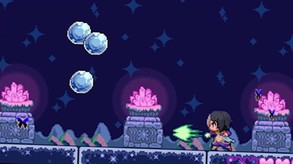
-A magical world beautifully depicted through in-game graphics. -Diverse levels that provide a fair challenge. -Additional bonuses that reward those who replay the game. -3 difficulty modes.
Modeled estimate, not a reported figure. How we estimate →
Prices
The United States storefront in every case, so this compares stores and not countries.
Discounts
Every price cut of more than 20% we have observed, in each market that quoted one, with this game's chart position on either side of it. These are episodes, not a model: a sale is one event, and one event cannot tell you what the next one will do.
Reviews, worldwide (the counter carries no country): 0/day in the week to Aug 5 → 0/day in the week after.
For scale, across Steam · Top Sellers · Brazil over the last 30 days: the 26 chart moves that followed a price cut of more than 20% went a median of 7 places towards #1, and the 2,400 moves with no price cut behind them went 2 away. One store, one chart, one country — it is the only place we have enough observations to say even that.
Prices outside the United States have been collected since 6 August 2026 and chart positions since 19 July 2026, so a cut older than that has no market to compare and a market that joined later has no history yet. Nothing here is converted between currencies.
About
Genres
Add-ons
Each DLC is estimated with the same model as a game, then summed — a modeled figure, not reported DLC sales.
Sums Steam only; Nintendo publishes no volume signal, so the true total is higher by an unknown amount.
| Store | Price | Audience | Score | Chart | Est. revenue |
|---|---|---|---|---|---|
SteamYou are here | $6.99 | 262reviews | 73% | — | $43.5K |
| $6.99 | — | — | — | not modelled |
Matched by title — a reused name can pair the wrong games. * is a critic aggregate. Prices and positions are each store's United States storefront; Epic charts worldwide. Audience and Score too, except Steam's, which is worldwide.
Engagement
Reviews
Themes across 40 recent reviews and how positive each mention is. A keyword signal, not full sentiment analysis.
Reviews
It's Mega Man, but with girls with stuff like boobs (Al best with boobs, Sola best without boobs), and also it has a shmup style power up system. It's short and cute and generally fun... ... until you get Riva as a playable character. Just don't. Don't be me. Don't do it.
撲克牌小遊戲 從100多玩贏到1000多 關掉重開直接重制回100多WTF
This game isn't recognized by my GPU as running, leading to horrible performance issues. It runs OK in fullscreen, but I don't think this game is intended to be played on a full-sized monitor. It looks ugly blown up to 27". Moreover, the little anime girl grunt noises are incredibly annoying every other time I shoot a missile.
Media

Related
Related
Price dynamics, follower growth, revenue and sales trajectories with interactive tooltips
This and every other Pro feature is free until October 20, 2026. A free account is all it takes.
Stats
All-time low is the lowest price we've recorded for this game since we started tracking it.
Languages: English, Japanese*, Traditional Chinese*languages with full audio support
Hours played at review time, across 40 reviews with recorded playtime.
positive critical· bar length = how often the theme comes up
Recuerdo cuando probé la demo de este juego en la Nintendo 3ds, me encanto tanto su diseño artístico y su gran parecido a la jugabilidad de los megaman clásicos era increíble, incluso aún tengo los dibujos que creaba para miiverse de los personajes, fueron bonitos momentos. He jugado la trilogía original nuevamente en la 3ds y debido al cierre definitivo de la Eshop sería una pena que se perdiera por completo en el limbo la tercera entrega, puesto que es la única que no ha llegado a Steam u otra plataforma, además es la que mejor jugabilidad y jefes tiene, espero y algún día puedan rescatarle y traer por aquí a steam :'3
The Legend of Dark Witch by INSIDE SYSTEM is a compact side-scrolling action platformer that draws clear inspiration from classic genre staples while introducing a few distinctive mechanics of its own. It follows a familiar structure: you select stages in a semi-nonlinear order, battle through enemy-filled levels, defeat bosses, and acquire their abilities to strengthen your character and expand your options. This foundation immediately evokes comparisons to older arcade-style platformers, and the game embraces that lineage rather than trying to disguise it. What it aims to do instead is refine that formula into something accessible, fast-paced, and lightly customizable through its upgrade systems. Gameplay centers on controlling Zizou, a magic user whose primary attack is a ranged projectile that can be modified and enhanced over time. Movement is straightforward—jumping, dodging, and positioning are key—but the real depth comes from how you manage your abilities and resources. Enemies drop energy that can be spent during stages for temporary boosts or saved for permanent upgrades between levels. This creates a constant tension between short-term survival and long-term progression, encouraging players to think about how they approach each stage rather than simply reacting in the moment. It’s a subtle but meaningful addition that gives the game a slightly different rhythm compared to more straightforward action platformers. The level design is functional and easy to read, particularly in the early stages where the game introduces its mechanics at a steady pace. Enemies are placed in ways that teach pattern recognition and timing, allowing players to gradually build confidence. However, as the game progresses, the environments don’t evolve as much as they could. While there is some visual variety and new hazards are introduced, many levels rely on similar structures and pacing, which can make the experience feel somewhat repetitive over time. The game captures the essence of classic design, but it doesn’t always push beyond it in ways that feel fresh or surprising. Boss encounters are where the game truly shines. Each boss is designed around distinct attack patterns that require observation and adaptation, rewarding players who take the time to learn their behaviors. These fights strike a balance between accessibility and challenge, making them engaging without being overwhelming. The reward for victory—new abilities—feeds directly back into the gameplay loop, giving a tangible sense of progression. However, the system that supports this can occasionally work against the player. Because certain upgrades and enhancements are lost upon failure, repeated attempts can feel more punishing than they should, especially if you enter a fight underprepared and are forced to rebuild your resources. Visually, the game adopts a bright, anime-inspired aesthetic with chibi-style character designs and colorful environments. While not technically advanced, the presentation is consistent and appealing, giving the game a distinct personality. Animations are smooth enough to support the action, and the overall art direction complements the fast-paced gameplay. The soundtrack further enhances this, offering energetic and catchy tracks that help maintain momentum and reinforce the game’s light, adventurous tone. Replayability is a significant part of the experience. Multiple difficulty settings, unlockable content, and the need to gather resources for upgrades encourage players to revisit stages and refine their performance. This design works well for those who enjoy mastering mechanics and optimizing their approach, as there is always room to improve efficiency or experiment with different abilities. At the same time, this emphasis on repetition can feel like grinding, particularly for players who are less interested in revisiting the same content multiple times to unlock everything. There are also moments where the game’s systems feel slightly unpolished. Controls are generally responsive, but occasional stiffness can become noticeable during more demanding sequences. Some abilities lack balance or clear utility, making them feel less impactful compared to others. These issues don’t break the experience, but they do highlight areas where the game could have benefited from further refinement. Ultimately, The Legend of Dark Witch is a game that succeeds by staying focused on what it does well. It delivers a straightforward, skill-based platforming experience with a light layer of customization and progression that adds depth without overwhelming the player. It doesn’t attempt to reinvent the genre, and it doesn’t always expand on its ideas as much as it could, but it captures enough of the classic formula to remain engaging. For players who appreciate retro-inspired action, pattern-based boss fights, and the satisfaction of gradually improving their performance, it offers a solid and enjoyable experience. For those looking for deeper innovation or more varied design, it may feel somewhat limited. It stands as a competent and occasionally rewarding title that leans on its strengths while leaving room for growth in future iterations. Rating: 7/10
A Megaman-style platformer with Gradius’ upgrade system sounds neat, but it was more frustrating than fun in my case. Defeating enemies and hitting bosses gives you Tres, which is used to power up your character: more speed, a glide, stronger shots, stuff like that. Getting hit takes away a huge chunk of Tres, while dying removes all your powerups. That’s annoying by itself, but what makes it terrible is that [b]there’s no way to heal beside dying.[/b] You start with 4 hitpoints by the way, so get ready to die a lot. There’s a shop that sells permanent upgrades, like more hitpoints and increased Tres gains (get this one first since the bar fills very slowly otherwise), so get ready to farm enemies for those upgrades. Then there are the special weapons, which I barely used because they consume Tres for each shot. You know, the same Tres used for your powerups. You’ll probably just bust them out for bosses or an enemy that’s out of reach. As a cherry on top, we got an Engrish translation. It’s readable, but rough. If you still want to try this, play The Legend of Dark Witch Renovation instead, since it seems to fix most, if not all, the issues I mentioned here at a quick glance.
シリーズの原点であるロックマンライクな2Dアクション。 セールであれば200円以下で変えるので雰囲気を感じたいなら遊んでみるのもいいと思います。 シリーズが続くにつれてクオリティが上がっていくのを感じられる今となっては貴重なゲーム。
anime megaman but bad
I love this game. I remember playing the demo when I was in grade five and have dreamed about playing this game fully, and its as good as I remember. What I like is how my death never feels like the games fault, it feels like its my fault, and you can really feel yourself learning each time you play the level or the boss fight.
シリーズの原点となる作品ですが、今遊んでもちゃんと面白い2Dアクションです。操作はシンプルで分かりやすく、サクサク動かせるので気軽に楽しめます。 ドット絵のクオリティも高く、この頃からすでにキャラがとても可愛いのが印象的。ちょこちょこ動くアニメーションや表情が楽しく、見ているだけでも和みます。 難しすぎず、でも物足りなくもないちょうどいい遊びごたえで、シリーズを知らなくても安心して遊べる一本。可愛いキャラと王道2Dアクションが好きな人にぴったりのゲームです。
Selling now
See how fast this game is selling right now — estimated copies and revenue per day from recent review growth.
Players by region
Where this game's players are, estimated from review languages.
Related
| Game | Estimated lifetime revenue | Reviews | Review score | Price |
|---|---|---|---|---|
| $5.2M | 12.3K | 95% | $17.99 | |
| $2.2M | 3.6K | 89% | $29.99 | |
| $1.7M | 4.9K | 95% | $14.99 | |
| $411.8K | 1.7K | 86% | $9.99 | |
| $164.9K | 1.4K | 88% | $4.99 | |
| $49.9K | 256 | 93% | $7.99 |
Related
| Game | Estimated lifetime revenue | Reviews | Review score | Price |
|---|---|---|---|---|
| $43.5K | 150 | 73% | $9.99 | |
| $43.5K | 108 | 81% | $7.49 | |
| $43.5K | 65 | 98% | $29.99 | |
| $43.5K | 829 | 80% | $2.99 | |
| $43.5K | 117 | 83% | $14.99 | |
| $43.5K | 85 | 87% | $34.99 |