
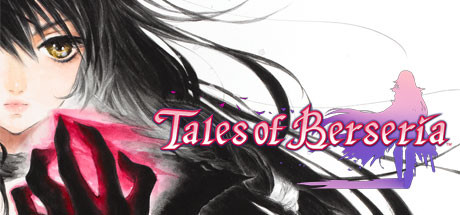
Players embark on a journey of self-discovery as they assume the role of Velvet, a young woman whose once kind demeanor has been replaced and overcome with a festering anger and hatred after a traumatic experience three years prior to the events within Tales of Berseria.
Modeled estimate, not a reported figure. How we estimate →
Media

About
Genres
Stats
All-time low is the lowest price we've recorded for this game since we started tracking it.
Languages: English*, French, Italian, German, Spanish - Spain, Portuguese - Brazil, Russian, Traditional Chinese*languages with full audio support
Updates
Build ids and update times come straight from Steam's PICS — the same source SteamDB reads. Patch history grows as we record new builds.
Engagement
Hours played at review time, across 601 reviews with recorded playtime.
Reviews
Themes across 601 recent reviews and how positive each mention is. A keyword signal, not full sentiment analysis.
positive critical· bar length = how often the theme comes up
Reviews
Why is the remaster a different game?!
Tales of Berseria is connected to Tales of Zestiria, but takes place many years before it. And honestly? It’s the darkest, rawest, and saddest Tales of game ever made (and that’s saying something, because none of them really have happy endings). - The story of Velvet Crowe is brutal. She’s a woman broken by loss, consumed by vengeance, and trapped in a world that’s merciless. Her demonic claw — the way she literally devours her enemies to survive — isn’t just shocking, it’s powerful. It’s a constant reminder of the monster she’s become, and the humanity she’s desperately clinging to. Also, she is strong, shattered, and painfully human. Her journey through anger, grief, and redemption is unforgettable. Every step hurts, but you can’t stop following her. - Rokurou: The calm, deadly swordsman. He lives by his own code and his quiet confidence balances Velvet’s rage perfectly. - Eleanor: The moral compass of the group. Always trying to do the right thing in a world where good and evil are blurred. Her growth is inspiring. - Magilou: The real MVP. She’s the “Sam” (LOTR) of this story — the comic relief on the surface, but the emotional backbone underneath it all. Behind her jokes lies a deep personal story and a hidden role as the catalyst of everything that happens. Without her, the group would fall apart. - Laphicet: The light in all the darkness. His innocence and bond with Velvet are the emotional core of the entire journey. Combat is fast, fluid, and incredibly satisfying. The Soul Gauge system and Velvet’s claw attacks make every battle feel intense and visceral. It’s easily one of the best combat systems in the whole series. The story doesn’t pull punches. It’s about loss, sacrifice, justice, and the weight of despair. Every character is scarred in some way, and the ending… it breaks you. It’s bittersweet, painful, and perfect for what this world represents. And I have to mention the opening theme by FLOW — it’s amazing. Energetic, emotional, and the video clip is a visual masterpiece that sets the tone for everything to come. In short, Tales of Berseria is a tragic masterpiece. A story of vengeance, redemption, and what it means to be human when everything falls apart. With an unforgettable cast, a brutal world, and a protagonist who’ll stay with you long after the credits roll. Even now, as I finish writing this review… I’m still trembling. Thank you, Berseria.
My favourite "Tales of" game. The best characters/party members in the series
很难想象一个游戏加了一些明明只需要更新一下就有的功能就能取名复刻版用原价再卖一遍 好评给原版
This post continues my mini-series on [i]Tales[/i] games from a localization standpoint. I’ve previously looked at [url=steamcommunity.com/profiles/76561198003711145/recommended/738540/]Vesperia[/url], [url=steamcommunity.com/profiles/76561198003711145/recommended/2530980/]Graces[/url], and [url=steamcommunity.com/profiles/76561198003711145/recommended/2246670/]Xillia[/url], comparing English and Japanese text and pointing out issues, from minor wording quirks to structural changes. I'm still playing ToB and I genuinely like it so far. The story works, the characters are engaging, and the gameplay feels sharp and purposeful. I’m not trying to evaluate the game as a whole just yet — if I have more to say about Berseria as a game after finishing it, I’ll add that separately in the comments. For now, I want to focus on localization. [h3]So far, Berseria’s English localization is very good.[/h3] The dialogue flows naturally, character voices are distinct, and emotional beats generally land where they should. This feels like a confident, experienced localization team at work — one that understands pacing, tone, and characterization. No jokes are added out of nowhere, no tonal embellishments that weren’t present in the original, and no character voices are quietly rewritten to sound “funnier” or more marketable. The intent and emotional shading of scenes appear to be preserved rather than reinterpreted. Most of the issues I pointed out in earlier reviews were either more frequent or more disruptive; here, those problems are largely absent. That’s why the one thing I [i]do[/i] want to point out stands out more clearly: a [b]small semantic shift in certain lore terms.[/b] [u][b]This isn’t a rant or an accusation of incompetence — simply an observation and an attempt to analyze.[/b] [/u] Some original concepts are slightly reframed in English, making the world feel a bit closer to generic Western fantasy than the Japanese original intended. The problem isn’t unique to Berseria. [list] [*]Vesperia mostly avoided this issue. Its lore terminology was already based on borrowed Greek/Latin/Sanskrit terms, and the localization usually preserved both function and tone. The problems there were rare, like how 星喰み suddenly became Adephagos. [*]Graces softened some conceptual language, for example, 総統 was translated as “Chancellor,” losing the clear historical association, and some of the terms and names related to local magical crystals occasionally raised questions about consistency and clarity. [*]Xillia introduced new terminology and derivative systems that actively muddied the original conceptual structure. With original 精霊, 黒匣, 源黒匣 terms, even without explicit exposition, players can intuit what category a given entity belongs to and how it functions in the world. In English, that clarity collapses into a kind of phonetic soup ([i]spirites, spyrites, spyrixes[/i]): similarly spelled words with overlapping fantasy vibes but unclear conceptual boundaries. Instead of reinforcing the underlying system, the terminology actively obscures it, making the world feel more generic and less internally coherent. [/list] In those reviews, I mentioned lore terminology only in passing because there were bigger problems to put out. In Berseria, bigger problems simply aren’t there — which is why this smaller mismatch becomes more noticeable. [b]Examples of semantic shifts[/b] [list] [*]穢れ (kegare) → translated as [i]malevolence[/i]. This is the most conceptually significant shift. 穢れ does not describe active malice or evil intent. It refers to a state of spiritual or moral defilement — an accumulated impurity that arises from actions, emotions, trauma, or contact with death and violence. Crucially, it is a condition rather than a judgment of character Rendering this concept as “malevolence” reframes it in moral and intentional terms. In English, malevolence implies hostility, ill will, and conscious wickedness, subtly shifting the idea from systemic contamination to personal evil. The result is a world that can feel closer to a good-versus-evil framework than the original text suggests, narrowing some of the ambiguity that the Japanese concept deliberately preserves. [*]祈祷師 (kitōshi) → translated as [i]paladins[/i]. Terms could have been translated more literally while keeping clarity for English audiences. Using “paladins” imposes a familiar fantasy trope unnecessarily [*]聖主 (seishu) → translated as [i]Empyreans[/i]. The Japanese term is deliberately abstract, describing a religious authority within the internal logic of the world. Rendering it as “Empyreans” imposes a loaded Western fantasy image and immediately raises questions the original text never intended. A closer approximation might have been [i]Holy Sovereign[/i] or [i]Sacred Lord(s)[/i], preserving abstraction while conveying authority [*]聖隷 (seirei) → translated as [i]Malakhim[/i]. Here the localization imposes a heavily Abrahamic term, probably because it sounds “cool,” but it carries external associations that the Japanese original doesn’t imply. [*]業魔 (gōma) → translated as [i]daemons[/i]. This is largely fine, though some of the karmic and ethical connotations embedded in the original term are inevitably lost. [*]導師 (dōshi) → translated as [i]Shepherd[/i]. This is an understandable localization choice: the term reads clearly to English audiences and preserves narrative function, while being consistent with Zestiria localization. However, Shepherd carries strong pastoral and Biblical associations that the original Japanese term lacks. The shift is subtle, but it nudges the concept toward more familiar Western fantasy imagery.[/list] Beyond that, the remaining uneven spots fall into what I’d call [b]classic localization dilemmas[/b], rather than mistakes Here's an example. In one episode, Magilou says a seemingly strange and silly line, deliberately setting up a [i]boke-tsukkomi dynamic[/i] — a classic manzai-style joke. As a boke, she expects a sharp, corrective response from another party member (who would play the role of tsukkomi) to land the punchline. Instead, Rokurou simply agrees, breaking the expected rhythm. Magilou responds with: ボケ潰しが一番の悪じゃよ (Literally: “Crushing the [i]boke[/i] is the greatest evil!”) The joke operates on multiple levels:[olist] [*]Magilou makes an obviously silly statement as the boke. [*]She expects Rokurou to play the tsukkomi [*]When he fails to do so, she complains[/olist] In other words, it’s a meta-joke: Magilou is joking about the joke itself and about how Rokurou just ruined it. That puts localization in an impossible position:[list] [*]Keep the term → most players won’t understand it [*]Explain it → the joke dies on the spot [*]Adapt it → the cultural layer is lost[/list] There is no perfect solution here. This isn’t a failure — just a structural dead end for cross-cultural comedy. The English version opts for adaptation, translating the line as: [i]“It’s not funny if you agree with me!”[/i] While this inevitably flattens the original reference, it preserves the punchline’s function for non-Japanese audiences and is a reasonable compromise. More importantly, Magilou’s performative, self-aware character voice survives intact, ensuring that her theatrical style continues to shine, even if the cultural nuance of the manzai joke is lost. (By the way, how the localization handles Magilou’s manner of speech overall — deserve clear praise.) So far, Berseria feels like a case where the localization team mostly got it right. The few shifts that exist are subtle rather than structural, and the compromises made are largely the kind that any localization — especially one bridging very different cultural frameworks — inevitably has to make. If nothing else, Berseria reinforces something I’ve come back to repeatedly in this series: [b]good localization isn’t about perfection, but about choosing which imperfections would be less damaging[/b] [h3]more examples in comments
Крутая тема! Выпустить ремастер без особых изменений, чтобы подогреть интерес к оригиналу. Я повелся и купил, пока нравится
Titre : Tales of Berseria : Mon Aventure Cœur & Griffes ! 🐺💔✨ Coucou mon journal ! 📖✨ Je viens de terminer Tales of Berseria et... mon cœur n'est plus le même 😭💖 C'était tellement intense et beau à la fois ! Au début, je m'attendais à un gentil RPG... mais OH SURPRISE ! 🎉 On incarne Velvet, et elle est carrément une louve vengeresse ! 🐺🔥 Au début, j'étais un peu 😳 devant sa colère, mais très vite, je l'ai comprise et adoptée ! ❤️🔥 C'est tellement rare et précieux de suivre une héroïne aussi sombre et déterminée ! Et son équipe ?! C'est la bande la plus chaotique mais la plus attachante du monde ! 🌍💫 Laphicet est un petit trésor qu'il faut protéger à tout prix 🥺👉👈 Mon instinct maternel s'est réveillé à chaque fois qu'il parlait ! Magilou... MA FOLIE PRÉFÉRÉE ! 🎭🤪 Elle est tellement drôle et imprévisible, j'adorais ses répliques complètement folles ! Eizen le cool ultime 😎⚡ et Rokurou le samouraï trop stylé ⚔️😼... Cette équipe était un chef-d'œuvre de personnages imparfaits et je les aime tous ! 🥰 Le combat ?! Au début, c'était un peu 😵💫, mais une fois pris en main, c'était du pur kiff ! 💥🎇 Enchaîner les coups avec les griffes de Velvet, c'était incroyablement satisfaisant ! On se sent tellement puissant ! 💪✨ Et l'HISTOIRE... Mon petit cœur n'était pas prêt ! 💔😭 C'est une montagne russe d'émotions ! J'ai ri 😂, j'ai serré très fort mon plushie 🧸, et j'ai versé des larmes de douleur et de joie 🥲. La relation entre Velvet et Laphicet est d'une beauté déchirante... C'est une histoire qui vous marque à vie 📖💫. En bref, Tales of Berseria, ce n'est pas un jeu, c'est un VOYAGE EMOTIONNEL ! 🚀🌌 C'est sombre, mais tellement lumineux dans ses moments de tendresse et d'humour. Si tu cherches une aventure avec des persos inoubliables, une héroïne badass et des fous rires entre deux moments de cœur brisé... CE JEU EST FAIT POUR TOI ! 🥰🤗 Note : 100/10, je le recommande avec tout mon cœur d'artichaut !
Original still holds up great, not sure anyone needs to buy the remastered version.
Буквально лучший представитель жанра JRPG. Большего знать и не нужно. Надо проходить. У меня это были одни из лучших 70ч жизни. UPD: Посмотрел трейлер ремастера. Из нововведений... Возможность скипать рядовые файты и ставить х5 опыта. Визуальные улучшения... Отсутствуют, да и они не нужны этой игре, я прошёл оригинал в начале года и помню как он выглядит, да и запустить при желании могу. Я понимаю наличие ремастеров у Graces и Xillia, которые выходили больше 15 лет назад только на консолях. Но тут у нас уже есть качественный пк порт с высоким разрешением. А ставить х5 опыта в ремастере можно и обычным читом при желании. В итоге, в ремастере всего 1 плюс, это скипать рядовые файты. С вас 2500 рублей. Оригинал был мной куплен на распродаже за 250 рублей, собственно это цена стала ещё ниже на распродажах. Зная, какие вышли ремастеры у Graces и Xillia, а они вышли крайне посредственными (сами игры крайне отличные, а ремастеры по факту просто порты с qol), советую либо спиратить ремастер, либо просто купить оригинал, играется он всё ещё отлично. А поиграть в Берсерию я советую, как никак одна из лучших жрпг за всё время.
今年的年度JRPG,真正活生生的世界,有血有肉的主角团。 降智桥段几乎没有,每个人都有自己的行为动机。 有时觉得主角团这帮怪人真够别扭的,不过仔细一想,这种“别扭”的感觉才更活灵活现。 一心复仇很不坦率但后期笑容也多起来的薇尔贝特,逐渐成长起来有担当的莱菲瑟特,热衷于斩杀和磨炼剑术的大男孩六郎,做什么都很认真的好学生艾蕾诺亚,古灵精怪的魔女玛琪露,坚持原则又厄运缠身的死神副船长艾杰恩…… 组一辈子奇术团吧!真的! 强烈推荐任何JRPG爱好者游玩,22RMB不亏的。
Related
Related
Trends
Modeled estimate over time, reconstructed from Steam's monthly review histogram.
Engagement
DAU/MAU are modeled from peak concurrent players (≈×8 and ×28) — Steam publishes no active-user counts, so treat these as rough estimates, not reported figures.
Audience
Audience
Estimated from the language of this game's reviews — a proxy for where players are, not official Steam demographics.
Games most often reviewed by the same players — an audience-affinity signal from our review sample, not full ownership data.
Related
| Warhammer 40,000: Dawn of War II - Anniversary Edition (Classic) | $21.9M | 13.8K | 88% | $49.99 |
| SILENT HILL f | $21.9M | 28.1K | 80% | $34.99 |
| OCTOPATH TRAVELER II | $22M | 16.8K | 94% | $59.99 |
| Hello Neighbor | $21.8M | 31.7K | 86% | $29.99 |
| Microsoft Flight Simulator X: Steam Edition | $22M | 26.4K | 87% | $24.99 |
| Zombie Army Trilogy | $21.8M | 18.6K | 86% | $44.99 |
Related
| Black Myth: Wukong | $794.9M | 1.2M | 97% | $59.99 |
| ELDEN RING | $680.4M | 1.1M | 93% | $59.99 |
| 7 Days to Die | $425.3M | 403.7K | 87% | $44.99 |
| Hogwarts Legacy | $323.8M | 370.1K | 90% |
| $59.99 |