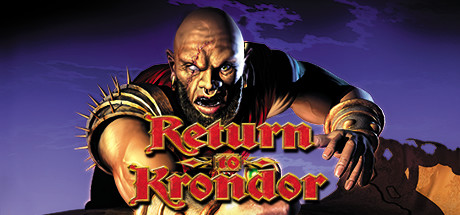
Return to Krondor is a classic fantasy role-playing game that continues the journey through the world of Midkemia, a setting created by fantasy author Raymond E. Feist. Released during the late 1990s, the game embraces many of the traditional RPG mechanics that defined the era, combining party-based exploration, tactical combat, character progression, and story-driven adventure into a large fantasy quest filled with political intrigue and supernatural danger. Although its age is immediately noticeable by modern standards, the game still carries a strong sense of atmosphere and worldbuilding that helps it remain memorable decades after its original release.
The story centers around the theft of the Tear of the Gods, a sacred artifact belonging to the Ishapian Church. What begins as a mysterious disappearance soon evolves into a much larger conflict involving dark magic, hidden conspiracies, dangerous factions, and ancient forces threatening the stability of Midkemia itself. Players are gradually drawn into a sprawling adventure that leads through cities, forests, ruins, underground passages, and dangerous territories filled with enemies and secrets. The narrative constantly expands in scale, introducing political tension and supernatural threats that keep the journey engaging throughout most of the campaign.
One of the game’s greatest strengths is its setting. Midkemia feels like a fully realized fantasy world shaped by history, religion, and conflict rather than simply existing as a backdrop for combat encounters. Towns feel connected to larger political structures, ruins hint at forgotten civilizations, and conversations with characters frequently reveal details about the world’s cultures and ongoing struggles. Fans of Raymond E. Feist’s novels will appreciate the many connections to the Riftwar universe, but even players unfamiliar with the books can still enjoy the depth of the setting through the game’s extensive lore and storytelling.
Gameplay revolves around controlling a party of adventurers with different combat roles and specialized skills. Warriors dominate close combat, spellcasters provide magical support and offensive power, while thieves and alchemists contribute through utility systems such as lockpicking, trap disarming, and potion crafting. Character progression follows a traditional RPG structure involving equipment upgrades, stat growth, spell acquisition, and skill improvement. The variety of character roles encourages strategic planning because party balance becomes increasingly important during more difficult sections of the game.
The combat system is turn-based and heavily focused on tactical positioning and resource management. Battles can become challenging, especially when facing enemies capable of using magic or inflicting status effects on the party. Players must carefully manage healing resources, spell usage, equipment durability, and character placement to survive tougher encounters. While combat moves at a slower pace compared to modern RPGs, it still provides satisfying strategic depth for players who enjoy thoughtful, methodical gameplay.
One of the more interesting systems is the game’s approach to alchemy and thievery. Instead of simplifying these mechanics into passive skills, Return to Krondor allows players to actively engage with them through interactive systems. Potions can be crafted using collected ingredients, while traps and locked containers require careful handling to bypass successfully. These mechanics add additional immersion and help make the world feel more interactive than many other RPGs from the same period.
Visually, the game clearly reflects its late-1990s origins, with dated character models, stiff animations, and older pre-rendered environments. However, despite the aging graphics, there is still charm in the game’s presentation. Cities, dungeons, and wilderness areas each have their own visual identity, and the darker lighting combined with atmospheric environments helps create a strong sense of adventure. The world often feels dangerous and mysterious, especially during exploration-heavy sections involving ruins or underground locations.
The soundtrack remains one of the game’s strongest presentation elements. Musical themes shift naturally between calm exploration and more dramatic moments, helping reinforce the fantasy atmosphere throughout the campaign. Combined with ambient sounds and occasional voice acting, the audio design gives many scenes additional emotional weight and helps strengthen immersion within the world of Midkemia.
However, Return to Krondor is undeniably a product of its era, and several mechanics have aged poorly. The interface can feel awkward and unintuitive, particularly when managing inventory or navigating menus. Movement sometimes feels stiff, and certain sections involve excessive backtracking that slows the pacing considerably. Modern players may also struggle with the slower combat speed and older RPG design philosophy, especially during lengthy dungeon segments that emphasize endurance over fast progression.
The game also exists under the shadow of Betrayal at Krondor, its predecessor and one of the most beloved RPGs of the 1990s. While Return to Krondor succeeds in continuing the setting and atmosphere of Midkemia, many players still view it as less refined in terms of storytelling and overall pacing. Even so, the sequel still offers enough depth, worldbuilding, and strategic gameplay to remain worthwhile for fans of classic RPGs.
What ultimately makes Return to Krondor memorable is its dedication to immersive fantasy storytelling and traditional role-playing systems. It does not rely on cinematic spectacle or modern action mechanics. Instead, it focuses entirely on exploration, character growth, tactical combat, and the gradual unraveling of a large fantasy narrative. The slower pace may not appeal to everyone today, but players willing to embrace older RPG design will discover a rich and atmospheric adventure filled with lore and strategic depth.
For fans of classic fantasy RPGs and old-school computer role-playing games, Return to Krondor remains an engaging journey through one of fantasy gaming’s more detailed worlds. Its dated mechanics and slower pacing are balanced by strong worldbuilding, memorable atmosphere, and rewarding party progression systems that still capture much of the charm associated with late-1990s RPG design.
Rating: 6/10