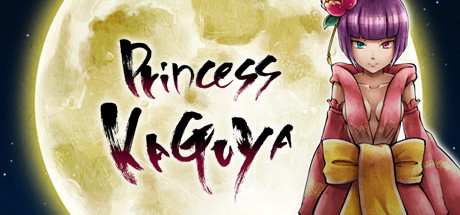
Princess KAGUYA, developed and published by Zoo Corporation, is a side-scrolling beat ’em up that draws its inspiration from Japanese folklore, blending traditional myth with fast-paced action and colorful fantasy. The game reimagines the legend of Princess Kaguya, a celestial maiden from the moon, and transforms her into a warrior heroine thrust into a battle to rescue her twin sister, Sakuya. It’s a concept brimming with potential—mythic origins, elegant design, and a protagonist who wields both grace and power—but while the game’s visual presentation and premise are immediately engaging, its mechanical execution and pacing sometimes struggle to match its ambition.
The gameplay structure is rooted in classic beat ’em up tradition, combining side-scrolling progression with waves of enemies and environmental hazards. The controls are straightforward, giving players access to melee attacks, ranged abilities, and special moves that can be used to clear crowds or deal heavy damage. Princess Kaguya can alternate between a kendama staff for close combat and a bow for ranged precision, adding an element of tactical choice to encounters. At its best, the combat feels rhythmic and satisfying, rewarding timing and positioning rather than button mashing. However, the balance between responsiveness and challenge isn’t always consistent. Some attacks connect with precision, while others feel sluggish or mistimed, especially during crowded battles. This inconsistency can interrupt the flow of combat, making it difficult to maintain momentum in later stages where precision becomes essential.
The game’s aesthetic presentation is one of its greatest strengths. The art style leans heavily on its folkloric influences, using soft brush strokes, traditional patterns, and luminous colors to create an atmosphere that feels both ancient and otherworldly. The environments—moonlit temples, enchanted forests, and mist-covered valleys—evoke a dreamlike quality that perfectly fits the mythological tone of the story. Each enemy, from mischievous spirits to monstrous demons, is designed with an exaggerated, storybook-like flair that makes every encounter visually distinct. The use of color and light also helps maintain visual clarity, ensuring that even in chaotic battles, the action remains readable. The soundtrack complements the visuals with traditional Japanese instrumentation blended with modern rhythm, giving the game a melodic flow that enhances its mood.
Unfortunately, the elegance of the presentation doesn’t always carry over to the gameplay experience. The enemy design, while visually diverse, tends to rely on repetitive attack patterns that can make combat feel predictable after a few levels. The challenge stems less from strategic depth and more from sheer endurance, as waves of enemies appear in succession without much variation in behavior. Boss battles, which should serve as climactic moments, are mixed in execution—some are creative and well-paced, while others feel drawn out or unbalanced. These pacing issues extend to the overall difficulty curve, which spikes unpredictably and can lead to frustration. The control scheme, though serviceable, occasionally suffers from input delays or awkward hit detection, particularly when multiple enemies occupy the screen. These issues make it difficult to fully enjoy what should otherwise be a fluid combat system.
The narrative, though rooted in a beloved myth, is delivered with minimal depth. The story of Kaguya’s quest to save her sister is primarily told through brief dialogue exchanges and short cutscenes, offering just enough context to move the action forward but not enough to establish strong emotional investment. There are glimpses of a larger world—hints of celestial politics, divine artifacts, and the tension between mortals and spirits—but these ideas are left underdeveloped. Players looking for an immersive story or deep character arcs will likely find the narrative serviceable at best. The game’s focus remains firmly on combat and progression rather than storytelling, which fits its arcade sensibilities but feels like a missed opportunity given the richness of its source material.
From a technical standpoint, Princess KAGUYA runs smoothly for the most part, with quick load times and stable performance even during busy combat sequences. However, the game’s roots as a smaller-scale production are apparent in certain areas. Some animation transitions are stiff, menus and UI elements can feel dated, and controller compatibility issues have been reported by players using non-standard gamepads. While these problems don’t render the game unplayable, they add a layer of roughness to an otherwise polished visual presentation. The difficulty balancing also reflects a lack of fine-tuning, with certain stages and enemy types demanding more precision than the control system comfortably allows.
Replayability in Princess KAGUYA is modest. The game includes forty Steam achievements and leaderboards, encouraging players to refine their runs and aim for higher scores. However, beyond these challenges, there’s limited incentive to replay once the campaign is complete. The stages, while visually distinct, follow a linear progression with little variation or branching paths. Players who enjoy mastering systems and chasing perfection may find satisfaction in replaying levels for better rankings, but casual players will likely see most of what the game has to offer within their first playthrough.
Ultimately, Princess KAGUYA is a game that succeeds more in its artistry than in its mechanics. Its visual design, musical atmosphere, and cultural inspiration give it a charm that stands out in a crowded genre. There’s a sincerity to its presentation—a sense that the developers wanted to honor Japanese folklore while delivering a fun, action-packed experience. Yet, its mechanical shortcomings, inconsistent controls, and uneven difficulty prevent it from achieving the fluidity and depth of the best modern beat ’em ups. It’s a game with heart and style, but one that struggles to fully translate its aesthetic strengths into cohesive gameplay.
For players who appreciate mythological settings, stylized visuals, and simple but challenging combat, Princess KAGUYA offers a visually enchanting, if uneven, experience. It’s a title that invites admiration for its atmosphere and cultural homage but may test the patience of those seeking precision or polish. While it might not reach the heights of its inspirations, it stands as a testament to the allure of folklore in gaming—a reminder that even imperfect games can enchant through beauty, spirit, and a touch of celestial mystery.
Rating: 5/10