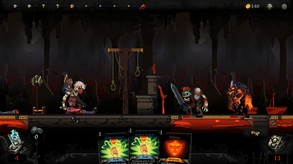
This card game combines elements of roguelike and deckbuilding. During the game, you shall strive ahead, gathering cards to build a unique deck and use it to defeat the enemies getting in your way. You will have to choose between escaping or try to defeat Death, who is relentlessly pursuing you.
Modeled estimate, not a reported figure. How we estimate →
Prices
The United States storefront in every case, so this compares stores and not countries.
About
Genres
Stats
All-time low is the lowest price we've recorded for this game since we started tracking it.
Languages: English, Simplified Chinese, Japanese, Polish, French, Russian, Traditional Chinese, Portuguese - Brazil, Korean, German
Sums Steam only; App Store publishes no volume signal, so the true total is higher by an unknown amount.
| Store | Price | Audience | Score | Chart | Est. revenue |
|---|---|---|---|---|---|
SteamYou are here | $14.99 | 727reviews | 81% | — | $246.1K |
| $2.99 | 21ratings | 89% | — | not modelled |
Matched by title — a reused name can pair the wrong games. * is a critic aggregate. Prices and positions are each store's United States storefront; Epic charts worldwide. Audience and Score too, except Steam's, which is worldwide.
Engagement
Reviews
Themes across 41 recent reviews and how positive each mention is. A keyword signal, not full sentiment analysis.
Reviews
I think this game is a classic for card battlers. Really good variety. If you are a card battler type, and wondering if you should buy. Just buy it. You won't regret it.
ローグライクの世界にハマったきっかけです。(ios版)
Копия минарета не имеет практической ценности. Дизайн игры характеризуется структурной диспропорцией. Игроки обладают возможностью нейтрализовать картотеку, что существенно снижает её функциональность. Комбинации формируются на основе случайного фактора. Персонажи и карты разработаны недостаточно тщательно. Вероятность обнаружения значимых предметов низка, а в некоторых случаях требуется дополнительная плата за их получение. Рекомендуется оптимизировать механизм восстановления картотеки, чтобы минимизировать риск летального исхода при значительных повреждениях. В целом, текущая конфигурация дизайна игры требует доработки.
Media

Related
Related
Price dynamics, follower growth, revenue and sales trajectories with interactive tooltips
This and every other Pro feature is free until October 20, 2026. A free account is all it takes.
Hours played at review time, across 42 reviews with recorded playtime.
positive critical· bar length = how often the theme comes up
[h1]КАРТЫ КАРТЫ КАРТЫ [/h1] Итак Blood card карточная инди игра заточенная на здравое калодостроение. Наша главная задача сбежать из подземелья, которое состоит из нескольких этажей, в конце которых поджидает босс. Каждый этаж состоит из 10 комнат, содержимое которых, мы определяем сами(На выбор 4 варианта- обычные враги. элитные враги, торговец, либо случайное событие). Ну понятное дело обычных монстров мы выбираем в начале забега, для быстрой и несложной прокачки. Элитные враги куда сильнее, но и награда с них лучше так что их лучше приберечь для середины забега. Торговец продаёт новые карты для колоды. А случайные события представляют собой квесты исход которых, может быть как положительным, так и отрицательным. А битвы с монстрами основа геймплея, ходим поочерёдно с врагами. В начале каждого хода нам даётся определённое количество маны, которое мы можем потратить на активацию карт из нашей руки. Количество карт в колоде является по сути нашем уровнем здоровья, если карты кончаются - мы проиграли. Есть 2 колоды карт: Первая- колода из которой мы берём карты. Вторая-куда кладутся использованные карты. После первых 3 раундов боя появляется смерть с косой( буквально) и начинает бить как нас , так и врагов, нанося урон.( Видимо чтобы жизнь мёдом не казалась, ну и для динамики конечно). Кроме того самих карт в игре вагон и маленькая тележка. Примерно классифицировать их можно так: Карты атаки, карты защиты, карты экипировки, карты способностей и карты проклятий. Все они имеют как одно так и несколько доп. свойств. Расписывать всё это не стану, ибо количество слов на обзор может не хватить(. После победы мы выбираем из 6 предоставляемых комплектов карт, тем самым увеличивая хп персонажа и делая его колоду более жизнеспособной. При победе над обычными врагами мы выбираем 1 колоду крат. При победе над элитными 2. А при победе над боссом 3. Комплекты карт тож. делятся на обычные( 3 карты), необычные( 2 карты) и редкие( 1 карта). А также есть ещё сверхмощные карты, но они появляются из сундуков в конце этажа. НО весь этот этап с выбором комплекта карт после комнаты можно скипнуть, получив золотишко ))) Крч. игрухес прям топовый оказался, говорить и писать о ней можно долго, я просто и кратко скажу - Играйте не пожалеете
Charming pixel art, interesting mechanics, great atmosphere, and a genuinely fun deck‑builder. If you can grab it on sale for the price of a coffee, you really can’t go wrong. Cards serve as your health — you die the moment you run out — but the game gives you several mechanics to avoid that. Unlike most deck‑builders, you don’t choose branching paths on a map. Instead, you have a set number of steps and can decide at any moment whether to fight a normal enemy, take on an elite, trigger an encounter, or visit a shop. Equipment is a great mechanic, though if your entire deck is built around it and you meet a specific boss, you’re basically done for. Encounters are fun, varied, and your choices actually lead to different outcomes. A lot of negative reviews seem to miss that the game lets you increase the difficulty. Death is mostly harmless on low difficulty, but becomes a real threat once you raise it. Balance is good overall. Broken combos exist — and they’re part of the fun — but you won’t be able to pull them off consistently. RNG is handled better than in many other deck‑builders. I’m not a big Slay the Spire fan, so I appreciate that this game is far less grindy. As for the reviewer who finished his second run with 100% evasion — he was extremely lucky. Across 60 hours, I managed to reach 100% evasion only once — that card simply doesn’t appear often enough. There are only two characters, with one specializing in card removal. She’s harder to play since cards are your life, but great if curse cards bother you. This is one of the better deck‑builders out there and definitely worth trying, especially on sale.
[h1]足りない。なにもかも。[/h1] アニメーションの質は低い。バランスは大味で調整不足感が否めず、SEも質素で爽快感が無い。UIも操作性もプロトタイプ味があり、なんとも気持ちよくない。 2度プレイしただけだが、あまりにもあっさりとクリアできてしまった。......これは何だったんだろう? 私はこの体験を通して、何かを感じたのだろうか? 正直、今までプレイしてきたゲームの中でも群を抜いてつまらないと感じた。¥1520は...かなり攻めているように思える。
Blood Card, developed and published by Pixel Cattle Games, is an inventive roguelike deck-building game that twists the conventions of the genre by linking the player’s health directly to the size of their deck. Instead of relying on a traditional health meter, every card in your deck represents a fragment of your vitality. When enemies damage you, you lose cards, and when your deck runs dry, death arrives to claim you. It’s an elegantly simple idea that reshapes the rhythm of every battle and adds constant tension to even the smallest encounters. Each decision—whether to add a new card, remove a weak one, or play aggressively—becomes an act of survival. The result is a fast-paced, strategic experience that feels both familiar to fans of roguelike deck-builders and refreshingly distinct in execution. The game begins much like others in the genre, with a modest starter deck, a choice of cards, and a series of battles against random enemies. But it doesn’t take long for Blood Card’s defining mechanic to make itself known. Every action, every draw, and every wound chips away at your total number of cards, and with each loss, you edge closer to oblivion. The player must weigh the value of expanding their deck for flexibility against the danger of diluting it with weaker cards that reduce efficiency. It’s a fascinating inversion of the genre’s usual logic—instead of streamlining your deck to maximize combos, you often want to bulk it up to preserve your health. This balance between survival and optimization forms the heart of the game’s strategy. The pressure escalates further when Death himself appears mid-run, functioning as a grim timer that grows more aggressive as battles drag on. If you don’t defeat enemies quickly enough, Death joins the fight, ensuring that prolonged indecision is punished swiftly. Combat is turn-based, fast, and deceptively simple. You draw from your deck to play attack, defense, and special effect cards, managing energy resources and aiming to build synergies that can handle increasingly difficult foes. What separates Blood Card from many of its contemporaries is the constant awareness that every mistake or unlucky draw has permanent consequences. Damage isn’t just temporary—it eats away at your options for future turns, creating an almost existential tension. The more cards you lose, the fewer tools you have to recover. This dynamic encourages aggressive but calculated play, pushing you to experiment with strategies that balance offense, defense, and deck preservation. The game’s large selection of cards—over two hundred in total—offers enough variety to support multiple playstyles, from brute-force attacks to intricate, combo-driven decks. Because of its roguelike structure, no two runs play out quite the same, and each victory feels hard-earned. Visually, Blood Card embraces a grim, gothic aesthetic that complements its theme of mortality and decay. The art style is simple yet evocative, with dark tones, muted palettes, and stylized depictions of grotesque monsters and otherworldly figures. The presentation recalls classic dungeon-crawler motifs but filtered through a minimalist indie lens, emphasizing atmosphere over detail. The user interface is clean and functional, though at times the card art and animations can feel repetitive. The soundtrack reinforces the mood with somber, tension-filled loops that underscore the inevitability of death’s approach. It’s a world that feels both oppressive and strangely hypnotic, mirroring the game’s mechanics: a struggle for survival in a system that’s designed to consume you. As you progress, the game introduces new challenges and unlocks. Different characters, cards, and events gradually expand the available strategies and potential builds. Random encounters on the world map offer small choices that can lead to powerful rewards or devastating consequences, maintaining the sense of risk that defines the genre. The randomness works in the game’s favor, as it forces adaptability and ensures that no two runs feel identical. However, this same reliance on luck can sometimes frustrate players, particularly when poor draws or unlucky events end promising runs. Like many roguelikes, Blood Card rewards persistence more than perfection; failure is part of the learning process, and each death teaches you something new about managing your deck and your limited time. The balance between innovation and frustration is where Blood Card finds both its strength and its weakness. The central concept—the deck as life—is brilliant in theory and engaging in practice, but the game’s difficulty can be punishing. The reaper mechanic that acts as a ticking clock during battles forces quick decisions, and while this urgency adds tension, it can also feel unfair when you’re building momentum only to be undone by bad luck. The game doesn’t always communicate its systems clearly, and some cards feel unbalanced, making certain builds far more effective than others. These issues don’t ruin the experience, but they can make it uneven. The developers’ ambition is evident, but the polish doesn’t always match the ingenuity of the design. Despite its flaws, Blood Card offers a deeply satisfying loop for players who enjoy mastering complex systems through trial and error. Each run feels like a self-contained puzzle—how to make the most of your cards, how to survive just one more battle, how to find the perfect combination of aggression and restraint. The roguelike structure encourages short bursts of play, and the ever-present sense of danger keeps even quick sessions engaging. The thrill of finally conquering a difficult boss or surviving with just a handful of cards left is immensely rewarding. It’s a game that demands patience and strategic thinking but rewards them generously with a sense of hard-earned accomplishment. Blood Card’s minimalism extends to its storytelling, which is more thematic than narrative-driven. There’s no elaborate plot or cast of characters; instead, the world’s personality emerges from its mechanics and tone. The player’s journey is a metaphor for endurance against inevitable defeat—a struggle to hold onto what little you have for as long as possible. The grim atmosphere, the constant presence of Death, and the haunting repetition of battles all reinforce this existential undercurrent. It’s rare for a deck-building game to feel this thematically cohesive, and while the execution isn’t flawless, the design philosophy is unmistakably deliberate. In the end, Blood Card succeeds because it dares to rethink what a deck-building roguelike can be. It strips the genre down to its essence and rebuilds it around a single, striking idea: survival through sacrifice. Every mechanic serves that vision, and the result is a game that feels fresh even in a crowded field of card battlers. Its rough edges—uneven difficulty, repetitive visuals, occasional imbalance—are overshadowed by the creativity of its central concept and the tension that permeates every decision. For fans of games like Slay the Spire or Monster Train who are looking for something darker, leaner, and more experimental, Blood Card delivers an experience that is both punishing and deeply satisfying. It is a roguelike where death is not just a consequence but the core of the design, and in embracing that inevitability, it finds its own grim beauty. Rating: 8/10
The second one is worse. play this instead.
The entire point is to try and go infinite with your deck, pretty cool mechanic for a roguelike deckbuilder.
Took a few attempts to appreciate but it's a pretty solid deckbuilder roguelike with mechanics that are different enough from Slay the Spire to be worth trying.
Players by region
Where this game's players are, estimated from review languages.
Related
| Game | Estimated lifetime revenue | Reviews | Review score | Price |
|---|---|---|---|---|
| $12.1M | 23.3K | 92% | $19.99 | |
| $1.1M | 1.5K | 76% | $19.99 | |
| $710 | 3 | 67% | $7.99 | |
| $20.2M | 218.5K | 97% | $6.24 | |
| $4.4M | 5.6K | 87% | $19.99 | |
| $109K | 302 | 85% | $14.99 |
Related
| Game | Estimated lifetime revenue | Reviews | Review score | Price |
|---|---|---|---|---|
| $246.1K | 1.1K | 88% | $14.99 | |
| $246K | 2.8K | 97% | $4.99 | |
| $246K | 264 | 72% | $24.99 | |
| $246.2K | 2.3K | 86% | $5.99 | |
| $246.2K | 595 | 85% | $14.99 | |
| $246.4K | 592 | 79% | $19.99 |