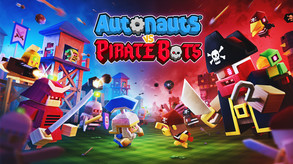
Create, automate and defend an impenetrable base. Assemble and command a Bot army to combat an entire Piratebot invasion. Build, program and battle your way through five different zones.
Modeled estimate, not a reported figure. How we estimate →
Discounts
Every price cut of more than 20% we have observed, in each market that quoted one, with this game's chart position on either side of it. These are episodes, not a model: a sale is one event, and one event cannot tell you what the next one will do.
Reviews, worldwide (the counter carries no country): 0.14/day in the week to Aug 6 → 0.14/day in the week after.
For scale, across Steam · Top Sellers · Brazil over the last 30 days: the 26 chart moves that followed a price cut of more than 20% went a median of 7 places towards #1, and the 2,400 moves with no price cut behind them went 2 away. One store, one chart, one country — it is the only place we have enough observations to say even that.
Prices outside the United States have been collected since 6 August 2026 and chart positions since 19 July 2026, so a cut older than that has no market to compare and a market that joined later has no history yet. Nothing here is converted between currencies.

About

Engagement
Reviews
Themes across 46 recent reviews and how positive each mention is. A keyword signal, not full sentiment analysis.
Reviews
This is a great automation game with some fighting (not over the top combat). Lots of fun!
Autonauts vs Piratebots is an inventive automation-strategy hybrid that expands the peaceful logic-puzzle roots of the Autonauts formula into a more goal-driven experience built around conflict, defense, and recovery. Developed by Denki and published by Curve Games, the title reframes automation not as an end in itself, but as a critical means of survival in a world overrun by hostile mechanical pirates. The result is a game that still celebrates creativity and efficiency, yet constantly pressures the player to adapt those systems under the threat of invasion. The premise immediately establishes a sense of urgency. Piratebots have swept through automated settlements, stealing resources, capturing friendly bots, and dismantling infrastructure. As the newly appointed commander of the Autonauts Defence Force, the player’s task is to reclaim lost territory, rebuild shattered production chains, and ultimately strike back against the pirate leadership. This narrative framework gives structure to the sandbox nature of automation, providing clear objectives while still allowing players to approach problems in their own way. At the core of the experience lies the same visual programming system that defined the original Autonauts. Players “teach” bots by recording sequences of actions, which can then be repeated autonomously. In Autonauts vs Piratebots, this system becomes far more than a productivity tool. Workerbots must gather resources, refine materials, and maintain farms at scale to support a growing war effort. Every inefficiency matters, because automation directly feeds military production, defenses, and expansion. Well-designed routines feel immensely satisfying, especially when they continue functioning smoothly while the player’s attention is pulled elsewhere by combat or exploration. Combat introduces a new layer of complexity without abandoning the game’s automation philosophy. Military bots such as warriors, archers, and knights can be trained, grouped into squads, and given behavioral routines that dictate how they respond to threats. Rather than direct micromanagement, battles are often won or lost before they begin, depending on how well squads are programmed and supplied. When Piratebots raid your base or you launch an assault on an enemy stronghold, watching coordinated units carry out their routines successfully can be one of the game’s most rewarding moments. Enemy encounters range from roaming pirate patrols to fortified outposts and large boss battles. Named pirate leaders serve as milestones in progression, each requiring preparation and adaptation rather than brute force. These encounters highlight the game’s central theme: automation is power. A poorly organized base can collapse under pressure, while a thoughtfully designed production and defense network can withstand repeated assaults with minimal intervention. That said, combat can occasionally feel uneven, as bot behavior may require manual correction, especially in complex terrain or chaotic fights. Exploration plays an important supporting role. The world is divided into multiple zones, each offering new resources, challenges, and opportunities to expand automation systems. Clearing pirate-controlled areas unlocks space for new factories, farms, and defensive layouts. This loop of exploration, rebuilding, and optimization keeps the game moving forward, preventing automation from becoming a purely abstract exercise. Every new area feels like a puzzle, asking the player to design systems that fit both the terrain and the threat level. Visually, Autonauts vs Piratebots retains the bright, toy-like aesthetic of its predecessor. The simple, colorful art style prioritizes readability, which is essential when managing dozens of bots performing interlocking tasks. The interface emphasizes clarity over spectacle, helping players track production lines, squad assignments, and threats without unnecessary clutter. Audio design is understated, reinforcing the rhythm of construction and conflict without distracting from the constant mental problem-solving the game demands. The pacing alternates between calm optimization and sudden urgency. Long stretches of planning and refinement can be interrupted by pirate attacks, forcing players to evaluate whether their systems are truly resilient or merely functional under ideal conditions. This tension is one of the game’s strongest qualities, as it transforms automation into a living system that must survive disruption. Failures often feel instructive rather than punitive, encouraging players to rethink layouts, improve redundancy, and refine bot logic. Overall, Autonauts vs Piratebots succeeds as a meaningful evolution of the automation genre. By introducing conflict and clear objectives, it gives purpose to efficiency and transforms abstract optimization into a strategic necessity. While some rough edges remain in combat execution and bot behavior, the depth of its systems and the satisfaction of seeing self-sustaining solutions hold up under pressure make it a compelling experience. For players who enjoy automation, programming logic, and strategic planning wrapped in a whimsical but challenging framework, it offers a rich and memorable sandbox where creativity truly becomes a weapon. Rating: 7/10
Media

Related
Related
Price dynamics, follower growth, revenue and sales trajectories with interactive tooltips
This and every other Pro feature is free until October 20, 2026. A free account is all it takes.
Genres
Stats
All-time low is the lowest price we've recorded for this game since we started tracking it.
Languages: English, French, German, Spanish - Spain, Polish, Portuguese - Brazil, Russian, Simplified Chinese, Turkish, Japanese, Korean
Hours played at review time, across 47 reviews with recorded playtime.
positive critical· bar length = how often the theme comes up
Love this game. I never finished the previous game, for feeling overwhelmed and lacking drive, but the streamlining of mechanics and "conquer the map" goals made this hard to quit.
Really fun for people with crippling autism!
很遗憾的是机器人有时候会停止工作,不知道什么原因。而且这个续作并没有加入创意工坊。
funny robots go ding ding
Habe es im Stream (WildMics) angetestet. Pros: - Ausführliches Tutorial - Grafik: Unter anderem Kinder ansprechend gestaltet - Verschiedene Seeds - Auto save Cons: - Tutorial an einigen stellen nicht gut erklärt bzw. vermutlich nicht gut übersetzt - Gab dafür keine Subs im Streams Fazit: Wer automatisierte Games mag, kann rein gehen.
fun
I love automation and programming games in general, and the original Autonauts is probably in my top ten of all time. Definitely in my top eleven. I dunno, I'm not going to sit down and make a list, what I'm saying is it's good. The programming is simple enough to be approachable and powerful enough to allow some reasonably complex automation, and the game itself has a winning art style and a difficulty curve that ramps up in a way that keeps thing challenging but never overly frustrating. I would recommend playing the original Autonauts before picking up this one for sure. In particular, you're going to figure some production and automation patterns along the way that will make this game a lot easier. The original Autonauts is about building a self-sustaining colony that can feed, clothe and generally ensure the happiness of its residents in increasingly complex production chains. This game instead uses those automation mechanics to build defensive structures and combat units to retake a colony planet that's been captured by space pirates. The escalation in complexity never reaches the heights of Autonauts' late game, but there is also much more hands-on management of units, and the presence of enemy units means you can't freely spread your base out across the planet like you could in the original. I've only played the standard difficulty and I would describe the challenge there as casual at best (which is not a complaint! I play games to unwind, generally, so a casual challenge is exactly what I was looking for). Pirates rarely attack your settlement, and even the barricades you're able to build at the very start of the game will slow them down enough to make it easy for your units to catch and overcome them. You'll also be able to build a radar unit early on to allow you to see them coming across the map. Furthermore, you have the option to declare a truce which deactivates incursions indefinitely. Once you break the truce by attacking a Piratebot, there's a 30 minute countdown before you can declare another one, but once you do so, even active raiding parties will simply turn around and go home. It honestly felt kind of cruel exploiting the timing of that so I could blow up an enemy outpost and then immediately call time-out before they could retaliate... Between that and ransacking their abandoned (or not so abandoned) structures for spare parts - surprisingly, sending your workerbots into their bases to steal the bricks from their ruined walls does not violate the terms of the truce - I began to wonder who the real bad guys were here. Tbh, the main challenge here was space management - you want your base to be fairly compact to minimize the space you need to defend, but you also need room to build, and reasonably quick access to resources that can be spread out pretty far across the map. You can move most structures around freely at any time, but I still found myself struggling to find space to expand at several stages of the game. I expect after a replay or two it gets a lot easier to plan ahead. I see some reviews claiming that managing troop movements was overly difficult, making it sound like they were reprogramming individual robots to change their targets... I can only assume that these people skipped the tutorials on Teams (whereby a bunch of bots can share the same programming and be enabled, disabled, or reprogrammed all at once) and Banners (movable area markers that can be edited on the fly to direct your bots where to attack without having to reprogram them). Once you've figured out how these things work together, the combat mechanics are pretty straightforward - you'll be using up some cannon fodder in the early game for sure, but those units are cheap and easy to replace. By the late game, once you've unlocked the trebuchet, combat is a breeze - after that point I didn't lose another unit until the final boss battle of the game. The game is certainly not flawless. The main frustrations that I recall are that it is more or less impossible to get your units to prioritize specific targets if they're close to other targetable units, that I could not figure out any way to get robots to use the logic "attack units if any are in range and structures otherwise" even though it seemed like that [i]should[/i] be easy (I wound up just putting attack and demolition in separate programs and switching between them on the fly as needed). and the aforementioned final boss was a little confusing - I had to consult the forums to figure out how to get the battle to progress past the halfway point. There were also some programming instructions that honestly I never quite made sense of and therefore never used, but I don't feel like i suffered from it - on the whole though the game could benefit from somewhat better, or at least more accessible documentation. In the end, this was a solid retrofit of Autonauts' cozy city-building to a combat-focused game, honestly not a thing I expected to work even a quarter as well as it did. I still replay the original from time to time, and I expect I'll be getting a fair amount of replay value out of this one as well.
游戏是个好游戏,但是其到了中期就开始有些枯燥了,尤其体现在小金库的上限和兵的智能程度,小金库很容易填满,但是造兵又很容易花光,结果就是机器人必须等金库攒满了才能造兵,或者搞稻子的小队捧着稻草这些站在原地被卡死,而且造兵前如果开了武器产线还会在造兵前提前花完导致旁边架起武器塔而一个兵都没有,而且海盗的劫掠战感觉不痛不痒,调兵又很麻烦,尤其是如果海盗站在区域边缘打它们它们就只会原地挨打,结果就是这边在忙产线,那边直接原地团灭,太tm不智能了,反正打可能直接让我没了部队,还不如让它们劫掠完事我再修来的省事,结果就变成海盗劫一下我,我劫一下海盗,没完没了搞得我很烦,但是议和以后游戏又变得很无聊,取消议和又有30min的CD。。。基本上玩上十来个小时就会进到这种状态,确实很难言。。。
Selling now
See how fast this game is selling right now — estimated copies and revenue per day from recent review growth.
Players by region
Where this game's players are, estimated from review languages.
Related
| Game | Estimated lifetime revenue | Reviews | Review score | Price |
|---|---|---|---|---|
| $2M | 3.6K | 90% | $19.99 | |
| $1.1M | 1.5K | 82% | $19.99 | |
| $447 | 2 | 0% | $7.99 | |
| $4.8K | 35 | 49% | $3.99 | |
| $764.6K | 1.2K | 86% | $24.99 | |
| $61.6K | 93 | 91% | $19.99 |
Related
| Game | Estimated lifetime revenue | Reviews | Review score | Price |
|---|---|---|---|---|
| $271.1K | 633 | 69% | $19.99 | |
| $271.6K | 858 | 81% | $14.99 | |
| $271.6K | 1K | 93% | $14.99 | |
| $271.7K | 557 | 81% | $14.99 | |
| $271.8K | 422 | 81% | $29.99 | |
| $271.8K | 713 | 74% | $14.99 |