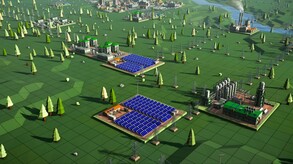
Build and maintain a power grid for a constantly growing population, while fighting off all kinds of disasters in this thrilling resource management experience. It's time for you to give "Power to the People"! Do you have what it takes to keep the lights on?
Modeled estimate, not a reported figure. How we estimate →
About


Genres
Stats
All-time low is the lowest price we've recorded for this game since we started tracking it.
Languages: English, French, German, Spanish - Spain, Simplified Chinese, Portuguese - Portugal, Russian
Engagement
Hours played at review time, across 40 reviews with recorded playtime.
Reviews
Themes across 40 recent reviews and how positive each mention is. A keyword signal, not full sentiment analysis.
positive critical· bar length = how often the theme comes up
Reviews
As for the game which should be a simulation of managing power plants and delivering electricity it is skewed when it comes to both. Operational costs of power plants and electricity production are plucked from thin air - it takes a massive role in such game and failing to simulate reality takes away all the fun. Also apparently the game takes place in some other universe where laws of physics are different and electric flow sums up. I advise against buying this game, as in more it can be finished in 14h with little effort and even less joy.
An sich ein tolles Spiel. Recht schlicht und einfach aber doch hübsch und zeigt eigentlich alles, was man braucht. Das Spielprinzip ist auch toll und in der Form wahrscheinlich einzigartig. Städte wachsen und die muss man mit Strom versorgen. Weil die mit der Zeit immer mehr Strom brauchen, baut man mehr Leitungen, Umspannwerke, Kraftwerke. Dabei muss man darauf achten, dass nichts überlastet wird und zudem will man auch möglichst wirtschaftlich agieren. Das funktioniert auch alles super und macht Spaß. Es gibt nur ein Problem. Die Berechnung der Leitungsauslastung funktioniert nicht richtig. Leistungsflüsse aus unterschiedlichen Richtungen heben sich in der Realität gegenseitig auf. Hier im Spiel addieren sie sich aber. Dadurch sind die Leitungen gerade im späteren Spiel mit größeren Städten und komplexen Netzen ständig überlastet, obwohl sie es nicht sein dürften. Mehr Leitungen helfen dann nicht mehr. Oftmals wird es sogar schlimmer, weil noch mehr Kreisflüsse auftreten. Dadurch wird das ganze Verhalten des Netzes nicht mehr vorhersehbar und Netzausbau ist mehr ein Trail-and-error-Puzzle als geplantes Vorgehen. Die Berechnung des Leistungsflusses ist die Kernmechanik des Spiels. Das muss funktionieren. Tut es aber nicht und das frustiert im späteren Spielverlauf. Leider wird das Spiel auch nicht mehr weiterentwickelt. Eine Besserung ist daher auch nicht in Sicht.
I didn't really appreciate the cussing and negative language in the tutorial so I deleted the game. It did not match the 'happy go lucky vibe.' I have to be honest if I had kids and they were playing this I probably wouldn't be happy either.
big shrug. loop is fine, But nothing to call home about. Probably won't electrify the player with any sort of joy.
This is an interesting take on the management game genre, where you don't build the city yourself; you only serve the city's power needs as it grows by itself over time and through various seasonal changes and events.
incredibly fun game it starts simple and easy but you need to progressively optimize in order to keep the evolving cities running so there's never a dull moment If i have to criticize something is that the energy times don't vary much, you could play every single map with only wind power or only solar power despite being on different continents without major drawbacks but it's up to you
I had the urge to play a city builder just for the power/grid management aspects, and this game scratches that itch very well. Great fun.
Power to the People, developed by Rhombico Games and published by Crytivo, presents a thoughtful and engaging simulation experience centered around building and maintaining a sustainable power grid for a growing population. The game invites players into the complex world of energy management, where every decision affects not only the efficiency of the electrical network but also the happiness and well-being of the people it serves. Set against a backdrop of expanding cities and diverse landscapes, the game challenges players to balance resource allocation, infrastructure development, and environmental factors in order to keep the lights on and the citizens satisfied. The core gameplay revolves around designing and optimizing a power network that includes power plants, substations, and extensive power lines. Players must consider numerous factors, such as geography, energy demand fluctuations, and technological advancements, as they progress through a comprehensive campaign. The inclusion of over 20 distinct building types and a detailed research tree with more than 30 unlockable technologies adds significant depth to the experience. This allows players to customize their approach to solving energy needs, whether through traditional fossil fuel plants, renewable energy sources, or hybrid systems. This level of customization and strategic choice fosters a sense of ownership and investment in the evolving grid. One of the most compelling aspects of Power to the People is its dynamic environment. The game introduces variable weather conditions, such as storms and solar flares, as well as unforeseen events that disrupt power supply or spike demand. These elements require players to adapt quickly, reinforcing the challenge of real-world energy management where unpredictability is the norm. Additionally, the game incorporates a NIMBY (Not In My Backyard) mechanic, which adds a layer of social simulation by affecting citizen satisfaction based on the placement of power plants. This forces players to think beyond pure efficiency and consider the social implications of their infrastructural decisions. Visually, the game adopts a clean and functional design, employing a top-down perspective that provides clear visibility of the power network and its components. The user interface is well-designed, striking a good balance between accessibility for newcomers and detailed data presentation for simulation enthusiasts. While the art style may be minimalistic, this choice works well to keep the player focused on managing resources and infrastructure without unnecessary distractions. The game also performs reliably across different platforms, including low-spec systems and the Steam Deck, ensuring a smooth experience for a broad range of players. Power to the People may not cater to those seeking fast-paced action or flashy graphics, but it excels in delivering a thoughtful, methodical, and satisfying management simulation. Its slow, deliberate pacing encourages strategic planning and problem-solving, rewarding players who enjoy meticulous control and long-term optimization. The presence of multiple modes, including a sandbox and weekly challenges, adds replayability and allows players to tailor their experience according to their preferences. Overall, the game is a strong addition to the simulation genre, offering a nuanced take on energy infrastructure management that is both educational and entertaining. For players intrigued by complex systems and resource management, Power to the People provides a richly detailed and rewarding experience. Rating: 8/10
rlly good 100% worth it to buy if u like strategy games
fun game to understand the macro concepts of the electric grid and pleasant simcity type of puzzle manager. The tech tree is actually decently accurate to the industry. I think expecting a $15 game to be physics or economically accurate is a bit ridiculous (looking at you engineering reviewers). But I would agree it would be a great addition to a second higher priced game in the future.
Related
Related
Trends
Modeled estimate over time, reconstructed from Steam's monthly review histogram.
Momentum
Pace estimated from the game's recent review growth (our daily snapshots) at its own sales-per-review ratio — a momentum signal, not booked sales.
Audience
Estimated from the language of this game's reviews — a proxy for where players are, not official Steam demographics.
Related
| 7 Days to Die | $425.3M | 403.6K | 87% | $44.99 |
| Mount & Blade II: Bannerlord | $309.8M | 294K | 88% | $49.99 |
| Factorio | $206.6M | 189.7K | 98% | $35.00 |
| RimWorld | $176.7M | 243.3K | 98% | $34.99 |
| Squad | $167.2M | 178.2K | 83% | $39.99 |
| Don't Starve Together | $164.7M | 539.5K | 95% | $14.99 |
Related
| Cornerpond | $242.3K | 2.7K | 97% | $2.99 |
| Reshaping Mars | $242.4K | 830 | 84% | $9.99 |
| ShantyTown | $242.3K | 421 | 98% | $14.99 |
| Cognition: An Erica Reed Thriller | $242.4K | 817 | 82% | $14.99 |
| Haydee 3 | $242.2K | 339 | 86% | $29.99 |
| Tengami | $242.2K | 1.8K | 81% | $6.99 |