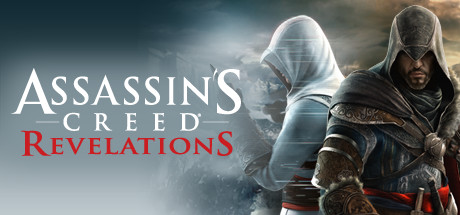
Ezio Auditore walks in the footsteps of the legendary mentor Altair, on a dangerous journey of discovery and revelation.
Modeled estimate, not a reported figure. How we estimate →
Media

About
Genres
Stats
All-time low is the lowest price we've recorded for this game since we started tracking it.
Languages: Danish, Dutch, English, French, German, Italian, Norwegian, Polish, Portuguese - Portugal, Spanish - Spain, Swedish, Russian +3 more
Engagement
Hours played at review time, across 127 reviews with recorded playtime.
Reviews
Themes across 127 recent reviews and how positive each mention is. A keyword signal, not full sentiment analysis.
positive critical· bar length = how often the theme comes up
Reviews
(RATING: 6/10) BUT: The famous disclaimer at the beginning of the game, stating that it was "developed by a multicultural team of various faiths and beliefs," is nothing more than a corporate shield. This message is used to camouflage an orientalist and insecure historical narrative designed to feed the deep-seated biases of the Western market. While the game remains playable thanks to the charisma of Yusuf Tazim, the gorgeous atmosphere of Istanbul, and a brilliant soundtrack, we are not buying Ubisoft’s habit of twisting history to satisfy centuries-old cultural grudges. Visually stunning on the outside, but deeply flawed and hypocritical under the hood. For those interested, here is the breakdown of the historical double standards: 1. Protected Western Leaders vs. The Ottoman Sultan: In previous titles, iconic figures of Western history are treated with extreme care and protection. In AC1, King Richard the Lionheart is portrayed as a fair and reasonable ruler who discusses the justice of a duel with Altair. In AC2, the Medici family and Machiavelli—one of history's most ruthless political minds—are written as allies or actual members of the Assassin Brotherhood. In AC3, even when George Washington is revealed to have ordered the burning of native villages (including the protagonist Connor's own home), Connor never draws a blade on him; he simply gets upset and walks away. Ubisoft never tarnishes the historical weight or charisma of their own iconic leaders. Yet, when it comes to the Ottomans, the series' core philosophy of "remaining in the shadows" evaporates. Ezio literally draws his sword and stands down Sultan Selim I (historically one of the most ruthless and powerful rulers) right in front of his own army. While Western leaders remain sterile and untouchable on their historical thrones, the Turkish Sultan is reduced to a minor end-game plot device used solely to boost Ezio's "cool old master" persona. 2. The Reality of the Mongol Army vs. Microscopic Ethnic Screening of Ottomans: The army built by Genghis Khan and his descendants is marketed monolithically in Western media as just a "Mongol" horde. However, historically, over 70% of that army consisted of Turkic tribes like the Kipchaks, Tatars, and Uyghurs. Furthermore, the administrative language of their courts and the spoken language of the military was entirely Turkish. Despite this, Ubisoft simply labels them "Mongols" without a second thought regarding their internal ethnic makeup. But when it comes to the Ottomans, a sudden microscopic screening begins. Even though the official court language, the daily spoken language, the founding element, and the vast majority of the military forces (starting with the Timarli Sipahis) were entirely Turkish, Ubisoft loves to nitpick with arguments like "but the Janissaries were conscripted devshirme, but there were Greeks living here." The goal here is obvious: to undermine the historical legitimacy of the Turkish identity in those lands and to portray the Ottoman Empire not as a legitimate state, but as an artificial, oppressive apparatus enslaving local populations. 3. The "Victimized Byzantium" Theater in Cappadocia and The Final Blow: The game opens with the implicit narrative that the Turks forced the Greeks and other Byzantine remnants to live in exile inside the underground caves of Cappadocia. Manuel Palaiologos, a descendant of the Byzantine imperial bloodline, is romanticized as an honorable leader who is just minding his own business trading, trying to save his "oppressed" people, and boosting morale during an attack. While Manuel and the Byzantine soldiers are painted as innocent victims, Shahkulu—a Turkman—is introduced as the sole sadist responsible for whipping and torturing slaves. The message is clear: Byzantium is noble, and the only barbarian here is the Turkman. The ultimate contradiction comes with Ezio’s actions. Acting on the instructions of the Janissary Agha Tarık and Prince Suleiman, Ezio arrives to destroy the gunpowder cache of this already "oppressed" population. By detonating the storage, he burns down the underground city and leaves thousands of innocent civilians and workers to suffocate to death in toxic smoke. The game frames this mass civilian slaughter as "Ezio successfully completing his mission." The narrative is twisted to show that the Turks first drove these Christians underground, placed a sadist Turkman (Shahkulu) over them to torture them, and finally sent Ezio to bring the cave down on their heads, dealing the final blow. 4. Visual Racism and the "Yellow Filter": The notorious Hollywood and gaming industry trope of "East equals dusty, dirty, and exotic" is fully at play here. When exploring Italy in AC2 and Brotherhood, the sky is crystal blue, the lighting is crisp, and the architecture looks grand and "civilized." Yet, the moment we step into Istanbul, the screen is suffocated by a heavy, yellow, and dusty filter. Smothering a magnificent capital surrounded by three seas and famous for its straits and greenery into a desert-like atmosphere is a deliberate subconscious attempt to tell the player: "You are now in a backward, tekin olmayan (unsafe), exotic Eastern territory."
Après avoir redécouvert Assassin's Creed, Assassin's Creed II et Brotherhood, je me suis attaqué à Révélations, qui était probablement celui que j'attendais le plus. C'est un épisode que j'ai toujours énormément apprécié, voire mon préféré de la licence, et qui gardait dans mes souvenirs une place particulière. Autant dire que j'étais très curieux de voir si ce souvenir allait tenir après avoir enchaîné les trois premiers jeux. Et la réponse est assez compliquée : Assassin's Creed Révélations est un très bon jeu, mais c'est aussi celui qui m'a le plus frustré. Le principal problème du jeu est qu'il donne parfois l'impression d'être une conclusion plus qu'une véritable évolution. Là où Assassin's Creed II et Brotherhood apportaient chacun énormément de nouveautés, Révélations reprend beaucoup d'éléments déjà existants et les polit davantage qu'il ne les révolutionne. Ce n'est pas forcément un défaut en soi, car le jeu améliore énormément de choses, mais on ressent clairement qu'il est moins ambitieux que ses prédécesseurs. Et pourtant, beaucoup d'aspects sont excellents. Constantinople est une superbe ville, plus petite que Rome, mais aussi beaucoup plus condensée et agréable à parcourir. Son level design est réussi, son ambiance orientale rappelle agréablement le premier Assassin's Creed et son exploration est particulièrement plaisante. Le gameplay gagne également en fluidité avec l'ajout du crochet, qui apporte un vrai dynamisme aux déplacements. Les combats sont aussi mieux équilibrés, avec des ennemis plus intéressants et des finishs particulièrement brutaux et satisfaisants. Le scénario reste également une grande force. Retrouver Ezio à la fin de sa vie apporte quelque chose de différent, et le jeu réussit à raconter une histoire plus mature autour de son personnage. Les séquences avec Altaïr sont excellentes et apportent une vraie conclusion à son parcours, même si elles auraient largement mérité d'être plus développées. Les personnages principaux sont attachants, les antagonistes fonctionnent bien et certaines scènes sont vraiment marquantes émotionnellement. Malheureusement, le jeu souffre aussi de son manque de contenu par rapport aux épisodes précédents. Là où Brotherhood et Assassin's Creed II proposaient énormément d'activités annexes avec de vrais objectifs derrière, Révélations semble plus léger. Même les récompenses les plus emblématiques, comme l'armure finale, manquent un peu du prestige et du travail de mise en scène qu'avaient les armures précédentes. Paradoxalement, le jeu propose pourtant l'une des meilleures idées de toute la saga : les séquences de Desmond. Ces passages à la première personne mélangeant narration et puzzles sont une excellente manière de rendre les phases modernes enfin intéressantes. Leur direction artistique est incroyable et elles apportent une vraie identité au jeu. Dommage qu'elles soient aussi courtes, car il y avait clairement matière à en faire beaucoup plus. Mais le plus gros problème aujourd'hui vient malheureusement de l'état du jeu. Sur PC, Révélations est un véritable parcours du combattant. Entre les problèmes d'optimisation, les ralentissements, les crashs et surtout la disparition de certains contenus liés aux anciens services en ligne, l'expérience est largement dégradée. Le fait de devoir modifier les fichiers du jeu pour récupérer certaines fonctionnalités qui faisaient partie de l'expérience originale est franchement regrettable. La disparition du DLC The Lost Archive et les problèmes liés aux fonctionnalités supprimées sont particulièrement dommageables. C'est vraiment triste, car derrière ces problèmes, Assassin's Creed Révélations reste un épisode avec une ambiance exceptionnelle, une direction artistique sublime et une vraie conclusion pour Ezio et Altaïr. Mais aujourd'hui, il est difficile de le recommander sans prévenir des nombreux problèmes techniques qui viennent gâcher l'expérience. Au final, je garde énormément d'affection pour ce jeu, mais cette redécouverte a été une petite douche froide. Il reste un très bon Assassin's Creed, mais aussi celui qui montre le plus les limites d'un développement plus court et d'une conservation catastrophique de certains contenus. Une conclusion imparfaite pour la trilogie d'Ezio, mais une conclusion qui possède encore de très grands moments.
юбисофт контора пидоров ♥♥♥♥♥♥, какого ♥♥♥ вы мне акк заблокировали\
конченый юбисофт конект
Es el mejor de la trilogía
There's no way it could get better than this
Ezio is now old, but wise and famous grand master assassin from Italy, its a good closing for the ezio trilogy also by connecting it with the first assassins creed. I prefer ac revelation story over brotherhood, you are not being fed who is the bad guy in the face, its rather understanding the situation what will ezio do next while also discovering it.
Вся трилогия Эцио это просто великолепная история. Пожалуй, это лучший персонаж серии, над которым действительно постарались. Эта часть отлично завершает его путь и красиво прощается с Альтаиром (тем самым легендарным ассасином из первой части). Насчёт следующих частей уже как-то сомневаюсь. Хотел взять третью часть ради Дезмонда, но передумал, потому что дальше главные герои постоянно меняются. Такую историю, как у Эцио, мы уже вряд ли увидим. Requiescat in pace, Эцио... и Альтаир.
Buen cierre para la mejor triologia de assasins creed, jugabilidad mejorada, nuevas mecanicas interesantes y es nostalgico jugar con ezio auditore una ultima ves.
Auf Steamdeck nicht spielbar. Ich, weiß das spiel ist zwar nicht das aktuellste, aber wie kann es sein das kleine Indi- Spiele für unter 5 euro perfekt auf dem Steamdeck laufen, aber dises AAA Spiel schafft es nicht zu checken, dass ich eine Controlereingabe brauche, außerdem nervt U-Play. Mir ist auch bewusst, dass es Workarounds gibt um das spiel über das Steamdeck zu spielen, aber ganz im ernst, das ist über den PC dann doch leichter, dachte ich, aber das Spiel laggt so extrem, dass ich nichtmal ins Startmenü komme, anscheineinend hat das spiel ein Problem mit Linux. Damit bleibt mir nur noch die XBOX 360 (spiel vom älteren Bruder, nachdem er fertig war)
Related
Related
Trends
Modeled estimate over time, reconstructed from Steam's monthly review histogram.
Engagement
DAU/MAU are modeled from peak concurrent players (≈×8 and ×28) — Steam publishes no active-user counts, so treat these as rough estimates, not reported figures.
Audience
Audience
Estimated from the language of this game's reviews — a proxy for where players are, not official Steam demographics.
Games most often reviewed by the same players — an audience-affinity signal from our review sample, not full ownership data.
Related
| World of Goo | $3M | 6.6K | 94% | $14.99 |
| The Weeping Swan: Ten Days of the City's Fall | $3M | 9K | 59% | $11.99 |
| Hue | $3M | 11.3K | 93% | $14.99 |
| PULSAR: Lost Colony | $3M | 5.7K | 90% | $19.99 |
| WRC 9 FIA World Rally Championship | $3M | 4.1K | 77% | $29.99 |
| F.I.S.T.: Forged In Shadow Torch | $3M | 7.1K | 86% | $15.99 |