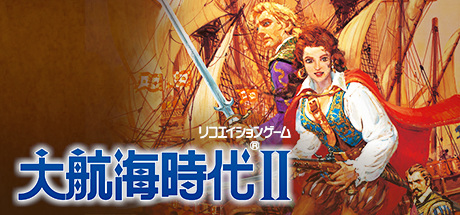
Uncharted Waters II, developed and published by KOEI TECMO GAMES CO., LTD., stands as a landmark example of how ambitious design can transcend technological limitations. Even decades after its original release, the game feels remarkably expansive, offering a blend of exploration, trade simulation, and role-playing elements that still feels distinct in today’s landscape. Set during the Age of Exploration, it doesn’t just recreate a historical period—it invites players to inhabit it, giving them the freedom to define their own path in a vast, interconnected world of ports, oceans, and competing ambitions.
One of the game’s most defining features is its choice of protagonists. Instead of funneling players through a single storyline, it presents multiple characters, each with unique motivations, starting conditions, and narrative arcs. This decision fundamentally changes how the game is experienced. A player who begins as a merchant will naturally focus on commerce and trade routes, while another who takes on a more adventurous or combat-oriented character may spend their time uncovering discoveries or engaging in naval warfare. These paths aren’t superficial variations—they meaningfully alter how you interact with the game’s systems, ensuring that each playthrough feels like a different journey rather than a simple replay.
The gameplay itself revolves around a delicate balance of systems that reward patience and thoughtful decision-making. Trading is more than just buying low and selling high; it involves understanding regional economies, tracking supply and demand, and building efficient routes across long distances. Exploration is equally methodical, requiring preparation, navigation skills, and a willingness to venture into unknown waters. Naval combat, while not overly complex by modern standards, adds another dimension, forcing players to consider fleet composition, resource management, and timing. None of these elements are particularly fast-paced, but together they create a rhythm that feels immersive and rewarding once you settle into it.
What truly elevates the experience is the sense of agency it provides. The game rarely dictates what you should do next, instead offering a framework within which you can pursue your own goals. Fame acts as a unifying progression system, with different types reflecting your chosen path—whether that’s becoming a renowned trader, a celebrated explorer, or a feared naval force. This approach gives every action weight, as your decisions gradually shape your reputation and influence across the world. It’s a design philosophy that trusts the player to find their own direction, something that remains relatively rare even in modern open-ended games.
Of course, the game’s age brings certain challenges. Its interface can feel cumbersome, and its lack of guidance may be off-putting to players who expect clearer direction or streamlined systems. There’s a noticeable learning curve, particularly in the early stages, where the game leaves much of its mechanics unexplained. Progress can feel slow, and the pacing demands a level of patience that not all players will be willing to invest. However, these elements are also part of what gives the game its depth. Rather than simplifying its systems, it encourages players to engage with them fully, rewarding persistence with a richer understanding of its world.
Visually, Uncharted Waters II reflects its origins with simple, functional graphics that prioritize clarity over detail. While it lacks the visual sophistication of modern titles, there’s a certain charm in its presentation, particularly when combined with its atmospheric soundtrack. The music plays a significant role in reinforcing the feeling of adventure, capturing both the excitement of discovery and the solitude of long voyages across open seas. It may not impress from a technical standpoint, but it succeeds in establishing a mood that carries throughout the experience.
Replayability is one of the game’s strongest qualities. The combination of multiple protagonists, open-ended progression, and a world filled with opportunities ensures that no two playthroughs are exactly alike. Players can spend hours refining trade networks, hunting for rare discoveries, or building a formidable fleet, all while carving out a unique story shaped by their choices. The game doesn’t rely on scripted events or constant novelty; instead, it derives its longevity from the freedom it offers and the systems that support it.
In the end, Uncharted Waters II is a game that rewards those willing to meet it on its own terms. It’s not immediately accessible, nor is it designed for quick, casual sessions. Instead, it offers a slower, more deliberate experience that emphasizes exploration, strategy, and personal storytelling. For players who appreciate depth and freedom, it remains a deeply satisfying and surprisingly modern-feeling adventure despite its age. For others, its dated interface and pacing may prove to be barriers that are difficult to overcome.
Rating: 7/10