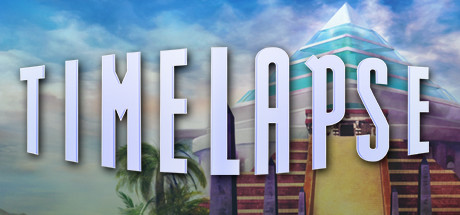
Developed by GTE Entertainment and published by Nightdive Studios and Atari, Timelapse is a classic first-person puzzle adventure that represents one of the more ambitious attempts to blend archaeology, mythology, history, and science fiction into a single interactive experience. Released during the height of the point-and-click adventure boom, the game follows the tradition established by titles such as Myst while carving out its own identity through its globe-spanning journey across ancient civilizations and its fascinating mystery surrounding Atlantis. Although the game is undeniably a product of the 1990s, its imaginative premise and emphasis on exploration continue to give it lasting appeal for fans of cerebral adventure games.
The narrative begins with the mysterious disappearance of Professor Alexander Nichols, an archaeologist who has spent years researching connections between several ancient civilizations. His investigations suggest that cultures separated by geography and time may share links to a common forgotten origin. When the professor suddenly vanishes, players are drawn into an expedition that gradually uncovers secrets involving advanced ancient technology, legendary lost civilizations, and the possibility of traveling through time itself. The story unfolds slowly, encouraging players to piece together clues rather than delivering direct answers.
One of the game's most compelling qualities is its sense of adventure. Rather than confining players to a single location, Timelapse transports them across multiple historical settings inspired by real-world civilizations. Throughout the journey, players visit environments influenced by Ancient Egypt, Easter Island, Mayan culture, and the Anasazi people before eventually reaching locations tied to the game's larger mythology. Each region possesses its own visual style, architectural design, and thematic identity, making every stage of the adventure feel distinct.
The game's atmosphere remains one of its strongest assets. Exploration is often a solitary experience, with players spending long periods examining ancient ruins, deciphering clues, and solving mysteries without direct assistance. This isolation creates a powerful feeling of immersion. The environments feel abandoned yet meaningful, as if they are preserving secrets that have remained hidden for centuries. The lack of constant dialogue or interruptions allows players to become fully absorbed in the process of discovery.
Puzzle design serves as the foundation of the entire experience. Nearly every obstacle requires careful observation, logical reasoning, or interpretation of environmental clues. The game includes a broad range of puzzle types, from mechanical devices and symbolic codes to mathematical challenges and sound-based sequences. This variety prevents the gameplay from becoming repetitive and ensures that players must continually adapt their thinking as they progress.
One of the most impressive aspects of the puzzle design is how closely it is integrated with the setting. Challenges rarely feel like arbitrary obstacles inserted merely to slow progression. Instead, many puzzles appear connected to the cultures and locations in which they are found. Ancient mechanisms, historical symbols, and architectural features often play important roles in the solutions, making progression feel like an extension of exploration rather than a separate gameplay element.
The non-linear nature of many areas enhances the sense of discovery. Players are often free to investigate multiple locations, gather information from different sources, and solve challenges in a variety of sequences. This structure rewards curiosity and experimentation. Instead of constantly directing players toward the next objective, the game trusts them to observe their surroundings and determine how different clues connect together.
Visually, Timelapse was highly impressive for its era. The game relies on pre-rendered environments that were designed to capture the grandeur and mystery of ancient locations. While modern audiences will immediately recognize the technical limitations of mid-1990s graphics, many of the environments still possess a distinctive charm. Detailed ruins, mysterious chambers, and large-scale monuments successfully create the feeling of exploring forgotten corners of history.
The environmental design deserves particular praise because it contributes significantly to the narrative. Every location tells part of the story through visual details. Ancient symbols, architectural patterns, and hidden mechanisms all provide clues about the larger mystery. Players who pay close attention are rewarded with a deeper understanding of the world's lore and the connections between civilizations.
The soundtrack complements this atmosphere exceptionally well. Rather than overwhelming players with constant music, the game uses ambient sounds and carefully selected musical themes to establish mood. Each location feels distinct thanks to subtle audio cues that reinforce its cultural inspiration and emotional tone. The result is a soundscape that enhances immersion without distracting from exploration and puzzle-solving.
Another strength lies in the game's respect for player intelligence. Timelapse rarely explains solutions outright and expects players to think critically about the information they encounter. Success comes from observation, note-taking, and careful analysis rather than trial and error. Solving a difficult puzzle often feels genuinely rewarding because the game allows players to arrive at conclusions independently.
The historical and mythological influences also add depth to the experience. While the story takes significant creative liberties, it draws inspiration from real-world archaeology, legends, and ancient cultures. This combination of fact and fiction creates a fascinating backdrop that encourages players to engage with the material on multiple levels. The game succeeds at making exploration feel educational without sacrificing entertainment.
However, many aspects of Timelapse reveal its age. The puzzle design can occasionally become frustratingly obscure, requiring leaps in logic that modern players may find unreasonable. Certain solutions are not always communicated clearly, leading to moments where progress stalls despite careful observation. These challenges were common in adventure games of the era but can still be difficult to accept today.
Navigation can also feel cumbersome. Movement through static screens and pre-rendered environments lacks the fluidity of modern exploration systems. Revisiting locations while searching for missed clues sometimes slows the pace considerably, particularly during longer play sessions.
The narrative, while intriguing, unfolds at a deliberately slow pace. Players seeking constant plot developments or cinematic storytelling may find parts of the experience too reserved. Much of the story emerges indirectly through environmental clues and puzzle progression rather than direct exposition.
Timelapse stands as a memorable example of the classic puzzle-adventure genre. While its dated mechanics and occasionally unforgiving design may deter some modern players, those willing to embrace its old-school philosophy will discover a thoughtful and immersive experience filled with fascinating locations, challenging puzzles, and an intriguing narrative. Its commitment to exploration and discovery continues to make it one of the more distinctive adventure games from the golden age of point-and-click storytelling.
Rating: 7/10