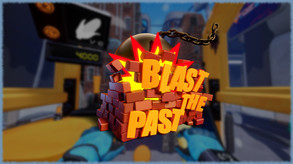
Operate a wrecking crane in VR to destroy the last remaining old building in a city of new skyscrapers, push buttons, turn wheels and make sure the ball hits its target!
Revenue comes from in-game items and microtransactions, which our price-based model doesn't estimate. Copies below reflect the player base, not paid sales.
Media
About
Genres
Stats
Languages: English**languages with full audio support
Engagement
Reviews
Themes across 40 recent reviews and how positive each mention is. A keyword signal, not full sentiment analysis.
Reviews
⠀
Crashes constantly, can't finish even one level.
Related
Related
Trends
Concurrent players on Steam, sampled daily since tracking started.
Hours played at review time, across 40 reviews with recorded playtime.
positive critical· bar length = how often the theme comes up
It's giving Tonka Dig'n Rigs vibes. Thanks for the free game just tell me how to get these secret achievements now
no mater what the game crashes in 1min of playing
Очередной не нужный VR.
Yeni gökdelenlerle dolu bir şehirde kalan son eski binayı yıkmak için VR'da bir yıkım vinci çalıştırın, düğmelere basın, tekerlekleri çevirin ve topun hedefine ulaştığından emin olun!
Blast the Past, developed and published by The Work Club, is a small-scale VR experience that revolves around a single, satisfying concept: operating a wrecking crane to demolish a building piece by piece. Rather than offering a traditional progression system or multiple levels, it focuses entirely on the tactile enjoyment of destruction, using physics and interaction as its primary appeal. As a student project, it carries a sense of experimentation, prioritizing immersion and hands-on mechanics over depth or long-term structure. The core of the experience lies in its control scheme. Players are placed in a crane operator’s position, interacting with levers, buttons, and controls to swing a heavy wrecking ball toward a structure slated for demolition. In VR, this setup feels particularly engaging, as each movement is physically driven, requiring coordination and timing to achieve effective results. The act of lining up a swing, building momentum, and watching the impact unfold gives the game a strong sense of presence. It’s not about speed or precision in the traditional sense, but about understanding weight, motion, and how each action translates into destruction. What makes the gameplay satisfying is its reliance on physics. The building does not collapse through scripted sequences; instead, it reacts dynamically to the player’s actions. Walls crack, sections give way, and debris falls in response to where and how the wrecking ball strikes. This creates a loop of experimentation, where players can try different approaches to see how the structure responds. There’s a subtle puzzle-like quality to it, as certain angles or points of impact can cause larger sections to collapse more efficiently. Even without explicit guidance, the system encourages trial and error in a way that feels intuitive. In addition to the main objective of demolition, the game introduces small optional elements, such as locating and preserving certain objects within the building. These additions provide a bit of contrast, encouraging players to be mindful of what they destroy and what they choose to save. However, these features remain secondary and do not significantly alter the overall experience, which remains firmly centered on the act of breaking things down. Visually, the game is functional rather than detailed. The environment is simple, with a focus on clarity and readability rather than visual complexity. The building itself is the centerpiece, and its destruction is the primary visual feedback. While the graphics do not stand out in terms of realism or detail, they serve their purpose well, ensuring that players can easily track the results of their actions. Sound design complements this by emphasizing the impact of each strike, with debris and structural collapse providing satisfying auditory feedback. The most noticeable limitation of Blast the Past is its scope. There is essentially one main scenario, and while it can be approached in different ways, there is little in the way of progression or variety. Once the building has been demolished, there are few incentives to continue beyond experimenting with different techniques. This makes the experience feel more like a short sandbox or demo than a fully developed game. It excels in delivering its core idea, but it does not expand beyond it. Controls can also feel slightly imprecise at times, particularly when attempting more controlled or deliberate movements. The physics system, while generally effective, can occasionally behave in ways that feel unpredictable, which may lead to moments of frustration. These issues are relatively minor but become more noticeable as the initial novelty begins to fade. Despite its limitations, Blast the Past succeeds in capturing a very specific kind of enjoyment. It taps into the simple satisfaction of destruction, enhanced by the immersion of VR interaction. The experience is easy to pick up and immediately engaging, making it well-suited for short sessions or for players looking to experiment with physics-based gameplay in a virtual space. In the end, Blast the Past is best understood as a focused, experimental experience that delivers on its core concept without attempting to be more than it is. It offers a brief but enjoyable look at what interactive demolition can feel like in VR, even if it lacks the depth and variety to sustain long-term engagement. For those interested in its premise, it provides a memorable, hands-on experience that stands out for its simplicity and immediacy. Rating: 7/10
[h1] Кукурузный драйглайнер [/h1] Все что можно успеть, это схавать кукурузу перед рабочим днем и разгромить здание. Ну.. а дальше на выход. Хотя я почитал комменты, возможно по какой то неведомой причине только у меня вылетает эта игра. Ну а так я думаю прикольно несколько минут поломать здания.
Вроде как игра хорошая но ее не пойму может она не для меня но друзьям нравиться может со временем разберусь с этой игрой и может тоже мне понравится.
Momentum
Pace estimated from the game's recent review growth (our daily snapshots) at its own sales-per-review ratio — a momentum signal, not booked sales.
Audience
Estimated from the language of this game's reviews — a proxy for where players are, not official Steam demographics.