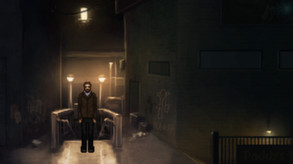
Russell Stone is a Jewish Rabbi at a poor synagogue in New York City. He is a devout man with a problem. Membership is way down and he lacks the funds to keep his synagogue open. Things are looking very bleak, and he has grown progressively more cynical and bitter with the passage of time.
Modeled estimate, not a reported figure. How we estimate →
Prices
The United States storefront in every case, so this compares stores and not countries.
About
Genres
Stats
All-time low is the lowest price we've recorded for this game since we started tracking it.
Sums Steam only; GOG publishes no volume signal, so the true total is higher by an unknown amount.
| Store | Price | Audience | Score | Chart | Est. revenue |
|---|---|---|---|---|---|
SteamYou are here | $4.99 | 899reviews | 81% | — | $79.9K |
| $1.49−70% | 381ratings | 72% | — | not modelled |
Matched by title — a reused name can pair the wrong games. * is a critic aggregate. Prices and positions are each store's United States storefront; Epic charts worldwide. Audience and Score too, except Steam's, which is worldwide.
Engagement
Reviews
Themes across 50 recent reviews and how positive each mention is. A keyword signal, not full sentiment analysis.
Reviews
This is the reason my grandfather used to hang people in front of the church on sundays...
Wow
The Shivah is a charming little noir point-and-click that manages to pack a surprising amount of heart into its brief runtime — I finished it in about two hours, but it never felt padded or wasteful. Playing as Rabbi Stone, a bitter man of faith investigating a murder he's been implicated in, gave me a protagonist type I'd genuinely never experienced before, and the dialogue system where you choose between a human response and a rabbinical one was a clever touch that kept conversations interesting. The pixel art style and moody jazz score fit the Manhattan setting perfectly, and the voice acting — bloopers included — added real personality to the cast. My only real gripes are that the final confrontation is frustratingly trial-and-error, and the story occasionally feels like it's skating on the surface of deeper themes it could have explored more fully. Still, for five dollars, this is an easy recommend for any fan of Wadjet Eye Games or classic adventure games looking for something short and genuinely unlike anything else out there.
Media

Related
Related
Price dynamics, follower growth, revenue and sales trajectories with interactive tooltips
This and every other Pro feature is free until October 20, 2026. A free account is all it takes.
Languages: English**languages with full audio support
Hours played at review time, across 50 reviews with recorded playtime.
positive critical· bar length = how often the theme comes up
On the surface the art, atmosphere and mechanics are lovely... but the game is short enough you will barely use any of the mechanics or have to think much about the mystery. As far as point and click games go it's veerry straightforward and story-focused, but to me the narrative ended up seeming both zionist and antisemetic and did not really have anything that interesting to say about "the nature of morality" lol.
Diving into a detective story that feels like coffee with grandma. It’s a funny investigation with a dash of wisdom, and I m still searching for my little drop of caffeine to keep going.
I played this using a guide because I did not feel like figuring out what I needed to do to progress the story. Overall game was short and entertaining enough. My favorite part was probably that it has voice actor outtakes after the credits. Not many games about a rabbi trying to solve a murder mystery so it was unique at least.
Finished in under 3 hours with all achievements. The setup is interesting: you play a Jewish Rabbi investigating the death of a former congregant after the police inform you that he left your synagogue a $10,000 donation. The graphics and animation are about what I expect from a Wadjet Eye game, but The Shivah ended up feeling like a very slight and strange experience. There are only six locations in the whole game, and there are basically no real puzzles. Most of the experience is dialogue and a few simulated online interactions. If that is what you want, fine, but it made the investigation feel thin. For me, this was a missed opportunity. If the goal was partly to expose players to Jewish culture, the game really could have used some kind of in-game glossary or encyclopedia for the Hebrew phrases. As it stands, I think a lot of non-Jewish players will feel like they are being asked to engage with a very specific worldview without enough context, and the story was not strong enough to fully carry that. I can still recommend it, but only at a low price. If you get it cheap, it is a short narrative curiosity. If you pay more than $5, I think most people will feel ripped off.
100% the whole game in a hour(ish). pretty good. I recommend it heavily to others. Reminds me of games made by college students. The voice acting is raw, and the convos are quite realistic. For how short the game is, it's worth it. ^^
1. Rabbi Stone's Psyche: The Crisis of Faith as a Reflection of the Human Mind The core of The Shivah isn't the police mystery, but rather the mental state of Russell Stone. At the start of the game, Stone's synagogue is empty, his bank account is overdrawn, and his faith in the Creator seems to have vanished. From a psychological perspective, Stone suffers from what existentialist literature and cognitive psychology call existential hopelessness. What's fascinating is how the game connects this to Judaism: in Jewish tradition, arguing with God isn't a sin, it's a tradition. From Abraham interceding for Sodom to Job demanding answers, questioning is part of the soul's identity. Guilt and Remorse: When Stone learns that a former member of his congregation (Jack Lauder, with whom he parted on very bad terms) has been murdered and left him a large sum of money, his mind enters a brutal ethical conflict. Is it a blessing from Hashem or the price of blood? Guilt, a universal psychological element but deeply rooted in Judeo morality, acts as the driving force that compels him to investigate. 2. The Sons of Hashem Facing the Mirror: Identity and Responsibility The game portrays the communal and spiritual life of the Sons of Hashem in a three-dimensional way, moving away from Hollywood clichés. There are two clashing philosophical perspectives within the game's own Judaism, represented by Rabbi Stone and the rabbi of the rival synagogue, the selfish but pragmatic Zelig: The tension of exile and assimilation: The characters move through contemporary New York. Being a "Son of Hashem" in a modern environment involves a constant mental struggle: how to maintain holiness, Shabbat, Kashrut, and Torah ethics in a hyper-capitalist, secular, and fast-paced world. Free Will (Bechira Chofshit): One of the game's strongest philosophical points occurs during the iconic "rabbinic insult battles" (where you respond to a question with another question). This isn't just a cultural joke; it's the Talmudic method of debate. The player's mind is forced to understand that in Jewish philosophy there are no simple answers or pre-digested dogmas; each individual is responsible for analyzing the morality of their actions under their own free will. 3. The Connection with the Goyim Mind: The Bridge of Universal Empathy Why does such a profoundly Jewish game resonate with any human mind, regardless of background or faith (the goyim environment)? The Goy Detective (Inspector Kahn): The interaction between Rabbi Stone and the police detective in charge of the case is masterful. Kahn represents the secular mind, the law of man, the order of the State. At first, there is an obvious cultural barrier. However, as the plot unfolds, the bridge between them is built through the pursuit of justice (Tzedek). The Universality of Mourning: The concept that gives the game its title, Shiva (the seven-day mourning period in Judaism), is one of the most perfect psychological institutions in human history. Shiva forces the mind to pause, to process grief, to not flee from death. The game demonstrates that, whether you are Jewish or non-Jewish, the pain of loss, the regret for unspoken words, and the need to close a cycle with those who are no longer here is a universal human experience. The non-Jewish mind understands Shiva not as an alien ritual, but as a shared psychological necessity. 4. Philosophy and the Dynamic Climax (No Critical Spoilers) The climax of The Shivah pits two worldviews against each other: justice and divine retribution. The game allows you to choose how to resolve the final conflict, and this is where Jewish philosophy connects directly with the player's ethics: Do we seek revenge or justice? Is the preservation of life (Pikuach Nefesh) paramount, even when it involves someone who has harmed us? Depending on your choices, the game offers endings that range from spiritual redemption to tragedy. It is up to the player to weigh whether Rabbi Stone regains his connection with Hashem through compassion, or whether he succumbs to the darkness of human despair. Conclusion The Shivah is a minimalist masterpiece. In two hours, it achieves what many hundred hour role playing games don't even attempt: to explore the recesses of a broken soul. It connects the human mind in its most vulnerable state with the ancient wisdom of Jewish philosophy, reminding us that being a Child of Hashem or simply a human being navigating this world is not about having all the right answers, but about having the courage to keep asking the difficult questions in the midst of darkness. An essential, intelligent, and profoundly spiritual book.

This just became one of my favorite games. The writing and music are both incredible. In fact, I've looked everywhere for the OST, and can't find it available to buy anywhere. I would definitely pay more money for that soundtrack, fyi.
Players by region
Where this game's players are, estimated from review languages.
Players also reviewed
The games this title's players most often review too — audience affinity.
Related
| Game | Estimated lifetime revenue | Reviews | Review score | Price |
|---|---|---|---|---|
| $1.3M | 4.2K | 93% | $19.99 | |
| $146.1K | 1.6K | 89% | $4.99 | |
| $70.1K | 789 | 94% | $4.99 | |
| $518.4K | 1.4K | 96% | $19.99 | |
| $373.2K | 1.9K | 88% | $9.99 | |
| $208K | 876 | 89% | $14.99 |
Related
| Game | Estimated lifetime revenue | Reviews | Review score | Price |
|---|---|---|---|---|
| $79.9K | 546 | 97% | $4.99 | |
| $79.9K | 100 | 80% | $27.99 | |
| $79.9K | 312 | 89% | $9.99 | |
| $79.9K | 355 | 83% | $10.99 | |
| $79.9K | 306 | 93% | $8.99 | |
| $79.9K | 481 | 86% | $6.99 |