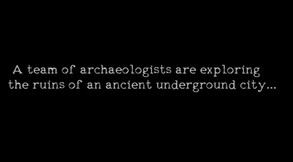
The Dweller is a puzzle game where you play as the MONSTER! It's time to get rid of all those pesky archaeologists snooping around in your lair. SCARE them, CRUSH them, DEVOUR them! ELIMINATE THE INTRUDERS!
Modeled estimate, not a reported figure. How we estimate →
Media
About
Genres
Stats
All-time low is the lowest price we've recorded for this game since we started tracking it.
Languages: English
Engagement
Hours played at review time, across 40 reviews with recorded playtime.
Reviews
Themes across 40 recent reviews and how positive each mention is. A keyword signal, not full sentiment analysis.
positive critical· bar length = how often the theme comes up
Reviews
да
– Наконец-то играешь не за героя, а за древнего монстра в пещере. – И что делаешь? – Археологов давлю, которые ко мне в дом без спроса лезут. – Зверь ты. – Не зверь, а собственник. Это, вообще-то, моя пещера, я за неё тыщу лет назад ипотеку закрыл.
The Dweller is a compact but inventive puzzle experience developed by Villainous Games and published by Forever Entertainment S. A. that immediately distinguishes itself through its unusual perspective. Instead of placing the player in the role of an adventurer braving ancient ruins, the game flips the premise entirely and casts you as the ancient horror that dwells beneath the earth. Archaeologists who enter your domain are not heroes to be guided or protected, but intruders whose presence disrupts your slumber, and your goal is to eliminate them by manipulating the environment itself. This reversal of expectations gives the game a strong identity and frames every puzzle with a mischievous, darkly humorous edge. Gameplay is built around self-contained puzzle rooms where movement and interaction are deliberately constrained. You do not roam freely through open spaces; instead, you exist within solid rock and can inhabit or manipulate stone structures scattered throughout each level. By shifting between these anchor points, you guide falling boulders, redirect enemy movement, and trigger carefully planned chain reactions that ultimately lead to the demise of the unsuspecting explorers. Each level feels like a logic puzzle that demands foresight rather than reflexes, encouraging players to study the layout, anticipate outcomes, and commit to a solution. Mistakes are rarely punishing, but solving a level cleanly provides a strong sense of satisfaction as all the moving parts fall into place. As the game progresses, new mechanics are gradually introduced to expand the puzzle vocabulary. Teleportation elements, environmental hazards, and more complex layouts add layers of challenge without overwhelming the player. Importantly, the game rarely relies on speed or execution difficulty, focusing instead on mental clarity and spatial reasoning. This design choice makes the experience accessible to a broad audience while still offering enough complexity to keep puzzle enthusiasts engaged. Levels are short and focused, which helps maintain a steady pace and prevents fatigue, making it easy to play in short sessions without losing momentum. Narrative elements are subtle but effective, woven into the experience through collectible notes and journal fragments left behind by the doomed archaeologists. These pieces of writing slowly reveal the broader context of why the ruins were explored in the first place and hint at a shadowy organization operating behind the scenes. Rather than delivering a conventional story, the game allows players to piece together its lore organically, adding a layer of intrigue that complements the puzzle-solving rather than distracting from it. This restrained storytelling approach fits the game’s minimalist design philosophy and reinforces the feeling of uncovering forbidden knowledge from the perspective of an ancient, indifferent entity. Visually, the game embraces a deliberately simple pixel art style that prioritizes clarity over detail. The environments are sparse, but every visual element serves a functional purpose, making it easy to read levels at a glance and understand how objects will interact. While the presentation may feel bare to players expecting elaborate animations or rich visual effects, it aligns well with the game’s puzzle-centric focus. The audio design is similarly understated, using minimal sound cues to reinforce actions without drawing attention away from the mechanics. Together, the visuals and sound create a restrained atmosphere that supports concentration and reinforces the sense of cold, ancient isolation. In terms of length, The Dweller is a relatively short experience, but it makes good use of its runtime. With dozens of handcrafted levels, the game feels complete rather than padded, and it rarely overstays its welcome. Replay value comes less from variation and more from the pleasure of revisiting clever puzzles and refining solutions. Some players may wish for additional mechanics or a longer campaign, but the game’s concise structure ensures that every idea it introduces is explored thoroughly without unnecessary repetition. Overall, The Dweller succeeds as a focused, idea-driven puzzle game that leverages its unique premise to deliver a memorable experience. Its strength lies not in scale or spectacle, but in thoughtful level design, clear mechanics, and a clever inversion of traditional roles. For players who enjoy logic puzzles, environmental manipulation, and indie titles that experiment with perspective, it offers a tightly designed and quietly satisfying journey into the mind of the monster beneath the ruins. Rating: 9/10
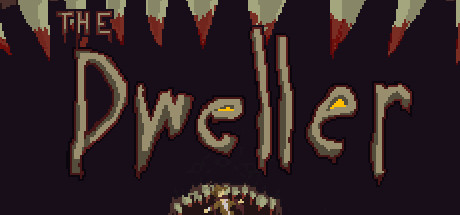
честно простая мобилка но ненадолго затягивает
It resembles a flash game, since it's pretty basic, but the price isn't too high usually, so you can have some fun with it if you like puzzle games.
[h3] 🇬🇧 Title: “Fear Lurks in the Silence — A Tense Journey Through The Dweller” 👁️🔥 [/h3] [code] [quote=Wendrex] 🎮 Introduction The Dweller, developed by Villainous Games, delivers a focused psychological horror experience driven by atmosphere and tension rather than cheap scares. This is not just a horror game — it’s an exercise in suspense, presence, and carefully controlled dread. 🎯 Gameplay Highlights ⭐ Slow-Burn Exploration Every step matters. The game rewards patience, awareness, and careful observation of your surroundings. 🔥 Psychological Tension Over Combat Rather than relying on constant action, the experience builds fear through vulnerability and unpredictability. 🎮 Environmental Storytelling The narrative unfolds naturally through visual cues and subtle environmental details, encouraging players to piece together the mystery themselves. 🎨 Visuals, Sound Design & Immersion Strategic lighting and deep shadows create a claustrophobic and oppressive atmosphere. 🎵 The sound design is exceptional. Ambient noises, distant echoes, and calculated silence maintain constant tension. Playing with headphones significantly enhances immersion. The game excels at making you feel watched — even when nothing is visible. ⚔️ Difficulty & Learning Curve The challenge lies in tension management and environmental awareness rather than mechanical complexity. ✔️ Mechanics are introduced organically ✔️ Subtle cues become readable over time ✔️ The pacing remains controlled and engaging Accessible in design, yet psychologically demanding. 🔥 What Makes It Memorable? Consistent atmospheric tension Engaging and mysterious narrative Strong sense of vulnerability Focused, well-paced experience Short but impactful journey It’s the kind of horror experience that lingers long after the credits roll. ⭐ Final Verdict The Dweller is a compact yet powerful psychological horror title that prioritizes immersion and atmosphere. If you enjoy tension-driven horror with strong environmental storytelling, this is an easy recommendation. 🔥 A short experience — but one that truly stays with you. [/quote] [/code]
What's here is small and short, make no mistake. But don't confuse 'short' for 'poorly made'. The Dweller is a reverse-horror puzzle game that features you, as an earth-bound spectre that can possess stone objects, seeking a way to kill or scare off all the archaeologists and agents in a room. What makes it interesting is that while you have free movement within the terrain, open air is impassable to you, in an inversion of the usual way things work. To cross open space, you can possess and animate boulders, slabs, and pillars and move them around, but they're subject to gravity and you can't move them upward. You'll need to use these stone features to transport yourself and bridge gaps to reach your targets - or, for the clever, perhaps drop these weighty objects atop them, or even scare them over a cliff to a lethal fall below! Fortunately, if you mess up, retries are infinite - a press of the R key will reset the level for you to try again, and you can return to the level select from the ESC menu at any time. In a pinch, you can skip a stage that's giving you trouble, but many of the stages are designed to build on the concepts of stages before them; skipping an intermediate stage may put you a harder stage that's more difficult to solve. Stages are very short - while there's a total of 59 of them, once you know the solution, most stages can be finished in under two minutes. There is a brief story, told through written logs and letters by the archaeological team that you will obtain as you complete stages. I'm not terribly fond of the ending, but it does serve as a potential sequel hook. All in all, given the price I certainly can't complain. It's much better made than I thought it'd be.
Por mais que a ideia do jogo seja muito boa, a parte mais dificil desse jogo é ter paciência com as contantes quebras que fazem ele fechar sozinho a cada 3-4 minutos, joguei até a fase 23 e cansei de tanto reabrir o game, uma pena, tem potencial mas não dá pra elogiar
Bardzo fajna, krótka gra logiczna. Może graficznie nie zachęca, ale ma bardzo gęsty klimat. Przeplatają się tutaj łatwe poziomy z trudniejszymi, a czasem można nawet wysilić swoje szare komórki. W końcówce jest lekki, pozytywny twist związany z łamigłówkami. No i wcielamy się w tego złego!
The game may not be a high budget masterpiece, it might look like it came from a 48 hours game jam, but it is a legitimate game. There's a lot of text-based lore if you're into that of the "found diary" variety. The first few levels feel like a prototype but after level 5 or so they're actually decent puzzles. Yep: this reverse horror, monster simulator is in fact a puzzle game. It solves the issue of being an invincible creature by putting the challenge in puzzles. Most games become boring when you are invincible and the dev solved that problem.
Related
Related
Trends
Concurrent players on Steam, sampled daily since tracking started.
Momentum
Pace estimated from the game's recent review growth (our daily snapshots) at its own sales-per-review ratio — a momentum signal, not booked sales.
Audience
Estimated from the language of this game's reviews — a proxy for where players are, not official Steam demographics.
Related
| Spirits of the Hellements - TD | $113.6K | 339 | 94% | $11.99 |
| 异常情绪回收组 | $113.6K | 409 | 82% | $10.99 |
| Pawn Planet | $113.6K | 276 | 73% | $9.99 |
| The Lust City | $113.6K | 486 | 75% | $11.99 |
| Tycoon City: New York | $113.5K | 287 | 43% | $9.99 |
| 99 Spirits | $113.6K | 405 | 59% | $9.99 |
Related
| Factorio | $140.6M | 232.2K | 98% | $35.00 |
| House Flipper | $65.8M | 110.8K | 94% | $24.99 |
| Prison Architect | $63.1M | 73.6K | 89% | $29.99 |
| Dyson Sphere Program | $56M | 83K | 97% | $15.99 |
| The Scroll of Taiwu : Beyond The Dome | $51M | 56K | 66% | $29.99 |
| Tabletop Simulator | $42.2M | 73.8K | 96% | $19.99 |