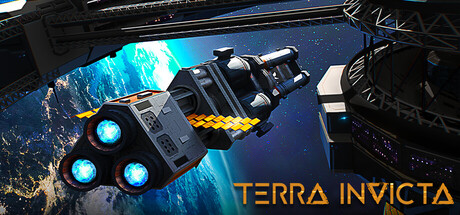
An alien invasion has fractured humanity into seven ideological factions each with a unique vision for the future. Lead your chosen faction to take control of Earth’s nations, expand across the Solar System, and battle enemy fleets in tactical combat.
Modeled estimate, not a reported figure. How we estimate →
Media

About
An extraterrestrial probe is detected approaching Earth. Unknown to humanity, an alien force has arrived in the far reaches of the icy Kuiper Belt and has begun mining a dwarf planet to prepare for an invasion.
With Earth’s nations unable to unite to address the alien arrival, transnational groups of like-minded political, military, and scientific leaders develop covert channels to coordinate a response. With the aliens' motives uncertain, factions emerge, driven by hope, fear, or greed.
You will control one of these factions.
The Resistance works to form an alliance of nations to mount a coordinated defense.
Humanity First vows to exterminate the aliens alongside any who sympathize with them.
The Servants worship the aliens and believe they will solve all the troubles of the world.
The Protectorate advocates negotiated surrender as the only means to avoid annihilation.
The Academy hopes the alien arrival heralds the opportunity to form an interstellar alliance.
The Initiative seeks to profit from the chaos and destruction.
Project Exodus plans to build a massive starship and flee the Solar System.

A distant anomaly, a mysterious crash site, and a spike in reported disappearances. Could this truly be humanity's first contact with extraterrestrial lifeforms? As your field agents investigate sightings and your scientists race to explore new fields of research, you will slowly learn the truth behind the alien arrival.
From early sightings and UFO crash sites to rampaging alien megafauna and robotic armies, it will rapidly become clear that the other six human factions are not your sole competition. Throughout the game, illustrated events will present you with difficult choices as you investigate growing alien activity on Earth. Uncover the mystery of the aliens’ origins and motives – unless, of course, you are Humanity First, and all that matters to you is extermination.
Terra Invicta has a global research system that creates opportunities for both competition and cooperation. Shared scientific advancement unlocks private engineering projects. Factions can choose to focus on private projects, at the cost of weakening Earth as a whole and ceding influence over global research direction to other factions with different priorities. Left unchecked, factions like the Servants or the Initiative may steer the world’s efforts toward developing methods of social control, rather than propulsion or weapon systems.

You begin on Earth as the head of a shadowy organization devoted to your chosen ideology. The aliens are coming – soon – but your first enemies (and perhaps allies) will be other human factions.
Lead a faction united by ideology, rather than a nation defined by territory. This is a stark change from most strategy games – in Terra Invicta, you will not paint the map with the colors of some chosen nation. Instead you will rule from the shadows and compete with other factions for control points representing a region's military, economic, and political leadership.
Geopolitics is your sandbox – unite or break apart nations as best serves your ends, while using those under your influence to conduct proxy wars against the other six factions. Earth’s regions are modeled in detail, from educational levels and unrest to GDP and inequality. Gaining command over regions with great monetary wealth and military power can allow you to implement your will on Earth, but the war for the Solar System will not be won without also securing regions containing space launch facilities.
Enact your will through a council of politicians, scientists, and operatives sent around the world (and even into space). The starting abilities of these councilors will improve through gaining experience and acquiring control over powerful organizations like intelligence agencies or wealthy corporations. A veteran commander may make the perfect choice to lead a tactical team under the council’s direction, while an experienced diplomat works to secure the funding needed to resist the alien invasion.
Seek out like-minded populations and politicians and take actions to convert followers of opposing ideologies. Public opinion is modeled along multiple axes – the Servants’ alien worship and the Protectorate’s advocacy of negotiated surrender may largely align in terms of support or opposition to the aliens, but events that show the aliens can be defeated have the potential to convince followers of the Protectorate that resistance is a realistic choice.

Terra Invicta bridges the gap between our modern-day world and the vast interstellar empires of other space strategy games, asking you to take humanity’s first steps in colonizing our Solar System, where over 300 asteroids, moons, and planets in constant motion create an ever-changing strategic map.
Start your campaign in the modern day and build your capabilities from the ground up, or begin in the near-future and push into the final frontier from the very start – build space stations and planetary bases, quickly gain control of the inner Solar System, and prepare for the existential threat growing at the far reaches of the system.
Take your faction beyond the confines of Earth, building space stations to act as shipyards and fuel depots, constructing mining stations to acquire advanced resources, and establishing bases to serve as research or construction facilities. Terra Invicta zooms into the strategic geography of the Solar System, presenting space not as a series of isolated stars that you order units to move to and from, but rather a rich and varied landscape of asteroids, moons, dwarf planets, gas giants, and other celestial bodies creating texture and tactical opportunities at every turn.
The expansive map is constantly shifting as celestial bodies orbit the Sun. This means your space stations and forward operating bases are constantly moving as well, forcing you to plan accordingly and adapt to the evolving circumstances – your colonies among the Jovian moons could find that a once-distant alien military outpost or Initiative privateering base has suddenly become a close neighbor.

Terra Invicta explores what might be – how colonies on Mars might function, what plausible engines could power our spaceships, and the nature of how space colonization and warfare might proceed. Players may find themselves establishing a mining base on the asteroid 16 Psyche after noticing it is rich in metals – and then learn that in our world NASA planned The Psyche Mission for the same reason.
Exploring and eventually colonizing space will require access to many resources: water for life support and propellant, metals for manufacturing, fissiles for nuclear drives and weapons, and more. At the start, you’ll have no choice but to acquire such resources on Earth and suffer the high cost of using rockets to escape Earth’s gravity, but over time you’ll increasingly choose to instead rely on asteroid mining and other means of securing local supply.
Spaceship design in Terra Invicta draws from the best of scientific speculation and hard science fiction. You can design your own ships, selecting from an array of weapons, drives, and other modules to place on a variety of hulls, ensuring each ship has the right mix of fuel capacity, maneuverability, and other capabilities.
Tactical combat is built around a realistic simulation of Newtonian physics, where momentum and maneuver in 3D space are just as important as the firepower your ships carry. Fire missiles and use point defense cannons to destroy incoming projectiles; build up momentum then swing hard to bring the enemy into your firing arcs; or grapple with the difficult decision to retract radiators and sacrifice heat dissipation to achieve better armor against an incoming enemy barrage.

Terra Invicta is built with modding support in mind, and much of the game is accessible to modders without a coding background. We hope that the Solar System setting and geopolitics simulation will provide a useful framework for modders to realize their own creative visions.
Genres
Stats
All-time low is the lowest price we've recorded for this game since we started tracking it.
Updates
Build ids and update times come straight from Steam's PICS — the same source SteamDB reads. Patch history grows as we record new builds.
Engagement
Hours played at review time, across 64 reviews with recorded playtime.
Reviews
Themes across 64 recent reviews and how positive each mention is. A keyword signal, not full sentiment analysis.
positive critical· bar length = how often the theme comes up
Reviews
Лучшая глобальная космическая стратегия 2026 года. Играть очень интересно, с одной стороны все очень просто, с другой нужно подумать заранее, чтобы было хорошо! В этой игре сочетается много жанров и много отсылок к литературе и кино. (взять хотя бы Задачу трех тел). Из претензий: Есть глюки (не критично) Обучение нужно разделить и упростить (большинство людей бросают играть еще на обучении думая, что игра сложная, а это не так) Полное, слепое, прохождение - с начала до победы, можно посмотреть на канале NIKADIM Games Удачи всем нам!
First playthrough, tried and failed to get a foothold in China. Fell behind the other factions, got my teeth kicked in. Second playthrough, consolidated the EU, overextended mission control, saw all my space assets fall apart, got my teeth kicked in. Third playthrough, started doing well, upset the aliens too early, got my teeth kicked in. Fantastic game. I will continue playing and getting my teeth kicked in in new and creative ways.
This is an amazingly detailed game if you play far enough in. Coming from a 4x perspective, terrestrial army combat seems simple enough, with options to deploy and mass deploy. Since units fight while moving it opens up possibilities for maneuver warfare and battle lines will ebb and flow. I intervened in the Ukraine war and pushed all the way to Moscow before having to order a general retreat with most divisions down to 25% combat strength. Thanks to the responsive command controls, I didn't lose a single division until Russia nuked Kalinigrad to keep me from taking it, and immediately followed up with a ceasefire with 2012 borders, the type of ruthless negotiation tactic that's missing from most games of the genre. Where the game really shines is in space combat. The battle focus shifts from 4x, to instanced RTS in space. Formations actually matter, unlike in a certain other game series. I learned this the fun way when the enemy flagship attempted to flee through my tightly packed formation, crashed into a gunship and exploded, giving me a nice achievement. Rather than having to fumble through controls, the game gives you fleet-wide target selection right off the bat, and a duplicate UI for fleet actions in general. Focus fire and properly timing missile salvos will have you winning lopsided victories like a modern day Tad Thatcher. Ship design is intuitive and has real gameplay impact beyond mere stats. Got a ship that's basically a front facing cannon? Put all the armor into the forward compartments and have at it. The game simulates the motion of every object, every projectile, all in real time. No RNG. All physics. And that's just the tip of the iceberg. There's so much more to this game. You can have ISIS teaming up with the CIA against aliens (or vice versa). Random third world countries become lightning rods of resistance in a global game of Eschaton. Doom stacks exist, but so do tactical nukes, forcing you to spread out your armies or better yet use the powerful clandestine tools at your disposal to settle discussions "peacefully." Pro-tip: If the game is too hard at first, try getting your feet wet playing as a pro-alien faction, they get a lot of bonuses and the gameplay is a bit more forgiving. Also, station defense does not require any delta-v whatsoever, so your garrison fleets can load up on guns instead of wasteful engines.
Can take a minute to get used to, but if you like large, long, and detailed space and strategy games it's probably right down your alley. i was hesitant at first but have so far been pleasantly surprised. if you really love space and sci fi i would recommend this
X-COM meets Crusader Kings 3 meets menu hell. Maybe the steepest learning curve of any game in the genre, it helps to know what your plan is before starting a run which meana going in blind means you're not spending your time efficiently and can get left behind. Very slow paced game that has a lot of "hurry up and wait" moments, but overall I find the payoff worth it when your plans come together. Something so satisfying about winning your first space battle with a ship you researched and designed personally.
I don't know how this got verified for the steam deck. There is tons of text and it's tiny and pixelated, even when ui scale is turned up to the whopping 113% that's the max.
Игра безусловно хорошо, но я не дошел до интересного геймплейя по причине невероятной тупости вначале игры. Я просто не способен осознать всю глубину этих глубин: значит, наше "мега супер-пупер тайное сообщество", состоящее из 2х агентов, руководителя и пачки чипсов прилетает в любую страну и через 3 хода начинает ей править. Ну вот так, просто, бац, и мы у руля. Потом в наше "мега супер-пупер тайное сообщество" звонят все представители других таких же сообществ и начинают угрожать или брататься. Затем мы такие: БАЦ, и запускаем станцию Мир, тоже через пару ходов. Параллельно этому, какие-то ученые где-то в мире ведут какие-то свои исследования, при этом мы получаем результаты этих исследований, наши ученые тоже что-то изучают, но так как у нас всего 2 агента, руководитель, то исследования, видимо, ведет пачка чипсов, поэтому все движется медленно. Короче, серьезность произведения на уровне мульта "Лило и Стич".
I tried SO HARD to like this game- But NO. It *can* be fun *at points* but is insanely betrayed by its baser functions. Even in a scenario where I forcibly united the entire Earth, the other factions are still present and overwhelmingly interfering with absolutely ZERO power. And then- you'll be tackling ACTUAL aliens in the Solar System- While being called back to Earth every 14 days to assign ♥♥♥♥♥♥♥♥ assignments. Either I'm looking beyond the point of the game, or the game is incomplete. Also, the battle interface sucks the big felota. Even when calculating in DV- there should be SO many more options for positioning relative to other objects. So- if you were looking to get this game for the space combat aspect- DO SO knowing you will DO SO with anchors to your ankles. The whole Earth map feels irrelevant after a while, no matter how you try. A frustratingly-novel experience.
If you've played games like Stellaris, Civilization, Rimworld, or the like and thought to yourself, these games are far too simplistic, easy to understand, and a UI that basically plays the game for you, then this incredible gem will be right up your alley. The spiritual child of XCOM's long war, this game is like if you took a game of Risk, blew out it's complexity, and then said, wait, HAH, turns out that earth is literally just a jumping off point for solar domination to rebuff the looming alien invasion. This game is incredibly rewarding, has an incredibly addictive gameplay loop, and is an armchair strategists dream. But, be warned, this game will make you work for it. Many elements of the simulation approximate real world challenges (e.g. there are many, many, many researchable rocket drive lines, and many of them are only useful temporarily or end up being complete dead ends). You may be trying to fend off an alien invasion, but, brother, this is a simulation of the world in 2026, and guess what else is happening - that's right, ice shelf collapse! The UI, while serviceable, cannot be described as friendly. All the information is available, but you may find yourself constantly opening and closing two different screens because you forgot the damn name of the asteroid you were trying to mine (because the asteroid and the outpost locations have different names). The attention and care that was put into the simulation is top notch and is the epitome of "one more turn." If this style/genre of game is your cup of tea, then I highly recommended Terra Invicta.
I went into this game with thinking it was going to be similar to the old xcom games to some degree. Instead, it is a game of setting up your pieces like its the beginning of a risk game with metadata thrown in, but the game never starts, the pieces metadata just shift around the globe and those starting pieces never do anything. Just not for me.
Related
Related
Trends
Modeled estimate over time, reconstructed from Steam's monthly review histogram.
Engagement
DAU/MAU are modeled from peak concurrent players (≈×8 and ×28) — Steam publishes no active-user counts, so treat these as rough estimates, not reported figures.
Audience
Languages: English*, French, Spanish - Spain, Japanese, Simplified Chinese, Traditional Chinese, German, Polish, Portuguese - Brazil, Italian, Czech, Korean +2 more
Estimated from the language of this game's reviews — a proxy for where players are, not official Steam demographics.
Related
| A Total War Saga: THRONES OF BRITANNIA | $13.7M | 14.8K | 71% | $39.99 |
| Darksiders III | $13.7M | 17.3K | 76% | $39.99 |
| Darksiders II Deathinitive Edition | $13.6M | 20.5K | 79% | $29.99 |
| EARTH DEFENSE FORCE 5 | $13.7M | 11.5K | 94% | $59.99 |
| The Last Caretaker | $13.6M | 12.4K | 86% | $34.99 |
| Life is Strange: Before the Storm | $13.6M | 37.8K | 93% | $16.99 |