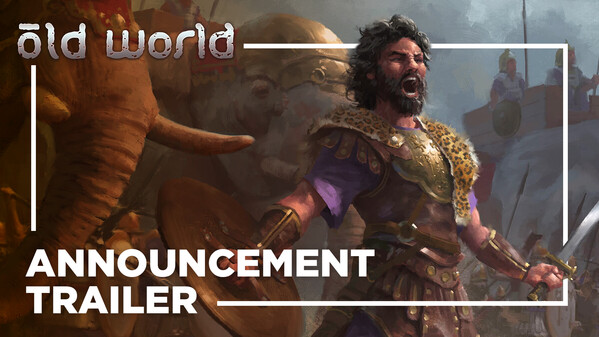
Old World is a revolutionary new historical strategy game where you lead your dynasty over generations of rule against rival kings and queens. Wage massive wars, manage your court, and build a dynasty — or watch your empire crumble to dust. What legacy will you leave behind?
Modeled estimate, not a reported figure. How we estimate →
Media

About

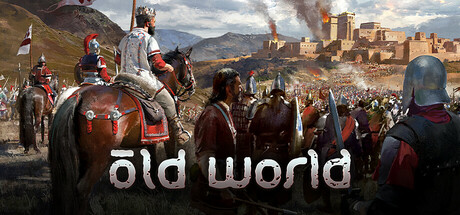
Old World is a historical strategy game where you lead your empire through multiple generations, building a grand legacy to last beyond your own years. This is an era of great leaders, from the revered to the feared. Which will you be?

Marry for politics, raise your heirs, and manage your relationship with the families of your kingdom. In the fast and furious world of kings and queens, family matters.
Each of the 7 kingdoms has four noble families that provide various benefits when put in charge of your cities.
Manage family ties through events, actions, and marriages to keep them happy and reap additional benefits. Upset them, or make them too powerful, and you risk their ire.
Maintain a strong family unit, or distract yourself with more illicit adventures.

The world is full of great characters with distinct personalities, strengths, and weaknesses. Use them to forge your kingdom, defend your borders, and build ties with other leaders.
Seek out and recruit famed warriors, philosophers, builders, and more. Have them tutor your children, lead your armies, and further your reign.
Different personality archetypes allow your court members to perform different tasks in similar roles. Find the right combinations to take full advantage of governors, diplomats, spymasters, and even your spouse.
Characters develop new personalities and traits over time, growing old, gaining experience, and finally falling ill and passing away, leaving room for the next generation.

Unsettled tribes, barbarian marauders, and remnants of previous cultures are all waiting in the vast unexplored wilderness.
Discover artifacts and great heroes of the past at ruins scattered across the map.
Experience over 3,000 unique events inspired by history and mythology.
Contact with foreign dignitaries triggers event chains, stories, and courtroom drama.
Pursue ambitions and legacies related to conquest, development, faith, and more.
Historically inspired scenarios, weekly challenge games, and a choice between randomly generated and handcrafted maps to explore. Lead Carthage to victory as Hannibal in the Punic Wars, hold your own against Barbarian Hordes, or compete against other players in tackling fictional scenarios.

Why do things the way they've always been done? Old World brings a new take to key elements of the 4X strategy genre:
Go beyond the traditional resources. Buildings are made of wood and stone, not "industry." Population doesn't grow off "food" alone.
Orders are a resource shared across your realm. Instead of moving every unit once per turn, each unit can be moved multiple times until fatigued or Orders are depleted.
Technological advancement is not predetermined. Randomization helps keep technology trees feeling fresh with each new playthrough.
Quality of life improvements, such as the ability to undo mistaken commands and nested tooltips, ensure you're always making informed decisions.
Play with friends in countless multiplayer modes — from hotseat, to asynchronous, to cloud play.
Experience a Grammy-nominated soundtrack blending Arabic music with contemporary influences.
Mods further open up infinite options for new worlds, empires, and dynasties — inspired by our real world, and by works of fiction as well.
Genres
Stats
All-time low is the lowest price we've recorded for this game since we started tracking it.
Engagement
Hours played at review time, across 73 reviews with recorded playtime.
Reviews
Themes across 73 recent reviews and how positive each mention is. A keyword signal, not full sentiment analysis.
positive critical· bar length = how often the theme comes up
Reviews
Angry Civ player perspective. I had this game sitting in my library for 2 years. After dedicating around 10 hours to learn all the game systems I can never go back to Civ 6 again (no I wont even try Civ 7). Old World is the best historical 4x (Civ-like) game on the market. I think only a few games qualify as a 4x Civ-like. I played Humankind. It is a great game imho but Old Wolrd is superior. No wonder. The guy who made it is the former lead designer of Civ 4. I will list my favorite features below: Order system > you cant move one time with every unit/turn like in Civ. Instead you have a set number of orders every turn. Order represents the legitimacy of your ruler. You start the game with around 10 orders but you can increase it by events/exploring the map/building improvements etc. In the mid late game you can easily have 30 - 50 orders per turn. Now the fun part. If you want to move a unit or do any action with a unit you need to spend orders. At the beginning of the game if you build too many military units this can mean you don't have enough orders to use all of them within the same turn. Or sometimes when you start a war you will be forced to decide if you spend your orders on fighting/moving military units or to build improvements with your workers at home etc. This system is so good. Workers > you have workers which dont disappear after 3 uses. OMG I forgt how much I miss this feature from earlier Civ games. You use them to build improvements, roads, etc. Undo button > great quality of life feature. Civ games should have it. Story events > at the beginning of each turn you get a couple of (3 to 5) story events. I am not a story gamer. This is why I play sandbox games like Civ. I hate to read/watch long stories. Here however each event is only a couple of lines long (10 to 30 sec read duration) and gives you a very nice flavor what is happening in your kingdom/palace. Gives your game such a nice depth. After each story event you have to chose an answer/action what you want to do. A lot of decisions have future consequences. I like it very much. Families > each nation have 4 families. Think of them as a "set of different perks/buffs". when you settle a city you need to decide which family you dedicate it to. You can have a maximum of 3 different families among your cities. You need to carefully manage relation with all said 3 families in order to not get into trouble/problems. Again just such an intuitive, nice, in-depth system. Resources > you have freaking resources like wood. stone, iron, food etc. Not just stupid "production". You have even special resources like "civics" and "training" and "research". Civics is used for assigning governors, changing laws, engaging in diplomacy etc. Training is used for military purposes. Leveling up soldiers, force march etc. Exploration > In Old World scouts are viable and important even in the late game. The more of the map they reveal the more legitimacy (multiplier to calculate the orders you have each turn) you get. They can also harvest resources. Which means they can get a once per 10 turns small bonus from each resource. The action does not remove the resource. For example horses when harvested provide 50 gold. Map settings when starting a game > very in depth settings. You can pretty much set everything the way you want. Super good. Combat > terrain plays a very important role in combat. Ranged units get +1 range on hills. Forest provide defense from ranged fire. Mounted units get a bonus on flat land etc. TLDR.: if you are a 4x or Civ fan I highly encourage you to give Old World a try. After a couple of hours of time investment I guarantee you you will never go back to Civ 6/7 again.
This game has definitely felt strange and clunky for me until I've seen FilthyRobot streaming it and praising it. Old World could be quite confusing if you don't have a lot of 4X experience and don't "feel the genre" (I didn't), especially combat system leaves "what the heck" feeling when the AI efficiently dispatches your army using quite good tactics. However, after seeing other people playing it quite well on stream I decided to give the game another try and it felt really cool. The more you play, the better you understand how things work, and initial clumsiness feeling is replaced by "oh, that is how it meant to work" and "oh, that actually has some deep tactical implications". This shines even more on higher-than-baseline difficulties where you need to start actually thinking how to improve your chances to win instead of trying to build everything and develop everything at once. :) Combat system is very cool, detailed and well-thought-of, but also difficult to understand at first glance, so be prepared to have difficult time fight AI in your first tries. Combat really shines in Multiplayer, but AI in Singleplayer is also very good at it and will quite effectively counter and destroy your army if you don't know what are you doing exactly. Beware of routing cavalry, this one is deadly. :D As I've mentioned in the beginning, seeing other people play helps a lot with understanding how the game works, and one of the best sources of such content is 2025 Community Tournament playlist on Mohawk Games Youtube. Also, 2026 Community Tournament will start soon, so there should be more fresh content as well. As a side note, learning the game might be easier when not all DLCs are enabled. I'm glad that I've started learning the game prior to Indus DLC as it adds special features for DLC Civs and also unique tribe of Huns with their unique events and behavior -- and all these features would've been overwhelming if I encountered them just when I started learning. They're not that difficult when you know the game, but when you don't... :)
While the game mechanics are deep and fun as far as ruling - the wars are a trash. You are far too limited in being able to avoid them, sue for peace without specific technologies that can take longer to even become available than it takes to destroy your civ, and given how long it takes you to build units you basically get what you have already built if war starts. The game is utterly imbalanced unless you simply want it to be a game of war. Also there are actions you can take that will plunge you into war and the game doesn't warn you that's a result. So you can trip right into devastation without knowing it and that just seems really dumb. The fighting itself favors the computer because IT knows EVERY bonus to ALL land types and you have to stumble through learning. Be nice if there were actual hints/icons/graphics that would show benefits or negatives for tiles when you select the unit. I think there is zero interest in fixing this so if you want a CIVILAZATION BUILDER then forgo this - if you want an ancient war game then sure it's fine.
(P.s. about 60 more hours of playtime on non-Steam platforms) I have spend thousands of hours in 4X games since the late nineties. Starting with Sid Meier's Alpha Centauri, through the Civilisation series, into sci-fi or grand strategy titles like GalCiv and Stellaris and indies like the Dominions-series and Shadow Empire. With my broad experience and frame of reference, I feel suited to review Old World not just through the rose-tinted glasses of the honeymoon phase, but as a game-design enthusiast. Old World is the most elegantly simple-to-learn-hard-to-master 4X game I have ever played. For most of the core problems that each iteration of 4X-games face, the designers at Mohawk Games have found a solution. Explosion of decision-space as the game progresses? An order-system giving the player a limited amount of actions per turn. Late-game drag? Victory conditions that are flexible enough to allow for different playstyles and still require the player to engage with all aspects of the game. A high barrier to entry? Seemingly simple decisions that ripple through time and space due to interlocking systems of religion, culture and traits, all on the foundation of a character-based system. Sameyness between playthroughs? Different characters give character to each game, and thousands of events that are actually cognizant of the game-state. Boring expansion phase? Dynamic tribal opponents that actually pose a challenge through deep into the midgame. Easy or incompetent AI? A game studio that has been focused on playtesting from the start. Not only in singleplayer BTW, the game is also suitable for 2-8h multiplayer games, seamlessly switching from simultaneous turns when possible to alternating turns when necessary. Then there's bells and whistles. Map tiles can change through calamities such as droughts, floods and volcano eruptions, going from lush to desert or lake between turns. The character system that is core to the game effects every aspect of gameplay and is manipulated with every action. Oh yeah, did I mention the order-system (actions per turn) is dynamic with respect to (amongh others) the legitimacy of your ruler? This is increased by in-game achievements. An heir or rival takes the throne? Your legitimacy gets (partly) reset to simulate the effect of a new administration taking hold. Historical events tied to specific nations or characters making you dive into a wikipedia page to learn more about the Classics. The QoL-features are through the roof, with an undo-button that can take you back as far as you want, great tooltips making every mechanic as transparent as you want it to be. So what's the catch? This game isn't the most flashy on the market. No in-depth pre-game race design, no timeline in which technology drastically alters the game from start to finish. You're hitting Huns with a slinger and they charge you with their endless horde of cav. No pew-pew. No huge modding community (yet?), because (apparently) flash is what gets gamers going nowadays. But if you're deciding between this, the newest iteration of Civilisation, Age of Wonders or any of the turn-based alternatives, I am sure you can find more depth here than in any of those. It ages like a fine wine and tastes like a multi-layered whiskey. [Edited because I get excited about more stuff I want to mention.]
I've spent many hours playing this game. As a game developer, I can appreciate how much effort and dedication the developers invest in creating such a brilliant experience. I love both the gameplay mechanics and the artistic style. The art style remind of the older Civilization games, especially Civilization 5, which was the last Civilization title I played. I also appreciate that the game avoids the stylized - cartoon aesthetics that many modern strategy games seem to imitate. The more realistic art direction is refreshing change in this genre. One aspect I find a bit annoying is the enormous maps in some scenarios. Managing a very large number of cities can become tedious. While I know it's possible to automate city management, I personally enjoy handling it myself. Perhaps smaller cities could be designated as colonies that focus on producing and supplying specific resources to major cities. The player could than directly govern the most important cities, reducing micromanagement while preserving strategic depth.
Many others have explained why Old World is such an amazing Historical 4X. It just baffles me it's sitting at 80% positive, when it should be like 99%. So I'm just doing my part.
Old World is an exceptional 4X game that almost seems as though it exists just fix the problems of the Civilization series and Paradox games (particularly Crusader Kings 2). It has internal management mechanics that stay challenging through the whole game, an exceptional combat system and a character system that makes characters actually important. Most map and 4X games are pretty bad at making internal management interesting or challenging. Very early into these games the realm is stabilized and ruler deaths become seamless transitions. In Old World stabilizing the realm is extremely difficult. Each city must be assigned to a family that has the potential to cause uprisings, civil wars and chaos when upset. They react strongly to ruler decisions, character traits, religion, and city unhappiness. Cities by default start off losing happiness and as the game progresses more religions become available resulting in conflict. Deciding between being tolerant or an enforcer of religious unity is a meaningful decision. The character traits of rulers, religious leaders and members of families massively affect family happiness and a stable realm can quickly become unstable upon key people dying or getting enraged. Tutoring, bribing, religion and intrigue are central to actually doing well at the game instead of just fun sideshows. Civilization 5 & 6 have pretty mediocre combat. Cities get placed too close together and easily support each other with defensive fire and reinforcements. There is little space for maneuvering or tactics and every civ basically makes the same type of armies unless they have broken unique unit to just spam for an era of the game. It is all just a slog. Old World fixes all of these issues. The biggest change is that cities can only be made on specific titles that are appropriately distanced away from other possible cities. This creates space for set-piece field battles with more tactical game-play and interesting sieges. Old World also makes armies more diverse by giving every nation a unique unit that only requires a modest 4 laws and a stronghold (7 and Citadel for elite) to build. Every nation wants to rush out their elite unit, but each unique unit changes everything about how the game should be played. Each require different resources to build and some like cavalry can only be built in cities with a specific resource (horses). Research decisions to compensate for the unit, city planning and even empire planning all change because of the unique unit. In Crusader Kings 2 the state becomes so stable that leaders just become interchangeable figureheads and most of the decisions relating to them just become a side gimmick. In that game you control of all character actions and those actions eventually stop mattering. In Old World characters are central to the game you have to react and adapt to their decisions because their traits massively affect happiness, research and production for the whole game. Your ruler marrying the head of a family and cheating on them has disastrous consequences. Your heir being a debaucherous heretic will result in an unstable and chaotic realm on succession. In other games you can stop this from happening or even just force the character to act differently, but in Old World they will act on their traits. You can embrace the heir and take the heretic religion the new religion and use the debauchery as a form of charisma. Another option is to enrage the previous heir by changing your succession so somebody else takes the throne and risk a civil war. Or perhaps survive chaotic heir’s rule until a more conservative and establishment friendly heir comes along. Old World strikes a good balance between player agency and having to react to the characters. Old World has a laundry list of changes to the 4X formula that make everything better like an orders system that limits actions each turn to make decisions more meaningful and points/ambitions victory system that stop the game from dragging out, but this is a review is too long for that.
An amazing successor to what is arguably the best game in the Civilization series: Civilization IV. The DLCs add a tremendous amount of content, and everything feels fairly priced - especially if you pick them up during a sale. I simply can't get enough of this game. It perfectly captures the addictive "just one more turn before I go to sleep" magic that defines the best Civilization games.
The game is just not worth it. Honestly, it's bad. And, even worse, it's boring. I was drawn to the game after seeing it had events and you could interact with them and it seemed pretty interesting (at least in the pictures), but, after playing the tutorial to learn the game (which it seems a lot of people haven't lol) and even failing 1 mission because I drew a random card and not the one I was supposed to so I'd be able to build slingers, my excitement and enjoyment of the game started falling fast. Now, lemme start with the positive aspects of the game (give credit where credit is due) and say the game has an amazing soundtrack. I really loved the songs playing in the background as I read the tooltips from the help section and navigated through the tutorial. As for the negative aspects... : - Abysmal performance: Honestly, the fact that RPGs made in 2025/2026 run better than this game is jaw dropping. The game often lags, lags when loading, lags when saving, lags when processing time etc. It also distorts or bugs out (or even stops) songs/sound while it's doing that. I know the game's also very CPU intensive, but for a game like this, it definitely should not handle the way it does. I donno why they released DLCs instead of fixing their issues. Or, actually, I do, it's all about money. Which brings me to my next point. - "Mobile gaming" The game just feels like it was made for mobile: - You have a resource that's used to command units, but units also have their own resource for how many steps/actions they can do - You have a "draw card" card that gives you *random* options for advancing your technology or just getting free resources or npcs (unless you don't pick them, then you lose them forever), which means you're literally playing with luck, not to mention that this prevents you from changing what/how you wanna build/rebuild, especially if you get attacked by the AI or wanna adapt to the given situation - The gameplay isn't in real time, it's in turns, meaning you can only do a limited number of things, not at the same time, and most of the time are forced down a certain path, as some actions/decisions can take from 1-10 years/turns (or more) - The "events" are random, so, again, gambling, and they usually offer you something, so there isn't really a negative aspect to them or something that just impacts you in a bad way, as they're literally just incentives that mostly just force you down a certain path (they seem interesting at first, but get boring/annoying really fast) - The interface feels extremely clustered. You have resources that have a max limit, which then get converted to other resources, which can be used for different things (but not really), depending on what the game "gives you" and how it acts towards you. The amount of information thrown at you is also immense, as there are way to elements in the game that basically just accomplish the same task, not to mention that vital information (visual as well as written) is not properly displayed. For example, when pressing on a tile/square, just inform the player exactly what type of building is there or what can be build or if that spot is available, don't put the terrain info ALWAYS at the top off the tile description lol, and add the structure or unit that's on it at the bottom...Wtf...You literally have to pay very close attention and learn what the structures/units look like by heart to know exactly what you're looking at. - Cycling through the units, idle units and/or structures also seems very wonky and counter-intuitive. I also didn't understand why they all needed the exact same resource to function or do actions, not to mention the fact that they can't be built or given orders (for units) at the same time. - Why not allow the player to select multiple units and be able to order them at the same time??? - Why are there redo/undo buttons in a RTS? Don't you have quick save/quick load or that, or just normal save/load? I mean, scumsaving is one thing, this is just ridiculous lol. - You can't build, march, attack, make peace, make war, settle, advance at the same time, since you're limited to a number of moves, which is ludicrous. - Even more random events, where a character might lose a stat you actually need or just get a "bonus" negative trait...Cause why not. - Ofc the AI can easily wipe you since it can process the best path forward and what the best course of actions is during a round And so on and so forth. After playing the "Learn the game by playing" tutorial and seeing I had to wait 4-8 turns just to make a builder just to be able to send him (which can also take a lot of time, depending on distance) to a city site so I can start building there and having to wait (again) for a worker to be created (which takes another couple of years) to sort of try a pacifist/peaceful run where I just build and expand/advance/evolve was insane...I had already discovered 2 free city sites and I literally couldn't occupy them cause I had to wait for the settler unit to be created -_- ... The option of being warlike/conquering kind of suffers from the same issue. It takes a long while for your troops to be made, promoted, given a commander, move to the objective, attack the objective, win, and just stand on the new empty city site while AGAIN waiting for a settler unit to be created and having to drag it all the way to the city you just conquered...Now, imagine having to do that again and again and again...Meanwhile, your own capital and other city states are ofc vulnerable, as you definitely won't have enough time or troops (or resources to actually move them or improve them or give them orders) to do a fast blitz-like conquering strategy. I got the game for free and I decided to try it, cause why not.But buying it? It's definitely not worth it. If you wanna play a good and nice RTS to for Warcraft, Starcraft, Knights of Honor (1; 2 is ♥♥♥♥) etc.
Old world has scratched an itch that CIv 7 failed to and i'm loving it! While it is not an easy game to understand initially, the games mechanics overlap and compliment each other so well that it makes learning the game really satisfying. The role playing elements also keeps you engaged and adds context to the gameplay systems. The combat, while simple, is enhanced by your characters stats and can become quite strategic further into the game. The game could do a better job of explaining 'why' you should be making certain empire building decisions. It was common in my early games to just build improvements and units because the game told me to. But once the gameplay loop reveals itself it becomes a lot more natural, and the game treats you like an adult to make decisions based on your own knowledge. Would recommend Old world to anyone who enjoys history or Civilization games.
Related
Related
Trends
Modeled estimate over time, reconstructed from Steam's monthly review histogram.
Engagement
DAU/MAU are modeled from peak concurrent players (≈×8 and ×28) — Steam publishes no active-user counts, so treat these as rough estimates, not reported figures.
Audience
Languages: English, French, German, Spanish - Spain, Japanese, Russian, Simplified Chinese, Traditional Chinese, Portuguese - Brazil, Korean
Estimated from the language of this game's reviews — a proxy for where players are, not official Steam demographics.
Related
| 7 Days to Die | $425.3M | 403.5K | 87% | $44.99 |
| Mount & Blade II: Bannerlord | $309.8M | 293.9K | 88% | $49.99 |
| Don't Starve Together | $164.6M | 539.5K | 95% | $14.99 |
| Crusader Kings III | $148.7M | 141.7K | 90% | $49.99 |
| Elite Dangerous | $57.1M | 106.9K | 77% | $19.99 |
Related
| The Legend of Heroes: Kuro no Kiseki | $1.8M | 1.7K | 91% | $49.99 |
| Devil May Cry HD Collection | $1.8M | 24.7K | 93% | $4.49 |
| Alba: A Wildlife Adventure | $1.8M | 8.2K | 98% | $16.99 |
| Knights and Merchants | $1.8M | 5K | 85% | $9.99 |
| Nova Roma | $1.8M | 2.1K | 94% | $23.99 |
| Stolen Realm | $1.8M | 3.9K | 84% | $19.99 |