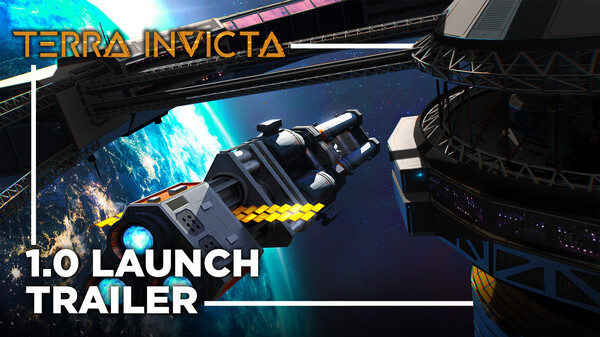
An alien invasion has fractured humanity into seven ideological factions each with a unique vision for the future. Lead your chosen faction to take control of Earth’s nations, expand across the Solar System, and battle enemy fleets in tactical combat.
Modeled estimate, not a reported figure. How we estimate →
Prices
Each in the currency that store quoted — not converted: the gap between two rows is the publisher's pricing, not an exchange rate.
Discounts
Every price cut of more than 20% we have observed, in each market that quoted one, with this game's chart position on either side of it. These are episodes, not a model: a sale is one event, and one event cannot tell you what the next one will do.
Reviews, worldwide (the counter carries no country): 16.29/day in the week to Jul 30 → 14.14/day in the week after.
For scale, across Steam · Top Sellers · Brazil over the last 30 days: the 26 chart moves that followed a price cut of more than 20% went a median of 7 places towards #1, and the 2,400 moves with no price cut behind them went 2 away. One store, one chart, one country — it is the only place we have enough observations to say even that.
Prices outside the United States have been collected since 6 August 2026 and chart positions since 19 July 2026, so a cut older than that has no market to compare and a market that joined later has no history yet. Nothing here is converted between currencies.
About
An extraterrestrial probe is detected approaching Earth. Unknown to humanity, an alien force has arrived in the far reaches of the icy Kuiper Belt and has begun mining a dwarf planet to prepare for an invasion.
With Earth’s nations unable to unite to address the alien arrival, transnational groups of like-minded political, military, and scientific leaders develop covert channels to coordinate a response. With the aliens' motives uncertain, factions emerge, driven by hope, fear, or greed.
You will control one of these factions.
The Resistance works to form an alliance of nations to mount a coordinated defense.
Humanity First vows to exterminate the aliens alongside any who sympathize with them.
The Servants worship the aliens and believe they will solve all the troubles of the world.
The Protectorate advocates negotiated surrender as the only means to avoid annihilation.
The Academy hopes the alien arrival heralds the opportunity to form an interstellar alliance.
The Initiative seeks to profit from the chaos and destruction.
Project Exodus plans to build a massive starship and flee the Solar System.

A distant anomaly, a mysterious crash site, and a spike in reported disappearances. Could this truly be humanity's first contact with extraterrestrial lifeforms? As your field agents investigate sightings and your scientists race to explore new fields of research, you will slowly learn the truth behind the alien arrival.
From early sightings and UFO crash sites to rampaging alien megafauna and robotic armies, it will rapidly become clear that the other six human factions are not your sole competition. Throughout the game, illustrated events will present you with difficult choices as you investigate growing alien activity on Earth. Uncover the mystery of the aliens’ origins and motives – unless, of course, you are Humanity First, and all that matters to you is extermination.
Terra Invicta has a global research system that creates opportunities for both competition and cooperation. Shared scientific advancement unlocks private engineering projects. Factions can choose to focus on private projects, at the cost of weakening Earth as a whole and ceding influence over global research direction to other factions with different priorities. Left unchecked, factions like the Servants or the Initiative may steer the world’s efforts toward developing methods of social control, rather than propulsion or weapon systems.

You begin on Earth as the head of a shadowy organization devoted to your chosen ideology. The aliens are coming – soon – but your first enemies (and perhaps allies) will be other human factions.
Lead a faction united by ideology, rather than a nation defined by territory. This is a stark change from most strategy games – in Terra Invicta, you will not paint the map with the colors of some chosen nation. Instead you will rule from the shadows and compete with other factions for control points representing a region's military, economic, and political leadership.
Geopolitics is your sandbox – unite or break apart nations as best serves your ends, while using those under your influence to conduct proxy wars against the other six factions. Earth’s regions are modeled in detail, from educational levels and unrest to GDP and inequality. Gaining command over regions with great monetary wealth and military power can allow you to implement your will on Earth, but the war for the Solar System will not be won without also securing regions containing space launch facilities.
Enact your will through a council of politicians, scientists, and operatives sent around the world (and even into space). The starting abilities of these councilors will improve through gaining experience and acquiring control over powerful organizations like intelligence agencies or wealthy corporations. A veteran commander may make the perfect choice to lead a tactical team under the council’s direction, while an experienced diplomat works to secure the funding needed to resist the alien invasion.
Seek out like-minded populations and politicians and take actions to convert followers of opposing ideologies. Public opinion is modeled along multiple axes – the Servants’ alien worship and the Protectorate’s advocacy of negotiated surrender may largely align in terms of support or opposition to the aliens, but events that show the aliens can be defeated have the potential to convince followers of the Protectorate that resistance is a realistic choice.

Terra Invicta bridges the gap between our modern-day world and the vast interstellar empires of other space strategy games, asking you to take humanity’s first steps in colonizing our Solar System, where over 300 asteroids, moons, and planets in constant motion create an ever-changing strategic map.
Start your campaign in the modern day and build your capabilities from the ground up, or begin in the near-future and push into the final frontier from the very start – build space stations and planetary bases, quickly gain control of the inner Solar System, and prepare for the existential threat growing at the far reaches of the system.
Take your faction beyond the confines of Earth, building space stations to act as shipyards and fuel depots, constructing mining stations to acquire advanced resources, and establishing bases to serve as research or construction facilities. Terra Invicta zooms into the strategic geography of the Solar System, presenting space not as a series of isolated stars that you order units to move to and from, but rather a rich and varied landscape of asteroids, moons, dwarf planets, gas giants, and other celestial bodies creating texture and tactical opportunities at every turn.
The expansive map is constantly shifting as celestial bodies orbit the Sun. This means your space stations and forward operating bases are constantly moving as well, forcing you to plan accordingly and adapt to the evolving circumstances – your colonies among the Jovian moons could find that a once-distant alien military outpost or Initiative privateering base has suddenly become a close neighbor.

Terra Invicta explores what might be – how colonies on Mars might function, what plausible engines could power our spaceships, and the nature of how space colonization and warfare might proceed. Players may find themselves establishing a mining base on the asteroid 16 Psyche after noticing it is rich in metals – and then learn that in our world NASA planned The Psyche Mission for the same reason.
Exploring and eventually colonizing space will require access to many resources: water for life support and propellant, metals for manufacturing, fissiles for nuclear drives and weapons, and more. At the start, you’ll have no choice but to acquire such resources on Earth and suffer the high cost of using rockets to escape Earth’s gravity, but over time you’ll increasingly choose to instead rely on asteroid mining and other means of securing local supply.
Spaceship design in Terra Invicta draws from the best of scientific speculation and hard science fiction. You can design your own ships, selecting from an array of weapons, drives, and other modules to place on a variety of hulls, ensuring each ship has the right mix of fuel capacity, maneuverability, and other capabilities.
Tactical combat is built around a realistic simulation of Newtonian physics, where momentum and maneuver in 3D space are just as important as the firepower your ships carry. Fire missiles and use point defense cannons to destroy incoming projectiles; build up momentum then swing hard to bring the enemy into your firing arcs; or grapple with the difficult decision to retract radiators and sacrifice heat dissipation to achieve better armor against an incoming enemy barrage.

Terra Invicta is built with modding support in mind, and much of the game is accessible to modders without a coding background. We hope that the Solar System setting and geopolitics simulation will provide a useful framework for modders to realize their own creative visions.
Add-ons
Each DLC is estimated with the same model as a game, then summed — a modeled figure, not reported DLC sales.
Sums Steam only; Xbox, GOG, Epic publish no volume signal, so the true total is higher by an unknown amount.
Updates
Build ids and update times come straight from Steam's PICS — the same source SteamDB reads. Patch history grows as we record new builds.
Engagement
Reviews
Themes across 980 recent reviews and how positive each mention is. A keyword signal, not full sentiment analysis.
Reviews
I absolutely would recommend TI, but I also absolutely would not recommend it to everyone. What you have here is almost a couple of different games. Firstly, you have your grand strategy game based on the Earth where you take command of one of seven factions - each of which have their own story and victory conditions - and control a small number of characters taking action each "turn" to work towards expanding your control over the planet, consolidating what you have, making friends or setting your rivals back. Personally, I think this is the part of the game with the tightest gameplay loop and I found it to be the most fun aspect. Yes, there are some confusing/tricky parts where I was sitting there trying to figure out why something didn't work or was going wrong and the answer was pretty much that I hadn't read a tooltip correctly or actually needed to go read through something properly in the game's encyclopaedia. For this part of the game, it does explain itself it's just that there's a lot of information because of the complexity and it can be difficult to digest. Accordingly, if you enjoy your complex GSGs where there's a bit of heavy reading and needing to refer to ledgers and the like, this part of the game is certainly a fairly easy recommendation. However, then we get on to the other part of the game - space. Not content with the starting point of a GSG, we have a full 4X game slapped on top with a solar system to explore and colonise and a whole bunch of aliens to fight (or just your fellow humans, depending on your faction). This is unfortunately also where the complexity starts to get dialled up to 11. Getting your first few bases or orbital platforms up are fairly straightforward and the resources you need to obtain and balance are fairly self-explanatory. Then you start to notice things like "oh, my probes to nearby asteroids can apparently take less time/resources if I launch them on a certain date" and a certain feeling of dread sets in as you realise it's a literally a simulation of the solar system and you now have wonderful things like deltaV to worry about and very quickly the game's learning curve is about to turn into a learning cliff. The first major roadblock you're about to wander into is designing your first ship. Rather than having preset designs, the game basically lets you research whatever components take your fancy (consisting of a drive, a compatible power source, a radiator, utility modules and weapons) and throw them all together to see if it works and has appropriate cruise and combat acceleration and deltaV to get around. Worse, the research topics will give you the raw numbers about, say, an engine's thrust but no actual indication of how it's going to perform with the chassis and other components you want to put it with. There are not even clear explainers of, say, "this drive is slow in combat but great to travel between planets" for most of them or even approximate tiers. Even worse, there are an incredible number of engine techs and some of them are more or less useless - whether actually lacking the power to really do anything or being so exorbitantly expensive on a particular resource that you could never afford to use it on more than a couple of ships. If there was one thing I'd love the developers to do it would be to at least offer some more guidance for players here because if you don't understand anything about the figures being thrown at you, your only option is to research a bunch of different techs and let the game's autodesigner pick out what the best components you researched actually are (and even then it's not always 100% correct). Well, at least with some ships designed, we can go fight some alien (or human) scum, right? Well, welcome to the second roadblock - space combat. I don't actually think this is as egregious as the whole mess around ship research and design, but as you might have already guessed from the depth of the rest of the game, space combats are fully 3D with realistic use of your fuel for manoeuvres. The tutorial itself for space combat might take you a solid 15 minutes or more to go through with all of the ways your ships can move and extra things to watch out for (e.g. how to fire off missile barrages or when you should retract your ships' radiators) and, whilst I love the attention to detail, it can be incredibly difficult to follow along with what is going on in a space battle. It is, as you might assume, tricky to properly track where things are or are going in a fully 3D environment that is presented on a 2D screen, not to mention the difficulty of controlling your ships in that environment. This is especially true when you might have, say, 20-30 ships from each side in the fight. This is not all to say that the space combats are bad - I have had some fun moments with them - so much as it is to say that it is very complex and I found myself just autoresolving in the later game whenever it gave an acceptable result. So, yep, TI is a game with a huge amount of depth and has very clearly had a great deal of time and effort put into making it but also has a learning curve for half of it that is more accurately described as a learning cliff. It is also a game that might take you a couple of hundred hours before you get your first victory. At least in that respect, there is no real question that the price tag is worth it if you enjoy it. It's just a question of whether you're the sort of person that enjoys this sort of game.
Media

Related
Related
Price dynamics, follower growth, revenue and sales trajectories with interactive tooltips
This and every other Pro feature is free until October 20, 2026. A free account is all it takes.
Every market we collect.
Genres
Stats
All-time low is the lowest price we've recorded for this game since we started tracking it.
Languages: English*, French, Spanish - Spain, Japanese, Simplified Chinese, Traditional Chinese, German, Polish, Portuguese - Brazil, Italian, Czech, Korean +2 more
| $19.99−50% |
| 113ratings |
| 80% |
| — |
| not modelled |
| $39.99 | — | 92% | — | not modelled |
Matched by title — a reused name can pair the wrong games. * is a critic aggregate. Prices and positions are each store's United States storefront; Epic charts worldwide. Audience and Score too, except Steam's, which is worldwide.
Hours played at review time, across 982 reviews with recorded playtime.
positive critical· bar length = how often the theme comes up
This is bad, this game is good, this game wastes your time, this game rewards your for playing it and paying attention. Earnestly, everyone who talks about this game being ass is correct. Everyone who talks about this being one of the greatest 4x games ever made are also correct. Both can be true If you've ever adored a game you know fails on several aspects but is still amazing to play in spite of it, then this is Terra Invicta. The Space game is confusing as i still don't fully get spaceship combat 200 hours in. I've restarted my playthroughs getting my ♥♥♥♥ pushed in 5 times now, but each time i understood what i did wrong and do a little better (or sometimes a lot better). Earnestly, i wouldn't say it about many games, but it feels like an autistic persons wet dream. I struggle to compare this to anything on the market because it is unique. The simulation is highly detailed with multiple paths through to success. Ignore haters who talk about a "Golden Path", this is no different than any other 4x games like Stellaris where factions have things they are particularly good and you would be foolish to buck that trend. Genuinely, I've never seen a game with so much variation between faction playstyles in a 4x game. Play a Resistance or Academy run and then try playing Servants. Earnestly, this game was not made for mass appeal. It was made for a very niche audience who sees the brilliance in this game. If you don't like this game, that's okay and doesn't say anything about you. But, i urge people to look at this game for what it is and not what it could be. This is more than "X-com as 4x game". This is a behemoth of a game that demands trial and error from you, consternation, frustration, and just the amount of tediousness to make early 2000's MMO's seem exciting. And yet, i have pumped 200+ hours into this game and expect to come back to it many times in the future. You have been warned, but also come right in, the Water is Neurodivergent for weirdos.
The game is fun and incredibly enjoyable as you discover and build things. It expects you to fail, learn from your mistakes and start over - a good concept. However, just the initial intro setup part to every campaign (think 1936 to 1939 in HoI4) is about 50 gameplay hours. Only after that do you get to play the "real" game of fighting the aliens, and see if you got your setup right or wrong. It's a game of snowballing and many mistakes are unrecoverable. Something suboptimal you did 30 hours in can make your game unrecoverable 100 hours in. The loop would have been fun, if it didn't take so long to get back to where you were. Councillor system is fun in the start, but turns into a busybody whack-a-mole of "Improve Opinion, Re-apply Defence, Reduce Unrest, Give Research Bonus", that you have to re-do every minute or two. You also have to min-max their stats and juggle their assigned "companies" every couple of minutes. You research many technologies, weapons, drives, etc. but you never use 90% of them. Shipbuilding is very unintuitive - you get to modify an excel sheet of stats that are used by the game calculations, but mean very little to you as a human being. It can take many hours from designing a fleet to actually seeing it fail in combat, at which point you have to backtrack a couple of hours and re-play everything else again as well. The game has very little "graphics", yet it stutters while just rotating the camera around earth. Some menus, like Research tab, takes a couple of seconds to open each time. You can't have multiple pop-ups/menus open, so you often need to switch back and forth between menus many times to make a decision, each menu forcing a 1-2 second hiccup. It's fun, I really liked the theme and concept but it's just so slow and sluggish to play, you can get a lot more for your 50 hours from other grand strategy games.
Was passiert, wenn man XCOM nimmt, mit Stellaris mischt und das Ganze in ein kompromissloses Hard-Sci-Fi-Setting packt? Man bekommt Terra Invicta – ein Spiel, das euch nicht nur fordert, sondern euch über dutzende Stunden hinweg immer wieder daran erinnert, dass ihr eigentlich völlig unterlegen seid. Oder anders gesagt: Die Aliens treten euch sprichwörtlich in die Eier, und ihr dürft herausfinden, wie lange ihr trotzdem stehen bleibt. Die Frage ist also: Ist Terra Invicta etwas für euch? Ich würde den Kauf empfehlen, wenn ihr euch in folgenden Punkten wiederfindet: War euch XCOM 1 und 2 zu kurz oder zu „kompakt“? Terra Invicta ist das genaue Gegenteil: eine riesige, lang angelegte Kampagne, in der jede Entscheidung langfristige Konsequenzen hat. Ihr spielt keinen schnellen Feldzug – ihr führt einen jahrelangen Abwehrkampf. Und manchmal verliert ihr diesen nach 100 Stunden trotzdem. Mögt ihr Stellaris, besonders den Moment, wenn euch eine überlegene Alienmacht komplett überrollt? Hier ist das kein Event – das ist der Normalzustand. Die Aliens sind lange Zeit deutlich stärker als ihr, und Fortschritt fühlt sich eher wie „wir sterben heute ein bisschen langsamer“ an. Gefällt euch der Gedanke, die Erde indirekt zu kontrollieren? Statt klassischer Basisbau-Mechanik arbeitet ihr mit Agenten: Einfluss sichern, Regierungen manipulieren, Missionen durchführen. Während ihr im All kämpft, sorgt ihr auf der Erde dafür, dass euch nicht gleichzeitig noch jemand in den Rücken fällt. Klappt überraschend oft nicht. Mögt ihr Sci-Fi wie Stargate, aber mit einem realistischeren Ansatz? Vergesst Schutzschilde und Wundertechnologie: Terra Invicta setzt auf Hard Sci-Fi. Eure ersten Schiffe sind im Grunde bessere Raketenplattformen, während die Aliens technologisch Lichtjahre voraus sind. Fortschritt fühlt sich dadurch weniger wie „cool“ und mehr wie „endlich nicht sofort tot“ an. Und wenn ihr denkt, ihr habt das System verstanden: Ihr werdet euch schon an der Anzahl der Antriebe den Kopf zerbrechen. Mögt ihr Spiele, die wirklich Zeit Intensiv sind? Ein Run kann locker 100+ Stunden dauern – und trotzdem scheitern, wenn ihr die Aliens zu früh provoziert oder denkt, ihr seid schon stark genug. Spoiler: seid ihr nicht. Nutzt Schwer Bewaffnete Orbital Habitate und Lockt Sie zu euch, oder Sterbt. Fazit: Terra Invicta ist kein Spiel für zwischendurch. Aber wenn ihr komplexe Systeme, langfristige Strategien und das Gefühl mögt, euch langsam gegen eine übermächtige Bedrohung durchzusetzen, dann bekommt ihr hier eines der intensivsten Strategie-Erlebnisse überhaupt. Und wenn nicht, bekommt ihr zumindest eine sehr detaillierte Lektion darin, wie man von Aliens systematisch demontiert wird. Also Viel Spass...... oder eben nicht ;)
Лучшая глобальная космическая стратегия 2026 года. Играть очень интересно, с одной стороны все очень просто, с другой нужно подумать заранее, чтобы было хорошо! В этой игре сочетается много жанров и много отсылок к литературе и кино. (взять хотя бы Задачу трех тел). Из претензий: Есть глюки (не критично) Обучение нужно разделить и упростить (большинство людей бросают играть еще на обучении думая, что игра сложная, а это не так) Полное, слепое, прохождение - с начала до победы, можно посмотреть на канале NIKADIM Games Удачи всем нам!
I absolutely love the concept of this game, and I've played quite a few campaigns. But the midgame grind is absolutely soul-crushing. It's endless micromanagement while you wait for your next science to research. In particular, having to re-assign your 6 agents every two weeks, when the Earth is basically settled, is just busywork that does very little to actually progress anything. There really needs to be competent automation system for them, that can do more than just a couple of the most basic missions.
This game is basically kerbal space program if it was that youtuber martincitopants's kerbal scuffed program series I don't really like it but I'm not gonna be a putdown so I gotta give this game some credits This game did show me something important: that there is indeed such a thing as "too complicated"... it reminds me of those mods for Sid Meier's Civilization games where they add hundreds of technologies and end up stretching out the pacing way too long - a full vanilla 500 turn game of that (Civilization V) would take probably 12 hours, maybe double that to 24 if you're playing multiplayer, whereas this game outright tells you that a full campaign is probably 100 hours and even when I use the custom settings in an attempt to simplify the game, everything goes by so quickly (and no it's not because I sped it up, it's because there's still a bajillion things to do after cutting the game down for my 12 year old computer to handle it at normal speed), I'm not even sure how the Steam Guides writers even learn anything when it requires basically MMO-tier time investment And yes like most other strategy games it does suffer from the dreaded "late game slog", but really what strategy games do you know that doesn't have a certain late game slog? Civilization: The game begins to take minutes on end to process turns, and wars, which were once quick, decisive affairs, now can only end when you take a half-dozen enemy cities, Crusader Kings II: managing your dozens of titles turns into hours of work as you seek to pacify your vassals and keep everyone bribed and happy, Hearts of Iron: the player has to deal with the problems of managing a huge, supply-draining army even as the game’s performance slows to a complete crawl, making the grind that much more torturous... Fighting battles in Total War is no fun anymore when you have to fight four of them in a turn and selling things on the galactic market in Stellaris becomes busywork clicking buttons over and over as you watch a huge stockpile get slightly smaller in return for resources you might maybe need… later. But yea I gotta agree with the red thumbs downers that there is a distinct period between the player basically reaching an unbeatable level and the game actually recognizing your faction's victory condition, which really isn't helped by what I typed above about the game being unusually long Speaking of factions from a narrative standpoint it says that there's 8 factions when in reality it's more like 3 and the gameplay loop for all of them is pretty similar enough where most of the differences come from diplomatic interactions with the other factions and who you find yourself making the alliances with - you have the anti-alien factions (for the comfy XCOM larp), the pro-alien factions (for when you like being a villain's minion), and the neutrals (for when you like a science fiction spy thriller, how much media of that have you seen? Only one I can think of is X-Files) But to give it credit I will say that the earth mode is basically the best part of the game; it's not just fun, it never stops being fun, they did it right with how the countries aren't playable factions in the game yet they kind of behave like them - they have their own agendas and they push back against the player factions' attempts to control them, with China in particular regularly soloing the aliens and their infiltration agents for years solely because of how totalitarian and bureaucratic they are, even when none of the pro-human conspiracy factions, none of the pro-alien factions who understand what the aliens are really doing, are offering them any help The aliens probably weren't expecting their fortress in Jupiter's moons to be obliterated by a strike team of Cuban Black Wasps that had been sneaking up to them in cryosleep for the past 14 years, ha Seriously if I could play a game that was just Terra Invicta's earth mode it would probably unironically be strategy game of the year, there have been a couple not-as-good games that tried replicating earth mode and it's just not the same Really now that I type it out it's probably why I yapped on about the late game slog earlier: the problem is that the systems that made the game fun at the start where you're only looking at Earth, the economy management, the armies, the little decisions that need to be made about technology, enemy faction spies, wars between the non-playable Earth nations, or whatever else, tend to multiply in number as the campaign goes on and new planets become accessible, turning the late game into a drag that never seems to end To put it in a sentence it's just 2 autistic 5 me, it reminds me of hearts of iron 3 where if you don't do the pre-war perfectly you're in an unwinnable state But I'm not gonna be a debby downer and do the red thumbs down cause I know a good amount of people who do enjoy hearts of iron 3 on a fundamental level, if the foundations of something is good but the content itself is lame then that's pretty easily fixed by modder contributions, the examples of other games that I bring up are for a reason, there are some real stinker games in the examples I bring up (Empire: Total War) that got saved by popular mods but this isn't one of them, I think; if a sequel gets made (which does seem likely given how well-received this is) then I suspect it will improve greatly from the inevitable sandpapering of friction that is done in those kinds of sequel things
Try this IF you like dozens of hours spent on one campaign. RNG plays a heavy roll in this game but averages out over the hours and becomes strategy. The learning curve is a little steep - it is not a casual game to turn off your mind to, rather the opposite, but for a sci-fi nerd it's really enjoyable, and it scratches a bit of the grand strategy geopolitical itch too.
Terra invicta is an iceberg. At first, it looks vast and overwhelming. Lots of systems, lots of numbers, lots of challenges, and space travel and especially space combat seems arcane. You get stuck on the choice between Z-Pinch and inertial confinement, and you feel like you chose the wrong one. Everything feels like it's falling apart. Then things start clicking into place, and it looks shallow as a puddle. You figure out how to handle nations, you get the basics of space combat, and the game shrinks down to a handful of nations, a handful of dials, and a handful of ship designs. You arrive at the choice between Z-Pinch and inertial confinement, and you choose correctly. Everything feels predictable, like a solved meta. You get confident. You increase the difficulty. Suddenly, the early game has changed. The game demands you do more and do it sooner. Space combat feels like everything you thought you knew is wrong. You get stuck on the choice between Z-Pinch and inertial confinement, and while you're glad you made it to the choice, you feel like you chose the wrong one. Everything feels like it's falling apart. Each playthrough can unfold in a lot of different ways. Even if it feels like everything you own has been smashed and ground down into dust, there's still (almost always) a path to victory. The characterization of the different leaders is fantastic. The lore tidbits are fantastic. Each faction has its own story that is told from its own perspective, and it takes multiple runs to piece everything together. The bad: long load times, weaker PCs can really struggle, poor tutorials, missing QoL and painful menus (e.g. sorting your space assets or finding space destinations in the transfer menu can be a real chore), a lot of implications are not immediately obvious (e.g. 'scam drives', spaceship engines that looks amazing at a glance are unviable because of power/heat weight requirements), large scale fleet battles can be a nightmare to micromanage, and the strong reliance on the wiki to see how mechanics work and interact.
教程过烂,同时有不支持一个中国原则的内容
Active players
Estimated daily and monthly active players (DAU/MAU) modeled from peak concurrency.
Players by region
Where this game's players are, estimated from review languages.
Players also reviewed
The games this title's players most often review too — audience affinity.
Related
| Game | Estimated lifetime revenue | Reviews | Review score | Price |
|---|---|---|---|---|
| $14.4M | 31.4K | 96% | $19.99 | |
| $14.5M | 14.6K | 92% | $25.99 | |
| $14.4M | 52.9K | 96% | $19.99 | |
| $14.4M | 27K | 98% | $19.99 | |
| $14.4M | 18.2K | 81% | $34.99 | |
| $14.6M | 8.7K | 41% | $59.99 |
Related
| Game | Estimated lifetime revenue | Reviews | Review score | Price |
|---|---|---|---|---|
| $7.4M | 6.9K | 83% | $39.99 | |
| $3.3M | 7.6K | 82% | $14.99 | |
| $216.2M | 137.4K | 88% | $49.99 | |
| $5.4M | 3K | 84% | $24.99 | |
| $4.8M | 3.8K | 67% | $39.99 | |
| $254.6K | 268 | 78% | $29.99 |