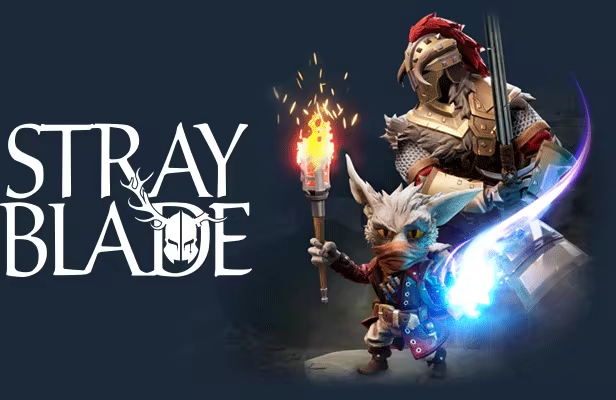
Stray Blade is an action-adventure where you play a rogue Adventurer exploring the ancient Valley of Acrea with your companion, the Xhinnon wolf Boji. Unveil the history of the forgotten valley and master the powers of the three Acrean Metals to restore balance to this war-torn land.
Modeled estimate, not a reported figure. How we estimate →
Media

About


Genres
Stats
All-time low is the lowest price we've recorded for this game since we started tracking it.
Languages: English*, French, Italian, German, Spanish - Spain, Japanese, Korean, Portuguese - Brazil, Russian, Simplified Chinese, Traditional Chinese*languages with full audio support
Engagement
Hours played at review time, across 40 reviews with recorded playtime.
Reviews
Themes across 40 recent reviews and how positive each mention is. A keyword signal, not full sentiment analysis.
positive critical· bar length = how often the theme comes up
Reviews
I don't mind the do-over necessary in a souls-like, or in this case a game aping some of the souls' formulae. But there are a few problems with how things are done here. First, healing is a consumable that you can find in the world and from slain enemies. When you die your meager beginning stock of 1 is refilled. Sounds good, right? Except that not every enemy drops a heal for you, The ones you find in the world are apparently one-time use. So the gank squad that you're currently struggling with will get harder to tackle because you only get back the one heal in your inventory. Second, enemies don't respawn, at least not all the time. Once you've cleared an area of enemies, they're gone never to be seen again. No griding for levels, no farming for materials, and no farming for heals. When you die you respawn at a bonfire-adjacent. All the enemy groups you've already killed are still dead, all the ones you haven't killed are still alive, and all the consumable heals in the world that you've already consumed are still consumed, leaving you with just the one heal you get with a respawn. Third, there doesn't seem to be a currency like a souls game. So there's nothing to drop and heighten the tension of a runback to recover it. I'll leave this one alone beyond that, because I threw in the towel before I got to any kind of leveling system once I encountered my next gripe. Fourth, there is no clear save system in place. Yes, you read that right. The game autosaves at the pseudo-bonfires, but not necessarily every time you get close enough, and not necessarily every time you press 'X' to activate it. This one blew my mind, especially when I confirmed it by clearing the first few enemies, crafting the first sword you unlock, going back to the ersatz-bonfire, and activating it to possibly save my progress. It did not save my progress. Dying and respawning at one of these sites also [u]does not save your progress[/u]. As far as I can tell, saving is performed by RNG, astrological convergences, or magical garden gnomes if they're feeling particularly helpful. Gripe four-and-a-half: in addition to not saving your game or respawning enemies, faux-bonfires also don't restore health or healing items. Unless you die and respawn, your interacting with one, apart from setting a new respawn point, seems to do nothing beyond a misleading swell and flash of light. Pretty, but pretty useless. The combat system seems serviceable, if heavy and sluggish due to input delay and long animations. Enemy attacks are tough to read sometimes, and they tend to stagger you if anything connects. But those are things I expect in a souls-like and can learn and adapt to. The heavy dialogue was very tiring, even in the 30 minutes or so of progress I made; I can't really imagine how bad that could get, so maybe this broken save system is a blessing in disguise for me. Ultimately, this is just a broken design for something that has been reasonably well established in game development for over a decade: players need a clearly defined and consistent way to save progress. Maybe the rest of the game will be worth it for you, dear reader, but this alone is a big NOPE for me. Add to that the quasi-souls respawn system that doesn't affect anything in the world except you, and you run into some awkward resource management issues. Why not just reload from a checkpoint and dispense with the whole 'I can't die' plot device?
Stray Blade is an ambitious action RPG from Point Blank Games, published by 505 Games, and it strives to deliver a blend of fast-paced, parry-centric combat with an adventurous, treasure-hunting journey through a fallen fantasy kingdom. The premise follows Farren West, an explorer who becomes bound to the ancient land of Acrea after accidentally awakening its dormant magic and dying in the process. Revived by this mysterious power and accompanied by a small, talkative companion named Boji, Farren sets out to unravel Acrea’s history, confront the warlords and forces that once destroyed it, and ultimately free himself from the magical tether that won’t allow him to leave. Instead of painting the world as heroic or triumphant, the game frames it as a place defined by tragedy, cultural collapse, and forgotten ambition, making the journey feel as reflective as it is adventurous. Combat forms the heart of Stray Blade, and the studio makes a clear effort to balance accessibility with intensity. Encounters revolve around precise dodging, timed parries, stamina management, and reading enemy color-coded attack cues that signal whether a strike must be blocked or avoided. This system creates a rhythm that rewards patience rather than button mashing, and even early fights can punish careless play. Weapons feel distinct—swords, axes, spears, and heavier arms each have different attack flows, recovery times, and upgrade paths that encourage experimentation. The game further incentivizes weapon variety by tying character progression to usage: defeating enemies with a weapon unlocks skill points for that weapon’s tree, preventing players from relying on a single tool for the entire adventure. The result is a combat system that constantly pushes players toward adaptation and growth, even if it occasionally feels rigid due to its heavy reliance on visual cues. Boji, the player’s magical companion, adds another dimension to both combat and worldbuilding. He can research relics, decode ancient texts, unlock new abilities, and weaken certain enemies with his spells. Rather than functioning as a passive guide, he becomes a partner in both narrative discovery and mechanical progression. His presence also creates emotional grounding, offering light humor, companionship, and commentary that keeps the tone from becoming too bleak. Their evolving relationship—between a determined human explorer and a scholar desperate to preserve Acrea’s memory—gives the story warmth and purpose, making even quiet stretches of exploration feel character driven. The world of Acrea is where Stray Blade shows the most personality. It’s a vibrant, hand-crafted environment filled with colorful wilderness, ruined palaces, overgrown battlefields, ceremonial structures, and magically corrupted zones. Each region has its own history and visual identity, and environmental storytelling plays a major role—murals, relics, collapsed cities, and lore entries reveal how the land fell long before the player arrived. Exploration is encouraged through hidden chests, crafting materials, shortcuts, optional bosses, and world-altering discoveries. One distinctive design choice is the world’s dynamic evolution: defeating major bosses can reshape certain areas, visually and mechanically reflecting Acrea’s destabilization or renewal. It gives the world a sense of responsiveness that extends beyond simple quest progression. Progression integrates multiple systems—weapon mastery, armor upgrades, crafting, skill trees, and special magical abilities tied to defeated warlords. These layered mechanics ensure that leveling feels meaningful rather than cosmetic. New abilities add variety to combat strategies, while exploration rewards perseverance with tools that open previously inaccessible paths. Crafting, however, leans toward simplicity and functions more as a support mechanic than a central pillar, ensuring it doesn’t overwhelm players who prefer combat and exploration over resource management. Visually, Stray Blade favors a stylized, painterly aesthetic rather than gritty realism. The colors are bold, outlines soft, and environments designed with clear visual readability, making navigation and combat easier to process. Enemy designs, while not wildly unconventional, stand out through sharp silhouettes and distinctive animations. The soundtrack complements the world’s mystical tone with orchestral themes, subdued percussion, and atmospheric ambient tracks that shift based on biome and narrative intensity. Voice acting varies in execution, but Farren and Boji’s performances carry enough personality to keep dialogue engaging. Like many mid-budget action RPGs, Stray Blade has limitations. Enemy variety can feel repetitive in longer play sessions, and some players may find the combat’s reliance on telegraphed color indicators overly restrictive, reducing improvisational freedom. Technical performance has historically varied across platforms, with occasional frame pacing issues, animation hiccups, or pathfinding oddities. The world, while beautiful, is more segmented than open, which may disappoint those expecting a sprawling seamless landscape. The narrative, though heartfelt and thematically cohesive, leans more on world history than character-driven drama, which may not satisfy players seeking deeper interpersonal arcs or story twists. However, Stray Blade’s identity lies not in perfection but in earnest, imaginative design. It’s a game built with clear affection for exploration, ancient ruins, and skill-based combat, and its distinct artistic tone sets it apart from more traditional dark fantasy action RPGs. For players who enjoy measured combat pacing, collectible-driven worldbuilding, and a whimsical but melancholic atmosphere, it offers a rewarding and memorable journey. It may not have the scale or polish of the genre’s biggest titles, but its sincerity, creativity, and strong sense of place give it staying power. Ultimately, Stray Blade succeeds as an adventure about restoration—of a kingdom, of forgotten knowledge, and of a life interrupted. It invites players into a fallen world not just to conquer it, but to understand it, and that philosophical undercurrent makes the experience richer than its action alone. For those willing to meet it on its own terms, it delivers a colorful, thoughtful, and engaging trek through a land worth saving. Rating: 7/10
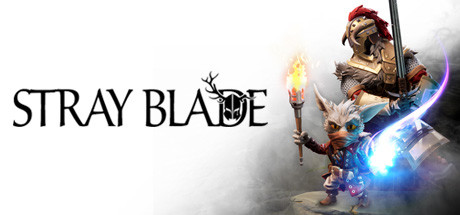
Not terrible, but not good. Mid game. Tries to be souls-like but just hasn't had any real thought put into why. Combat is mid. Very mid. Story/lore is meh. Loot/craft system is not a system. 4/10 (If you have young kids learning arpgs, this is a decent shoe in the door game) extra stuff for whoever. The gear levelling system is really dull, i don't know how else to put that. Simple as an autistic chihuahua and as basic as the ♥♥♥♥♥ that carry 'em in bags. You just arbitrarily find a blueprint for better weapon/armour, have/farm easy rss, make, use, repeat. The combat holds up, needs a lot of work, but by mid game you can complete fold enemies without dodging and it's too easy. The hit-boxes are jank (especially with the chuffing Raider Axe, I'm a pagan and that slow-ass butter cutter made me question if anyone in the production team has ever even held an axe) The assets are stylised and tolerable, visuals are not terrible, the art and enemies look okay. The voice acting is probably the most redeeming factor. They did a good job. though there script often doesn't make a lot of sense contextually and waiting still for boji to finish monologing or just rambling on every corner of every map gets tedious as all heck. Why he can't talk while i walk i will never under stand that choice. buy it cheap for kids.
What I like most about this game is the combat system. You can cancel most of your attacks with a parry. Because of this, you can juggle offense with defense. If you are good at doing that, you can break their stance meter well before their health, allowing you to execute them early. I really like mechanics that incentivize exploring all the game mechanics. In this case, your build is based on what weapons you have "mastered", meaning you've actually killed some stuff with it. The amount of kills needed is not much, meaning you wont be stuck with a bad a weapon long, but still get rewarded for experimenting. This does add some randomness to the early game. A lot of weapons are drops, and health and energy upgrades are super important early on. In my first game on hardest difficulty, I got a weapon which increases health. I restarted on the difficulty below that and didn't get this same weapon until I had already found all the basics, so I was without this health upgrade for a while. I found the hardest difficulty a bit unforgiving, and having finished the game, I'm glad I didn't put myself through that. I do like their clearing mechanic, where if you kill all the enemies in an area they do not respawn. As the game goes on, more and more annoying enemies show up. I really don't like having to chase after my enemies non stop, and there are a few that are either constantly back stepping or dodging most of your attacks until parry. They really slow the game down, and often are difficult to have any chance of fully depleting their stance. You get a teleport to enemy ability later, but it doesn't interrupt, meaning you have to defend right after using it. I wish the game had some better wake up gameplay. Getting knocked down is tedious, especially when there is a pack of enemies that all charge you with knock downs. I appreciate the map and fast travel from anywhere, considering the level design is a giant maze, but I wish it would auto center on the player when opened. The way the story is told wasn't my cup of tea so I skipped almost all cut scenes. The writing is trying to be funny, but it was on the cringe side for me. The bosses are mostly easy and boring, hardly taking any advantage of the combat system. The game definitely has optimization issues - one of the few I have had to lower graphics for. One thing that cannot be forgiven is unskippable rebirth cutscenes. Dying is punishment enough, why prevent me playing immediately too? It's definitely not perfect, but an easy recommend.
[Would be a neutral review if it would exists] Not really, long story short, a classic example of trying to add souls like to a game that would be much better without it. Combat is too clunk to be a souls thing, and "if you ever read people saying that some games you can't feel the weight of the attack" this one will be a perfect example of it. Could be fine with just a normal explorer rpg, without the unneeded craft system for no reason. Like those games that you just hit the enemy flashes red then you can hit again, that would make this much better. Or they should refine more the combat animations and timings. All enemies have the super long attack that winds for like 5sec so you dodge until you run out of stamina, I mean ALL, from the very basic solider to the most common spider..... It is OK-ish, buy it during a sale or something if you want something else to play, but hold your expectations
Body type instead of a real gender choice. I didn't know it used it. I am tired of having to bend my knee and genuflect to non-biological genders that are likely less than 5% of the population. Anyway, hopefully I can return the game. If not, I'll just delete it. Anyway, I do recommend this game to anyone who has deluded themselves into believing there are 52 genders or more.
It says it is playable with a controller but it's a lie, i had to use Steam Input. Not a big deal but it was the first annoying thing. The second was that some help bubble are hidden by other texts in the menus so it seems the devs have not played their game. The third is the menu not remembering the last menu page I went to so everytime I want to see the map I have to go to inventory and then select the map. The fourth is the map not being centered on my position but instead being centered on an undiscovered (blank) area everytime I open it. I will stop playing because in less than one hour the game annoyed me way too much. If only I tried it less than 14 days after buying it I would request a refund but I guess I will just uninstall. Clearly this product is not finished.
I don´t know where to start, it´s kinda messed up. The visuals are nice, reminds of World of Warcraft. The world is beautiful crafted, and easily to get lost, sometimes literally. Certain events causes changes in certain areas, like a fort been built up by one of the factions, which can create lots of confusions if you´ve been here before or not. But it´s something you can get used to. But things i never got used to, the kinda horrible combat, thanks to the delayed, sometimes unresponsive combat controls, the horrible hit-reg and hitboxes. You visually hit an enemy, but it doesn´t get registered as one. The other way around, enemy attack misses you, but still get the full damage. And then there are a few weapons that have such a slow attack speed (though they hit like a truck), that are kinda useless against the majority of enemies. Thankfully they added a Story mode, i had to switch to after a few hours of clunkiness. Another annoyance, your companion. Not himself is the problem, but i don´t understand why the dialog between him and the player char are just happening while you move around, no you have to watch some sort of cutscene.
Après environ 11 heures de jeu, Stray Blade m'a laissé une impression plutôt positive. Le jeu propose un monde coloré et agréable à explorer, avec une progression fluide et un système de combat dynamique. Les affrontements sont nerveux, les animations sont réussies et l'évolution du personnage donne régulièrement envie de poursuivre l'aventure. L'univers possède sa propre identité et se distingue de nombreux Souls-like plus sombres. Cependant, le jeu manque parfois de profondeur. Les ennemis deviennent rapidement familiers, certains combats manquent de défi et l'exploration finit par reposer sur une formule assez répétitive. Les boss sont corrects mais ne marquent pas particulièrement la mémoire, et le niveau de difficulté reste globalement accessible. Malgré ces défauts, Stray Blade reste une expérience agréable qui se laisse parcourir sans frustration. Il ne révolutionne pas le genre, mais il propose suffisamment de bonnes idées pour maintenir l'intérêt jusqu'à la fin. Je le recommande aux joueurs recherchant un action-RPG accessible avec une exploration plaisante et un système de combat efficace, sans forcément chercher le défi ou la complexité des meilleurs représentants du genre. Note personnelle : 7/10.
先说结论,这游戏没评论区说的那么不堪,前半段打得很屎,后半段就成爽游了。 游戏流程很长,地图相当之大,层层叠叠,兜兜转转,穿山越岭即使有地图也要绕半天,电梯,藤蔓桥就是捷径,后面能把整个地图串联成一块儿,地图设计还是有点东西的。 简单说下战斗系统,这游戏小怪人均霸体,大剑、巨斧砍上去都不带晃的,而你只要挨了一下,哪怕对面拿个小匕首,立马被打断出招甚至被掀翻在地[笑哭]武器战技也是,只有抓敌人出招后摇或者倒地时间,否则根本不可能完整释放。 所以,这游戏千万别贪刀,一刀刀有节奏的砍,初期少得可怜的精力条也不支持你乱砍,慢慢熟悉每种敌人的出招,弹反可以削减敌人的架势条,后期配合奥数冲击,曼宁重击可以快速打空敌人架势条进行处决,处决是一击必杀的,后期敌人攻高血厚,削减架势条处决是最有效的手段,切记。另外这游戏虽然出招、闪避会消耗精力条,但是奔跑却不消耗,战斗中只要绕到敌人背面,一样可以触发背刺,请善加利用。 游戏有套自己的成长系统,不过这个系统绑定了武器,每把武器都带有一个属性加成,比如血药+1,血量上限增加,精力上限增加,轻攻击伤害提升,重攻击伤害提升……武器有熟练度,一定熟练度后能开启符文槽(最多三个)习得武器战技,最后达到100%熟练度才能用升级点数点出属性加成。所以,武器再难用,也得忍着屎憋的手感练到100%熟练度!就问你服不服?[doge] 游戏中有30把武器可以收集,护甲也是宝箱开出来。最上面八把武器是神兵,位置在地图上有显示,需要曼宁或者辛农矿石,且只能在秘能熔炉才能炼出来。每把武器能提供两个属性加成。推荐副手带山脉之心这把巨剑,出招超慢自带霸体,我们要用的是它的重击。重击是一个超大范围的冲击波,可以当做没有冷却时间的曼宁重击用,能快速削减敌人架势条,后期就算几个重甲兵一起上都不怕。 虽然游戏系统有点渣,但是所有敌人出招都一板一眼,弹反,闪避难度并不高,手感来了能连续弹反,武器音效也不错,各种帅气的终结技,颇有点荣耀战魂的感觉。熟悉战斗节奏后还真有点上头。 PS:前期千万别打群架,只适合单挑,几个人干你就快跑。等后期有了奥数冲击,曼宁重击等技能就可以打群架了,而且后面越来越强,辛农视野甚至能把敌人冻结住,已经完全不需要近战了,直接甩技能,一群敌人上来也只有被虐的份,变成完全的爽游了。 总结:一款很对电波的游戏,玩进去了就越打越上头,现在价格也不贵,碰到打折就十几块,喜欢地图探索,魂系战斗的玩家可以试试。
Related
Related
Trends
Modeled estimate over time, reconstructed from Steam's monthly review histogram.
Momentum
Pace estimated from the game's recent review growth (our daily snapshots) at its own sales-per-review ratio — a momentum signal, not booked sales.
Audience
Estimated from the language of this game's reviews — a proxy for where players are, not official Steam demographics.
Related
| Comanche | $205.8K | 390 | 55% | $19.99 |
| Tour de France 2022 | $205.8K | 176 | 76% | $39.99 |
| Night At the Gates of Hell | $205.7K | 881 | 90% | $11.99 |
| Dusk City | $205.7K | 384 | 89% | $24.99 |
| Kvark | $205.6K | 475 | 87% | $19.99 |
| Strategos | $205.6K | 238 | 86% | $22.49 |