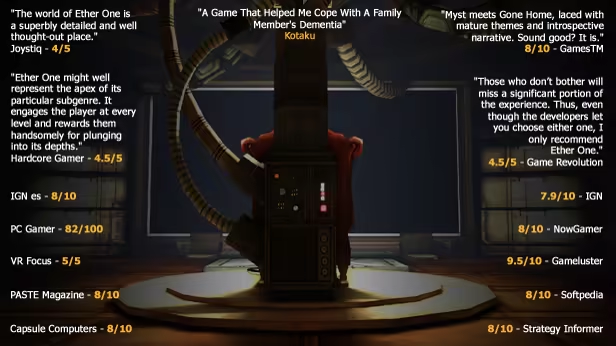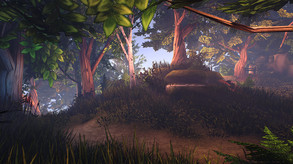
Ether One is a first person adventure that deals with the fragility of the human mind. There are two paths in the world you can choose from. At its core is a story exploration path free from puzzles where you can unfold the story at your own pace.
Modeled estimate, not a reported figure. How we estimate →
About


Stats
All-time low is the lowest price we've recorded for this game since we started tracking it.
Languages: English*, Spanish - Spain, French, Italian, German, Polish*languages with full audio support
Engagement
Hours played at review time, across 40 reviews with recorded playtime.
Reviews
Themes across 40 recent reviews and how positive each mention is. A keyword signal, not full sentiment analysis.
positive critical· bar length = how often the theme comes up
Reviews
[quote] [h1] Приключенческая квест-головоломка от первого лица [/h1] [/quote] Крайне сильно люблю тематику научной фантастики в области изучения сознания и разума человека. Автор такого произведения, фильма или сюжета, может поместить вас в фантастическое путешествие по миру, воссозданному из образов и фрагментов памяти человека, показать любую искажённую реальность и отсутствие логичных природных и физических законов, затронуть и преподнести эмоциональные сцены максимально трогательно. Именно такой оказалась сюжетная концепция в игре Ether One. Сюжет начинается с представления главного героя, который является сотрудником научной лаборатории «Эфир». Здесь проводят экспериментальное лечение людей, страдающих психическими заболеваниями. С помощью уникальных технологий, специально обученный сотрудник (реставратор), попадает в разум человека и проводит внутреннюю терапию, путешествуя по воспоминаниям и различным сегментам памяти, попутно уничтожая пораженные участки мозга. На этот раз помощь необходима 69 летней Джин Томпсон, страдающей от деменции. Сама история мне очень понравилась. Также испытал огромное удовольствие от скрытой интриги и главного твиста, но был разочарован подачей сюжета, которая здесь получилась очень раздробленной, не всегда последовательной и запутанной. Многие моменты я понял лишь после повторного прохождения и решения сложнейших и не очевидных головоломок, которые легко пропустить или не заметить. Помимо классной сюжетной концепции в игре присутствует грустная и драматическая атмосфера. Очень трогательно показаны многие события из жизни человека, страдающего сложным психическим заболеванием и старающийся изо всех сил ухватится за жизнь. Не сопереживать основным персонажам было попросту невозможно. Геймплей представляет собой квест-головоломку, с исследованием доступных локаций, решением загадок, сбором и поиском предметов, а также нахождением ключевых фрагментов для восстановления памяти пациента. Помимо виртуального мира созданного из воспоминаний, у рестовратора есть возможность в любое время телепортироваться в Хранилище. Это специальное место, где можно оставлять найденные предметы, записки, воспоминания и другую важную информацию о пациенте. Также Хранилище является переходным центром, благодаря которому, можно попадать в разные участки сознания. Важность этой комнаты заключается ещё и в том, что все найденные вещи придётся хранить здесь, так как персонаж способен носить лишь один предмет с собой в инвентаре. В глобальном плане, игра предлагает два пути прохождения. Первый, достаточно простой и лёгкий, где от вас потребуется найти все ключевые предметы на уровне, прочесть найденные записки и совершить основные действия по восстановлению сегментов памяти. Второй путь прохождения подразумевает разгадывание опциональных, сложных и многоструктурных головоломок, решив которые, можно получить более подробную информацию по сюжету и событиям игры. Проблема такого подхода заключается в двух крайностях. В одном случае, идя по лёгкому пути, геймплей не представляет чего-то оригинального и особенного. Нужно просто пройти несколько уровней и собрать легконаходимые, ключевые предметы. Сюжет в таком случае подаётся весьма бедно, большая часть дополнительной информации отрезается вместе с пропуском головоломок и в финале чувствуется эффект недосказанности. Идя же по более сложному пути, игра предлагает трудные головоломки, решение которых, представляют собой настолько сложные и нелогичные действия, что буквально, на первых из них, можно застрять и не продвинуться дальше. Большинство загадок на самом деле весьма изобретательны и необычны. Для их решения необходимо быть крайне внимательным к любой найденной информации и предметам, тщательно анализировать все аудиосообщения, изучать сложные механизмы и детали работы производственных машин и т.д. И это круто, но в большинстве случаев загадки настолько не очевидны, а порой и вовсе не логичны, что это вызывает только раздражение. В игре будет много заданий на поиск предметов, деталей механизмов, бумажек с кодами, инструкций, дневников и прочего. Есть много заданий с активацией сложных механических машин, игра в правильную последовательность, звуковые головоломки, в одной из которых, нужно будет сыграть мелодию по нотам... Бывают моменты, когда найденный предмет, может пригодиться, через 1-2 часа, уже на другом уровне, когда ты уже о нём благополучно забываешь. Многие квестовые вещи могут ничем не отличается от обычных. Более того, порой, в одних эпизодах один и тот же предмет, может быть как нужен, так и не нужен. Все пазлы являются многоструктурными, для их решения необходимо совершать длительные и последовательные действия. Банально упустив лишь одну деталь, не найдя лишь один предмет, все последующие головоломки на уровне просто рушатся, так как их невозможно будет пройти. Проблема сложности головоломок заключается ещё и в том, что автор придумал свои законы и правила, по которым они работают, но понять и догадаться о совершенно новых и никогда ранее не встречавшихся механиках зачастую невозможно. Да, частично, какие-то намеки и подсказки есть в заметках и дневниках, разложенных на уровне, но информация о них довольно поверхностная. Мне понравились запутанные и симпатичные локации. Игра даст возможность побывать на побережье маленького городка, в шахтах горнодобывающей промышленности, на заводе по переработке мышьяка и пары других мест. Все декорации выполнены в стиле 60х годов и создают приятный ретро эффект. Правда в техническом плане графика выглядит весьма примитивно. Это в первую очередь слабая дальность прорисовки и низкое качество текстур, которые на близком расстоянии смотрятся очень плохо и размыто. Также не балуют детальностью модели, строения и объекты, которые созданы в низкополигональном стиле. В игре есть классный, лиричный саундтрек, хорошая озвучка, но к сожалению, на английском. Для понимания игры, сюжета и заданий необходимо обязательно поставить руссификатор текста. [h1] Итог: Ether One оставила после себя двоякое ощущение. С одной стороны, потрясающая сюжетная концепция, драматическая и трогательная история, необычные и сложные головоломки, великолепная атмосфера, с другой стороны, не самая лучшая и довольно запутанная подача этой истории, совершенно не очевидные и не всегда логичные пазлы, заставляющие десятки раз обходить уровни, а также, примитивная графика. [/h1]
[h1] Walking sim in which you travel to people minds to collect memories of the past. You can hold one item at a time however you can store more in some kind of hub where you're able to teleport to anytime. Gameplay consist of listening to story and wandering around solving puzzles along the way. Visuals aged quite badly but game have cartonish look to it so it's bearable. If you like sci-fi stories with time travels and such you might like it. [/h1]
game has a good story but unfortunately was not able to finish it due to a bug that seems to be plaguing it for nine years as of the writing of this review that makes it to were the last core door appears like a regular door and dose not open, and the only fix that I've seen from in the discussions tab about this problem has been to email your save.
There is another version of the game called the Redux version. A remaster of sorts. I do not see it here on Steam anymore but that's what I played. Perhaps you get it when you buy this one. Anyway, you can't review that game separately since this is the only one in the store so I installed it for a few mins to be able to review the game. The game is mostly an open world (actually large open maps with occasional loading screens) sandbox puzzle game. The music is relaxing/calming and the environment is very serene but also quite surreal. There is little to no hand holding. You could walk around for hours trying to understand what to do and why to do it. Some puzzles are easy and many I needed a guide for. The inventory system is half annoying and half clever. On one hand, you can 'teleport' to a room with tons of shelves to put stuff but you can only ever carry 1 single item at a time. So yeah, you'll be doing lots of teleporting. There are hundreds of random items here and there and most are unimportant so you can never be sure what to grab and store in your shelves. Basically, if most modern games do entirely TOO MUCH hand holding, this one doesn't do enough. With that said, no matter what, do NOT give up on this game. If you start getting lost and impatient, just use a guide to help you. When you finally get to the end and understand what in the world is going on, the ending makes it all worth it.
To actually play through this game you need not only the brains but also a lot of insight, persistence and before anything - dedication.While I was keeping my mind keen and not to look any guides on the first quarter when exploring Pinwheel Harbor and managing with puzzles quite well the second level just overwhelmed me. Can't really help it for I was running around and around in big open spaces, searching documents, saving items, making notes, everything, and when I actually was able to solve something I rushed to another dead end. Hence I say this game is hard, I mean HARD! If you want to really delve deep prepare to reserve a lot of time, but it might be worth it cos solving the puzzles are extremely rewarding. Here is an example of one the puzzles in the game. You find an space where you need place an object A that you found not from too far. To this point it might be intuitive, but nothing is happening after placing the item. So you might try something else for you see many item Bs standing around which can be lit or unlit. There is also five pedestals where you can place the item A, but you are not aware of which one and is there a some kind of combination with As and Bs or are the independent parts of the puzzle. Then after many trial-errors you may give up and go searching entirely other areas and you'll find many items As. A-ha! You pick them up and save them in the case (inventory) and head back to the puzzle place. You place the item As to the pedestals and 'presto' something happens, but the puzzle is not ready yet. There is still these item Bs standing around and not a clue nearby what to do with them unless your mind was so strong or you were lucky enough to remember some random clue you saw in the newspaper which was appealing in the entirely different area with dozens of other details and many hours before the current puzzle. "Wild-goose chase" if you ask me! Goes without saying that I did not solve this puzzle all by myself, but I really did try at first. I am gonna be honest here and say that I really made a good use of guides, but the reason for it was that Ether One's story is remarkable and I could not let the frustration get into way and make me abort the mission. The whole atmosphere is so damn great and reminded me of games like Firewatch, Gone Home, Get Even, What remains of Edith Finch and I certainly was not feeling remorse after seeing the ending. The script is many layered and beautiful. If you should take me lazy for picking the easier path which I did and love hard games, I do recommend to give it a try and see how far you can actually get before you are mumbling curses and pulling your hair out. Even after checking few guides some puzzles are really far fetched and need backtracking, a great feat of strength and even a fistful of good luck. And as a free hint when you get into the mine level and find rounded reel items - save them into the case and solve the puzzle straight when you have gotten all seven! The game can break the way that you won't get platinium and true ending. Speaking of which the game is featuring that you can play this game in two ways. Either concentrating into the puzzles or just taking it as a walking simulator and collecting only the special ribbons which allow you to reach conclusion, where you are left confused and unrewarded. Have courage instead and give it a try with the puzzles at least. That being said I am gone and leaving this review positive for Ether One truly deserves it.
I went in blind, reading briefly that this game had two routes: walking sim, or puzzle game. I imagined a linear game with a fork in the path, in reality the game is way more open. You’re a Restorer, working at a company pioneering memory restoration. Your task is to enter the mind of a dementia patient and help cure them, guided by the lead doctor. It starts off in a seemingly linear way, but then opens up to 4 main areas which you are free to explore. You can travel between them (after the first area), by foot, or fast travel. Each area has puzzles scattered around that are technically optional. At any time, you can warp to “The Case”, essentially your home base, where you can review progress, re-listen to unlocked audio, review important files on your clue board, and best of all, store items you think may be important on your shelves. I loved the concept of having a safe & contained space in someone else’s mind, and the klepto in me from playing point & click games absolutely loved that I could hoard & arrange items I thought might be useful. Now, puzzles are optional, but I fully back that this game isn’t worth playing as a walking sim. Playing this without the puzzles would be like deciding to eat an egg and then only eating the shell. This game is designed so well around the puzzles. Every time you even walk into a puzzle area, you get the first line of dialogue to a little memory that is being recalled that is only expanded on if you do the puzzle. Each puzzle also unlocks an audio log, so that’d be a lot of missed dialogue. In general, the puzzles are interesting, and satisfying at times. I found it really engaging for quite a while, before getting stuck and kind of running out of steam a bit. I was prepared for harder puzzles, but a few were just kind of obscure. Plus, when you think you’re missing something it can feel daunting. It’s a shame there is no hint system in a non-linear game like this. Thankfully, most solutions are contained to their specific area. I did have to use a guide a few times as some things just weren’t obvious. One piece of advice I’d give you: really pay attention to the details & inspect important objects. This game is quite old so my expectations were low. The graphics hold up surprisingly well, and you can tell that this game was made with detail in mind. I looked at a clock, and the face had all the numbers to the right side. I was reminded of a show that said sometimes the cognitively impaired can’t draw a clock properly, the example looking exactly the same as in the game. Everything is also placed perfectly. There are holes in walls, breaks in the trees and skyline, to give you glimpses of other parts of the level. Even something as simple as establishing the Lighthouse as a curiosity in the story, and then always making sure you can catch a glimpse of it. I had no idea what the story was about going into it. As you go, nothing is given plainly. You piece together information to learn who is who and what is what. It feels purposely vague, and fitting giving the subject matter. Certain things felt odd/off but it made sense later. I honestly didn’t feel very invested in the story as I was going along, but by the end it had me crying which I was not expecting. For me, the impact was felt towards the end, and after playing. Interestingly… I 100%ed everything knowing at a certain point there was no going back. I ended the game, I felt some kinda way, and was getting ready to sweep up achievements as not many were left, when I saw mention in the discussions of another ending. If you “continue” after finishing the game to do anything you missed, once complete, you’re prompted and can get what I see as the actual ending. I missed this prompt as I was booting up a “pre-ending” save, so it’s definitely missable. The first ending just left me unsure of what happened and what it actually meant. The completionist ending makes so much more sense, is so much more positive, and ties in so many gameplay elements that it’s just the better ending. Meaning, for a worthwhile end to this game you need to do [b]all[/b] of the puzzles, making the walking sim option a complete no-go in my eyes. My thoughts on the endings: [spoiler]Ending 1, Thomas becomes lucid, remembers himself, his possessions, his partner. He’s weak and confined to his chair. We know now there is no institute, the doctor is just a carer, and he’s just going through validation therapy. He asks for his wife, and the carer alludes to her being gone. He found himself again, to realise he’s alone. They listen to music together and it cuts to black, which could signify him losing awareness again. This was just… incredibly sad. It may be the horrible reality of dementia, there one day and gone the next, but it made my heart ache and my mind wonder what really was the point? Ending 2, Thomas becomes lucid, somewhat self-reliant. He walks freely, and you realise The Case was a re-representation of the care home, that throughout the game Thomas was not in touch with reality, but has improved enough to be discharged, to live with his son. You find notes that tie things together. A carer leaves a note to another saying Thomas had cleared the shelves and starting stacking random things on them because it helped “get his thoughts together”. This referencing the inventory system. Another note states the TV is broken and they will instead get some old record players out. This explained why none of the TVs would turn on in the game, something I was curious about, and why there was so many radios & record players. There’s a few other little revelations like this, that just gives more meaning to the gameplay and more hope to the outcome. This ending made me cry as well, but at least this time there was some positivity.[/spoiler] Anything relating to mental illness in games, I question if it is a fair representation. Curious about some of the notes in the game about dementia, giving that this is a serious & sad subject, I was glad to find out in the devs documentary (really recommend) that some research was done. The doctor is based off of Naomi Feil, a social worker who developed validation therapy. Her approach works with the concept of validation so that the person in therapy is acknowledged and respected. The characters behaviour is also based on a specific type of dementia, Lewy Body Dementia (LBD), which affected how the story was told, down to what colours were used and even what shape the physical representation of the dementia took form as in the game. After the game, I thought about it for a short while. How would I want to be treated if I got dementia? Would I want someone trying to ground me in reality, even if that was upsetting? or just let me go, and keep me as peaceful as possible? It scares me to think about my “being” being lost, but is it kinder, less painful, for myself and the carer, to practice therapeutic deception? It is a horror to me, that may just be my greatest fear. To think that people go through this every day, as the one afflicted or as a bystander, is heart-breaking. Overall this was an interesting and thought-provoking game. It’s not perfect, but I definitely recommend it. I actually couldn't fit everything I wanted into the review, so there are some extra bits in the comments. [quote][b]Achievements:[/b] Included Fairly easy 100%, but one missable you may need to start a new save for.[/quote] [quote]For more reviews of this genre, check out my curator page [url=https://store.steampowered.com/curator/45518898-The-Best-First-Person-Puzzle-Games/] The Best: First-Person Puzzle Games[/url][/quote] [quote]For more reviews of games with psychological, philosophical or thought-provoking themes, check out my curator page [url= https://store.steampowered.com/curator/38795895/] Psychology, Philosophy & Thought, [/url] where we review games that explore the mind, get you thinking or make you question. [/quote]
Obwohl die Hauptstory eigentlich ganz interessant ist, die UE4-Version auch hübsch ist und vorallem das Sounddesign und die Synchro toll sind, hinkt das Spiel leider tierisch bei den sogenannten Rätseln. Einige davon sind wirklich sehr gut zu lösen, andere sind einfach nur dummes rumprobieren. Eine Tür in einem Haus ist abgeschlossen und öffnet sich nur, wenn man die Haustüre schließt - das wird aber nirgendwo angedeutet, kein "Damit niemand meine Erfindungen stiehlt, bin ich besonders vorsichtig" oder so. Oder wir sind ziemlich früh in einer Mine, in der es Gittertüren gibt, die sich nicht öffnen lassen, egal welche man ausprobiert. Stunden später in der nächsten Mine gibt es so eine Tür, die lässt sich aber einfach öffnen. Das ist einfach mieses Gamedesign, denn ich habe vorher gelernt, das ich die Türen nicht öffnen kann. Oder es gibt ein zweistöckiges Rätsel, bei dem man sich im unteren Bereich bestimmte Schalter merken muss. Leider stimmt der obere Bereich überhaupt nicht mit den Stellen der Schalter überein. Das Rätsel ist also nicht schaffbar - es wird auch nirgendwo gesagt, das es eine bestimmte Reihenfolge gäbe. Oh und ich hab die Redux (UE4-Version) von dem Spiel gespielt, nicht die normale Version, deswegen sind es hier nur 10 Minuten Spielzeit.
Невыразимая скукота. Не стоит потраченного времени.
[h1]A unique game, just don't play Redux straight after[/h1] Here is an adventure / puzzle solving game with a difference. The central theme is dementia, and its effect on not just the person with the disease, but also on close relations. The game does a great job of setting the mental scene, insofar as my opinion is worth, as a person that has never experienced dementia. You spend your time running around fixing what you think is someone else's memories, collecting ribbons and exposing memories in the form of photographs, all supposedly towards helping a person recover from an illness. It's no secret the illness is dementia, but the identity of the main character is mysterious to begin with - by the end it becomes obvious who it is. The graphics are not the greatest. This annoyance comes hand-in-hand with the movement speed, which can seem to make the game longer, especially if you're trying to figure out puzzles and end up running around a lot more. To add to this, there is at least one instance of a person's weight needing to be typed in, but there is no clue in the game to say what it is, at the time I write this. So while it would have helped if running could be a bit faster, it might also have helped if it was always on. I couldn't imagine playing at walking speed. There are four major areas of the game, in addition to a 'case' which functions almost like a personal mental space for your mind. Here you can see all your collections - ribbons remaining per area, items you saved and put on a shelf, photos taken (stored in the darkroom), and important documents and clues pinned to the lightbox. Unfortunately none of these areas really stood out for me in terms of graphics or features, and a lot of the time spent on puzzles is all about figuring out combinations for locks. The areas are basically cave, beach town, village town, and industrial. And the only music to be found in the game is from little stationary radios, or occasional strums of a guitar (if you click on one). A lot of my criticisms may make it sound like a negative review, but the story, in terms of dialogue snippets and banter, recorded messages and conversation excerpts, not to mention the emotional endings, kind of make it all worth it. Ether One Redux comes with Ether One as standard now, but it is essentially the same game. Redux is just the version that was used for console release. Weirdly, the two games each have their own achievement lists and card drops, so they are in fact separate games. As mentioned briefly in the header, I don't recommend playing the same game twice in a row as it will do your head in from boredom. Once is an experience, twice is nuts. If you absolutely must play them both, space them out a bit with a few other games to preserve your sanity.
there should be a study on why most walking sims (probably all with surreal concepts) end up being overly dramatic sentimental stories about trauma, loss, grief, etc. this one was ok though, if you're into BioShock Infinite, Shutter Island and Eternal Sunshine.
Related
Related
Trends
Modeled estimate over time, reconstructed from Steam's monthly review histogram.
Momentum
Pace estimated from the game's recent review growth (our daily snapshots) at its own sales-per-review ratio — a momentum signal, not booked sales.
Audience
Estimated from the language of this game's reviews — a proxy for where players are, not official Steam demographics.
Related
| Sodaman | $170.1K | 834 | 77% | $7.99 |
| Royal Defense | $170.2K | 385 | 72% | $14.99 |
| Raiders! Forsaken Earth | $170.1K | 303 | 79% | $19.99 |
| Evospace | $170.2K | 391 | 83% | $14.99 |
| Moose Miners | $170.1K | 524 | 69% | $9.99 |
| Cursed Armor | $170.1K | 691 | 89% | $9.99 |