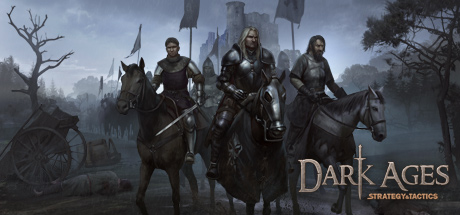
Strategy & Tactics: Dark Ages aims to deliver a sweeping medieval strategy experience built around turn-based conquest, faction management, and board-game-style decision-making. Developed and published by HeroLabs, the game drops players into an alternate version of the medieval world where historical armies and anachronistic units coexist—Vikings face Mongol cavalry, crusader knights clash with musketeers, and war elephants march beside early European infantry. This imaginative mixture adds a playful “what-if” quality to the campaign, and the game’s large provincial maps encourage players to think in terms of long-term planning rather than moment-to-moment micromanagement. Each scenario places you in control of a struggling faction, requiring you to rebuild your forces, secure income, and push outward through contested terrain.
A notable strength of the game lies in how it frames strategy on a broad scale. You manage provinces rather than individual battlefields, and every decision—recruiting troops, positioning generals, fortifying borders, securing supply—contributes to a wider web of consequences. Terrain types such as rivers, bogs, and forested regions meaningfully slow movement or hamper effectiveness, introducing a layer of operational nuance reminiscent of tabletop war games. Generals, each with randomly generated traits, leadership bonuses, and personalities, serve as the backbone of your armies. Their presence on the field conveys advantages in morale and combat resolution, and the randomness of their attributes ensures no scenario feels identical to the last. Optional “glory point” objectives add additional challenge and reward players who want more than simple victory, encouraging different tactical approaches across repeated attempts.
Visually, the game borrows heavily from the aesthetics of physical strategy boards, with maps that feel like stylized battle plans and unit icons that resemble handcrafted counters. This gives Strategy & Tactics: Dark Ages a distinct identity—less concerned with realism and more with providing a clean, readable overview of conflicts. The art direction may not be lavish, but it effectively communicates the information you need to play, and the mood is enhanced by a soundtrack that leans toward atmospheric medieval tones. During long sessions, the combination of map animations, battlefield readouts, and subtle sound cues helps maintain a sense of immersion without overwhelming the player.
However, while the strategic layer is engaging, the game’s combat execution is comparatively limited. Battles are resolved largely through automated simulations based on unit stats, formation choices, general bonuses, and terrain. This means your involvement ends the moment you commit your troops. For players who enjoy grand strategy titles focused on planning rather than real-time tactics, this can feel appropriate, but many will find the lack of direct control disappointing. Engagements often play out with minimal animation, and the results can sometimes feel detached from the player’s input, especially if unit strengths and weaknesses are not clearly explained. This abstraction creates moments where battles feel predetermined rather than earned, undercutting the tension that should accompany major clashes.
The game also struggles with pacing and clarity. Early turns can feel slow, as unit recruitment and income growth take time to build momentum. Meanwhile, later scenarios can spike in difficulty, forcing sudden adaptation without always providing the information needed to make informed decisions. The tutorial only covers the basics, leaving the deeper mechanics—such as how formations interact or how certain stats affect combat—underexplained. For seasoned strategy players, this may encourage experimentation, but newcomers can find themselves confused about why their armies succeed or fail. Technical issues such as occasional crashes or clunky interface elements further contribute to inconsistent pacing and can break immersion at key moments.
Despite these shortcomings, Strategy & Tactics: Dark Ages earns credit for its ambition and its board-game-like approach to medieval warfare. The variety of factions and units, the emphasis on terrain and supply lines, and the emergent challenges created by procedural generals all work together to form a solid strategic foundation. The limited scenario count and absence of skirmish or multiplayer modes restrict long-term replay value, but players who enjoy structured campaigns with defined objectives will find satisfaction in pushing through each map’s unique challenges.
Ultimately, this is a game best suited for strategy fans who appreciate planning on a macro level, enjoy turn-based map control, and don’t mind a more abstracted combat system. It’s not a polished or expansive experience, but when taken as a moderately complex digital board game rather than a full-spectrum strategy epic, it offers rewarding decision-making and tense, map-spanning struggles. For those willing to overlook its rough edges, Strategy & Tactics: Dark Ages provides a thoughtful—if imperfect—take on medieval conquest.
Rating: 6/10