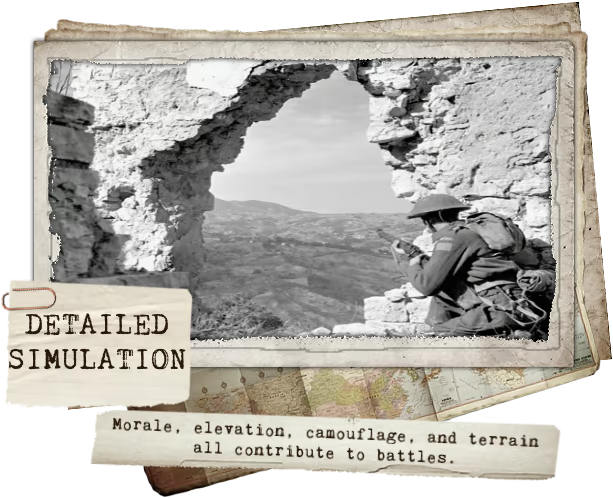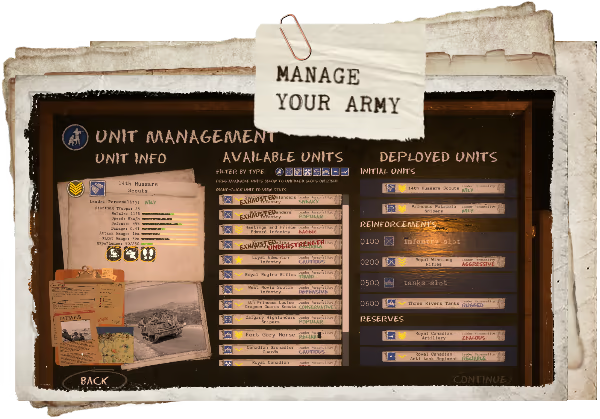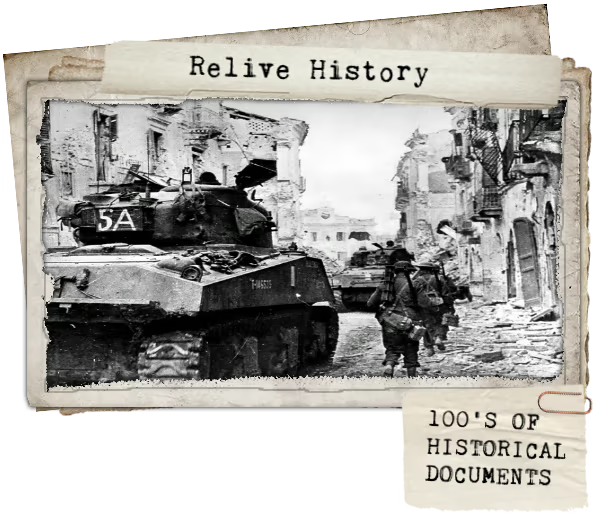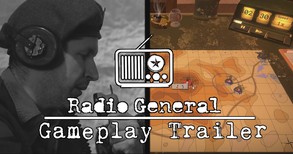
It's WWII. You're a general sitting in a tent. All you have is a map, and a radio. Can you win the battle? Radio General is a unique strategy game where you interact with your units over the radio using speech recognition. Test your mettle and relive famous battles as a WWII general.
Modeled estimate, not a reported figure. How we estimate →
Media
About


Genres
Stats
All-time low is the lowest price we've recorded for this game since we started tracking it.
Languages: English*, German, Russian, Spanish - Latin America, French, Italian*languages with full audio support
Engagement
Hours played at review time, across 42 reviews with recorded playtime.
Reviews
Themes across 42 recent reviews and how positive each mention is. A keyword signal, not full sentiment analysis.
positive critical· bar length = how often the theme comes up
Reviews
A simple but effective game. Great for practicing your Incident Command Skills. Excellent for Canadian History buffs and students.
Amazing game that's realistic and can either allow you to torture yourself on ultra hard difficulty or take a walk in the park with easy difficulty
awesome game rlly hard but really good game
Quaint wargame experience that is worth checking out. The use of fog of war tied to limited real time unit knowledge makes for a challenging but rewarding experience by the end of each mission. In my playthrough there was some minor annoyances where movements units seemed to struggle moving to where I would order them. In some cases, it wouldn't notify why the unit couldn't move to that location outside of being in combat. Overall, hope to see more of this style of strategy game in future.
I like the game, but I have issues with the voice commands. I have a bit of an accent, and often the mic will not understand me. I can't order in reserve scouts because the computer does not recognize when I say it. Random units jump to the correct column, say Juliet, but will run to the edges of the board even when I issue orders trying to correct them. "Juliet 5" somehow becomes "Juliet 1" or "Juliet 14." I would recommend this game, but I really thank a tune-up to some stuff or some backup controls for certain systems that might not work without voice commands are needed.
An interesting and fun game that makes me want to tear out my hair sometimes. For some reason, this game cannot handle someone saying "juliet, Dog, or Alfa." Also the screen would show Bravo 5 after my voice, but then goes haywire and the unit goes to Bravo 17.
Really fun, interesting game. lots of history of Canadian units. I keep coming back to it.
Radio General delivers one of the most distinctive interpretations of the real-time strategy genre by placing players in the shoes of a World War II commander who must rely on communication instead of direct battlefield control. Developed by Foolish Mortals Games and Michael Long, and published by Foolish Mortals Games, the game abandons the traditional bird's-eye perspective found in most strategy titles and instead focuses on the uncertainty and responsibility that military leaders experienced during wartime. Players command operations from a headquarters tent using a tactical map and radio transmissions, making every decision based on reports from field officers rather than perfect information. This creative approach transforms familiar RTS gameplay into a tense exercise in judgment, planning, and leadership. The game's most innovative feature is its voice command system, which allows players to issue military orders through a microphone using natural speech. Officers acknowledge commands and report changing battlefield conditions through fully voiced radio conversations, creating an immersive command environment unlike almost anything else in the genre. Those who prefer a more traditional approach can still use standard keyboard and mouse controls, but the speech recognition system remains the centerpiece of the experience. While the feature works best with clear English pronunciation and quality audio equipment, it succeeds in making players feel like authentic battlefield commanders rather than detached strategists controlling digital units from above. Instead of offering complete battlefield visibility, Radio General constantly reminds players that war is unpredictable. Soldiers relay information based on what they can personally observe, meaning reports can be delayed, incomplete, or even inaccurate during the confusion of combat. Enemy positions often remain uncertain until confirmed by multiple units, forcing players to interpret fragmented intelligence before making critical decisions. This mechanic creates a level of tension rarely found in strategy games because every order carries genuine risk. Poor communication, delayed reinforcements, or incorrect assumptions can quickly turn a manageable situation into a disastrous defeat. Beneath its straightforward presentation lies a surprisingly detailed tactical simulation. Numerous battlefield elements influence every engagement, including terrain, elevation, forests, road networks, visibility, camouflage, morale, fatigue, ammunition supplies, and weapon effectiveness. Roads allow troops to travel quickly but leave them exposed, wooded areas provide concealment for ambushes, while elevated positions improve observation and defensive capabilities. Rather than overwhelming players with unnecessary complexity, these systems naturally encourage thoughtful planning and reward commanders who carefully study the battlefield before committing their forces. The management of military companies also adds meaningful strategic depth. Units develop experience throughout the campaign, and their effectiveness depends not only on combat ability but also on the qualities of their commanding officers. Some leaders display greater caution, while others may continue attacking despite dangerous circumstances. Between operations, players must balance combat readiness by allowing exhausted formations to rest and replenish before sending them back into battle. This creates a stronger sense of continuity throughout the campaign, as veteran companies gradually become valuable assets worth protecting instead of disposable resources. Historical atmosphere is another area where Radio General excels. Rather than focusing solely on explosive action, the game emphasizes the realities of military command during World War II through authentic communication procedures, operational planning, and battlefield uncertainty. The command post setting, period-inspired interface, detailed radio chatter, and strong voice performances combine to create an experience that feels grounded in its historical setting. The emphasis on decision-making under pressure helps players appreciate the difficulties faced by real commanders, giving the game an educational dimension alongside its strategic gameplay. Although the visual presentation is relatively modest compared to modern blockbuster strategy games, it effectively supports the gameplay. The tactical map is clean, functional, and easy to interpret, while the audio design does much of the heavy lifting in establishing immersion. Constant radio updates, battlefield reports, and believable voice acting keep players engaged throughout every mission, making sound just as important as visual information. Listening carefully becomes an essential skill because valuable intelligence often arrives through spoken communication rather than visual cues. The game's unconventional design does come with certain drawbacks. Players accustomed to traditional RTS games may initially struggle with the lack of direct control and complete battlefield awareness. The reliance on voice recognition, while highly innovative, can occasionally produce inconsistent results depending on microphone quality or pronunciation. Additionally, the slower pace and deliberate decision-making may not appeal to players seeking fast-paced tactical action. However, these aspects are largely intentional design choices that reinforce the game's commitment to realism rather than representing flaws in execution. Radio General stands as a bold and memorable strategy title that successfully reimagines how military command can be represented in video games. By replacing omniscient control with realistic communication, uncertain intelligence, and meaningful leadership decisions, it creates a rewarding experience that challenges players to think differently about warfare. Its combination of historical authenticity, innovative mechanics, tactical depth, and immersive presentation makes it one of the most original World War II strategy games available. While its specialized gameplay may not appeal to every RTS fan, those looking for a fresh, intellectually engaging command simulation will discover a highly satisfying and memorable experience. Rating: 8/10
Мне нравится концепция этой игры, где игрок не видит передвижения войск противника в реальном времени и получает информацию только по радио от своих отрядов, за которыми также вынужден следить. Вайб штабного работника старой эпохи без спутниковой разведки, интернета, бпла и т.д. передан замечательно. Эта игра особенно хорошо заходит для коопа с другом, особенно когда вы разбросаны по карте. Геймплей подталкивает к кооперации и работе в команде. Таймеры же заставляют активно играть, а не сидеть на месте. Главная проблема этой игры баги, что мешают игроку наслаждаться процессом и проходить миссии. Если исправить их и сделать интерфейс более френдли ( шрифты с иконками побольше), то она стала бы лучше. И ее точно захотелось бы проходить второй раз. В целом за свои деньги хорошая вещь, что скрасит ваш вечер. Желаю канадским разработчикам не забрасывать игру и успешно ее развивать! Английская версия: I like the concept of this game, where the player primarily sees no obstacles to movement and receives information only via radio from their squads, which also requires observers. The vibe of a modern-day command post without satellite reconnaissance, internet, drones, etc. is beautifully captured. This game is especially well-suited for team play with a friend, especially when you're scattered across the map. The gameplay encourages cooperation and police work. The timers are active, not static. The main problem with this game is the bugs, which hinder the player's enjoyment and mission completion. Fixing them and making the interface more user-friendly (larger fonts and icons) would improve the game. I'd definitely want to play it a second time. Overall, it's a great game for the money that will brighten up your evening. I wish the Canadian developers continued development and continued success!
Now I know what it feels like to hopelessly watch all my men get wiped out one by one as I hear their cries on the radio.
Related
Related
Trends
Concurrent players on Steam, sampled daily since tracking started.
Momentum
Pace estimated from the game's recent review growth (our daily snapshots) at its own sales-per-review ratio — a momentum signal, not booked sales.
Audience
Estimated from the language of this game's reviews — a proxy for where players are, not official Steam demographics.
Related
| 7 Days to Die | $425.3M | 403.5K | 87% | $44.99 |
| Mount & Blade II: Bannerlord | $309.8M | 293.9K | 88% | $49.99 |
| Squad | $166.3M | 240.4K | 81% | $39.99 |
| Satisfactory | $164.4M | 275.8K | 97% | $27.99 |
| Kerbal Space Program | $154.7M | 144.7K | 96% | $39.99 |
| RimWorld | $149.6M | 205.9K | 98% | $34.99 |
Related
| Solar Ash | $288.6K | 1.5K | 90% | $9.99 |
| Ben 10 | $288.6K | 547 | 75% | $24.99 |
| Dragon Spear | $288.7K | 912 | 63% | $14.99 |
| Endless Monday: Dreams and Deadlines | $288.7K | 2K | 98% | $9.99 |
| Backseat Drivers | $288.8K | 1.2K | 79% | $6.99 |
| Dark Future: Blood Red States (Classic) | $288.4K | 511 | 62% | $24.99 |