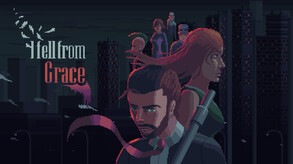
I fell from Grace is a retro style adventure game, that blends storytelling and puzzle solving in a branching narrative style. Can you solve the mystery of the strange gift that has cured your wife of terminal illness, but unleashes sinister events before it's too late?
Modeled estimate, not a reported figure. How we estimate →
Media

About
Stats
All-time low is the lowest price we've recorded for this game since we started tracking it.
Languages: English**languages with full audio support
Engagement
Hours played at review time, across 40 reviews with recorded playtime.
Reviews
"I fell from Grace" is an older game from 2017. It's a venerable 7 years old at the time of this review. It's a rather poor attempt at making a "dark and edgy" psychological horror adventure thought waves and waves of endless, garbage Visual Novel writing and the occasional bad puzzle. The schtick is you're an antiheroic jerk with a sick wife and to try cure her and not get fired from your job, you go on a horrible adventure where a lot of people die and imaginary children talk to you. Yeah, a terrible idea. Oh, and the dialogue rhymes (badly) but you can turn that off. I don't know what they were thinking, but one thing we know for sure, they were wrong. One important note is that even though this is an amateur project, it does seem to be sincerely and genuinely made. I couldn't find any flipped assets, plagiarism or any other kind of insincere actions from the developer, but unfortunately genuine intentions alone are not enough to produce a brilliant PC gaming experience. From a technical perspective, the game doesn't meet basic minimum requirements that most PC gamers expect as standard. A choice was made to use obsolete, decades old retro pixel "art" as a substitute for contemporary PC graphics. It's unclear if this is due to lack of budget or talent, regardless, the overall visual quality of the game is extremely low as a result. While there are options to change the resolution for the game, all this does is scale up the simplistic 2D art assets used to make the game, which makes little or no difference to the graphics quality. Without any other substantial graphics tweaks, it's not possible for gamers to improve the lacklustre 2D visuals. The controls can't be customised, which will be an annoyance for many, but it can also render the game unplayable for differently-abled gamers, left handed gamers or gamers using AZERTY or other international keyboard layouts. To make matters worse, there's no mouse input, whether this is deliberate or through incomptence or deliberate is unclear, but Sierra moved on from keyboard-only controls as soon as the mouse became a mainstream peripheral. There's no excuse here, and this makes the game awful to play... even before the writing hits you. These technical defects push this game below acceptable standards for any modern PC game. The poor quality of this game is reflected by how many people spent time with it. At the time of this review, SteamDB shows the all-time peak player number was only 7 players. This is a remarkably low number, and now, the only player activity occurs once or twice a month, presumably someone loading it up to see what it is then quickly uninstalling it. Considering there's over 120 million gamers on Steam and well over 100,000 games for gamers to choose from, the overwhelming lack of interest in this low quality game is to be expected. So, should you buy this game? Is this one of the best of the 100,000+ games on Steam? "I fell from Grace" has the laughable, eye-watering price of around $8 USD, it's not worth it given the defects and shortcomings with the product, especially considering the sheer number of completely free, much higher quality games on Steam. For comparison, the $8 asking price for this game could get you games like "Lethal Company", "The Witcher 3: Wild Hunt" or "Far Cry 5". No pixelcrap is worth $8. If developers want to get paid the same kind of money as real game developers who know how to do graphics properly, they need to learn how to do graphics properly.
This is an amazing game which I have played multiple times. I love the branching paths and random tasks. I looked at the achievements and there's still so much I haven't discovered. The rhyming gets dull (annoying?) sometimes, but it works with the story. And this game has mature themes, so seeing topics people talk about in rhyming-fashion gets pretty good. Lastly, this game gets dark and emotional. Don't let the rhyming fool you, this game gets pretty real.
A dark point and click game, within a very deep depressing believable world. Far for perfect but more than good value for your money. The Great: ----------- - Impressive world building, very deep small narrative paths to explore, that expand upon the world and the characters. - Impressive atmosphere. And a quite unique way to learn about the world through character interactions. - A surprinsingly ammount of content is not needed to complete the game. I got to the ending without realizing that more than 70% of the game was still unexplored. The good: ----------- - Interesting story - Tight controls - Art and music - Good writting (I disabled the rhyme) The bad: ---------- - Lack of mouse controls (however the key controls work quite nicely, and you can play well with a steam controller) - The main character is quite non relatable. This is not a bad thing per se, but the emotions of the character are selfish to a non-justified extreme in some circumstances. This is bad, cause we can take a lot of moral choices as the protagonist but no matter what, he will still expose selfish and insensitive thoughts that are a bit too out of place. More effort and attention here would have made wonders. - Maybe related to the previous point. There are some places where the game is odd and I was not sure if it was a case of underdeveloped or overdeveloped character building. For example, you cannot take some nonviolent approaches if you have in your inventory an item that can be used as a gun. The protagonist reacts in a very inconsistent way to traumatic events. - You have to find six specific items that appear as a bright spot on any place in the world. The locations of these keys are to me very obscure. The Ugly: ----------- - Lack of text options, you cannot adjust the text speed or disable the VN like effect of the text appearing letter by letter. It would be a much better choice to make just the entire text just to appear at once. There is also a delay in a lot of dialogues from one text to the text. This small thing slows incredibly the gameplay. -Though the decisions of the story are clear, they affect the story in a way that does not make sense most of the time. This makes that the dialogue decisions of the player with one of the characters affect the interactions with totally unrelated characters. For example, a character asks you about getting drugs or finding a person depending on a totally unrelated dialog choices with non-connected characters. Another character talks to you about wanting a telescope, and you happen to have one. However you cannot give it to him. Instead in a particular branch of gameplay you are required to give him a totally different item for no explained reason. - A couple of very deep plot/narrative holes: 1) The protagonist decides to not speak about a murder, even with a personal cost to stay out of trouble but then he blackmails the murderer to get a sandwich. The option to speak to the police about any of this does not appear when going to the police station. 2) The relationship between the protagonist and his mentor is totally inconsisted, contribed and does not make any sense. 3) That nuclear reactor scene out of nowhere.
I Fell from Grace, developed and published by Deep Taiga, is a narrative-driven adventure that leans heavily into themes of desperation, moral compromise, and the emotional toll of love pushed to its limits. Framed within a retro-inspired pixel art presentation, the game tells a deeply personal story centered on Henry, a man struggling to cope with his wife Grace’s terminal illness. What begins as a tale of devotion and hope gradually transforms into a darker meditation on obsession, consequence, and the fragile boundaries between right and wrong. Rather than offering escapism, the game invites players into a somber world defined by decay, rain-soaked streets, and characters burdened by their own unresolved grief. The setting reinforces this melancholic tone from the outset. Nearly every environment feels subdued and claustrophobic, drenched in muted colors and persistent gloom. Henry’s home, his workplace, and the surrounding town are interconnected spaces that feel small yet heavy with implication. The world itself seems tired, mirroring Henry’s mental and emotional exhaustion. Conversations with other characters reveal a broader societal malaise, suggesting that despair extends beyond Henry’s personal tragedy. This pervasive atmosphere of decline and moral ambiguity strengthens the narrative’s central question: how far would someone go to save the person they love? Gameplay follows traditional adventure mechanics, with side-scrolling exploration and interaction-based progression. Players guide Henry through environments, examining objects, engaging in dialogue, and solving puzzles to advance the story. The puzzles are generally straightforward, often revolving around item usage and environmental observation rather than complex logic chains. While this simplicity keeps the focus on storytelling, it can also make certain segments feel repetitive or lacking in mechanical depth. The absence of clear objective tracking or navigation assistance occasionally results in moments of uncertainty, where players must rely on trial and error or repeated backtracking to uncover the next step. One of the game’s most distinctive design choices was its initial commitment to fully rhymed dialogue. Every conversation was originally written in verse, lending the narrative a theatrical and poetic cadence. This stylistic gamble proved divisive among players. For some, the rhyming structure added a layer of surreal charm and artistic identity; for others, it disrupted immersion and constrained character expression. In response to feedback, the developer later introduced an option to experience the dialogue in standard prose. Even so, the lingering poetic sensibility shapes the tone of the game, giving it an unusual rhythm that distinguishes it from more conventional indie adventures. Where I Fell from Grace truly distinguishes itself is in its branching narrative structure. Player choices carry tangible consequences, leading to multiple possible endings that range from bleak tragedy to fragile acceptance. Decisions are rarely framed as purely good or evil; instead, they reflect shades of gray that align with Henry’s increasingly strained moral compass. This structure encourages reflection and replayability, as players may wish to explore alternative paths to see how different decisions reshape the narrative. The weight of these choices reinforces the central theme that actions born of love can still produce devastating outcomes. The audiovisual presentation enhances the story’s somber tone. The pixel art style is detailed and expressive despite its retro aesthetic, capturing subtle character emotions and environmental nuances. Rain frequently streaks across scenes, adding texture and reinforcing the sense of unrelenting gloom. The soundtrack complements this mood with subdued, jazz-inflected compositions that echo noir sensibilities. Together, the visuals and audio create a cohesive atmosphere that supports the narrative’s introspective depth. Despite its strengths, the game is not without flaws. Pacing can feel uneven, particularly during extended segments of backtracking or when puzzle solutions lack clear contextual clues. The mechanical simplicity may leave some players craving more interactive complexity. However, these shortcomings stem largely from the developer’s prioritization of narrative over gameplay density. For those drawn to story-centric experiences, the emotional weight of Henry’s journey often outweighs the mechanical limitations. Ultimately, I Fell from Grace is a bold and introspective indie title that prioritizes moral complexity and emotional storytelling over conventional gameplay thrills. It explores themes of love, desperation, and consequence with sincerity, offering players a story that lingers long after completion. While its stylistic experiments and subdued pacing may not appeal to everyone, the game stands as a testament to the power of narrative ambition within the indie space. For players seeking a character-driven adventure unafraid to confront uncomfortable truths, it delivers a poignant and thought-provoking experience wrapped in a rain-soaked pixelated world. Rating: 6/10
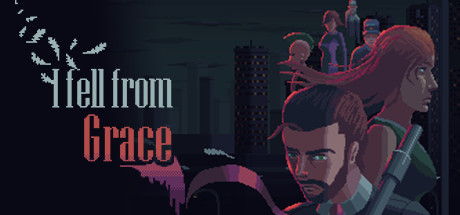
[i]I fell from Grace[/i], is pleasantly... unpleasant. It's a very dark tale of a man, who, while - hopelessly - trying to save his dying wife, loses a lot more. The rhyming dialogue will be off-putting to many, yet it's actually an element that creates a nice contrast with all the tears and blood that will be spilled throughout this pixel-art, horror-ish adventure. On the other hand, the actual process of playing this leaves a lot to be desired, and the pacing is painfully slow for what is essentially a narrative-driven experience. [b]Cubed3 Rating:[/b] [b]5/10[/b] [url=http://www.cubed3.com/review/5499/1/i-fell-from-grace-pc.html][b]Read Full Review Here[/b][/url]
I wanted to like it, I loved the art style, but sadly I found it too boring to continue.
Great story and characters, I love how the game gives you choices and you're not just stuck with a linear path of story to follow. fantastic game. 10/10
how far would you go?
I remember really enjoying this game but don't remember why I dropped it. Back to it now...
PROS - Interesting and mysterious story, with bits of psychological horror and a non-tipical "hero". It keeps you invested to see what happens. - Excellent choice and consequence, many choices, branches and endings for you to explore. - Nice pixel art which depicts very well a decaying and rotten city CONS - It can turn repetitive. There are lots of fetch quests, which you end up going from one side to another almost every day. The whole area is almost open for you from the beginning, so you end up revisiting areas that only change a bit of dialogue and not much more. - Loading times are quite long OVERALL: A compelling psycological thriller/horror story that makes you feel invested with its characters. The mood is bleak, the "hero" is a horrible person, and most people if they are not like him, they are just poor victims of other similar cruel people. You have lots of decisions with consequences and arcs, and the story does not unfold completely on one playthrough. You can see what happened to other characters or see other points of view by playing again with different choices, which provides replay value. If you are willing to go through the repetitive parts of fetch quests, and to explore every nook and cranny, I recommend it! SCORE: 8/10
Related
Related
Trends
Modeled estimate over time, reconstructed from Steam's monthly review histogram.
Momentum
Pace estimated from the game's recent review growth (our daily snapshots) at its own sales-per-review ratio — a momentum signal, not booked sales.
Audience
Estimated from the language of this game's reviews — a proxy for where players are, not official Steam demographics.
Related
| EMMA The Story | $1K | 94 | 89% | $0.73 |
| Mint | $1K | 83 | 51% | $2.99 |
| Eternal Man: Forest | $1K | 52 | 71% | $0.99 |
| Tarim: Guardians | $1K | 105 | 74% | $0.49 |
| Your StepSister | $1K | 125 | 82% | $0.49 |
| Magical Girl Dash | $1K | 59 | 93% | $0.99 |