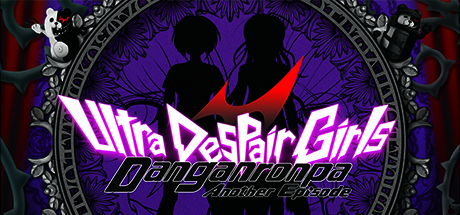
Komaru Naegi has been imprisoned inside a mysterious apartment for over a year. Her rescue is derailed when hundreds of Monokumas suddenly attack. She teams up with Toko Fukawa to survive the rampaging Monokumas, escape the crafty Monokuma Kids, and uncover the secrets of the city.
Modeled estimate, not a reported figure. How we estimate →
About
Genres
Stats
All-time low is the lowest price we've recorded for this game since we started tracking it.
Languages: English*, Japanese*, Traditional Chinese, Korean*languages with full audio support
Updates
Build ids and update times come straight from Steam's PICS — the same source SteamDB reads. Patch history grows as we record new builds.
Engagement
Hours played at review time, across 74 reviews with recorded playtime.
Reviews
Themes across 74 recent reviews and how positive each mention is. A keyword signal, not full sentiment analysis.
positive critical· bar length = how often the theme comes up
Reviews
Personally, I thoroughly enjoyed this game - but if you're not sure, check some gameplay footage first (this game [b]can[/b] be safely skipped if you're just interested in the story of the main entries). This game is NOT a murder mystery like the main entries of the series. There is still the visual novel storytelling set in the Danganronpa universe with some familiar characters, but it also has 3rd person shooter segments (which, to be fair, some would probably call janky - I kind of found it to be part of the charm though) added in between. Unless you already played Danganronpa 1 and 2, there's little reason to play it - so it's basically only for those fans who [b]also[/b] don't mind the genre switch. When you consider it in that context, 78% isn't a bad rating at all.
I really tried to like this game but I just couldn't bring myself to finish it. The CGI cutscenes were... interesting, but they didn't work for me. The controls felt clunky, and the dialogue was mostly forgettable, and neither the gameplay nor the puzzles were engaging enough to make up for it. Playing this game started to feel more like a chore than something I was enjoying. You might enjoy this if you're a huge danganronpa fan looking for more lore, but otherwise I really wouldn't recommend it.
Great game! It gives us more behind the scenes information on what is going on after trigger happy havoc and it also lets you meet some characters related to those in trigger happy havoc.
May 24th - [b]Danganronpa Another Episode: Ultra Despair Girls[/b] - 22h 24m - 6/10 - Main+ - Started May 7th - 17 Days Taken - Beat all chapters, read Ultra Despair Hagakure and got 69% of achievements. [b]Pros:[/b] The best parts of Ultra Despair Girls are its last two chapters, 4 & 5. Those are the chapters where the story finally starts to pick up and you start learning more of the Warriors of Hope's backstories and motivations. You already know [spoiler]they were traumatized by their parents in some way to end up hating them,[/spoiler] but you don't get the specifics until later. Masaru [spoiler]was physically abused by his father.[/spoiler] Jataro [spoiler]was constantly insulted by his mother.[/spoiler] Kotoko [spoiler]was forced perform sexual on others by her mother.[/spoiler] Nagisa [spoiler]was treated like a test subject and was buried underneath the sky-high expectations of his parents.[/spoiler] Monaca [spoiler]was reluctantly adopted by a family that wanted nothing to do with her. Demeaning her at every opportunity.[/spoiler] You can see where each one is coming from to a certain extent. This works great for Nagisa and Monaca, as you feel for them [spoiler]when they get "executed".[/spoiler] It also partly applies to Kotoko, who got some character development before the end of her chapter, but gets more later. For Masaru and Jataro however, you get their backstories after their chapters, which means that you don't feel anything [spoiler]when they get "executed",[/spoiler] because you don't know them that well at that point. I feel like some of those backstory books could've been moved to their respective chapters to help strengthen that emotional connection more. I want to highlight Nagisa and Monaca because from them you can clearly see the contrast in their ideals. Nagisa [spoiler]genuinely believes in the children's paradise and wants to see it succeed. He goes out of his way to undermine the game that Nagito and Monaca have setup for the captives to find the successor to Junko Enoshima, by helping Komaru leave Towa City. Meanwhile Monaca, doesn't believe in the children's paradise at all, all she wants is to spread despair further and have it recover after Junko's death at the end of THH. To her, the killing of the adults was just a means to an end. A way to create despair from which a hope could arise and cause an even greater despair. (More as to how this works with Komaru's character later.) She even prepared a fake suicide attempt, so that Junko could swoop in and give the other kids the hope to kill their parents. This way the rest of the Warriors of Hope would be on Junko's side and feel like they were indebted to her. It's also no wonder that Monaca herself latched onto Junko. Haiji and his father resented her being a part of the family, to Monaca, Junko was the first person who cared about her and supported her. That is how she came to adopt Junko's love of despair. This compassion from Junko wasn't out of character for her either, because she had ulterior motives for her actions. The Towa Group is a tech company and Monaca was the chief executive of the robotics division. Junko used Monaca to help create the large number of Monokumas she needed for the Tragedy. It makes Ultra Despair Girls work very well as a sequel to Trigger Happy Havoc. [/spoiler] [b]Cons:[/b] In Danganronpa tradition, the 3rd chapter is by far the worst one in the game. Although this time it's not a stupid double murder but instead a series of very questionable choices from the developers. The one thing that chapter 3 has over the first two chapters in the game is that you get some of Kotoko's backstory, which I've already brought up earlier. The ways it fails are numerous. I know that Danganronpa has always been a series with crass, immature humor. You have Miu as a character after all. But there are good and bad ways to implement that humor. [spoiler]Almost everything from Kotoko herself is great, it showcases how traumatized she is. That the only way she can think of to get others to help her is debasing herself and flashing her panties. But outside of those moments there are also shots where the game's camera just shows her panties anyway, which feels dirty and unnecessary. It's fan service either way, but at the very least the former supports Kotoko's character.[/spoiler] I haven't even mentioned the worst aspect of chapter 3 though, because for some reason the developers decided to make [spoiler]the sexual abuse victim commit sexual assault on Komaru. Kotoko's motivation for this is completely non-sensical as well, saying that it's revenge against her own abuse somehow. Wouldn't a victim not want to cause the same harm they themselves have gone through? The nail in the coffin is that Kotoko says it's fine because Komaru's a teenager and not a child. Like age has anything to do with whether sexual assault is acceptable.[/spoiler] How any of this made it past the planning stage into the final game confounds me. So far all my criticisms of the game have been about specific scenes or character details, but there is one aspect of Ultra Despair Girls, I've barely touched on in my entire review which I have major gripes with. That aspect is the game's gameplay. The main gameplay of Ultra Despair Girls is simplistic with little depth to speak of. It's a third person shooter in comparison to the murder mystery visual novels that the series is known for. Most of the gameplay consists of shooting the break bullets at the monokumas. The game tries to vary up the gameplay by introducing new bullets you can use or new enemies to fight, but most bullets have niche use cases where you're better off using the break bullet and the enemies still die all the same. Another way that the game tries to create depth is that you can give two different upgrades to each bullet type you have and similarly to the mainline games you can equip skills to use in gameplay. The upgrades affect the 3 stats that the bullets have, but their effects are so minimal I couldn't tell any differences based on which ones I had equipped. Some combinations of upgrades are labelled "good" or "excellent", but god do I know what that actually changes about them. [i]What about the skills then, if they work in the mainline games, surely they work in UDG as well, right?[/i] The issue with the skills is that the amount of skill points you have is so abundant that you can equip all or nearly all of the skill bullets at any given time. In the mainline games, the amount of skill slots you have is very limited, so you have to strategize about which ones you want to bring into the class trials. In Ultra Despair Girls this strategic aspect is almost completely absent. I only had to start strategizing a little about which skills I wanted equipped in the last chapter. Alongside these flaws the biggest issue I have with the gameplay is that I just don't find it inherently all that interesting, especially when compared to the excellent gameplay in the mainline games. Although this might be more of a me thing, since I avoid shooters in general. [b]Conclusion:[/b] Danganronpa Another Episode: Ultra Despair Girls is a divisive game for a reason and I can see why. It is carried almost exclusively by the character development and plot twists in the game's last two chapters. The first three chapters range from bad to mediocre and the gameplay isn't anything to write home about either, with attempts at depth that fall flat. I went into Ultra Despair Girls with very low expectations, as it has a fairly negative reputation within the fandom, which is the same reason I originally skipped the game in my playthrough of the series years ago. Didn't help that it was merely a spin-off either. Despite that reputation, I still found aspects of the game I thoroughly enjoyed. In the same way however, there are parts of the game that fell short or left me baffled in their inclusion.
This game is SO fascinating. It's the only Danganronpa game to take place within the post-apocalypse the rest of the games dance around. The game is dripping with the despair the whole world has been feeling, and Towa City is particularly bad, as the Future Foundation has been unable to gain much of a foothold here. It's so exciting to be able to see the horrors of this world more fleshed out. Gameplay-wise, this is a puzzle/adventure shooter game with a whole lot of visual novel elements as well. If you don't want to hear characters talk at each other for hours, this is NOT the game (or series) for you. There are not really any mystery elements of this game, since it isn't a killing game. There's loads to chew on here with regards to character development, world lore, and the main story and themes. Hope vs Despair is here as always, with a super interesting twist to each side. I suggest playing this game with a keyboard and mouse. I played the original on the Vita and the game is infinitely easier with keyboard+mouse controls to control the shooting. I love Komaru and Toko's friendship and how both characters develop over the course of the game. Toko/Syo in particular are a delight to see in a more drawn-out way, and both get development in this game. The Warriors of Hope are probably my favorite villains in any media ever. Their wishes are hypocritical but so so understandable, and each one of them has a slightly different way of seeing the world, influenced by how adults have mistreated them their whole lives. If you like the world of Danganronpa and want a look into the apocalyptic side of the setting, this is absolutely the game for you.
remake the game and remove all of the kotoko panty-shots and this game shoots up 2 ratings
First, I'll get onto the positives. Komaru and Toko's interactions are very enjoyable throughout the series, and we see Toko's character development throughout the game as well. The gameplay being a puzzle shooter is very creative for its time. The game corners are also a good change in pace occasionally. Ok now the negatives: The writing is awful, there are only one or two points in the game where I actually laughed, but otherwise I just felt dread. In chapter 3 and beyond, the gameplay begins to stagnate. Speaking of gameplay, dodging is near impossible because of the broken hitboxes that are present, making potential no hit runs and general gameplay a drag at times. Also the game corners begin to lose their charm when they introduce stealth sections. The prompt to use something has a weird thing where the prompt shows up inconsistently. Bosses also are stupidly easy, despite the fact they do a HORRIBLE job at telegraphing their attacks. All this caused the final boss to force me to lower the difficulty just so I can finish this ♥♥♥♥♥♥ game. There are also various visual glitches with the save menu and occasionally with the ingame cutscenes. In summary, this game is unique for its gameplay and puzzles, but if I wanted to play something like that I'd play MOUSE: P.I for Hire instead.
A decent third person shooter with the classic Danganronpa charm. Fun dialogue with an interesting story and characters alongside some intensely dark writing that will definitely not sit right with everyone, but it has its purpose. Recommended to people who have played the previous games, although the current price of almost 28 euro is a tad too much. Maybe get it for 20 bucks.
Game is pre good got some old ps2 vibes but gameplay get stale after a while mainline games are better 7/10
Regular блят что это ♥♥♥♥♥
Related
Related
Trends
Modeled estimate over time, reconstructed from Steam's monthly review histogram.
Engagement
DAU/MAU are modeled from peak concurrent players (≈×8 and ×28) — Steam publishes no active-user counts, so treat these as rough estimates, not reported figures.
Audience
Audience
Games most often reviewed by the same players — an audience-affinity signal from our review sample, not full ownership data.
Estimated from the language of this game's reviews — a proxy for where players are, not official Steam demographics.
Related
| Call of Duty®: Black Ops | $4.5M | 4.5K | 91% | $39.99 |
| School Days | $4.5M | 7.7K | 76% | $11.24 |
| Lost Records: Bloom & Rage | $4.5M | 5.8K | 86% | $39.99 |
| Daemon X Machina: Titanic Scion | $4.5M | 2.4K | 63% | $69.99 |
| Clone Drone in the Danger Zone | $4.5M | 39K | 96% | $6.99 |
| Deadzone: Rogue | $4.5M | 16K | 82% | $12.49 |