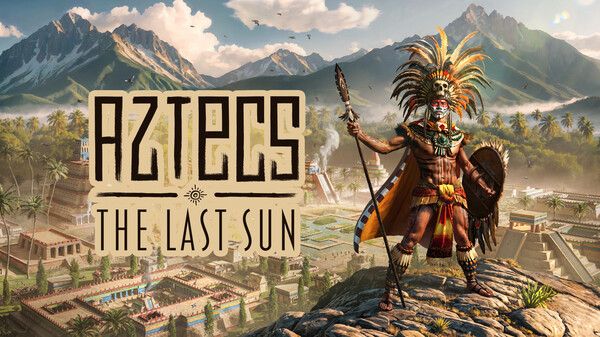
Rule Tenochtitlán in this survival city-builder where gods decide your fate. Confront the Moon Goddess and her generals. Delve into the intricate story, survive the nights in the Sandbox mode, or build freely in the Creative mode. The last sun is yours to save, or… lose!
Modeled estimate, not a reported figure. How we estimate →
Media

About
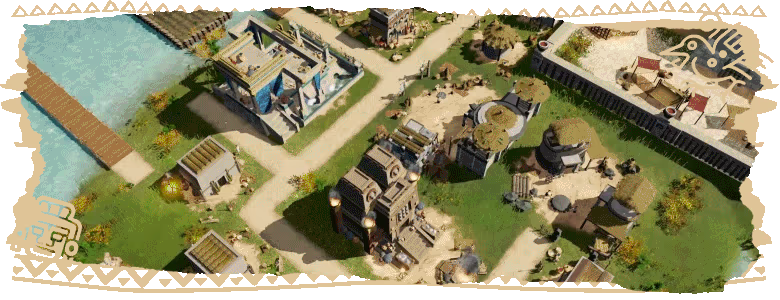
Take on the role of the Tlatoani, the divine ruler of Tenochtitlán. Build your city upon the waters of Lake Texcoco, lead your people to glory, and bring the long war against the Moon Goddess to its final reckoning.
Construct over 25 unique building types, each upgradeable across four levels except the Story-Exclusive ones.
Terraform Lake Texcoco, dig canals, and reclaim precious land from the marsh.
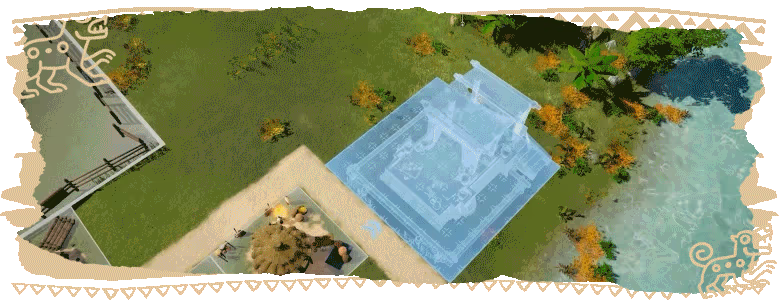
Raise divine monuments, academies, and gardens.

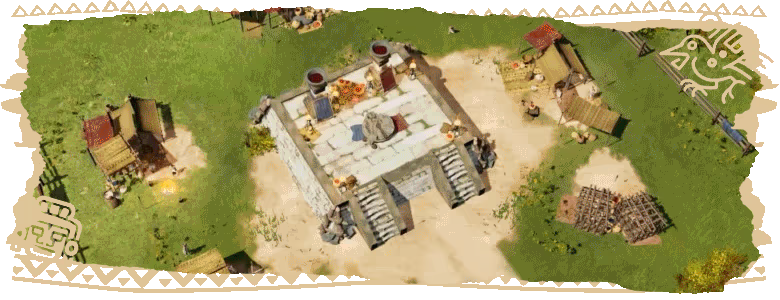
Perform rituals and human sacrifices to earn divine protection
Answer the gods' offerings when they come for tribute. Fail them and risk losing godly Grace!
Balance the favor of the gods, your economy, and survival itself

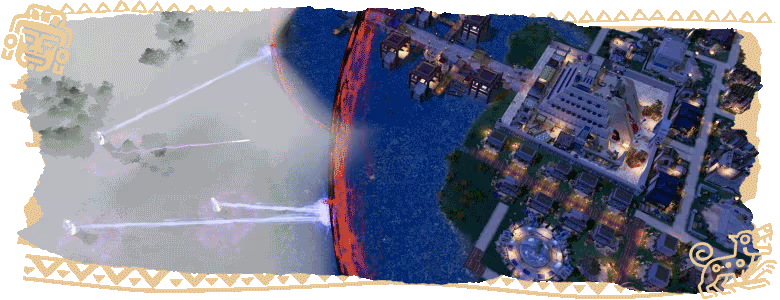
Face the Moon Goddess and her generals in a story-driven campaign.
Discover the ancient Sun Pillar and raise its modules to push back her power, and see the sun again
Confront her at last in a showdown for the fate of Tenochtitlán

Send expeditions across the strategic map, secure resources, and establish trade routes
Recruit new citizens from distant settlements and the port city
Expand your power beyond the borders of Tenochtitlán
Campaign: the full story across four difficulties: Relaxed, Story, Adventure, and the punishing Doom.
Sandbox: keep the survival challenge, drop the story. Build, defend, and outlast the night with limitless resources.
Creative: pure city-building. No economy, no threats. Unlock the full roster of buildings by surviving nights in the other modes, and use the Photo Mode to capture your built city in all its splendor.
Genres
Stats
All-time low is the lowest price we've recorded for this game since we started tracking it.
Languages: English*, German, Simplified Chinese, Polish, Russian, Spanish - Spain, French*languages with full audio support
Engagement
Hours played at review time, across 41 reviews with recorded playtime.
Reviews
Themes across 41 recent reviews and how positive each mention is. A keyword signal, not full sentiment analysis.
positive critical· bar length = how often the theme comes up
Reviews
Devs have officially abandoned it. No further updates. Don't buy it.
Dużo błędów, ciężko się grało. Średnia kopia Frostpunka
Kanäle. Heilige Scheiße man kann Kanäle graben. Ich muss meine Stadtplanung nicht nach den Gewässern auf der Karte ausrichten – wenn der Teich meinem Bluttempel im Weg ist, einfach überbuddeln. Warum haben das nicht alle Stadtbau-Spiele? Texcoco-See, ich erkläre dich zu meiner Was, das Spiel? Ach ja. [h2]Aztecs: The Last Sun[/h2] Überlebens-Stadtbau-Simulator mit Azteken-Flair. Ihr baut Ressourcen ab, um damit Gebäude zu errichten, die euch dabei helfen mehr Ressourcen abzubauen – das Konzept war schon 1602 nicht neu. Wir erfahren, dass die alten Mexikaner progressive Politiken hatten, wie die Bezahlung ihrer Arbeiter mit Schokolade, oder die Hinrichtung politischer Gefangener, um mit deren Blut die Angriffe des rachsüchtigen Champions der Mondgöttin abzuwehren, und das ist wo der Überlebenssteil reinkommt. Jede Nacht wird eure Stadt angegriffen, und nur mit Blut könnt ihr die Barrikade aufrechterhalten, die verhindert, dass eure Stadt zerstört wird. Bauen lässt sich nur innerhalb dieser Blutzone. Das Blut muss nicht von Menschenopfern stammen, sondern kann auch von dankbaren Bewohnern gespendet oder von Göttern gegeben werden. Aber insbesondere am Anfang ist die einzig sinnvolle Blutquelle: alle. Insgesamt macht das Spiel im Genre nichts wirklich Neues, abgesehen vom Azteken-Thema und den oben erwähnten Kanälen. Allerdings gab es auch nicht, das mir auf die Nerven gegangen ist, und von etwa 20 Städtebau-Demos, die ich mir auf Steam angesehen hatte, war "The Last Sun" das einzige, dass ich mir tatsächlich gekauft habe. Es hat also zumindest nichts falsch gemacht. Zusammen mit den Bugs in der Early-Acces-Version gibt es also nur eine eingeschränkte Empfehlung. Hier ein paar Tipps: 1 - Am Anfang des Spiels, bevor das erste Blutopfer vollzogen wird, gibt es eine "Tageszeitlose" Eingangsphase, in der ihr Bäume fällen und Steine hacken könnt. Es empfielt sich hier, das Voranschreiten der Handlung hinauszuzögern um einen Vorrat anzulegen, mit dem die harte Anfangsphase des Spiels einfacher wird. 2 – Ressourcen können nur innerhalb der Blutzone abgebaut werden, und Steine, Bäume, Fische und Gold regenerieren sich nicht. Entsprechend müsst ihr eure Blutzone "nomadisch" erweitern, um neue Ressourcen freizuschalten. Wenn ihr mit Mirkomanagment vor der Nacht diese kleineren Zonen abschaltet, könnt ihr eine Menge Blut sparen. 3 – Der Handel mit anderen Siedlungen ist nur eingeschränkt nützlich. Um neue Handelsmöglichkeiten freizuschalten müssen zuerst alle existierenden Handelsoptionen abgeschlossen werden. Dazu gehört das Versenden von Arbeitskräften, und von denen gibt es nur eine begrenzte Anzahl. 4 – Was den Technologiebaum angeht: Am wichtigsten ist der Markt, der freies Ressourcen-Tauschen ermöglicht. Denn Nahrung und Obsidian sind regenerierbar und nicht davon abhängig, wo ihr sie anbaut. Alle anderen Ressourcen gegen diese einzutauschen ist effektiver als deren eigentlicher Abbau, und spart jede Menge Kleinarbeit.
*Aztecs: The Last Sun*, developed by Play2Chill S.A. and published by Toplitz Productions, is an ambitious attempt to reframe the city-building genre through a lens that is both culturally distinct and mechanically more demanding than the usual formula. Instead of placing players in a generic medieval or industrial setting, the game draws from the world of the Aztec civilization and layers it with mythological tension, giving every system a sense of urgency that goes beyond simple expansion and efficiency. From the moment you begin shaping your settlement, it becomes clear that this is not just about building a prosperous city—it’s about preserving balance in a world where failure has existential consequences. The foundation of the experience lies in its city-building mechanics, which are at once familiar and refreshingly contextualized. Establishing your city on and around a lake introduces spatial constraints that immediately affect how you think about expansion. Land must be created or carefully utilized, infrastructure needs to account for water-based geography, and every district placement feels like part of a deliberate plan rather than casual sprawl. Resource management plays a central role, with production chains that require attention to workforce distribution, material flow, and sustainability. Food, construction materials, and population needs are tightly interconnected, creating a gameplay loop that rewards foresight and punishes neglect. It’s a system that fans of the genre will recognize, but the environmental constraints and cultural framing give it a distinct personality. What truly sets the game apart is how it incorporates survival elements into what would otherwise be a straightforward builder. The passage of time introduces cycles of increasing danger, particularly during nighttime phases when hostile forces tied to mythological themes begin to threaten your settlement. These moments shift the tone from calm planning to tense preparation, forcing players to think defensively and ensure their city can withstand what’s coming. Rituals and offerings become essential tools, not just optional flavor mechanics, and they tie directly into the game’s interpretation of divine influence. The inclusion of sacrificial systems—handled with a focus on historical inspiration—adds a layer of weight to decision-making, as players must balance ethical discomfort with the practical need to maintain favor with the gods. There’s also a broader strategic dimension that emerges as you progress. Managing your city is only part of the experience; interacting with the world beyond it, whether through expeditions, trade, or acquiring resources and captives, expands the scope of play. These systems help prevent the game from feeling too insular and provide additional avenues for growth and problem-solving. At the same time, they reinforce the idea that your city exists within a larger, often hostile world. The narrative undertones—centered on preserving the sun and maintaining cosmic order—add a sense of purpose that elevates the experience beyond mechanical optimization, even if the storytelling itself remains somewhat understated. That said, the game’s ambition does come with noticeable limitations, particularly in its current state. As an Early Access title, it still carries rough edges in both presentation and mechanical refinement. The interface can feel clunky at times, and certain systems lack the depth or clarity needed to fully support long-term engagement. Visuals, while stylistically appropriate and occasionally striking, don’t always achieve the level of detail or polish seen in more established city builders. Performance inconsistencies and minor bugs can also interrupt the flow of play, reminding you that the experience is still evolving. Despite these shortcomings, there’s a compelling core here that keeps pulling you back in. The blend of city-building and survival creates a rhythm that feels engaging, with each cycle presenting new challenges to overcome and new optimizations to consider. It’s the kind of game where small improvements in efficiency or planning can have significant long-term effects, making progression feel meaningful. More importantly, the thematic identity—rooted in a rarely explored historical and mythological setting—gives it a sense of originality that helps it stand out in a crowded genre. In its current form, *Aztecs: The Last Sun* feels like a promising but still-developing experience. It already offers a solid gameplay loop and a distinctive perspective, even if it hasn’t fully realized its potential yet. For players who enjoy city builders with added pressure and a unique cultural backdrop, it’s easy to see the appeal, especially if they’re willing to accept some roughness along the way. With continued refinement and expansion, it has the potential to grow into something truly memorable. Rating: 7/10
ziemlich tough. Viele Ideen. Leider schlechtes Speicherstand-Management.
Залипательная игра, отняла почти 8 часов моей жизни залпом, но к середине баланс тотально сломан. При выстроенной экономике вечно чего-то не хватает, особенно дерева и еды, хотя работают три кухни и три лесопилки. Отсюда же возникают проблемы с кровью, ну и когда приходят два братца-акробата - всё, гейм-овер. Дропнул ближе к концу игры, потому что надоело бодаться с балансом.
Gra fajna i wymagająca trochę myślenia żeby zbyt szybko nie zakończyć kampanie. Minusy: -drzewa graficznie wyglądają jakby ktoś pędzlem machnął na płótno i tak zostawił -optymalizacja jest średnia, prawie leży i kwiczy i to jest potrzebne do naprawy z pewnością -Drogi mogą iść tylko w liniach prostych więc na skos nie możecie ich prowadzić -Drogi nachodzą na siebie przez co marnujemy zasoby bo można budować drogę w.. drodze.. Plusy: +Historia i klimat Azteków jest ciekawy, jakaś lekka świeżość w dobie ostatnich tego typu gier gdzie większość bazuje na średniowieczu lub czas starożytnego Egiptu +Ciekawa mechanika obrony wioski przy której musimy podejmować decyzje moralne jak na przykład w Frostpunku z tym że tutaj decydujemy czy poświęcić mieszkańców gdy skończą nam się jeńcy +Rozwój wioski poprzez ulepszanie w głównym budynku +Trudność owej gry uważam że jest na plus w dobie gier casualowych i można tutaj poczuć trochę wyzwania Ocena: 7/10
Гра для шанувальників стратегій. Не вистачило для занурення української текстової локалізації.
为什么游戏通关后我加载不进存档?任意一个都不行。这是故意这么设计还是bug?游戏很好玩,我希望在我通关后依旧可以进入墨西哥中央谷地特诺奇蒂特兰,我还有很多基建没有建呢!请制作者考虑我的建议!
игра отвратительная, ни сюжета, ни развития города, да вообще ничего. игра- пустая болванка где ты кликаешь куда тебе скажут, обучение долгое и бессмысленное, нет ничего интересного, я уже молчу про всю эту необоснованную тему с кровью и жертвоприношениями: вы приносите людей в жертву для получения крови, но на следующий день вам благодарные жители приносят кровь в ведрах (откуда они ее нацедили история умалчивает)
Related
Related
Trends
Concurrent players on Steam, sampled daily since tracking started.
Audience
Estimated from the language of this game's reviews — a proxy for where players are, not official Steam demographics.
Related
| A Vampyre Story | $48.9K | 275 | 76% | $9.99 |
| DEFRAG | $48.9K | 511 | 95% | $2.99 |
| Richard & Alice | $48.9K | 431 | 73% | $5.99 |
| Damned 2 | $48.9K | 138 | 88% | $13.99 |
| REDO! | $49K | 238 | 88% | $9.99 |
| Wars Across The World | $49K | 187 | 81% | $9.99 |