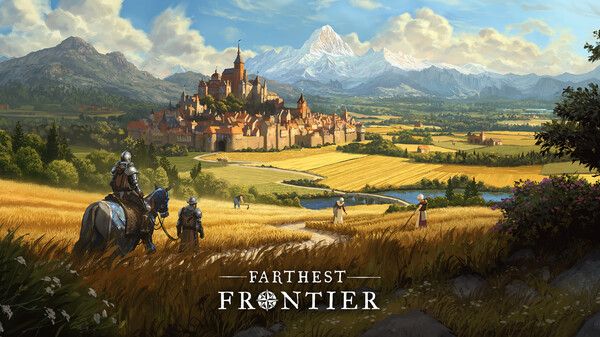
Protect and guide your people as you forge a town from untamed wilderness at the edge of the known world. Harvest raw materials, hunt, fish and farm to survive. Produce crafted items to trade, consume, equip and fight with as you battle for your survival against the elements and outside threats.
Modeled estimate, not a reported figure. How we estimate →
Media

About
Protect and guide your small band of settlers to forge a town from untamed wilderness at the edge of the known world. Harvest raw materials, hunt, fish and farm to sustain your advancing town. Produce crafted items for villagers to trade, consume, equip and fight with as you battle for your survival against the elements and outside threats (pacifist mode available for players who do not want to engage in combat).
Harvest, Grow, Craft - Harvest 16 different raw materials from wood, stone and clay, to metal ores, wild herbs, and honey. Grow 19 types of food, including forage items, fish and game, plus 12 food crops, each with different characteristics. Produce 32 crafted items and materials in a multi-tiered economy.
Build and Advance - Construct over 190 different buildings as you grow your town from a fledgling settlement to a bustling city. Your town center and housing will advance through multiple building tiers as the prosperity and desirability of your town increases and advancements are made in a vast 140+ point Tech Tree. Upgrade production buildings to increase efficiency and enable production of more advanced items. Construct a temple and customize your people’s faith with discoverable relics.
Most Detailed Farming System Ever - Strategically select from 12 crops with unique growing characteristics and configure crop rotations to maintain soil fertility, avoid heat and frost damage, and prevent the accumulation of diseases. Cultivate your fields over time, removing weeds and rocks, raising fertility and adjusting soil mixture to achieve maximum crop production to keep your growing population fed.
Advanced Town Simulation - Villagers actively live their lives and perform their jobs in real time. Watch as villagers carry goods across town from remote work-sites to be processed into materials and crafted into items. See foods and goods delivered to homes, the trade post or stored for later use. Develop roads, transport wagons and improve storage methods to facilitate the efficient movement of goods through your town and prevent spoilage.
Randomly Generated Maps - No game is ever quite the same with beautiful, completely randomized terrain generation and resource distribution. Unique biomes and map themes increase replayability, with extreme maps leading to unique challenges. Controls allow players to specify the amount of water or mountains they desire, even down to which resources can generate on the map.
Idyllic to Brutal - Customizable difficulty options allow players to turn off features like invaders and disease, for a more tranquil experience or max out difficulty to truly test their town-builder prowess. Enable custom game options to cater the experience to your desires.
Environmental Interaction - Develop your economy based on which resources are locally abundant and produce items for trade to acquire that which you lack. Erect fencing to keep deer away from crop fields and stop bears from raiding food storage. Manage tree cover to prevent underground water supplies from drying up. Balance the need to clear land for agriculture around vital natural resources like wild growing medicinal plants and forage items.
All Them Old-Timey Diseases! - Ensure your villagers have clean water to stop outbreaks of dysentery and cholera. Collect berries and plant greens to avoid scurvy and ensure a healthy diet. Make sure villagers are properly shoed and clothed to reduce chances of contracting tetanus, rabies or frostbite. Build a healer’s house to quarantine the infected and provide herbs and medicine for treatment. Manage rodent populations by collecting waste, securely storing food and employing rat catchers to ward off the feared bubonic plague.
Fend Off Would-Be Invaders - Choose to play on pacifist and avoid combat altogether or engage with varying levels of raider difficulty to raise the stakes for your town’s survival. Progress from wood palisades to stone walls, build towers and barracks, recruit and equip soldiers in the defense of your town as rising prosperity attracts the attention of raiders and foreign armies seeking plunder.
Steam Workshop Integration - With full support for modding through the freely available Unity development tools and Steam Workshop, players have the power to take the game's strong foundation and build upon and reinvent it to their wildest desires.
Crate Entertainment is a fully independent developer and publisher located outside Boston, MA. Crate is best known for the critically-acclaimed action-RPG, Grim Dawn. Join the Crate community and help shape the future of development of our games and be among the first to receive news about Farthest Frontier by participating in polls and discussions on our forum.
Genres
Stats
All-time low is the lowest price we've recorded for this game since we started tracking it.
Languages: English*, French, Italian, German, Spanish - Spain, Czech, Korean, Polish, Portuguese - Brazil, Russian, Simplified Chinese, Swedish +3 more
Updates
Build ids and update times come straight from Steam's PICS — the same source SteamDB reads. Patch history grows as we record new builds.
Engagement
Hours played at review time, across 605 reviews with recorded playtime.
Reviews
Themes across 604 recent reviews and how positive each mention is. A keyword signal, not full sentiment analysis.
positive critical· bar length = how often the theme comes up
Reviews
The biggest problem with Farthest Frontier isn't balance, difficulty, or complexity. It's that the game constantly wastes the player's time. This is one of the most beautiful and immersive city builders on the market, which makes its quality-of-life problems even more frustrating because they're not hidden behind a bad game. There is an excellent city builder underneath all of this, but interacting with it often feels like fighting the interface instead of managing a settlement. Take building site management. If I place twenty construction sites to test a neighborhood layout and later decide it doesn't work for what I'm trying to build, I can't simply drag-select them and press Delete. I can't bulk-cancel them. I can't use the so-called "Manage Buildings" tool. Instead, I have to click each individual build site, move my mouse across the screen to the delete button, click it, move my mouse back across the screen to confirm, and repeat that process for every single structure. Twenty build sites means roughly sixty clicks for something that should take seconds. What's even more baffling is that the "Manage Buildings" tool doesn't actually manage buildings. It manages roads, plazas, decorations, walls, towers, and shelters while excluding one of the most common things players actually need to manage: building sites. That design philosophy shows up everywhere. The game constantly pushes the player through extra menus and unnecessary steps for routine actions. Want to remove construction plans? Open a window. Want to review or manage large groups of structures efficiently? Good luck. Many systems feel designed around repetitive manual interaction rather than giving the player practical tools to manage a growing settlement. The larger your town becomes, the more obvious these shortcomings become. This lack of clarity extends into one of the most frustrating parts of the entire experience: logistics and system transparency. The game often provides minimal feedback about why production chains are failing or stalling. You’ll see messages like “production halted” or notice critical shortages without clear explanations of what caused them or how to resolve them efficiently. Resources appear to exist in the settlement, yet aren’t being delivered where they are needed. Workers behave in ways that are difficult to predict or diagnose, and instead of clear diagnostic tools, the player is left to manually trace problems across multiple buildings and storage points. In a city builder where logistics are the backbone of progression, this lack of visibility turns problem-solving into guesswork far more often than it should. This leads into one of the game's biggest recurring issues: many systems don't behave the way players would reasonably expect them to. The flattening tool frequently behaves more like a smoothing tool than a flattening tool. The Manage Buildings tool doesn't actually manage many of the structures players most commonly need to manage. Expensive hedge fences and iron-wrought fences provide no desirability despite being some of the most visually appealing structures players can build. Time and time again, the game teaches players that the obvious solution is not the correct one. Instead of feeling intuitive, many systems feel like they require players to discover workarounds for problems that should not exist in the first place. The desirability system is perhaps the clearest example of this disconnect. Hedge fences and iron-wrought fences are some of the nicest-looking structures in the game. They're expensive, visually appealing, and exactly the kind of thing players naturally want to use when creating attractive residential districts. Yet they provide absolutely no desirability. Their practical purpose is largely limited to controlling animal access, while a handful of cheap gardens provide significantly more value for improving residential areas. The issue goes beyond fences. Many structures that clearly exist to improve the appearance of a settlement contribute nothing to desirability at all. Every aesthetic investment should provide at least some benefit to desirability, even if it's small. The amount can scale based on cost, prestige, or upgrade level, but when players spend resources making their city look better only to discover the game doesn't recognize that effort, the system feels arbitrary rather than intuitive. A small garden should not outperform nearly every other beautification option simply because it happens to be one of the few objects the system rewards. The game should encourage creative city design, not funnel players toward a handful of mathematically optimal decorations. Ironically, the desirability system also exposes another problem with the terrain system. The flattening tool frequently requires multiple passes and often struggles to create suitable construction space without creating awkward-looking terrain. In practice, I've found that decorations and gardens do a better job preparing building areas than the dedicated terrain tools. By placing inexpensive decorative objects across an area, I can preserve the natural rolling hills, create flatter building footprints, and prevent structures from clipping into terrain more effectively than if I had used the actual flattening tool. When decorative objects perform the job better than the system specifically designed for that purpose, something has gone wrong at a fundamental level. One recurring theme throughout Farthest Frontier is that players are often rewarded for finding workarounds rather than engaging with the systems as intended. The most effective solution frequently isn't the tool designed for the job, but some unrelated mechanic that happens to produce a better result. Gardens become superior desirability generators compared to more expensive beautification projects. Decorative objects become better terrain preparation tools than the flattening system itself. Rather than reinforcing the game's mechanics, these situations encourage players to bypass them. What makes these issues especially frustrating is that they all point toward the same underlying problem: a lack of focus on player interaction and quality-of-life in a genre built around managing things at scale. Many actions still require repetitive one-by-one interaction long after the settlement has grown beyond the point where that makes sense. What makes all of this so frustrating is that none of these complaints are about wanting the game to be easier. Good quality-of-life features don't remove challenge; they remove unnecessary friction. They respect the player's time and allow the player to focus on meaningful decisions. Farthest Frontier often does the opposite. Too many systems feel like they were designed around workarounds rather than convenience, forcing players to spend time wrestling with interfaces instead of building cities. The tragedy is that beneath all of these issues is arguably one of the best city builders in the genre. The atmosphere is fantastic, the visuals are fantastic, and the core simulation is genuinely compelling. But after years of development, it is difficult to understand why so many basic quality-of-life problems remain unaddressed when they affect some of the most common actions players perform. Farthest Frontier doesn't need more content nearly as much as it needs the developers to modernize the experience, embrace intuitive design, and start respecting the player's time.
You can play for 10 in game years, and if there is a bandit camp near your settlement all it takes is one settler running past it and getting killed. After that workers and nearby settlers will constantly try to carry that body to the cemetery for burial and they will keep dying to the same bandit camp over and over again. At that point the game is basically over because this bug has not been fixed for 8 years and the developers still have not added a simple option to cancel the burial of a specific corpse.
Это не игра, а памятник геймдизайнерскому упрямству и полнейшей технической импотенции. Разработчик типичный мододел-плагиатор со сломанным логическим мышлением. Он создал продукт, который разваливается под собственным весом, заставляя игрока тратить сотни часов впустую ради несбалансированного, заскриптованного и технически неиграбельного финала. Игра экономически заставляет держать планку населения в 2000-3000 жителей, но движок игры к этому абсолютно не готов. Из-за кривой реализации и неумения работать с современными процессорами (включая массовку на SIMD-инструкциях), игра начинает выдавать перманентные микрофризы уже на 1000-1500 поселенцах. Самое смешное, что это не зависит от мощности вашего процессора. Вы можете купить топовый CPU, но игра все равно будет лагать, потому что код написан левой ногой. В это невозможно играть - в этом можно только сидеть. Разработчик зажал игрока в тиски своего скудного и ущемленного воображения. Вы никак не можете повлиять на основы игры. Вы просто наблюдаете за тем, как работают намертво заскриптованные, нелогичные базовые механики. Никакой гибкости, никакого креатива - только слепое следование чужим глупым рельсам. Весь проект - это ленивая, под чистую слизанная копия градостроя Foundation (2019 года). Вот только авторы Foundation написали свой собственный движок и создали уникальную архитектуру экономики. Она строилась исключительно на экономии ресурсов путем отправки солдат на боевые задания. В оригинальной Foundation эта цепочка работала идеально: Вы отправляете солдат на внешние миссии. Они перестают потреблять еду и ресурсы города на 1-2 месяца игрового времени (или дольше), снижая нагрузку на поселение. По возвращении они приносят огромную чистую прибыль в виде добытых ресурсов (оружие за защиту замков, золото за разбойников, припасы за мирные квесты). На этой экономике игрок выживал и двигался вперед. Разработчик просто скопировал чужую экономическую модель, но вырезал из нее саму суть - внешние задания и разгрузку снабжения. В этой помойке боевую систему прикрутили, но солдаты продолжают вечно жрать городскую еду и истощать запасы. Никаких плюсов и источников прибыли не предусмотрено. Из-за этого местная экономика вечно и неизбежно уходит в глубокий минус вынуждая вас создавать еще больше население(лаги). Мышление автора - это мышление "козла", шестеренки в голове которого работают только на то, как сделать ИГРОКУ плохо. В игру искусственно накидана куча отрицательных событий, которые происходят по тупым, слепым скриптам. Алгоритм вообще не анализирует состояние на карте: Вы можете развиваться, а можете еле выживать — игре плевать. У вас только что вырезали все население? Через год скрипт бездумно нарисует еще 400 врагов просто "потому что". Вы наладили производство и стали добывать вместо 10 камней\минуту - 20? Для игры это триггер запустить каскад пакостей: переломать всех шахтеров травмами, врубить эпидемию болезней или натравить очередную волну врагов. Нехватка ресурса в Foundation компенсировалась торговцами. Эту часть так же скопировали под чистую, но с "козлиным" мышлением - например, если у вас не хватает шкур, вам никогда не придет торговец с ними. По мнению упоротого автора сего чуда - нужно нажимать на кнопку "запрос интересуемого ресурса", чтобы торговец его привез с огромной наценкой, что ставит в полный тупик, т.к прибыль в поселении до 2-3 уровня в зависимости от типа карты буквально ничтожен и съедается на инфраструктурные объекты типа "компостной кучи", "дом лекаря" и важнейшую вещь - НАЕМ СОЛДАТ и ИХ ЗАРПЛАТЫ. Мало того, что игра генерирует случайное число противников из воздуха, так разработчик еще и полностью забил х** на зонирование респавнов. Враги могут пойти на вас одним скопом, а могут одновременно с 5 сторон. Там стоит простейший, примитивный счетчик +1, который тупо множит направления атаки, не думая о том. где стоит поселение игрока.( эта кретинская функция может заспавнивать врагов прямо рядом с домами поселенцем. Есть скрин ). Но апогей идиотизма кроется в триггерах интерфейса. На ваше поселение могут совершить два набега за один год просто потому, что вы держали открытым окно Базара или настраивали севооборот у полей. Код анализирует не состояние игрового мира, а то, на какие менюшки нажимает игрок. Это демонстрирует тотальную профнепригодность программиста. Капкан на 100+ часов без финала Из-за поломанного баланса, идиотских триггеров и отвратительного кода игра искусственно затягивает время. Вы вынужденно наигрываете более сотни часов, развиваетесь, строите, а в итоге неминуемо упираетесь в тупик. Завершить партию невозможно: экономика коллапсирует из-за логических дыр плагиатора, а сама игра превращается в слайд-шоу из-за оптимизации. 100 часов вашей жизни улетают в помойку. ТЕМ САМЫМ ВЫ НЕ МОЖЕТЕ ВЕРНУТЬ ДЕНЬГИ ЗА ЭТУ ПОМОЙКУ, Т,К ЧТОБЫ ПОНЯТЬ ЧТО ЭТО ЧИСТЕЙШАЯ ПОМОЙКА - идет тупое отсрачивание понимания игроком происходящего(Т.Е тупо СОКРЫТИЕ гавна) Вердикт: Слизанный, кривой мусор от тупого мододела, который нихрена не шарит в балансе. Разработчик - абсолютный ноль во всем: в железе, коде, триггерах событий и экономике. И это лишь верхушка айсберга - детальный разбор каждой мелкой функции вызывает только ярость от позорного плагиата и глупости создателя. Проект не заслуживает ни секунды вашего времени. На прямые указания что не так от опытного программиста и эксперта в подобных экономиках - этот ишак заявляет что все нормально -> ЖРИТЕ, я приготовил.
这不是最远的边陲,这是最远的公厕 什么中世纪城镇发展管理都是虚的,核心玩法就只是居民拉屎,然后运屎,然后把屎变肥料,然后拿肥料浇菜,然后吃屎浇出来的菜,然后再次循环
To be honest, Crate Entertainment is the last developer I would have expected to make such a radical genre shift and move away from a tried-and-true formula to create something completely new. And yet, that’s exactly what they did. They abandoned the H&S genre and decided to create a classic survival city-builder… and yet they decided to make the task even more difficult for themselves. If you take a look for an overview of the currently available city builders you’ll notice a pattern. Absolutely every game tries to do something which will set it apart from the competition; it might be an original setting, atypical genre mix etc. However, here, the developers decided to do things their own way, so they simply created a medieval settlement simulator. There are no hidden or overt themes, nor anything unique. Just a simple life, its hardships, and small moments of respite and joy. It’s all very familiar and, frankly, pretty cliché. Yet it works. It works because the game is a realistic survival and city-builder based on sandbox mechanics. The game impresses with its complexity and the fact that it requires (just like in real life) you to meet all needs and gather all necessary resources. If you don’t provide fruit, scurvy will set in; if there’s no fresh water, dysentery and cholera will spread; if there’s no firewood or warm clothing, they’ll freeze or fall ill. If you want wine, you’ll also need to provide bottles. There’s nothing arbitrary about it. To achieve full production, you need technology, production lines for all components, and so on. [b]Would I recommend it? Yes. [/b] This game is a fantastic survival and city-builder that will satisfy anyone who wants to design realistic cities and refuses to settle for clichés. It’s clear that the game has been well-thought-out in terms of its concept, excellently executed in terms of gameplay and mechanics, and that great care has been taken to ensure all elements work seamlessly together. Yes, it has its flaws, but in my opinion, they do not detract from the overall positive experience of this game. ✅[list] [*] Game is visually stunning, but this effect is achieved through attention to detail and overall composition, rather than flashy graphics. Every building has been hand-modeled, which is clearly visible when zoomed in. Each building upgrade results in a more detailed model, which also perfectly reflects the city’s growth and prosperity. [*] Soundtrack was composed by Steve Pardo and is calm and atmospheric. Main theme is designed to reflect both the era in which the game is set and the so-called hardships of everyday life. To be honest, both the melody and the tempo of the tracks are a perfect fit for this game. Soundscape is also excellent. Sounds blend seamlessly into the surroundings and the flow of events. Combined with the music, they form a cohesive whole in which no single element overpowers the others. [*] 6 distinct biomes + advanced settings that allow players to further customize the gameplay to their preferences. Additionally, all maps are procedurally generated, so choosing a biome doesn’t mean you’ll see the same layout you might have seen in someone else’s game. [*] Agriculture. It’s probably one of the most complex systems that I’ve seen outside of the games dedicated solely to it. You need to manage variety of factors (soil composition, fertility profile, plant diseases, three-field rotation etc.), while planning and preparing fields for sowing. System not only encourages you to plan in advance but heavily suggest that you’re not planning it for next season but for the next decade. [*] Diverse, realistic systems and mechanisms designed to reflect production processes as accurately as possible. Building a functioning, self-sufficient economy requires a tremendous amount of effort, but it also brings great satisfaction. Core gameplay mechanics are well-designed. They keep the player engaged and evolve as the game progresses. [*] Various diseases and conditions that must be prevented. Preventive measures depend on the nature of the problem, but they cannot be ignored because a potential outbreak could, at best, set your colony’s progress back by light-years and, at worst, destroy it completely. Incidentally, this perfectly illustrates just how valuable every pair of able-bodied hands is and how important it is to ensure the well-being of your citizens. [*] Additional government policies that can yield significant benefits, but always involve certain trade-offs. E.g. food rationing - while this can reduce food consumption in the settlement, the average level of happiness will drop significantly. [*] Tech tree. Not every technology is groundbreaking, but each one makes gameplay much easier and increases your settlement’s chances of survival. [*] Combat portion is more like a tower defense. You need to plan and prepare your defenses against roving bands or local armies, but all of this takes place primarily on a logistical level. [*] Price/length ratio is well balanced. [/list] 😐 [list][*] Entire color palette seems to be dimmed, especially in spring and summer months. Don't get me wrong, it's perfect for winter but for the warmer seasons, I'd expect bolder, more vibrant colors. [*] UI at first glance seems to be not particulary user-friendly, but with time you learn to appreciate its design and planning. That said, due to its overall look it might be deterrent for some. [*] It would be nice if the game offered a few different scenarios to choose from. I know that some achievements set forth a particular goal to get them, but without exception, they all require playing on a very high. Not everyone has enough time or will to do that.[/list] ❌[list] [*] Game lacks a proper tutorial. What was added in Update 1.1 would be sufficient for the Anno series or other casual city-building games, but it isn't enough for a survival game. [*] Unity does not really fare well in generating larger (>2k citizens) and more complex cities but lag and/or framerate drop is entirely dependent on your rig. Some will saw it earlier, while others will be able to build massive cities. Developers tried to mitigate it but it’s one of perennial quirks of an engine and can’t really be removed. I'm just speculating here, but I suppose it would be better if the developers built their own fork of the Unity engine. Though that takes time and money so it could not be viable here. [*] I think there’s some kind of error related to the prioritization of resource transport. [*] Monuments need a redesign. Out of 3, only one justifies its costs while other 2 are either mediocre or bad. [*] Game should provide better information or visual cues regarding resource depletion. In current system, it’s far too easy to miss the moment when resource levels start to decline, so far too often the game has forced me to make snap decisions to mitigate the damage. It would be much easier if I were notified in advance when deposits were running low, rather than being forced to check the situation one by one. [*] City walls have no ramparts so most of the time archers or crossbowmen are a waste of resource. Strangely enough, they can shoot their enemies through the locked gates. Don’t know if it’s a bug or intended behavior. [*] We’re unable to build improved versions of the buildings from the start. We only can build basic ones and then keep upgrading them till we get desired results. [*] We should be able to enter into a contract with a merchant for the delivery of a specified quantity of goods at a specified price. [*] Flattening ground for future mine takes a lot of time, especially in mountainous areas. It would be better if the game allowed us to build angled or horizontal mine shafts. [*] Only one architectonical style, typical for medieval Central Europe. [/list]
画面很不错但是明显是个半成品且制作团队没有认真去考虑过里面的各项设置。 排除老生常谈的单核问题和bug, 科技点的设计就纯纯是为了浪费玩家时间。 一本科技就可以点的增加石矿效率, 可石矿要三本才能解锁建造。 二本给学院提供纸张的造纸厂需要砖块, 但砖块是三本才能解锁建造。 矿场和制铁的工厂分两个科技解锁, 如果排除掉矿场科技除了解锁铁矿场外同时能让你获得金矿和粘土矿, 那我要获得铁就必须花费两个科技点,且第一个科技点毫无作用, 因为铁矿石除了给制铁工厂供应外没有一点作用。 劫掠者和军队的设定也堪称脑瘫。 对方装备精良且训练有素,战斗力比一般村民高得多这个非常合理。 可我杀了他后为什么不能扒下他的装备自己穿? 我的村民每个人都有洁癖吗? 导致到头来这种不定期的事件只会成为消耗玩家资源的手段, 玩家在经历这些事件时几乎没有正反馈。 甚至征服者难度下的敌人会以离谱的数量出现, 而玩家一个兵营12个兵,哨塔也过于弱鸡。 最佳的防守方式居然是强行改变地形让敌人绕小路。 且到了中后期敌人开始有重步兵后用村民拳死掠夺者的方式就失效了, 我不要求每个村民都想帝国时代4里的英格兰农民一样会射箭, 但抄起工具打点伤害还是能做到的吧。 现在是村民一拳打在重步兵身上对方掉1滴血, 更搞笑的是我那个时候科技还爬不到点出二本兵。 黄金和与之相伴随的贸易系统也是如此。 黄金作为升本,建筑单位维护的重要资源, 平日里的主要来源居然是村民那点微不足道的税收。 先不论在这个有形的大手控制一切经济生产的游戏里黄金仅仅作为对外贸易的货币是有效的, 为什么我要给祭司医生乃至战士花费黄金来维护,而其他工作却不需要花费维护费用? 如果制作团队想加入类似维多利亚3那种每个工作场所工资不同且会随盈利亏损变化那还说得过去, 否则现在这种战士让本来是劳动力的工人无法进行生产劳动, 消耗照旧且我还得给他提供武器装备和黄金工资的情况, 就只能被解释为是为了拖慢玩家发展才设定的。 贸易系统也是一塌糊涂。 玩家无法主动外出寻找贸易机会,只能等不知带了什么货物的商人到访本身就很奇怪。 且建造几个重要建筑所需的重型工具居然只能通过贸易获得。 无法想象制作团队到底在想方设法延长游戏寿命上花了多少心思, 只能说有这个功夫不如老老实实完善一下游戏。
For years this has been my go to city builder. I play other city builders but I always come back to Farthest Frontier. To me it's a successor to Banished in spirit but it goes so much further and deeper. You can chill and build a cozy village in peace or you can challenge yourself in terms of making survival harder. Wildlife, diseases or even build a small army to stand up to the threat of roaming raiders and bandits. It's all there in the customization before you start a new game. There are 5 different biomes with varying terrain and resources. Map generation layout itself is largely randomized. But even this is customizeable to some extent. Check out https://farthestfrontier.wiki/wiki/World_Generation for more information. Many people have already experimented with seed generation and found good maps so a simple Google search will net you quick results. As a reward for reading my poor review of this amazing game I'll share a seed I like and play at the time of writing; 738C23264D8 Good luck!
The game is nice, but it doesn't seem complete, like it's only 70%-80% done and it's still in beta, and yet 1.0 is out. You can build bridges in the game, but there are no rivers. The terrain flatting tool doesn't work properly, where you have to click and drag an area multiple times to flatten it and between each time you have to wait for the villagers to do the work. The terrain manipulation in the game is just bad. Army management in the field is clumsy and incomplete. The trading system needs more polishing. Farming disease management is annoying and blasts you with alerts if you don't do it a certain way and you suffer crop loss, which makes the intricate farming system kind of pointless. They've already brought out a DLC, which is a bit overpriced for how little the DLC adds to the game, without changing what's missing from the base game, and that does not bode well for the future of the game.
挺好玩的中世纪城建游戏,从小村子建设到大城市很有成就感,随着建筑的升级,外观也会相应变化,从城建方面来说很适合造景党,可以选用依山傍水的地图种子,这样不会因为雇佣兵来骚扰而腹背受敌,不过游戏也有很多缺点 第一个缺点是没有终极目标,几乎就是无尽模式,会有雇佣兵不停的来骚扰你的城市,打退后再过几年就会还有更多更猛的雇佣兵来,而你的经济经不起失误,只能不停的存档和读档,只要资金不足,就会造不起兵去应战,想劝退雇佣兵也赔不起钱 第二个缺点是目标指引信息不足,我到了游戏后期才看到有网格建设的功能,铺路可以不用歪七扭八,然后强迫症只能前功尽弃把城市推倒重来,反正建议是看到有什么不懂的按钮就点几下 第三个缺点是物流指引信息不足,当城市越来越大后,你很可能看到很多村民从西城往东城送东西做无用功,当城市里有上百个快递员而没有人真干活的时候,就离崩盘不远了,没有面板来显示物流信息提前规划就很草台班子 第四个缺点是作物经济太无脑,钻研播种顺序没有用,最后都是无脑抄作业即可,也包括养鸡养羊都不如养几头牛就够了,经济模式很单调,就相当于只靠豆橛子和现宰牛肉就能养活几百个人口,什么你要找蔬菜罐头和奶酪罐头,奢侈品搁我这儿是不存在的 第五个缺点是商人经济太无脑,随着时间推进会有很多商人来造访城市,你可以买卖货物当倒爷,但商人的钱是有限的,他的负重却是无限的,你可以卖他成百上千个农产品铁制品,商人还能一把拉走就离谱 第六个缺点是小孩不受控,我懂现在游戏不让控制小孩,但我在冬天的前夕派出村民去野外收集遗迹的东西,然后就看到几个小孩在冬天的野外来来回回,划过去看到的是遥远的遗迹爆出了衣服,而我又恰好因为这个冬天没有备好足够的衣服,就会看到小孩离家出走去地图的边陲遥远的遗迹去捡衣服来穿,命不好的甚至会冻死在野外的半路,这个时候千万要控制好家人不要让他们在冬天贸然去收尸,不然可能还要再搭几个人命进去 第七个缺点是卡顿掉帧,以六百个人口为分水岭,这个阶段差不多就是升级到大城市了,然后就会出现很明显的卡顿掉帧,就会劝退很多电脑性能不足的玩家,玩到上千个人口更是卡死闪退,这个时候就是我的游戏时间三十小时被弹出,搁这儿防沉迷呢 7/10
[h1] I've been playing this game for 10 hours (which is 30 years in my settlement), and these are my impressions: [/h1] First of all, I love this game. Its atmosphere is so good that sometimes I'm just chilling and exploring the city. The building mechanics are pretty good; it feels very free, and you can design your village however you like. The way the game works is very creative and detailed, and it keeps you playing without stopping—it’s addictive. The graphics are awesome. I think this is one of the main strengths of the game; the great visuals make the experience very satisfying. The defense mechanics are average and nothing new. However, there are no other settlements on the map to fight and take over, except for a few small barbarian camps. The only combat mechanic is defending your village from barbarian raids. Sometimes predators can also be a problem for settlers, so you have to deal with them occasionally. However, most of the game is about resources and expansion rather than wars. I think this is the unique part of the game and could answer the question: "Why should I play this instead of other city builder games?" The answer is: it’s peaceful. I'm considering playing it more. I think this is just the beginning, because I checked the community page and saw that my city is still just a tiny village. There is a very large map to explore and build a much bigger settlement. The only problem I had is that most of the buildings look very similar, which makes them harder to distinguish and interact with. I haven't encountered any bugs yet. Optimization could be better, though. Overall, I would give this an 8.8/10.
Related
Related
Trends
Modeled estimate over time, reconstructed from Steam's monthly review histogram.
Momentum
Pace estimated from the game's recent review growth (our daily snapshots) at its own sales-per-review ratio — a momentum signal, not booked sales.
Engagement
DAU/MAU are modeled from peak concurrent players (≈×8 and ×28) — Steam publishes no active-user counts, so treat these as rough estimates, not reported figures.
Audience
Audience
Games most often reviewed by the same players — an audience-affinity signal from our review sample, not full ownership data.
Estimated from the language of this game's reviews — a proxy for where players are, not official Steam demographics.
Related
| Quantum Break | $27.3M | 30.7K | 86% | $39.99 |
| Gunfire Reborn | $27.3M | 103.4K | 93% | $19.99 |
| The Walking Dead | $27.3M | 80K | 97% | $14.99 |
| The Elder Scrolls IV: Oblivion® Game of the Year Edition Deluxe (2009) | $27.2M | 52.8K | 95% | $19.99 |
| Wobbly Life | $27.2M | 34.9K | 97% | $24.99 |
| Anno 117: Pax Romana | $27.4M | 12.4K | 70% | $59.99 |
Related
| Kingdoms and Castles | $18.5M | 31.3K | 94% | $19.99 |
| Ostriv | $4.7M | 7.6K | 95% | $24.99 |
| Cartel Tycoon | $3.1M | 3.8K | 76% | $29.99 |
| Ancient Cities | $941K | 2.1K | 63% | $14.99 |
| Depraved | $64.9K | 1.2K | 61% | $1.99 |
| Manor Lords | $60.3M | 89.1K | 84% | $25.99 |