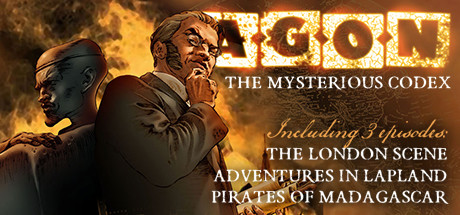
AGON - The Mysterious Codex (Trilogy), developed by Private Moon Studios and published on Steam by M.INDIE, is a classic point-and-click adventure collection that compiles the first three episodes of the AGON saga into a single package. Rooted in traditional adventure game design, it follows Professor Samuel Hunt, a British Museum historian drawn into a globe-spanning mystery involving ancient relics and legendary board games collectively known as the “AGON.” Structured as an episodic trilogy—The London Scene, Adventures in Lapland, and Pirates of Madagascar—the game embraces intellectual curiosity and methodical puzzle solving over action or spectacle.
The story begins in Edwardian London, where Hunt receives an enigmatic clue tied to a centuries-old codex. From there, the narrative expands outward, taking players to the snowy landscapes of Lapland and eventually to the lush, tropical environments of Madagascar. Each chapter is self-contained yet connected by the overarching mystery, creating a sense of progression while allowing each location to develop its own cultural flavor. The episodic design gives the trilogy a serialized charm reminiscent of classic literary adventures, with each new destination presenting distinct characters, traditions, and historical contexts.
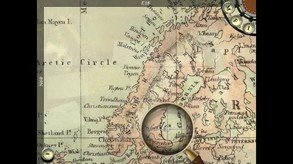
Gameplay adheres to the conventions of classic point-and-click adventures. Presented through a first-person panoramic viewpoint, players explore static but richly detailed scenes, interact with objects, collect items, and solve puzzles to unlock new areas. The puzzles are central to the experience, often drawing from logic problems, symbolic riddles, historical references, and mechanical contraptions. Many of them are cleverly integrated into the environment, requiring attentive observation and thoughtful deduction. However, as with many adventure titles of its era, the difficulty curve can be uneven. Some puzzles feel intuitive and satisfying, while others verge on opaque, occasionally necessitating careful note-taking or patient experimentation.
The trilogy’s visual presentation reflects its mid-2000s origins. Environments are built using pre-rendered backgrounds that emphasize atmosphere and detail rather than dynamic movement. While character models and animations may appear dated by modern standards, the art direction successfully captures the mood of each setting. The London chapter conveys quiet intellectual intrigue, Lapland evokes isolation and folklore-tinged mysticism, and Madagascar introduces vibrant jungle scenery layered with colonial history and local tradition. The restrained camera movement and deliberate pacing contribute to immersion, reinforcing the contemplative tone.
Audio design plays an important supporting role. Ambient sounds—wind across snowfields, jungle wildlife, subdued indoor echoes—enhance environmental authenticity. The musical score leans into orchestral and thematic motifs that underline the sense of global exploration. Voice acting adds personality to Professor Hunt and the supporting cast, giving narrative exchanges weight and warmth. Though production values may not match contemporary cinematic standards, the voice work and soundscape effectively support the storytelling.
Pacing is steady and methodical, encouraging players to linger in environments and absorb contextual clues. Unlike modern adventure games that emphasize streamlined progression, AGON expects patience and deliberate exploration. Backtracking is common, and progress often depends on synthesizing information gathered across multiple scenes. For players who enjoy slow-burning mystery and intellectual engagement, this structure is rewarding. For those seeking fast-paced interaction or guided objectives, it may feel antiquated.
One of the trilogy’s most distinctive elements is its thematic focus on ancient games as cultural artifacts. The AGON relics are not merely plot devices; they represent forgotten traditions and intellectual legacies from different parts of the world. This emphasis lends the narrative an educational undertone, blending fiction with historical curiosity. Professor Hunt’s scholarly perspective reinforces this angle, making the adventure feel less like a swashbuckling escapade and more like an academic quest for preservation and understanding.
While the trilogy’s age is evident in its interface and occasional mechanical rigidity, it retains charm through its commitment to classic design principles. The episodic format keeps the story digestible, and each chapter’s distinct setting prevents visual monotony. Although modern players accustomed to streamlined UI and dynamic camera systems may find aspects dated, the game remains faithful to the spirit of traditional adventure storytelling.
Ultimately, AGON - The Mysterious Codex (Trilogy) is a thoughtful and atmospheric homage to classic point-and-click adventures. Its strengths lie in its globe-trotting narrative, immersive environments, and intellectually driven puzzles. While it may not deliver the polish or accessibility of contemporary titles, it offers a nostalgic and methodical experience for players who appreciate historical mystery and deliberate exploration. For fans of old-school adventure games, it stands as a modest but sincere expedition into a world of forgotten relics and enduring curiosity.
Rating: 6/10