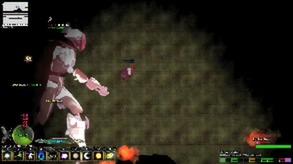
A Valley Without Wind is an ambitious indie action-adventure platformer created and published by Arcen Games. Released in 2012, the game attempts to merge multiple genres into a single large-scale experience, combining procedural exploration, magical combat, light strategy mechanics, and survival elements within a massive dynamically generated world. Rather than guiding players through a strictly linear narrative, the game embraces an open-ended structure where exploration, experimentation, and gradual expansion of a survivor settlement form the backbone of progression. This approach reflects the experimental design philosophy of the developer, which frequently focuses on large systemic worlds and player-driven gameplay rather than scripted storytelling.
The game takes place in a distant future where a once-thriving world has been devastated by an apocalyptic climatic catastrophe known as the Wind. The disaster shattered civilization and warped the environment, leaving behind dangerous storms, strange magical anomalies, and powerful overlords that rule the remaining territories. Humanity survives only in scattered communities struggling to rebuild in the face of overwhelming odds. Players assume the role of a survivor working to reclaim the world from these hostile forces. Instead of controlling a single permanent hero, the game treats the player as the leader of a broader resistance group composed of multiple survivors. Individual characters can perish during dangerous missions, but their legacy continues as new survivors take their place and carry forward the community’s efforts to reclaim the land.
One of the defining features of the game is its enormous procedurally generated world. Rather than relying on handcrafted maps, the game creates continents composed of numerous regions that are generated dynamically each time a new campaign begins. Each region contains multiple interconnected side-scrolling environments that players can explore. Outdoor landscapes lead to buildings, caves, ruins, and underground facilities that extend vertically and horizontally, creating layered exploration spaces. Because the environments are procedurally generated, every playthrough presents a different layout of areas, enemies, and resources. This design gives the game a strong sense of scale and unpredictability, as players never quite know what they will discover in the next unexplored location.
Gameplay primarily unfolds as a side-scrolling platforming adventure where players traverse these areas while battling hostile creatures and collecting resources needed to strengthen their settlement. Combat revolves around a large variety of magical spells rather than conventional weapons. These spells serve both offensive and utility purposes, allowing players to fire projectiles, create temporary platforms, manipulate the environment, or enhance mobility. Players can equip multiple spells simultaneously and combine them in creative ways to adapt to different situations. Some spells focus on direct damage, while others provide defensive capabilities or movement options that help navigate difficult terrain.
Exploration plays a central role in the gameplay loop. As players move through different regions of the world, they uncover hidden structures, magical artifacts, crafting materials, and new missions. These discoveries allow players to unlock additional spells, improve existing abilities, and gather resources needed to support their community of survivors. Because the world is constantly evolving, stronger enemies and more complex challenges begin appearing as players grow more powerful. This gradual escalation of difficulty helps maintain tension throughout the long campaign while encouraging players to continue exploring new territories.
Beyond individual exploration missions, the game also incorporates elements of settlement management. Survivors rescued during exploration can join the player’s settlement and contribute to rebuilding efforts. Some survivors can be assigned to resource gathering missions that generate materials over time, while others unlock new upgrades or special abilities that benefit the entire community. This management system adds a strategic layer to the experience, requiring players to decide how to allocate resources and survivors in order to strengthen their resistance against the hostile forces that dominate the world.
The long-term structure of the game revolves around defeating powerful overlords who control each continent. These bosses represent the main threats within the world and act as major milestones for the player’s progress. Before confronting an overlord, players must weaken the surrounding region by constructing shelters that stabilize the environment and reduce the destructive storms affecting the land. Once enough preparations have been made, players can challenge the overlord in a climactic battle. Defeating these enemies allows players to move on to new continents that introduce stronger foes and larger areas to explore, effectively expanding the scale of the game as the campaign progresses.
Visually, the game uses a retro-inspired 2D presentation that combines pixel art characters with modern lighting effects and environmental particle systems. The world is depicted as a series of ruined cities, desolate landscapes, and corrupted environments shaped by the destructive forces that reshaped the planet. Although the graphical style is relatively simple compared to modern AAA titles, it effectively communicates the bleak atmosphere of a world struggling to recover from disaster. Weather effects such as storms and magical distortions add visual variety to the environments and reinforce the setting’s hostile nature.
The sound design complements this atmosphere with a moody electronic soundtrack that blends ambient melodies with more energetic battle themes. The music often reflects the feeling of wandering through an abandoned world filled with lingering danger. Sound effects for spells, enemy attacks, and environmental hazards provide clear feedback during combat encounters, ensuring that players can react quickly to the many threats encountered throughout their journeys.
Despite its creative ambitions, the game received mixed reactions from critics and players. Many appreciated the sheer scale of the procedurally generated world and the enormous variety of spells available for experimentation. The ability to approach exploration and combat in many different ways gave the game a sense of freedom rarely found in traditional platformers. However, the heavy reliance on procedural generation sometimes led to repetitive environments and uneven level design. Without handcrafted structure guiding the experience, some areas could feel less memorable than those found in more traditional adventure games.
Another common criticism involved the game’s somewhat unfocused design. By attempting to combine so many different systems—platforming, crafting, exploration, settlement management, and strategic planning—the overall experience occasionally struggled to maintain a consistent gameplay rhythm. Some players enjoyed the freedom offered by this hybrid design, while others felt that the individual mechanics could have benefited from greater refinement.
Ultimately, A Valley Without Wind stands as an ambitious attempt to create a vast sandbox platformer where exploration and experimentation take precedence over scripted storytelling. Its blend of magical combat, procedurally generated environments, and community management creates a gameplay experience that feels both unusual and expansive. For players interested in indie titles that prioritize creativity and scale over conventional design, the game provides a unique journey through a mysterious and unpredictable world.
Rating: 6/10