Space Aliens have built a stupidity machine that's slowly reducing everyone's IQ to single digits. Worse yet, the only person who can stop them is Zak McKracken, reporter for the disreputable National Inquisitor, who dreams up stories about carnivorous cantaloupes and vegetarian vampires.
Modeled estimate, not a reported figure. How we estimate →
Media

About
Genres
Stats
All-time low is the lowest price we've recorded for this game since we started tracking it.
Languages: English
Engagement
Hours played at review time, across 40 reviews with recorded playtime.
Reviews
My least favorite LucasArts adventure, unfortunately. I really wanted to love this one, but it's extremely obtuse and filled with dead-ends and annoying mazes. If I didn't have a guide or save states, I seriously doubt I would have ever come close to beating this. Some really funny moments, but the game is too much of a chore to be worth it imo. If you wanna play some old, OLD school LucasArts, I'd recommend Maniac Mansion instead. That one is smaller but much more tightly designed.
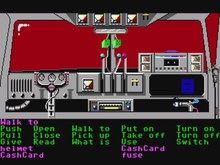
Zak McKracken and the Alien Mindbenders is a classic point-and-click adventure originally developed by Lucasfilm Games and published by Lucasfilm, now distributed by Disney, and it stands as an important milestone in the early history of narrative-driven computer games. Released during a formative era for the genre, it helped establish many of the conventions that would later define adventure games, particularly those built on the SCUMM engine. While its age is unmistakable, Zak McKracken remains a fascinating blend of ambitious design, eccentric humor, and experimental storytelling that reflects both the creativity and limitations of late-1980s game development. The story follows Zak McKracken, a struggling tabloid journalist plagued by strange headaches and prophetic dreams, who soon discovers that Earth is under threat from a group of aliens attempting to suppress human intelligence. What begins as an absurd premise quickly expands into a globe-spanning conspiracy involving ancient civilizations, psychic powers, and long-standing mysteries drawn from fringe theories and pop culture speculation. The narrative leans heavily into parody, referencing real-world locations such as the pyramids, Stonehenge, and even Mars, while treating them with a tongue-in-cheek sincerity that gives the game its distinctive tone. Rather than unfolding in a tightly scripted manner, the story is discovered through exploration, environmental details, and the gradual piecing together of clues scattered across the world. Gameplay is rooted firmly in the traditional verb-based adventure format, where players issue commands like walking, picking up objects, talking to characters, and combining items to solve puzzles. Zak McKracken offers an unusually large world for its time, allowing players to freely travel between numerous countries and planets once they have the means to do so. This sense of freedom is both one of the game’s greatest strengths and one of its most challenging aspects. The open-ended structure encourages curiosity and experimentation, but it also means that progress can feel opaque, with puzzles that sometimes lack clear logical connections or rely on obscure solutions. Puzzle design in Zak McKracken is highly variable, ranging from clever and satisfying to frustratingly unintuitive. Some challenges reward lateral thinking and careful observation, while others hinge on very specific item usage or timing that can feel arbitrary to modern players. The game does not shy away from letting players fail, occasionally allowing situations where progress becomes impossible without realizing it immediately. This unforgiving approach reflects the era in which it was created, when adventure games often assumed repeated attempts, note-taking, and even external hints as part of the experience. Visually, the game’s pixel art is simple by today’s standards but rich in character. Environments are packed with odd details and visual jokes that reinforce the game’s quirky personality, and character animations, though limited, convey a surprising amount of expression. The color palette and layout of each location help distinguish the many areas players visit, giving the game a sense of scale and variety that was impressive at the time. Audio elements are minimal, but the music and sound effects that are present contribute to the game’s surreal and playful atmosphere. One of Zak McKracken’s defining qualities is its humor, which blends satire, absurdism, and cultural references into nearly every interaction. The jokes are often broad and unapologetically strange, poking fun at conspiracy theories, bureaucracy, and science fiction tropes. While some of this humor has aged better than others, it remains a key part of the game’s identity and charm. The writing reflects a willingness to be weird and experimental, something that later Lucasfilm Games titles would refine into more polished comedic storytelling. Playing Zak McKracken today, especially via modern platforms like Steam, is as much an act of historical appreciation as it is pure entertainment. Its mechanics can feel archaic, its puzzles occasionally exasperating, and its pacing uneven, yet these elements are inseparable from its legacy. The game represents a period when designers were still discovering how interactive storytelling could work, and its ambition often outweighs its flaws. For fans of classic adventure games, retro computing, or the evolution of game design, Zak McKracken and the Alien Mindbenders remains a memorable and influential experience that captures a unique moment in gaming history. Rating: 8/10
Got it on GOG long ago, but I ultimately couldn’t resist getting a copy here on Steam too - it’s was a duty, in front of one my favourite adventure games. It sits in a peculiar place: it’s not the one that “started it all” like [b]Maniac Mansion[/b] (whose popularity at the time was also boosted by the NES version), and at the same time it quickly became dated compared to later titles, especially [b]Monkey Island[/b]. I was fresh off that game at the time, and it took a while to warm up to [b]Zak[/b]. There are several valid criticisms that can be raised in light of what came even just a few years later. Even for its time, there could have been more frames of animation, as the characters feel blocky and rigid. The inventory is a chore to scroll through, as only four items can be visible at once. The mazes can get annoying, and above all there are plenty of ways to die or get stuck due to the strict dependence on money for travel, or the risk of leaving behind or wasting a necessary item. From what I remember of my experience at the time, you’ll likely need an initial playthrough just to learn optimal routes and other tricks to conserve money (like avoiding unnecessary phone bills). The lack of a “Talk” command also means dialogue is more limited than what later Lucasfilm/arts titles would offer. But once it clicks, with some patience and plenty of save files, a globe-trotting (and beyond) adventure opens up. There’s a high variety of locations, plenty of clever puzzles with no strict order for much of the game, and even multiple controllable characters later on (it followed up from [b]Maniac Mansion[/b], after all). The sci-fi/new-age premise is full of humour, starting from the unforgettable opening dream. And, technology that makes humans more stupid? How absurd… ha ha ha!… Ha. *[small cough]* Of course, I speak as someone from an era when the game was still relatively recent and I had more time and patience for it, but the fact I can still redo many puzzles from muscle memory says a lot about how much it stuck with me. It’s less polished than later Lucasfilm/arts games, but still rightfully part of that string of classics. Fan projects over the years have tried but never fully recaptured the magic; the 2008 fan sequel is an impressive effort, but in my opinion the humour and writing miss the mark. Back in the day, I had already heard of a Japan-exclusive version with enhanced graphics and sound, which remained a distant curiosity for fans until the advent of ScummVM. It’s available here and is the version shown in the store screenshots. It mostly looks good, if not great, but can sometimes be a bit gaudy, especially in the Mars Maze. While it’s more forgiving, it also removes dark areas where you need a lighter or torch to see. It does, however, benefit from a more convenient interface that shows up to ten items at once. Less well known is that there is also a very early DOS version (the more commonly known one here, uses graphics from the Amiga), with chunky graphics similar to the Commodore 64 version, albeit with a less muted palette. Zak doesn’t even have his iconic look yet, instead wearing a green shirt. There’s little reason to play it beyond curiosity, but including it here would have made this a truly complete package.
Il classico dei classici delle avventure grafiche! Il tema archeoesoterico probabilmente non risulta più così originale come poteva essere un tempo, ma l'umorismo bizzarro è ancora tutto lì. Il gioco presenta due versioni. Quella originale e quella "enhanced". Le differenze non sono moltissime. Forse consiglierei la prima perché un determinato strumento suona come dovrebbe suonare.
Classic Point and click adventure with a decent amount of lucas arts style humour and puzzles to solve
TLDR: If it wasn’t one you grew up with, you probably won’t enjoy it without substantial assistance. [b][u]General Thoughts/Overview:[/u][/b] Zak McKracken (ZMK) is an ancient point and click, a direct ancestor to the Lucas Arts greats that followed it. Tech was evolving rapidly at the time, and this game sits at a moment of evolution. For all its charm, it was quickly surpassed and seems to have largely been forgotten or ignored, I suspect largely due to the run ending soft-locking flaws preventing progress. Initially, we are Zak (but later the cast expands), and we’re a reporter for a trashy tabloid setting out to make our living. Little do we know we’re about to stumble into the greatest adventure of our life. But before we get abducted, let’s dig down and have a closer look at this ancient artefact. [b][u]Pros:[/u][/b] [list][*] Even a game as old as this has multiple ways to solve a bunch of the puzzles… It puts a lot of modern games to shame with the sheer variety, and also the consequences, of different actions to achieve the same goal. [*] A lot of the humour and quirk of Lucas Arts games can still be seen here. The point and click genre really did have its day, and it’s sad that the storytelling and genre seems to be less beloved today. [*] No real handholding. You’re given basically nothing to go on at all. Nothing. And the game is better for it, dreams are important, scenes sometimes have meaning, and you’ll need an actual pen and paper to write some stuff down, or you’re stuffed later. [/list] [b][u]Cons:[/u][/b] [list][*] Right, the soft-locks are insane. I’m REALLY lucky I tried to explore everywhere I could before I properly settled into the problem solving, because it meant I saw before I’d properly begun, that it was possible to get soft-locked by travel costs. [*] The number of times I saw different things I could do, and then found out later which ones I needed to do, was very frustrating. It felt designed purely to eat up cash in order to soft-lock you. [*] The maze puzzles weren’t fun in the 90’s, they’re not fun now. I don’t mind a maze designed to halt progression until you have found a key to the path…. But ones designed purely to frustrate, relying on you to get lucky or be painfully methodical? Those aren’t good. [/list] [b][u]Suggested improvements:[/u][/b] [list][*] A skip button for the mazes, or a map somewhere you can copy. [*] A journal to store all the stuff you normally have to write by hand. [*] just make money infinite, so you don’t have to balance the resource. [/list] [b][u]Overall Recommendation:[/u][/b] Overall I don’t recommend ZMK. I think I’d feel differently if I’d grown up with it, I can see how it has all the hallmarks of a game I’d love… But I didn’t grow up with it, I found it in 2026, and frankly the modernisation of games has come so far mechanically that the game just feels bad to play. This isn’t a game for people who hate oldschool point and clicks. It isn’t for people who get frustrated easily, and it isn’t for people who need to be told explicitly what they need to do. This is a game designed for yesteryear, it’s from when respecting a players time wasn’t even a consideration. This is a game for the oldies, people who want to solve puzzles the hard way. This is a game for people who want to dig in and uncover the plot, with little to nothing to go on. This is a game for people who have time to mill through, and don’t mind restarting to optimise. And in 2026? I don’t think I recommend it in general, just if you fall into that golden oldie bracket. If you’re still interested, and new, and DO want to play, I recommend getting a guide for the maze sections as they’re extremely frustrating. [url=https://store.steampowered.com/curator/44852412/]My curator page[/url] with reviews by genre. In case you want to find more games, or even reviews, like this one.
Da gibts nicht viel zu sagen...ein alter Lucasarts-Klassiker im Stil von Maniac Mansion & Konsorten.
Das Spiel ist noch genauso wie ich es aus den 90ern in Erinnerung habe. War wirklich lustig es einmal wieder zu spielen zumal der Preis nicht wirklich Fragen aufwirft. Den deutschen Patch habe ich heruntergeladen und installiert, funktioniert problemlos.
Kniffliges Wiedersehen mit Gedankenblockade was die Rätsel angeht. Auch mit Lösung reicht ein kleiner Fehler wie den Sauerstoffhelm zu lange aufhaben und 1 der 4 Mitstreiter fällt aus. Das bedeutet dann Spiel wird unlösbar, weil jede Kollegin ist entscheidend um die Antidoofheit Schutzschildsmaschine aufzubauen.
Zak was the second point and click adventure games that I played growing up in the 80s. Maniac Mansion was my first, then Zak on the C64 (later the Amiga Version). If you're looking for humour, adventures and puzzles... this game should be one that you play before you die. :)
Related
Related
Trends
Modeled estimate over time, reconstructed from Steam's monthly review histogram.
Momentum
Pace estimated from the game's recent review growth (our daily snapshots) at its own sales-per-review ratio — a momentum signal, not booked sales.
Audience
Estimated from the language of this game's reviews — a proxy for where players are, not official Steam demographics.
Related
| Roblox | $2.5B | 50.1M | 84% | Free |
| Pokémon GO | $839.2M | 15.4M | 73% | Free |
| Black Myth: Wukong | $794.9M | 1.2M | 97% | $59.99 |
| PK XD: Fun, friends & games | $538.5M | 6.4M | 94% | Free |
| DayZ | $531.7M | 465.8K | 78% | $49.99 |
| 7 Days to Die | $425.3M | 403.5K | 87% | $44.99 |
Related
| Scholar Adventure: Mystery of Silence | $14.1K | 99 | 96% | $7.99 |
| Takara Cards | $14.1K | 142 | 82% | $3.74 |
| Ritus Exorcismus | $14.1K | 115 | 99% | $5.99 |
| Project RTD: Random Tower Defense VR | $14.1K | 56 | 75% | $8.99 |
| Ruckus Ridge VR Party | $14.1K | 56 | 64% | $9.99 |
| A-Men | $14.1K | 56 | 46% | $9.99 |