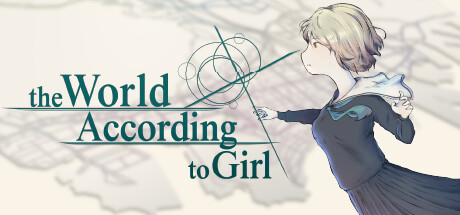
A deck-building roguelike caring game In a collapsed world, a plan to raise a young girl into a savior begins in order to find the only salvation. You become an "administrator" to raise a girl to become a savior, and raise her by selecting "human resources (cards)" with various effects.
Modeled estimate, not a reported figure. How we estimate →
About
Genres
Stats
All-time low is the lowest price we've recorded for this game since we started tracking it.
Languages: Japanese, English, French, German, Spanish - Spain, Portuguese - Brazil, Simplified Chinese, Traditional Chinese
Engagement
Hours played at review time, across 47 reviews with recorded playtime.
Reviews
Themes across 47 recent reviews and how positive each mention is. A keyword signal, not full sentiment analysis.
positive critical· bar length = how often the theme comes up
Reviews
[quote][b]Check out our [url=store.steampowered.com/curator/36364102-Horny-Hentai-Festival/]Steam curator[/url] , [url=www.youtube.com/curatorhhf/]YouTube channel[/url] and [url=twitter.com/hhfcurator]Twitter[/url]![/b][/quote] A deckbuilding game based on human resources. Despite the card game part seems challenging from one point of view, get over it with your preparation and luck. The worldview and anime characters are excellent anyways. Fair price.
Try the demo first. Once you've done that, as someone who's just finished his first run, lemme tell you - this is a game with a good amount of depth and a lot of group decisions with minimal inputs, making it an ideal game for streaming with friends. But more than that, it's a game that, even in my last playthrough where I skipped the story, it builds towards one mood and, even in a secondary language and the occasional renpy error (which you solve by hitting ignore), it 500% [b]nails[/b] the experience it's going for. [i]Gameplay loop:[/i] You hire paid actors to take up various roles around an artificial city to raise your girl, divided into five districts. Each district, per turn, has a percentage chance of influencing the girl each turn, which raises her stats. You can use items and your influence as head of the city to increase the quantity and quality of these influences, leading to the Abigail test at the end of ever year. Pass the test, and your game continues. [i]Gameplay variety:[/i] There are a lot of different strategies you can use to raise your girl, but you'll be limited somewhat at the beginning by who you can find and who comes to your aid. You'll find there are some districts you'll focus on and others you'll let be, but it's a bad idea to put your eggs in one basket for the districts since you can't double trigger districts reliably (Hotspots double the value gained, but only trigger once). You'll find yourself bouncing between different strategies as you force your girl to bigger and greater heights. Eventually your city will become your own little chasm of micro engines in a macro machine of proving to a dying humanity you [b]do[/b] have best girl. Some examples (spoiler free): -[u]The Machine and I[/u] - Hire small mechanics. Have them build machines, to the point they build a super computer who gives you a super powered tip/trick for the Abigail test. This one I used in my winning run. -[u]Paper Dolls[/u] Hire idols. Hire more idols. Hire people to hire more idols. When you have 5 idols you get a super idol, you gets more powerful the more you hire people. Your idols will go on parades, making everything more interesting. I ended up with this in my winning run by accident. -[u]Gen Urobuchi's Industrialisation process[/u]: Get people with the 'revenge' ability, which triggers the month after a bad event happens in the city. Get a lot of them. Once you have enough from parks, look for ones in the industrial area, and chefs who cook so badly they cause misfortune. Maybe find a devil? -[u]The student body[/u]: Give the girl friends her age. These friends will help her develop evenly and healthily. Get some teachers for those friends and they'll develop well together. But there are a lot more. If you think you can reliably make big number from it, you can build it. [i]The graphics:[/i] Alright, tbh. Nothing inspired, but each talent has a unique feel about them. An Idol trainee doesn't feel like a generic idol trainee but a specific trainee, you feel me? "Charming" comes to mind, especially when your little cocoon talent evolves from a six year old girl drinking milk to a 300 pound, muscular beefcake of man with a missing eye. [i]The sound:[/i] Limited, but very high quality. If you could put up with Persona 5's limited soundtrack you'll find an atmospheric, cohesive and well made OST which is great for rainy days. [i]RNG[/i]:If you're the type of person who hates RNG, avoid. This game has more RNG than RNA in it's DNA. [i]The journey:[/i] [b]SPOILERS AHEAD[/b] Absolutely the best part of the game. You'll start going "oof, how am I ever going to pass this test?" from day one. You'll feel a deep, terrible guilt when [spoiler]Your girl learns too much and you have to wipe her brain[/spoiler]. When you [spoiler] are first faced against district 3's girl [/spoiler] you'll feel a genuine sense of fight for survival, and then smirk at the little ♥♥♥♥ [spoiler] when she forces you into an infinite rps draw.[/spoiler] When your city pops off like dominoes, developing your girl by a thousand growths in one turn, you'll feel a genuine sense of accomplishment. And when you win, [spoiler] you'll feel a genuine relief, as if you had just saved the world[/spoiler]. Overall, a fantastic game, even if you only stream it 2-5 times with your close mates. I absolutely adored it, and hope you do too.
This is a really great deckbuilding/drafting game that is accompanied by an extremely well made story (Something akin to "The Truman Show") The game does however do very little to explain what you're doing and what is going on, so it's entirely possible to be very confused on first play. I'd reccomend at least playing through the game once to try and understand as much as possible without worrying too much about winning. The only other downside so far is probably the translation which is REALLY rough around the edges but should otherwise be able to convey it's meaning. (growing uuup girl)
Слишком сильное влияние случайности на игровой процесс и слабый перевод на английский не радуют. Часть взаимодействий вообще требуют либо использования поисковика, либо бытия фанатом ракуго.
○良かった点 ・ストーリーにかなり力が入っている ・キャラクターイラストが可愛い ・良い人しか登場しない優しい世界 ・6時間程度はハマってプレイできた ○悪かった点 ・チュートリアルが不十分で、攻略サイトなどの情報収集は必須 ・勝手が分からないとゲキムズに感じるが、コツをつかめば簡単というピーキーな難易度 ※プレイ3回目でシン・エンドに到達できるくらい ・UIがガタついている印象。キャラやアイテム選択時にマップや人材状況を確認できなかったり、よく選ぶ行動が「OTHER MENU」の中にあって選びづらかったり ○総評 正直、粗い部分が目立つ作品ではある。 けど、半日がっつり楽しめて、ストーリーもちょっとしたSF短編を読んだくらいの読後感は得られる。
理不尽というか、運ゲーの振れ幅がデカすぎる。 自分はローカルファイルを逐次バックアップ取って システム的には存在しない中断セーブを無理やり再現して 一生引き直しして無理やりクリアした。 それほどやるほどのストーリーにも感じられなかったので、素直に不満。 最初の2時間くらいは面白いので返品しづらいのもイラつく。
这个游戏值得更高的评价。 首先这个简中译名真的是难以言喻,纯纯无视内涵直译标题。相比之下繁中的「倾注世界一切的少女」更加达意。 我并不是喜欢玩肉鸽卡牌类游戏的人。但这个游戏首先在美术风格和故事梗概上吸引了我之后,我意外地发现这个游戏的卡牌游戏系统还算是新鲜且有趣。 培养系统上虽然是经典的回合制每回合培养一定数值,并定期进行检测过关。但这个游戏运用人物卡和概率来替代传统的选择培养项目之类的规划,并且引入有利事件和不利事件、特定职业的人物数目、培养区域的概率性培养、强行度、发现概率和传统的抽卡环节,为培养属性带来了大量的不确定性和策略性。 我不好说这游戏的随机性有多强,开了10把就过了1把,其他都卡在第2阶段和第3阶段。但令我感到意外的是,这个玩法和这个剧情设置难以置信地契合,哪怕失败了,哪怕不能局外提升,我也能很从容地按下“放弃计划”退出这一轮的游戏。可能我连这一步都已经完全融入到游戏的世界观里去了吧,我想对一个游戏设计而言已经没有比这个更加高的赞誉了。 而具体的定期考验则类似Im@s SC(我只玩过这个)那种获得技能然后抽技能打审查官的模式。你不能说完全没策略深度,但操作空间非常小,基本培养过程就定死作战思路和大致的结果了。 整体游戏难度集中在前面3个阶段的突破上,由于各项系统都需要一定积累才能开放,特别是城市等级的提升需要大量费用,前期费用又非常少,前期如果运气不好或者操作失误个一次基本就死刑了,但一旦城市提升完毕进入4阶段之后几乎就没有难度了,神抽的话甚至能一直重复回合,数值要多高有多高。但达成真结局需要5次(还是6次?总共只有7次)打出3个审查官退场,并且一个阶段只能留5个回合(通常6回合),导致前期本来就高的难度暴增,感觉没有足够多的神抽几乎就没戏,这个意义上来说平衡性的设置还是有点问题的。 美术和音乐基本上无可挑剔了,作为一个独立游戏,独特且匀称的美术风格搭配流畅和具有设计感的UI,外加没有违和感的bgm,至少玩起来舒适感是十足的。 作为一个终末世界观的游戏,如果你指望这是一个剧情深度十足且无可挑剔的游戏,那要求显然是高了的。 但如果是对回合养成类的游戏感兴趣,恰巧又喜欢带一点随机和策略性,那这个游戏的系统想必是能让你满意的。 当然代入这样的终末世界的管理官的感觉或许本身就很有吸引力,我想这可能也是我推荐的理由之一。
A pretty complex drafting game with some pretty good variety. Highly reccomend it to anybody who enjoys drafting games.
the World According to Girl is an unconventional indie experiment that fuses deck-building roguelike systems with a raising simulation and a quietly bleak post-apocalyptic narrative. Developed and published by yondray, the game asks the player to take on the role of an unseen administrator overseeing the upbringing of a single girl who represents humanity’s last hope. Rather than focusing on direct action or traditional combat, the game frames survival as a matter of planning, education, and emotional guidance, turning long-term development into both its central mechanic and its thematic core. The premise is immediately striking in its restraint. Humanity, facing extinction, has pooled its remaining resources into preparing one individual to qualify for evacuation aboard a final spacecraft. Over the course of several in-game years, divided into seasonal turns, the player must shape the girl’s growth by assigning specialists, allocating resources, and making strategic choices that influence her physical health, intelligence, emotional stability, and social aptitude. Each year culminates in an evaluation overseen by an inquisitor figure, where her accumulated stats are tested. Failure at any stage ends the run, reinforcing the sense that every decision carries long-term consequences. Gameplay unfolds primarily through a card-based system. Each turn presents a selection of cards representing personnel, events, or circumstances, and players must decide how to deploy them across different areas of the city. These placements interact with regional energy levels and stat modifiers, creating layers of synergy that reward careful planning. At first glance the system appears simple, but as runs progress, the interdependence between cards, stats, and long-term planning becomes more apparent. Poor early decisions can snowball into irreversible failure later, giving the game a distinctly roguelike tension despite its calm presentation. What makes the experience stand out is how mechanical progression is tied to emotional and narrative beats. Between strategic phases, the girl occasionally engages the player in conversations that range from innocent curiosity to unsettling philosophical questions. These moments are not merely flavor text; they reinforce the theme that the girl is not just a project or a stat sheet, but a developing person shaped by the environment you create. While these interactions can feel abstract or oddly written at times, they add texture to what might otherwise be a purely mechanical optimization exercise. The game’s pacing can be challenging, particularly for newcomers. Tutorials are minimal, and many systems are explained only indirectly, encouraging experimentation but also leading to early failures that may feel unfair. Randomness plays a significant role in card draws and event outcomes, which can occasionally undermine even well-considered strategies. However, repeated runs gradually build player understanding, and once the underlying logic of the systems becomes clear, the experience shifts from confusing to compelling. Mastery comes not from reflexes, but from recognizing patterns and planning several years ahead. Visually, the game is understated but effective. Its 2D presentation blends character illustrations, card art, and interface elements into a cohesive whole that supports the game’s contemplative tone. The art is not flashy, but it conveys mood and intention, reinforcing the sense of a world quietly winding down. Audio design follows a similar philosophy, offering subtle background music that complements the game’s pacing without demanding attention. Narratively, the World According to Girl is more suggestive than explicit. It does not overwhelm the player with exposition, instead letting the implications of the setting emerge gradually through evaluations, conversations, and the ever-present pressure of failure. The idea that humanity’s future rests on shaping a single life is unsettling, and the game leans into that discomfort by forcing the player to balance efficiency with care. In doing so, it raises questions about responsibility, agency, and the ethics of reducing a person to a checklist of desirable traits. Reception to the game reflects its niche appeal. Players who enjoy deck-builders and roguelikes often appreciate the depth hidden beneath its minimalist surface, while others find the systems opaque or the randomness frustrating. Translation inconsistencies and unclear phrasing can occasionally obscure intent, weakening the emotional impact of certain scenes. Despite these issues, the game’s ambition and originality are difficult to ignore. Ultimately, the World According to Girl is a game about preparation rather than action, and about hope filtered through systems that are cold, impersonal, and unforgiving. It is not designed to be comfortable or immediately gratifying, but to reward patience, reflection, and repeated attempts. For players drawn to experimental indie titles that blend strategy with moral unease, it offers a memorable and thought-provoking experience. While imperfect in execution, its willingness to explore uncommon themes through interactive systems gives it a distinct identity that lingers well beyond any single playthrough. Rating: 6/10
システムはかなり素晴らしいが運要素がひどい。神隠しや地震などはともかく5%の発覚が二週連続で二回連続で起きた時にあきらめてしまった。しかしそれを踏まえても1000円でこのクオリティと考えるとお勧めできる
Related
Related
Trends
Modeled estimate over time, reconstructed from Steam's monthly review histogram.
Momentum
Pace estimated from the game's recent review growth (our daily snapshots) at its own sales-per-review ratio — a momentum signal, not booked sales.
Audience
Estimated from the language of this game's reviews — a proxy for where players are, not official Steam demographics.
Related
| Double Dragon IV | $57.5K | 815 | 60% | $3.49 |
| Trivia Vault: Mini Mixed Trivia 2 | $57.5K | 122 | 60% | $13.99 |
| Demon's Mirror | $57.5K | 107 | 87% | $19.99 |
| Voodoo Detective | $57.5K | 370 | 95% | $9.99 |
| Dark Legion VR | $57.5K | 128 | 70% | $19.99 |
| Once Again | $57.5K | 1K | 91% | $3.99 |