[h1]Sights & Sounds[/h1]
[h3]Very Wadjet Eye-ish[/h3]
[list]
[*] Unless you're Jewish, a New Yorker, or both, I don't think [i]Shivah[/i] is the sort of game that most people just stumble upon. If you've reached this point in the Wadjet Eye catalogue, it's likely because you're a fan of point and clicks, especially those from the mind of Dave Gilbert
[*] If you've played the [i]Blackwell[/i] series, you've already seen a game with extremely similar visuals. I suspect that's because [i]Shivah[/i] was released in November 2006, while [i]The Blackwell Legacy[/i] was released just a month later
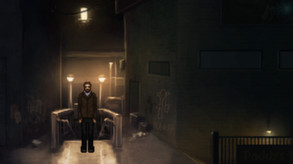
[*] For those less devoted to Wadjet Eye history, their pixel-forward artstyle with cluttered backgrounds, diverse settings, a straight-on 2D perspective, and detailed character portraits harken back to the early days of PnC. They're like slightly more grounded pre-[i]Grim Fandango[/i] LucasArts PnCs
[*] In any case, the design of your inventory, many of the assets, and the character models are all heavily reminiscent of the early [i]Blackwell[/i] games
[*] Some of those similarities also bleed over to the music. Beyond the co-development of the two games, Peter Gresser composed the soundtracks for both. Given the narrative thrust of the two titles, it's unsurprising that they're heavily steeped in the jazz noir style, but it's impossible to ignore how deeply steeped [i]Shivah[/i]'s soundtrack is in Jewish folk music tradition
[*] It's definitely not a combo that I've ever heard before, and, in fact, I wish the two diverse influences had been a little more tightly interwoven. In general, the OST's tracks are split along the lines of their influences, with only one track bearing similarities to both (the one that plays in Stone's office). I found myself wishing for a bit of a tighter mashup, if only because I don't think klezmer jazz has been invented yet
[/list]
[h1]Story & Vibes[/h1]
[h3]Synagogue mafia[/h3]
[list]
[*] It's pretty clear from the outset that the rabbi Russell Stone has seen brighter days. [i]Shivah[/i] opens with him reading the Torah to a virtually empty synagogue. Wrapping up, heading back to his office, and checking his emails confirms what you've seen: his flock is leaving due his repeated gloomy sermons and perpetually sour demeanor
[*] While contemplating his fall from grace and mounting debts in his shabby office with a surprisingly nice view of Manhattan, a sudden visit from the police disturbs his brooding. It seems that one of his synagogue's former members, Jack Lauder, has been murdered and left $10,000 to Stone. This is especially confusing as the two did not part company on the best terms
[*] These mysterious circumstances and long-standing feud between the two men results in Stone being the prime suspect. Your goal as the player is to determine who killed Jack, figure out why he would leave such a large sum of money to someone he hated, learn the reason that Jack left the church, and perhaps atone for some of Stone's past prejudices
[*] Eventually, after solving a good number of puzzles and making some shrewd dialogue choices during your interrogations, you'll uncover a trail of corruption that reaches higher into the religious order than it initially seems
[*] All told, it's quite a compelling mystery. Additionally, Stone's characterization goes beyond that of a surly investigator. He's a deeply flawed man of faith who is struggling to protect the identity of his people, but often in a way that's deeply incompatible with his culturally diverse New York surroundings
[*] For Stone, his struggle becomes more than merely a fight for survival in the face of conspiracy. He wrestles with his identity, his faith, and his position in progressively more egalitarian and diverse society. It's an interesting character study in which the protagonist's moral unrest likely reflects that of the writer
[*] There are multiple endings that, depending on how you handle a few pivotal conflicts, decide the outcome of Stone's moral quandry. Actions, after all, speak louder than words. Being more merciful and understanding will steer you towards a happier conclusion. The other endings? Well, they're considerable more bleak
[/list]
[h1]Playability & Replayability[/h1]
[h3]Same ol' same ol'[/h3]
[list]
[*] Now that we've discussed the narrative, which clearly diverges from the [i]Blackwell[/i] franchise in a number of ways, let's get back to discussing some of the similarities they share
[*] Of course, most of the gameplay similarities between [i]The Blackwell Legacy[/i] and [i]Shivah[/i] are all well-known genre hallmarks. If you've played any investigative PnCs in the past, you're well-prepared for the mechanics on display in this title
[*] Specifically, these revolve around travelling to different environments depending on the plot, searching for clues (sometimes using less-than-scrupulous methods), and interviewing every last person who'll talk to you
[*] Your dialogue choices usually aren't explicit. When prompted for a reply, your options are given in the form of "Polite response" or "Humorous response" rather than the exact text that Stone will reply with. Note, however, you'll always be given the option to provide a "Rabbinical response", which usually results in Stone answering questions with a question in turn. There's an achievement for always picking this one, so consider choosing it every time on one of your playthroughs if you're going for completion
[*] Despite this difference in dialogue, the puzzles and deduction mechanics are very similar to its contemporaneous [i]Blackwell[/i] counterpart. This is especially true when it comes to using your in-game computer to gather information. Like Rose, Stone will continually have to use technology to help him with his investigation
[*] Like the [i]Blackwell[/i] series, I think this solution is perhaps a bit overused. In fact, if you find yourself stuck on what to do next, trying to "Oogle" key places and people you've learned about is very likely to be the solution
[*] As far as replayability goes, the conventional wisdom overrides any gameplay-based recommendation. Once you've solved the mystery and seen all the endings, there's not much reason to pop open the game again. In fact, you won't even need replays to see all the endings if you rotate your saves regularly
[/list]
[h1]Overall Impressions & Performance[/h1]
[h3]A Tale of Two Mysteries[/h3]
[list]
[*] It's not too often that you get to play a game that was so tightly wound up in the development timeline of another, extremely similar title from the same dev. The visual and puzzle similarities are pretty undeniable. However, I do wish I could have played the original build of the game that was made for a game jam a few months before the self-published, cleaned up release. Part of me wonders if the similarities would evaporate
[*] It's evident that creator Dave Gilbert is in love with three things: 1) New York City, 2) investigative gameplay without the "moon logic" that sometimes pervades such titles, and 3) making characters resort to search engines when they don't know something
[*] Still, it's hard to ignore the key plot difference, particularly with respect to character development. On a single-game basis, the character study of Russell Stone far surpasses that of Rosangela Blackwell, but my opinion changes if you consider the latter's development over her 5-game saga
[*] Performance-wise, you'll be fine running this in just about any hardware. It's a retro callback point-and-click, after all
[/list]
[h1]Final Verdict[/h1]
[b]7.0[/b]/10. I didn't go into this playthrough thinking that [i]Shivah[/i]'s writing would be as good as it is, but it shook out to be a great character study with competent (if fairly standard) investigative gameplay. My only major complaint is the overused search engine solution for so many puzzles. If you're looking for a good conspiracy story that won't take up too much of your time, this is an easy recommend