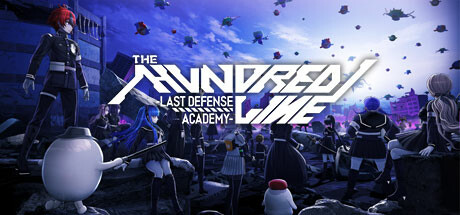
Kazutaka Kodaka and Kotaro Uchikoshi join forces for the first time to deliver the ULTIMATE adventure game! 15 students are tasked with defending a school from grotesque monsters for 100 days. Can they make it to the end? And will they survive long enough to uncover the truth?
Modeled estimate, not a reported figure. How we estimate →
Each in the currency that store quoted — not converted: the gap between two rows is the publisher's pricing, not an exchange rate.
Every market we collect.
Discounts
Every price cut of more than 20% we have observed, in each market that quoted one, with this game's chart position on either side of it. These are episodes, not a model: a sale is one event, and one event cannot tell you what the next one will do.
Reviews, worldwide (the counter carries no country): 2.71/day in the week to Aug 2 → 2.43/day in the week after.
For scale, across Steam · Top Sellers · Brazil over the last 30 days: the 26 chart moves that followed a price cut of more than 20% went a median of 7 places towards #1, and the 2,400 moves with no price cut behind them went 2 away. One store, one chart, one country — it is the only place we have enough observations to say even that.
Prices outside the United States have been collected since 6 August 2026 and chart positions since 19 July 2026, so a cut older than that has no market to compare and a market that joined later has no history yet. Nothing here is converted between currencies.
About
Takumi Sumino is a totally average teenager living in the Tokyo Residential Complex, a place where every day is much like the last and nothing bad ever happens. All that changes when freakish monsters attack the town and start wreaking havoc. A strange creature calling himself Sirei appears and offers Takumi the power to protect those he holds dear... All he has to do is stab himself in the chest!
The next thing he knows, Takumi is in Last Defense Academy, a school in the middle of nowhere surrounded by a wall of otherworldly flames. He and 14 other students have been drafted into the Special Defense Unit, a team tasked with keeping the school safe for the next 100 days. How much are they willing to sacrifice to take back their normal lives and save the world from the grotesque school invaders?
The curtain rises on 100 days of war and despair...
Takumi's choices will decide his future, but there's no telling what kind of consequences these decisions might have...
When the invaders attack, it's up to you to protect the school in SRPG battles.
Use each student's unique Specialist Skills to turn the tide of battle in your favor!
Spend time with your teammates to deepen your bonds, or explore the wilderness and ruins outside the school.
You can even use the items you find to craft gifts and get even closer to your allies!
Genres
Add-ons
Each DLC is estimated with the same model as a game, then summed — a modeled figure, not reported DLC sales.
Sums Steam only; Nintendo publishes no volume signal, so the true total is higher by an unknown amount.
| Store | Price | Audience | Score | Chart | Est. revenue |
|---|---|---|---|---|---|
SteamYou are here | $48.99−30% | 8.7Kreviews | 88% | — | $20.2M |
| $59.99 | — | — | — | not modelled |
Matched by title — a reused name can pair the wrong games. * is a critic aggregate. Prices and positions are each store's United States storefront; Epic charts worldwide. Audience and Score too, except Steam's, which is worldwide.
Updates
Build ids and update times come straight from Steam's PICS — the same source SteamDB reads. Patch history grows as we record new builds.
Engagement
Reviews
Themes across 889 recent reviews and how positive each mention is. A keyword signal, not full sentiment analysis.
Reviews
Honestly best game every considering how many possible routes there are. Battles are challenging but also very fun. This game will take hours for me to 100% but that's okay since I love games that take time.
After 100%ing it and getting all endings...it gets a tentative mostly recommendation. There are some routes that just fundamentally do not respect the player's time/attention and are a complete waste, and others which are really, really solid.
Media

Related
Related
Price dynamics, follower growth, revenue and sales trajectories with interactive tooltips
This and every other Pro feature is free until October 20, 2026. A free account is all it takes.
Stats
All-time low is the lowest price we've recorded for this game since we started tracking it.
Languages: English*, Japanese*, Simplified Chinese, Traditional Chinese, Korean*languages with full audio support
Hours played at review time, across 891 reviews with recorded playtime.
positive critical· bar length = how often the theme comes up
Hundred Line starts off with your protagonist, Takumi, going about his normal life living in an underground shelter until an attack by strange creatures and the sudden awakening of his powers lead to him being transported to the Last Defense Academy. Alongside a group of various other high school students, he must live on the surface in the ruins of human society, fighting off hordes of strange creatures trying to destroy whatever is being sealed inside the school for 100 days. Throughout these 100 days, Hundred Line proceeds as a linear story as you gradually learn about the characters, world, and various key events. Upon reaching the ending, you then get to go back to the start and make different choices than the first route, causing the game’s branching paths to unfold. There are 100 different endings in total, though the large majority of these are just a glorified “Bad End” immediately following a dumb decision, leaving something closer to 20 proper routes that follow meaningfully different storylines from the original 100 days. —---------------- Compared to a lot of other VNs with branching paths, you often see information learned in one route have some relevance to other routes, whether that means shedding light on a character’s actions, providing more context on the overall events, or some similar function. Given that Uchikoshi was a lead writer for the game I figured this would be a big way the story functioned, but apart from a handful of routes where he was clearly in charge there’s very little meaningful overlap. There’s an entire route dedicated to collecting the Boxes of Blessing and it's confirmed that the enemy forces are also looking for them because of the wish they supposedly grant. But outside that one route there’s literally no mention of them by either side nor are there any implications of your team never looking for them in the first place. And the same pattern holds for several other routes where you could delete the entire storyline and it wouldn’t have a meaningful impact on the rest of the game because none of its information ever mattered. And it gets even worse with the game’s ‘ending’. Technically there is no true end to Hundred Line. No definitive route that ties everything together or provides a big answer. Each ending is essentially the end to its own mini-story and doesn’t try to provide any broader narrative resolution to the rest of the game’s events. There are only two exceptions and they both highlight what Hundred Line did wrong and what it could have been. Scenario 2 is probably the closest thing Hundred Line has to a narratively cohesive ending. I can’t say anything without huge spoilers, but it essentially resolves the whole war and the fates of all the characters involved at once, tying up all the loose ends of the world unlike the many other endings which deal with only a small portion of the game’s overall focus. The problem is that Scenario 2’s ending has no connection to any of the other 99 routes. Nothing learned elsewhere matters for the ending to S2, nor does anything learned in S2 matter to the rest of the game. Meanwhile, the other route that seems to function as a true ending takes the complete opposite approach. SF, the main route written by Uchikoshi, involves synthesizing a bunch of information from several of the other routes he wrote. You can’t complete SF until you’ve gotten past story locks in the other relevant routes since their info and context are needed for SF to work properly. And equipped with all the knowledge of those various timelines, SF essentially gets to the best ending possible and provides the second closest thing Hundred Line has to a true end. But the fact that it only tries tying about 5 or 6 routes together as ingredients to the true end while all the others are still irrelevant leaves it feeling like a weird inclusion. It’s as if a quarter of the game is just off doing its own micro narrative while the remaining three quarters are a bunch of standalone stories doing their own thing. Had every route been independent, it would have been one thing. Had every route been connected to a greater whole, it would have been another. But the fact that the two approaches are both present makes Hundred Line’s structure feel painfully incoherent. It really feels as if the ambition of having 100 endings across a huge number of routes got to be too much and the writers were just throwing whatever they wanted into the mix to pad out the time. Even when some of the individual routes were done well, they never felt like they belonged with everything else going on. —------------------------ Hundred Line tries to wear both hats of being a visual novel and a strategy game with some other social elements blended in. You’ll go through a chunk of time on a linear story, have a few sessions of free time where you can talk with other characters, gather resources, upgrade equipment, etc., and then you’ll have a battle against a group of enemies. Rinse and repeat for the duration of the game. The gameplay side of the experience is decent. Each of the students at the academy has their own unique set of abilities, and you’re encouraged to mix and match between them to utilize their strengths according to the situation at hand. Enemies are weak, but there are a large number of them so you’ll want to use various ranged or AoE attacks to limit their numbers, plus some strong attacks for the handful with more health. And finally, limited action points and spread-out maps encourage using multiple characters in fights. The core system is solid with a lot of variety to how you can approach the game, but past the first 30 hours or so it really begins to show the lack of depth. Before long you’ll have enough upgrades that a small handful of characters will be qualitatively better than their peers and you can win plenty of fights just spamming the same character the whole time. A very generous scoring system (I only had two or three fights the whole game that I didn’t get Rank S for completing) and a lack of any real benefit to fighting or consequences for doing poorly really killed any interest in the system. —------------------------- It’s hard to write a meaningful review of Hundred Line. On one hand, there’s so much content that it feels wrong to give it all such a cursory overview without delving into specifics, but the same flaws are present over and over such that trying to repeat them in different contexts would get overwhelming without being particularly informative. It’s simultaneously a huge experience with so many different elements at play, while also being a surprisingly structured one where the game falls into specific patterns even when it would be better off breaking from them. I can’t bring myself to dislike Hundred Line, but I can’t say a great deal in its favor either. More than anything else, this game felt like something which could have been great with a stronger vision and resources behind it, but it ultimately proved to be way too much for its team to handle. I don’t think I can recommend Hundred Line overall. There are a lot of great things about it, but they fail to make for a cohesive experience, and properly appreciating them involves wading through way more fluff or low-quality content than I think can be justified by anybody who doesn’t have infinite time on their hands. If you really want to play it, either for the experience or because of some compulsion to see what Kodaka and Uchikoshi managed to cook up together, then go ahead. But unless you’re already inclined then there are many better games you could be spending your time on instead.
The game has a lot going for it but is dragged down heavily by many monotonous factors that affect its narrative and gameplay. I do like the premise and some of the routes that come up once you beat Route 0. Some routes have interesting character pieces (02, 10B, 12, 13A, 15A), good character dynamics (00, 05, 11, 15A), or fun plot developments (14A, one path in 14B). A lot of the routes that start early in the timeline feel more obligated to get to 100 days compared to the routes that start later, which ends up hurting the pacing of those routes. Each route tends to have a character focus on it, and it's nice to go through and have a different character be in the spotlight, letting them develop and go beyond their stereotypical one-liners. Unfortunately a lot of the same events transpire no matter which route you go through, making each path feel less unique and constrained to the overarching narrative that the game wants to achieve. Every facet of the gameplay has built-in timewasters that will whittle at the player as they go through the routes. Each instance is a small amount of time but they add up as you make your way through the game. Reading the plot has announcements and Takumi's randomly manual or automatic trip to the Cafeteria almost every day, as well as time skips that sometimes load in each day separately before reaching the final destination. Free Time pads out almost every route, and serves little purpose in the narrative. If this mechanic was kept outside of the structure of the routes' plots it would help with the game's pacing problems. Exploration becomes entirely skippable after making progress on the game, which is good because it's not a good mode but bad because it's wasted potential. Even if you do Simple Explorations you're watching a lot of unskippable animations as you go through many Free Time days to upgrade your characters. In combat, battles in different routes can be skipped if you have done it once already. This does not skip the entire fight though, before you are given the choice to skip there are animations that play out fully and dialogue that happens before each wave. Since these routes share a lot of plot elements, finishing one route makes it so ~80% of every other route's battles are skippable. There are many wasted chances to make unique combat encounters based on the route that you're on, so instead the player gets to watch many fade to blacks as all the battles are skipped. The combat loses steam fairly quickly after all the characters are introduced. There is a lack of variety in enemy and map design. The backgrounds can vary but you're fighting in a perfectly rectangular arena in almost every fight. There's nothing that makes a fight unique aside from story implications that could affect objectives. When the player comes across a fight they finally can't skip and it turns out it's played like every other fight done before, it adds to the time wasted by this game. It's pretty shameless as to what the game tries to get away with to try to justify its large scale. I'm not sure if more QoL changes could be applied to this game to fix these issues given how the systems are built. Whatever changes the devs could implement to pare down the overall experience would greatly help out, however.
虽然全通至今已经过了半年多了不过还是来写个好评。没赤过石的可以来吃,量大管饱保证有最对电波的路线和最难忘的史线(贬义),二周目最初不锁线就极不合理,小高和刚自己打过没就端出来这个?看攻略走真相线可以获得不错的游戏体验,至于初见就进上半区的我只能说孩子你有福了。如果有异食癖说不定在一些玩家公认的“史线”里也能品出巧克力味,虽然写到现在都在骂但我个人还是很喜欢这游戏的,跟小高和刚自己写的几条路线对上电波的话就会像我一样半年多了还在被这破游戏套牢,不过小高以后能不能别和打越合作了你俩根本尿不到一个壶里。
This is one of the most ambitious games I've ever played in my life, and I fully recommend it, particularly if you like Danganronpa or other similar games. But take it slow! I have burned myself out hard by pushing through the first ending as quickly as possible, and there will be quite a bit of repetition in the different routes of this game - but there's enough difference to keep them fresh and interesting. Just don't rush it.
As a danganronopa veteran and Fire Emblem enjoyer this was the game I never knew I needed. On paper a game that combines elements of visual novels with turn based strategy which works well in theory but being able to pull off a story as convuluted as this at this scale (100+ hours of gameplay) is insane. If you love the writing of Danganronpa and enjoy RPGs this game is worth it, there's so much content to keep you going for weeks on end. I wasn't as big of a fan of [spoiler]some of the routes this game had to offer such as the comedy routes. They felt like filler content more than anything. But the routes they actually took their time on were amazing and lets each player unravel the mystery of what's really going on differently.[/spoiler]
I was extremely hesitant to buy this game, It just didn't seem like my kind of game but after playing it *the main game, i haven't done any of the 100 endings yet but i will* I am pleased to say this was fantastic and had me engrossed in the story and characters the whole time. Sure it has some problems like the UI and map can be kind of bad at times and this one minigame is kind of boring after awhile, but the combat is fun. i might update it after the 100 endings if i still have sanity left, i just hope they are unique enough being so many.
Whilst it takes time to get started, I found myself very invested and eager to find answers to the story. First off, I think this game is too long, many of the hundred days contain lots of padding conversations that don't serve a purpose towards building characters, progressing or providing hints to the story and work-building. I started to speed through some of these once I noticed the tone saving time on several days that didn't eat too much into my enjoyment of the game. Now that is done with, the story and characters are very 'anime', lots of opening story threads that get tied up, many highly emotive personalities from characters that you would be familiar with if you have played the Danganronpa games, which is referenced several times here for story-unrelated humour (much appreciated). The art style is not to everyone's tastes, you can tell the character designers were having fun here, where at certain points designs totally change from budget 90's style visual novel to highly detailed very dramatic layered images. How this game differs is with the strategic combat, moving your characters with unique abilities (which are upgradable) on a grid, planning and using their abilities in addition to tools to defeat waves of enemies in turn based combat using limited action points. These action points are regained each turn or by defeating specific enemies. This creates a satisfying flow process of being creative and analytical to cause as much damage within each turn.
I played through the first 100 days and, while I enjoyed parts of the experience, most of it became extremely monotonous. There are just enough interesting story developments to keep you moving forward, but they are buried beneath what feels like an endless cycle of repetition. After you “beat” the game, the real story finally begins. That sounds exciting at first—until you find yourself back on day 45, or some other familiar point, once again going through the motions. Even the combat eventually loses its appeal, and the story starts skipping over many battles entirely. Ultimately, The Hundred Line: Last Defense Academy demands far too much patience from the player. You have to genuinely love lengthy visual novels and anime-style storytelling to endure how slowly it reveals its best ideas. After spending more than 30 hours repeatedly waiting for something exciting to happen, I honestly feel that my time would have been better spent elsewhere.
Active players
Estimated daily and monthly active players (DAU/MAU) modeled from peak concurrency.
Players by region
Where this game's players are, estimated from review languages.
Players also reviewed
The games this title's players most often review too — audience affinity.
Related
| Game | Estimated lifetime revenue | Reviews | Review score | Price |
|---|---|---|---|---|
| $13.5M | 27.1K | 97% | $29.99 | |
| $4.1M | 23.3K | 83% | $11.99 | |
| $1.7M | 1K | 90% | $59.99 | |
| $1.1M | 38.6K | 96% | $1.99 | |
| $456.8K | 1.5K | 91% | $10.90 | |
| $71.8K | 61 | 41% | $49.99 |
Related
| Game | Estimated lifetime revenue | Reviews | Review score | Price |
|---|---|---|---|---|
| $20.2M | 218.5K | 97% | $6.24 | |
| $20.2M | 18.2K | 94% | $23.99 | |
| $20.1M | 37.7K | 86% | $14.99 | |
| $20.1M | 174.1K | 93% | $4.99 | |
| $20.1M | 29.6K | 90% | $19.99 | |
| $20.3M | 34.9K | 75% | $27.99 |