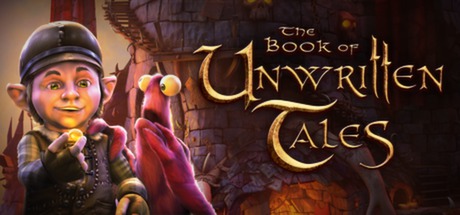
In a world torn by war, the aged gremlin archaeologist Mortimer MacGuffin harbors the dark secret of a powerful artifact.
Modeled estimate, not a reported figure. How we estimate →
About
Genres
Stats
All-time low is the lowest price we've recorded for this game since we started tracking it.
Languages: English*, German**languages with full audio support
Engagement
Hours played at review time, across 40 reviews with recorded playtime.
Reviews
Themes across 40 recent reviews and how positive each mention is. A keyword signal, not full sentiment analysis.
positive critical· bar length = how often the theme comes up
Reviews
It's a pretty nice point & click adventure game, fun characters, pretty reasonable puzzles, a lot of humor. Even a little bit too much humor, it feels, because occasionally the style of humor it uses (reference overdose, meta-humor and lampshade hanging) can get a bit grating occasionally. And also the pacing feels a bit off, final chapters seems to have a bit of "running out of budget" problem, each chapter feels way too long, and by 13-14 hours it takes to complete the game you might start to get a bit exhausted Nevertheless, it's a nice game to spend a few evenings on
très bon jeu d’aventure j’ai adoré je vais faire le deuxième opus car je lai depuis longtemps dans ma bibliothèque que javais pas jouer car vieux pc
Wilbur is ma boy
Klassisches Point and Click, nicht zu schwer, gute Sprecher, der flow ist auch gut. Empfehlenswert für Genrefans.
Replayed it for nostalgia reasons and I still love it.
Eines der besten Adventures, die es gibt.
A really good old‑school 90s‑style quest — a relaxing kind of game where you’re not rushing anywhere, just paying attention to things.”
品质比较高的点击解密 需要杀时间的可以玩玩
The Book of Unwritten Tales is a lovable mess that could have been more There’s a certain charm to The Book of Unwritten Tales that’s hard to dismiss. It wears its point-and-click heritage on its sleeve, and you can tell the developers poured their hearts into it – but as the old saying I am making up now goes, love alone is never enough. Let’s start with what works. The art direction is genuinely lovely – whimsical, colorful environments that feel ripped from a storybook. The voice acting is decent, and some NPCs are funny. If you’re looking for a gentle, low-stakes adventure to unwind with, this game will happily hold your hand and guide you through its world. The problem is that it never really lets go of that hand. The puzzles are simple. Too simple. I’ve played a lot of point-and-click adventures, and this might be one of the easiest I’ve ever come across. You’ll rarely feel that satisfying “aha!” moment. Then there’s the cast. Four playable characters, but only one of them – the gnome – is written quite well. The others? Forgettable. Two of them barely get any screen time; you control them for such short sessions that you’ll wonder why they’re even playable at all. There’s no balance. It feels like the game started as a solo gnome adventure, then someone in a meeting said, “What if we added more heroes?” and nobody had the heart to say no. Honestly, an adventure focused entirely on the gnome would have worked much better. The time-travel gimmick near the end is painfully predictable. You’ll see the twist coming from a mile away – it’s a textbook deus ex machina, and a cheap way to force you to replay sections from a slightly different angle (simpliest way to make the game longer reusing assets). And the game has the nerve to pull the Monkey Island 2 joke not once but twice: entire puzzle sequences get solved offscreen while you watch. It’s not clever. It’s lazy. Worst of all, the storytelling feels slapdash. Large chunks of the plot are simply told to you – narrated in a rushed, almost embarrassed way, as if the writers ran out of time or ideas. The overall plot is painfully banal. And when the credits roll, you’re left with a sackful of loose ends: Who is the real Archmage? What happened to Critter? Where was the artifact hidden? And for the love of all that is point-and-click, what the hell is Critter? The game never bothers to explain. The three main heroes never develop a real bond. They’re just sort of… there. Thrown together by chance, existing in the same scenes without ever truly connecting. So where does that leave us? The Book of Unwritten Tales is a mediocre game, but a pleasant one in fits and starts. It’s like a bedtime story told by a well-meaning uncle who keeps forgetting key details and making up the rest on the spot. You can feel the love, absolutely. But love, as we’ve established, isn’t always enough. Would I recommend it? If you’re a hardcore adventure game fan, you’ll probably find it too easy and too shallow. But if you’re in the mood of something cozy, undemanding, and occasionally funny – and you don’t mind plot holes – then sure. Give it a shot. Just don’t expect a masterpiece. Expect a warm, flawed hug from a game that tried its best.
The Book of Unwritten Tales is a standout example of how a traditional point-and-click adventure can embrace fantasy tropes while simultaneously poking fun at them. Developed by King Art Games and published by THQ Nordic, the game transports players to the magical realm of Aventasia, a world overflowing with wizards, dragons, ancient prophecies, and eccentric heroes. Rather than taking itself too seriously, the adventure uses its fantasy setting as a playground for humor, creating a story that feels both like a tribute to classic role-playing games and a clever parody of the genre. From the opening moments, it becomes clear that the game values character-driven storytelling and witty writing just as much as puzzle-solving and exploration. The narrative revolves around a mysterious artifact with the potential to influence the fate of the entire world. What begins as a seemingly straightforward quest gradually expands into a large-scale adventure involving multiple factions, hidden secrets, and unexpected twists. The story is carried by a cast of unlikely heroes whose personalities clash in entertaining ways. Each protagonist brings a unique perspective to the journey, helping the world feel more diverse and alive. Their interactions are often humorous, but the game also succeeds in creating genuine moments of tension and emotional investment. This balance between comedy and adventure prevents the story from becoming a simple parody and allows it to stand as an engaging fantasy tale in its own right. One of the game's strongest qualities is its exceptional writing. The dialogue is packed with jokes, references, and playful nods to fantasy literature, tabletop games, and popular culture. Many of these references are cleverly integrated into the world rather than feeling forced. Even players who do not catch every joke will appreciate the consistently entertaining conversations and memorable personalities. The humor rarely overshadows the main plot, which helps maintain a sense of purpose throughout the lengthy campaign. As a result, the game appeals both to fans seeking comedy and to players looking for a compelling adventure story. Gameplay follows the classic point-and-click formula, focusing on exploration, conversations, inventory management, and environmental puzzles. The world is filled with interactive objects, hidden details, and challenges that encourage careful observation. Many puzzles require combining items, examining surroundings, and thinking creatively about available solutions. The game generally avoids the frustrating logic that occasionally plagued older adventure titles, favoring challenges that feel fair while still demanding thoughtful problem-solving. The inclusion of multiple playable characters also introduces variety, as certain puzzles rely on cooperation between protagonists or make use of their unique circumstances within the story. Aventasia itself is one of the game's greatest achievements. The world is filled with colorful locations that range from bustling settlements and magical forests to mysterious dungeons and ancient structures. Each area feels handcrafted, with visual details that reward exploration and help strengthen the game's fantasy atmosphere. Despite being released years ago, the art direction remains charming because it prioritizes style and imagination over technical realism. Character designs are expressive, environments are vibrant, and the overall presentation captures the sense of wonder that defines classic fantasy adventures. The audio design further enhances the experience. Voice performances bring the cast to life and help deliver the game's comedic timing effectively. The soundtrack supports both the whimsical and epic aspects of the adventure, shifting naturally between lighthearted melodies and grand orchestral themes. Together, the voice acting and music create a polished presentation that elevates many scenes beyond what the writing alone could accomplish. The result is a world that feels lively and immersive from beginning to end. Another aspect that deserves praise is the game's impressive scope. Unlike many adventure games that can be completed in a relatively short time, The Book of Unwritten Tales offers a substantial campaign filled with new locations, puzzles, and story developments. The journey feels expansive without becoming repetitive, largely because the game continually introduces fresh situations and characters. This sense of progression keeps players engaged and reinforces the feeling that they are participating in a genuine fantasy epic rather than a small-scale adventure. The game is not entirely without flaws. Some puzzles may take considerable time to solve, particularly for players unfamiliar with traditional point-and-click mechanics. The pace can occasionally slow during puzzle-heavy segments, and some references may resonate more strongly with long-time fantasy fans than with newcomers. Nevertheless, these issues rarely diminish the overall quality of the experience and are largely characteristic of the genre itself. The Book of Unwritten Tales succeeds as both a loving homage to classic adventure games and a thoroughly entertaining fantasy adventure. Its memorable cast, clever humor, rewarding puzzles, and richly detailed world combine to create an experience that remains enjoyable long after its original release. Players who appreciate story-focused games with strong writing and classic adventure mechanics will find a great deal to enjoy here. It is a title that demonstrates how creativity, charm, and strong design can make a fantasy world feel timeless. Rating: 9/10
Related
Related
Trends
Modeled estimate over time, reconstructed from Steam's monthly review histogram.
Momentum
Pace estimated from the game's recent review growth (our daily snapshots) at its own sales-per-review ratio — a momentum signal, not booked sales.
Audience
Estimated from the language of this game's reviews — a proxy for where players are, not official Steam demographics.
Related
| Papo & Yo | $852.3K | 2.9K | 93% | $14.99 |
| ATOM RPG Trudograd | $853.4K | 4.4K | 83% | $10.99 |
| Card Shop Simulator Multiplayer | $852K | 2.1K | 84% | $11.99 |
| Lorelei and the Laser Eyes | $851.8K | 3.2K | 94% | $12.49 |
| Tomb Raider I (1996) | $853.9K | 4.6K | 85% | $6.99 |
| Hexarchy | $851.6K | 1.2K | 83% | $19.99 |