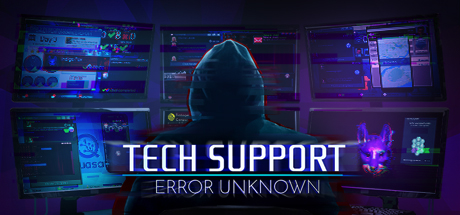
Things are not what they seem at your new tech support specialist job. While resolving customer issues, you soon find yourself in the middle of a conspiracy. Will you side with your employer, join a rogue hacktivist group bent on destroying them, assist the police or stand alone?
Modeled estimate, not a reported figure. How we estimate →
Media

About
Genres
Stats
All-time low is the lowest price we've recorded for this game since we started tracking it.
Languages: English, German, Simplified Chinese
Engagement
Hours played at review time, across 40 reviews with recorded playtime.
Reviews
Themes across 40 recent reviews and how positive each mention is. A keyword signal, not full sentiment analysis.
positive critical· bar length = how often the theme comes up
Reviews
I like the game but there are a lot of unfixed bugs you WILL encounter in the game. Dev have abandoned the game since 2019 so they will never be fixed. Keep that in mind if you choose to buy the game. Otherwise, decent game. Buy it if you enjoyed Papers, Please or That's Not My Neighbor
I really wanted to like this game. I completed two runs. In the first, I tried to play as “wrong” as possible—intentionally giving terrible support to create the most painful experience for customers. That experiment didn’t last long, though, once I realized all the answers are pre-determined, and you can be fired after failing a certain number of tickets. There’s only so much chaos you can actually cause. For the second run, I played the game as intended: solving tech support tickets as accurately and as quickly as possible. Maybe I’m missing something, but I ended up finding the experience repetitive and, honestly, pretty boring. There just isn’t much there in terms of engaging gameplay. Yes, there’s a main quest and a handful of side quests that can be genuinely interesting, but most of the time is spent dealing with tech support tickets that feel completely disconnected from those storylines. From my experience, these tickets serve only two purposes: 1. Making money, since your earnings are commission-based—the faster and more accurately you solve issues, the more you earn. 2. Getting promoted within the company, which unlocks more tools so you can… solve even more tech support tickets. Do I want to see how the conspiracy unfolds? Absolutely. Do I have the patience to grind through tech support tickets that only indirectly push the story forward? Unfortunately, no.
[h2]中文版体验非常差[/h2] 明明英文版会黄色高亮的地方中文版只是稍微加粗了,看都看不清,害我开头就一头雾水卡半天,更别说都不知道可以网页上看问题指南什么其他的了,全都没有高亮要看半天,不知道谁搞的这么反人类,登录界面也一直莫名其妙卡在第30天,一堆英语没有的bug 而且很多错字谐音梗会很难get到,都没说机翻的感觉 玩了一会儿中文的很奇怪为什么这么多好评才去看的英文,基本可以算两个游戏了 [h3]复古客服模拟器[/h3] 能英语的话尽量英语玩吧,我还挺喜欢这种复古UI的感觉的,各种错别字真的很搞笑,就是每次出错这个上司都好烦啊,还有电脑上突然出现的事件,任务做多了还会升职越来越难,玩下去应该蛮有意思的
Personally: buggiest game I have ever played. Always on the tip of your toes to know if your correct solution will be correct or correct but bugged. If you love gambling this might just scratch that itch, maybe can help with addiction – I don't know. I am honored to write this review. I think I developed TMJ playing this game. Big ups to everyone reading.
What starts as a simple tech support job in game turns into something far more complicated and sinister - at the end of the day though it truly asks the question of what side do you want to be on. The side of a corporation who has in their hands in more pots than what you would ever believe or the side of the hackers who want to reveal everything to the public. Truly this game is entertaining, and just is good for that job simulator vibe with a twist.
Titel: Mehr als nur ein Tipp-Simulator - Ein verstecktes Juwel! Bewertung: ⭐⭐⭐⭐⭐ Positiv Ich hatte einen einfachen Simulator erwartet, in dem man Support-Tickets abarbeitet. Was ich bekam, war eine überraschend tiefgründige, atmosphärische und oft urkomische Story-Erfahrung, die das monotone und doch seltsam fesselnde Leben eines Tech-Support-Mitarbeiters perfekt einfängt. Das Geniale an diesem Spiel ist nicht nur das Tippen (was sich super anfühlt), sondern die Welt, die es um einen herum aufbaut. Man jongliert ständig mit E-Mails, Chat-Nachrichten und einer mysteriösen Handlung, die sich durch kryptische News-Meldungen und Kundenanfragen entfaltet. Die Entscheidungen, die man trifft – wie man mit einem genervten Kunden umgeht oder was man mit sensiblen Informationen macht – haben echte Konsequenzen und führen zu mehreren Enden. Es braucht etwas Zeit, um Fahrt aufzunehmen, aber es ist unglaublich immersiv. Wenn ihr narrative Spiele, einzigartige Simulatoren mögt oder einfach eine Schwäche für Tech- und Hacker-Asthetik habt, zögert nicht. Ein fantastisches Erlebnis für den Preis. Aktivitätszeit: 6,2 Stunden (Für alle Enden!)
I can`t recommend this game due to game-breaking bugs. Core mechanics, like the banking system, constantly glitch out and ruin the gameplay. The story is full of inconsistencies and logical flaws. Instead of enjoying the game, I spent most of my time with broken scripts.
Okay some of the "solutions" don't make any sense. Customer will sometimes briefly say what's wrong, but when you dig deeper (or as deep as you can with the repetitive responses) what they explain is completely different from what they started with. Main story (big evil corporation versus terrorist revolutionists) shows up like once every 3-4 in game days and doesn't stick around long enough to stay interesting. Also be consistent with problem solving. You fail a call they explain why you failed. You get an identical call the next day and fix what your boss said to fix and you still fail the call. This game is as frustrating as it would be to work in an actual I.T. call center, and that's not a good thing.
Tech Support: Error Unknown is an inventive narrative-driven simulation that transforms the everyday routines of technical support into a surprisingly layered and morally complex experience. Developed by Dragon Slumber and published by Iceberg Interactive, the game places players in the role of a new employee at a powerful telecommunications corporation, where the primary responsibility is assisting customers with malfunctioning smartphones and software issues. What initially appears to be a dry office simulator quickly reveals itself as a branching story about corporate power, surveillance, and personal ethics, using mundane tasks as the gateway to much larger questions. The core gameplay unfolds entirely within a simulated computer desktop, and nearly every interaction happens through windows that resemble email clients, chat applications, internal databases, and diagnostic tools. Players juggle multiple customer conversations at once, read complaints, cross-check information, and select responses that resolve issues—or escalate them. Early tasks are straightforward, teaching the basics of customer interaction and company procedure, but the complexity ramps up steadily. As new tools unlock, players are asked to track devices, verify ownership, examine logs, and navigate corporate policies that may or may not align with what feels morally right. The structure captures the controlled chaos of real tech support work, where efficiency, accuracy, and time management constantly compete for attention. What elevates Tech Support: Error Unknown beyond a routine workplace simulator is how seamlessly it weaves narrative tension into its mechanical framework. As days pass, outside forces begin to intrude on the player’s routine. Shadowy hackers, internal security teams, and law enforcement agencies make contact, each offering different perspectives on the company’s activities and different incentives for cooperation. Players are repeatedly forced to decide where their loyalties lie, often in subtle ways that are not immediately framed as major plot choices. Small decisions—such as sharing information, ignoring suspicious behavior, or strictly following company policy—gradually shape the direction of the story and determine which narrative paths open or close. The game’s pacing is deliberately methodical, reflecting the repetitive nature of office work while allowing narrative threads to build slowly in the background. This can feel hypnotic and immersive for players who enjoy routine-driven gameplay, but it can also verge on monotony if the underlying story does not immediately capture interest. The repetition is intentional, reinforcing themes of bureaucracy and compliance, and making moments of narrative disruption feel more impactful when they occur. Over time, the tension between doing your job well and questioning the system you serve becomes one of the game’s defining strengths. Visually, Tech Support: Error Unknown adopts a minimalist and utilitarian presentation that mirrors a generic corporate workstation. There are no flashy animations or dramatic set pieces; instead, immersion comes from familiarity. The interface is clean but busy, requiring players to manage overlapping windows and prioritize tasks under time pressure. This design choice enhances realism, though it can feel clunky at times, especially when juggling multiple conversations simultaneously. Audio design remains understated, using ambient sounds and subtle cues to support focus rather than dominate attention, reinforcing the feeling of being alone at a desk late into a shift. One of the most compelling aspects of the game is its emphasis on consequence and replayability. The story branches extensively, offering numerous endings shaped by allegiance, ethics, and professional behavior. Whether players choose to rise through the corporate ranks, undermine the company from within, assist external groups, or pursue a more self-serving path, the narrative responds accordingly. These outcomes rarely feel binary; instead, they are the cumulative result of many small decisions, making repeat playthroughs feel meaningfully different rather than cosmetic. Overall, Tech Support: Error Unknown succeeds by recontextualizing ordinary work into an engaging narrative framework. It is not a game about reflexes or spectacle, but about observation, judgment, and the quiet weight of choice. While its repetitive structure and restrained presentation may not appeal to everyone, players who enjoy slow-burn storytelling, ethical dilemmas, and unconventional simulation concepts will find it thoughtfully constructed and surprisingly memorable. It stands as a strong example of how even the most mundane settings can be transformed into compelling interactive fiction when paired with careful design and thematic ambition. Rating: 7/10
Do I want to see how the conspiracy unfolds? Absolutely. Do I have the patience to grind through tech support tickets that only indirectly push the story forward? Unfortunately, no.
Related
Related
Trends
Modeled estimate over time, reconstructed from Steam's monthly review histogram.
Momentum
Pace estimated from the game's recent review growth (our daily snapshots) at its own sales-per-review ratio — a momentum signal, not booked sales.
Audience
Estimated from the language of this game's reviews — a proxy for where players are, not official Steam demographics.
Related
| Interstellar Space: Genesis | $187.4K | 841 | 84% | $9.89 |
| King of Dragon Pass | $187.4K | 564 | 79% | $11.99 |
| Sipho | $187.2K | 356 | 85% | $17.99 |
| The Berlin Apartment | $187.5K | 421 | 93% | $24.99 |
| Tokyo Warfare Turbo | $187.6K | 431 | 83% | $14.99 |
| Dinosaur Fossil Hunter | $187.6K | 803 | 77% | $7.99 |