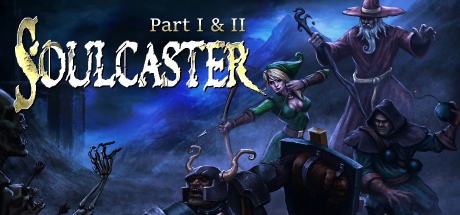
Take control of a squadron of epic summons in this unique take on dungeon crawling!
Modeled estimate, not a reported figure. How we estimate →
Media
About
Stats
All-time low is the lowest price we've recorded for this game since we started tracking it.
Languages: English
Engagement
Reviews
Themes across 40 recent reviews and how positive each mention is. A keyword signal, not full sentiment analysis.
Reviews
This game is like a mix of Tower Defense and Gauntlet. It's fast, fun, and simple to learn. Reasonable amount of content considering the price. I'd highly recommend it.
Soulcaster: Part I & II is a compact yet thoughtfully designed indie experience that brings together two early entries in MagicalTimeBean’s hybrid action–strategy series, offering players a distinctive blend of real-time tactics, tower defense concepts, and arcade-style pacing. At first glance, the game’s retro pixel art and simple presentation might suggest a lightweight or straightforward experience, but beneath that surface lies a carefully balanced system that rewards planning, quick thinking, and adaptability. By bundling both parts together, the Steam release provides a cohesive look at the series’ foundational ideas and how they evolve across its early stages. The central gameplay concept revolves around the role of a fragile spellcaster who cannot directly fight enemies. Instead, you summon and command a small team of allies to protect you from waves of hostile creatures moving through maze-like arenas. Each summoned ally serves a distinct tactical role: a melee-focused warrior for holding choke points, a ranged archer for sustained damage from a distance, and an explosive bomber capable of dealing heavy area damage. These allies function like mobile, intelligent towers, and learning how to position, recall, and redeploy them effectively is the key to survival. This indirect control scheme gives the game its unique identity, forcing players to think strategically rather than relying on reflex-heavy combat. As stages progress, the game gradually introduces more complex enemy patterns and environmental layouts, pushing players to refine their tactics. Enemies approach from multiple directions, exploit weak points in your formation, and overwhelm careless placements, making every decision feel meaningful. The ability to recall summoned allies to restore their health adds another layer of strategy, as doing so temporarily weakens your defenses but can be crucial for long-term survival. This constant tension between maintaining coverage and preserving your units keeps the gameplay engaging and prevents it from becoming static, distinguishing Soulcaster from more traditional tower defense titles. Visually, Soulcaster embraces a clean and readable pixel art style that emphasizes clarity over detail. Enemy types, ally abilities, and environmental features are easy to distinguish at a glance, which is essential given the game’s fast-paced decision-making. The environments, while modest in scale, offer enough variety to keep the experience fresh, ranging from darker, ominous settings to brighter, more fantastical locations. Complementing the visuals is a soundtrack that fits the tone well, providing energy during intense waves without becoming distracting or repetitive. Across both Part I and Part II, the game offers a substantial number of stages, each designed to test different aspects of the player’s understanding of the mechanics. Difficulty ramps up steadily, and while some later stages can be punishing, they rarely feel unfair. Instead, failure usually serves as a lesson in positioning or timing, encouraging players to adjust their approach rather than rely on brute force. Additional challenge modes and higher difficulties extend the lifespan of the game, giving experienced players reasons to revisit earlier levels and experiment with more efficient or risky strategies. While the overall scope of Soulcaster: Part I & II is relatively small compared to larger strategy or action titles, its focused design works in its favor. The game doesn’t overstay its welcome, and its mechanics remain engaging throughout its runtime. Some players may wish for deeper progression systems or more unit variety, but the limited toolkit is also part of what makes the experience so tightly balanced. Every ability and unit has a clear purpose, and mastery comes from understanding how they interact rather than unlocking endless upgrades. Overall, Soulcaster: Part I & II stands as a strong example of how inventive design can elevate a small-scale indie project. Its blend of strategy, action, and tower defense elements creates a gameplay loop that feels fresh and rewarding, especially for players who enjoy tactical challenges that demand constant attention. While its presentation is intentionally modest, the depth of its mechanics and the care put into level design make it a memorable experience that punches well above its weight, offering satisfying gameplay that remains engaging from the first wave to the last. Rating: 6/10
Related
Related
Trends
Modeled estimate over time, reconstructed from Steam's monthly review histogram.
Hours played at review time, across 40 reviews with recorded playtime.
positive critical· bar length = how often the theme comes up
Could be a better experience There are some flaws: - Controls are too delayed leading to a lot of misplacements, you can and will get stuck in your own "towers" - Recall mechanic is again, too slow - Too much pattern learning - Saving for bigger upgrades is punishing as you have to finish the stage with what you have and can't go back to 'lobby'. That being said, the gameplay is so unique that all these can be overlooked and treat this as a classic game, I was really surprised with it and finished Part I in a single run.
pros -conceito inovador -mecanica funciona bem -dificuldade equilibrada contras -alguns sprites simples demais -algumas fases com pouco conteudo -pouca imersão na historia e level design grafico 8 jogabilidade 9 diversão 10 som 8 nota final 8,5 Jogo simples mas supera as expectativas, conta com trilha sonora e SFX que lembra o som de mega drive, com isso e mais o estilo grafico consegue dar um ar de jogo antigo dos anos 90. Tem uma mecânica bem interessante e facil de se jogar, não é um jogo sofisticado mas cumpre bem a proposta de diversão e preço justo.
Super fun, very original RPGish-RTSish-puzzleish game with a lot of flexibility in how you play. If you are like me, no matter how many times you play it you go back to maxing out Shaedu and trying to utilize him exclusively no matter the circumstance. Getting all the steam achievements seems to be broken for me, but I will live with it as this game is fantastic.
This is a good game, hard but not unfair. I recommend it.
Is the concept of the game good, yes.. but it just doesn't work. After a while it became a Grind Fest of just trying to RNG beat a level in "Special Mode". Did I beat part I YES, did i beat part 1 on hard YES, did i beat all challenges in part 1 YES.... but to play PART 2, I to go to the library menu to start the game. This gave me the option to play part 2. Good luck with that only 2% & 1% of all individuals have beaten the "Special Modes'. There is almost no story, you do have to learn each map but even still I enjoyed the first 4 hours of game play after that it was just me trying to get achievements which I failed at
Amazing games. I played through both a few times before they made it to Steam. Very cozy atmosphere with enjoyable gameplay. I really appreciate the sound design as well. Hope we'll see a part 3!
This little game really nails the feel of an NES title, standing above the countless that have attempted and failed that same goal. That isn't to say that those games fail at being good, just that there's so often something that undermines the effort at NES emulation - often, the problem is over-elegance in game design. This game, on the other hand, sticks to the lean mechanical limitations and sort of off-the-wall approach to making ideas work within those bounds that defined the NES. I think it could actually be worked to run well on NES hardware. The premise is simple enough; you are a person/thing who moves through a series of levels summoning three (typical) types of spirit/troop to fight for you. There's a story, probably. Your archer/melee and shield/area bomber troops come with some rules to work around. This set of rules and the level designs and scenarios are the star of the game. There's a strong element of tower defense, insofar as luring enemies into death traps and arranging troops in little tactical scenarios. The game doesn't tend to bring along the stuffiness of that genre, nor is it punishingly limited in approach - you are, after all, a little wizard person on the move, and can play the bait if part of your strategy. It all works a wee bit more like a puzzle game than a strategy game, but levels aren't tied down to single solutions. Levels are relatively short, but the great majority are very well designed, with a few bringing really novel ideas. There's a little collecting and upgrading, but the game doesn't use those factors as a funnel for the entire experience. The default controls can feel just a little awkward for a while. They seem simple enough on paper, and there's hardly a need for a sheet to keep track of things. It's just the layout of using QWE to summon the categories of your summons, and then R to recall them in respective order. It's all too easy for your hand to migrate a little and to call up the wrong fella, or remove one. Sometimes, that error can be critical. AWD for troop categories, and S to recall would be more comfortable for many people. I can't recall if you can configure controls. Visuals and sound barely need an explanation, really. It's just plain fun, and it's satisfying to see your ideas work out. It's just a little condensed blast of pure video game for when you've gotten tired of having to dedicate weeks of your life and a priceless clump of your cortical matter to just have a rudimentary ability to play a game, anymore.
Fun little tower defense esque game. The gimmick is instead of building some buildings preventing enemies from getting from A to B but instead you control a character who runs around a map being chased by enemies and you build towers to defend yourself
Momentum
Pace estimated from the game's recent review growth (our daily snapshots) at its own sales-per-review ratio — a momentum signal, not booked sales.
Audience
Estimated from the language of this game's reviews — a proxy for where players are, not official Steam demographics.
Related
| Equin: The Lantern | $7.7K | 58 | 91% | $4.99 |
| The Katydids Incident | $7.7K | 55 | 100% | $4.99 |
| KoroNeko | $7.7K | 110 | 96% | $4.49 |
| 闲置神话 | $7.7K | 113 | 53% | $2.99 |
| Cartier 06 | $7.7K | 99 | 76% | $4.99 |
| White Night | $7.7K | 302 | 75% | $1.49 |