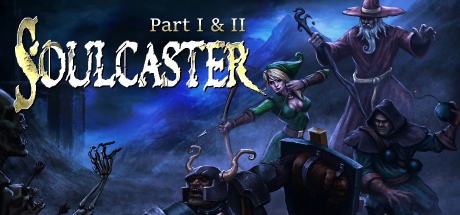
Take control of a squadron of epic summons in this unique take on dungeon crawling!
Modeled estimate, not a reported figure. How we estimate →
Media
About
Stats
All-time low is the lowest price we've recorded for this game since we started tracking it.
Languages: English
Engagement
Reviews
Themes across 40 recent reviews and how positive each mention is. A keyword signal, not full sentiment analysis.
Reviews
I don't know whether all those people with positive reviews played another game. But judging by the global achievement statistics that is very likely. This game could be great. But there are a lot of things really wrong with it: [list] [*] The controls are much too fiddly. [*] There is too much action going on at the same time. You may learn some patterns on how to place your units but it's not enough. [*] The game is unforgiving and seems unbalanced at times. [*] Especially in the second part it spawns units like crazy where you are supposed to run through. Not fun. [*] Most maps are layed out such that you have to try a path, often times leading to being cornered. Same thing with any challenge maps, they are mostly trial and error. [/list] Graphics and sound are fine and could be, with a little bit of polish, worthy of a great indie game.
I wouldn't call this Tower Defense or Dungeon Crawler even though it looks like it. Each mission/level you have one small area you can move around in, and you have seconds to do so (split seconds later levels). You can summon 3 stationary heroes, your towers. Warrior, archer, and bomb thrower. Each with their limited abilities. The thing is, this all happens EXTREMELY fast. You can go through a whole level in what seem like seconds. Strategy of going into a room and putting a warrior at the door is about as much strategy as there is. Okay concept and fun enough for an hour maybe. Unless you love action extremely fast games. Neither of which I associate with dungeon crawlers or tower defense.
Related
Related
Trends
Modeled estimate over time, reconstructed from Steam's monthly review histogram.
Hours played at review time, across 40 reviews with recorded playtime.
positive critical· bar length = how often the theme comes up
[h1] Skip. [/h1]
Soulcaster I & II takes the tower defense genre in a different way. Keeping it short, the gameplay's fun, the music's fine, I did really enjoy one song from Soulcaster Part II, but the rest isn't memorable. I gotta say I enjoyed the fact that each statue could converse and that this simple game was accompanied by some kind of plot/story, but it's nothing to go home about. I can't give this game a positive review due to broken achievements. There are two achievements that requires you to clear all challenge rooms (special maps unlocked after finishing the game), but yet, these cannot be achieved at all as they haven't been coded in. I'll update this review if it ever gets fixed.
I bought this game largely because it came from the makers of Escape Goat, and I wasn't disappointed! Definitely a steal at $5.
Nice story told through simple gameplay. Only thing I do dislike that enemy spawns too close to you.
A real-time top-down wave defense game with 3-5 summonable stationary turrets/defenders where you try to keep your character alive. Decent (NES-era) graphics and sound, but the story is pretty barebones and mediocre. ScI and ScII are pretty similar; ScII has more levels (and more open areas to make archers useful) and a few more enemy types. There are three types of immobile turrets/defenders that you summon. The first is an archer who deals the most damage but needs line-of-sight and can't absorb much damage. The second is a melee tank who you use as a front line to soak enemy fire and block enemies from getting to you or your ranged back line. The third is a grenadier who deals ranged AoE (3-space-long cross) damage and can fire over obstacles/allies. They are summoned onto a grid and you can't move past them once placed down. So if you get stuck you need to recall then re-summon them. Defeated enemies sometimes drop gold, health potions, or scrolls. Gold is used to buy health/damage upgrades to your defenders or extra summons slots (start with 3 and it goes up to 5). You can carry up to 3 potions & 3 scrolls. Potions work as automatic health refills/extra life bars; you have 99 hp and once it hits 0 the potion is automatically used to bring you back to 99. Scrolls are one-use effects that can help you out in dire situations. In ScI, it seemed like they were always a bomb/blast that dealt good damage over a huge range. In ScII, it seems like it either does that or summons a friendly enemy to fight for you(?). Take things slowly; activating switches unleashes enemy waves and often changes the map's layout. It's good to gain as much gold as possible for upgrades because it'll make future levels that much easier. Try to press every switch, defeat every enemy before you leave the level, collect every item (because some items trigger enemy waves). There are several times they tell you to exit early but it's always possible (though sometimes hard) to defeat all the enemies instead and hope they drop gold/items. I'd rather just retry the stage than make future stages harder. Worth a look for those who like simple defense games and want a try one with a twist. Other thoughts:[list] [*] A bit more about the story: From what I understand, you (a mute wizard with no spells) randomly stumble across ruins of an old empire/city and then gain the power to summon the three defenders. For whatever reason, you decide to go to the heart of it instead of leave and find [spoiler]a poisoned chalice which apparently powers the curse that has tainted the land/summons monsters in the ruins(?).[/spoiler] You solve that then leave the defenders behind and then in the second game you are on the outskirts of the empire and randomly find the defenders again. Your goal this time is to escape to a safe place. There is a twist/explanation in ScII but it comes at the end of the game after ~30 levels of no development. And it leaves on a cliffhanger, you don't even [spoiler]fight the revealed enemy[/spoiler]. [*] Most stages are pretty straightforward but there are a few stages that have little tricks to them. There's a rat stage where a horde of rats comes out if you defeat a rat. So you can [spoiler]just ignore them and run around the maze hitting switches until one switch puts a wall of spikes on all four sides around you. It gives you free rein to use your ranged to take them out safely without retribution.[/spoiler] [*] I preferred the grenadier over the archer because grenades don't need line of sight (and can fire over allies/walls) and the tank can solo the gold skeletons without archer support. Archers are hard to use except in wide open maps and there aren't that many of them (in the first game). [*] I call them a grenadier but the credits screen for ScII show them using a launcher of some kind. [*] I liked to prioritize tank HP upgrades first and then ranged dps second (preferring the grenadier and picking up extra orbs when possible). However, unlocking all 5 orbs meant that I never unlocked all the upgrades for a single character in the first game. The second game has a bonus upgrade once you unlock all of one character's upgrades and it seemed pretty good. The grenadier's extra upgrade leaves a 1x1 thing that lasts for a few moments that keeps damaging things after the initial explosion. [*] Maybe it's good to 'kite' backwards by recalling your front line before they die. It takes less time to re-summon than to wait out the death timer. However, you can't see the health bar so you have to guess. [*] Don't pick up scrolls/potions when you're already at the max amount. I'd rather save it for when you get overwhelmed and run to them later. If you pick too many scrolls up it just disappears instead of being used immediately. At least with potions it restores current hp back to 99. [*] When I lost challenge room 8 on ScI, it randomly gave me the 'Conqueror I' and 'Armored Fire' achievements. [/list]
I own this on XBLIG and on Steam. So worth it. Quick levels and playtime, but you want to come back for more. Great NES style graphics, top notch gameplay, and a nice soothing soundtrack. Easily recommended
Great little game * not TD * worth the $$
Soulcaster: Part I & II is a compact yet thoughtfully designed indie experience that brings together two early entries in MagicalTimeBean’s hybrid action–strategy series, offering players a distinctive blend of real-time tactics, tower defense concepts, and arcade-style pacing. At first glance, the game’s retro pixel art and simple presentation might suggest a lightweight or straightforward experience, but beneath that surface lies a carefully balanced system that rewards planning, quick thinking, and adaptability. By bundling both parts together, the Steam release provides a cohesive look at the series’ foundational ideas and how they evolve across its early stages. The central gameplay concept revolves around the role of a fragile spellcaster who cannot directly fight enemies. Instead, you summon and command a small team of allies to protect you from waves of hostile creatures moving through maze-like arenas. Each summoned ally serves a distinct tactical role: a melee-focused warrior for holding choke points, a ranged archer for sustained damage from a distance, and an explosive bomber capable of dealing heavy area damage. These allies function like mobile, intelligent towers, and learning how to position, recall, and redeploy them effectively is the key to survival. This indirect control scheme gives the game its unique identity, forcing players to think strategically rather than relying on reflex-heavy combat. As stages progress, the game gradually introduces more complex enemy patterns and environmental layouts, pushing players to refine their tactics. Enemies approach from multiple directions, exploit weak points in your formation, and overwhelm careless placements, making every decision feel meaningful. The ability to recall summoned allies to restore their health adds another layer of strategy, as doing so temporarily weakens your defenses but can be crucial for long-term survival. This constant tension between maintaining coverage and preserving your units keeps the gameplay engaging and prevents it from becoming static, distinguishing Soulcaster from more traditional tower defense titles. Visually, Soulcaster embraces a clean and readable pixel art style that emphasizes clarity over detail. Enemy types, ally abilities, and environmental features are easy to distinguish at a glance, which is essential given the game’s fast-paced decision-making. The environments, while modest in scale, offer enough variety to keep the experience fresh, ranging from darker, ominous settings to brighter, more fantastical locations. Complementing the visuals is a soundtrack that fits the tone well, providing energy during intense waves without becoming distracting or repetitive. Across both Part I and Part II, the game offers a substantial number of stages, each designed to test different aspects of the player’s understanding of the mechanics. Difficulty ramps up steadily, and while some later stages can be punishing, they rarely feel unfair. Instead, failure usually serves as a lesson in positioning or timing, encouraging players to adjust their approach rather than rely on brute force. Additional challenge modes and higher difficulties extend the lifespan of the game, giving experienced players reasons to revisit earlier levels and experiment with more efficient or risky strategies. While the overall scope of Soulcaster: Part I & II is relatively small compared to larger strategy or action titles, its focused design works in its favor. The game doesn’t overstay its welcome, and its mechanics remain engaging throughout its runtime. Some players may wish for deeper progression systems or more unit variety, but the limited toolkit is also part of what makes the experience so tightly balanced. Every ability and unit has a clear purpose, and mastery comes from understanding how they interact rather than unlocking endless upgrades. Overall, Soulcaster: Part I & II stands as a strong example of how inventive design can elevate a small-scale indie project. Its blend of strategy, action, and tower defense elements creates a gameplay loop that feels fresh and rewarding, especially for players who enjoy tactical challenges that demand constant attention. While its presentation is intentionally modest, the depth of its mechanics and the care put into level design make it a memorable experience that punches well above its weight, offering satisfying gameplay that remains engaging from the first wave to the last. Rating: 6/10
Momentum
Pace estimated from the game's recent review growth (our daily snapshots) at its own sales-per-review ratio — a momentum signal, not booked sales.
Audience
Estimated from the language of this game's reviews — a proxy for where players are, not official Steam demographics.
Related
| Equin: The Lantern | $7.7K | 58 | 91% | $4.99 |
| The Katydids Incident | $7.7K | 55 | 100% | $4.99 |
| KoroNeko | $7.7K | 110 | 96% | $4.49 |
| 闲置神话 | $7.7K | 113 | 53% | $2.99 |
| Cartier 06 | $7.7K | 99 | 76% | $4.99 |
| White Night | $7.7K | 302 | 75% | $1.49 |