Modeled estimate, not a reported figure. How we estimate →
Media

About
Genres
Stats
All-time low is the lowest price we've recorded for this game since we started tracking it.
Languages: English**languages with full audio support
Engagement
Reviews
Themes across 40 recent reviews and how positive each mention is. A keyword signal, not full sentiment analysis.
Reviews
Just play the game get all achevments and your done. The only thing i have to say is that the story has to be more explore and some bugs need to be fix
its a well made game tbh
good
Related
Related
Trends
Modeled estimate over time, reconstructed from Steam's monthly review histogram.
Hours played at review time, across 40 reviews with recorded playtime.
positive critical· bar length = how often the theme comes up
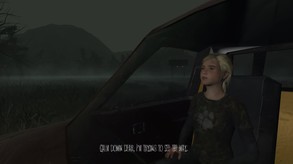
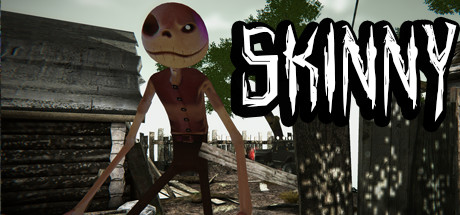
Skinny, developed and published by lol, is a low-budget psychological horror experience that blends exploration, stealth, and survival elements within a deserted town setting. Released on Steam in 2019, the game attempts to build tension through atmosphere and uncertainty rather than large-scale cinematic horror. Its premise is straightforward but emotionally charged: after a mysterious late-night car accident, you awaken in an abandoned environment to find your daughter missing. What follows is a methodical search through eerie streets and empty buildings, all while being stalked by an ominous entity known only as “Skinny.” From the beginning, the game emphasizes vulnerability and isolation. The town feels empty and oppressive, with dimly lit streets, silent interiors, and minimal guidance. Exploration is central to progression. Players must investigate houses, search for keys or clues, and piece together fragments of narrative context. Rather than delivering heavy exposition, the story unfolds through environmental hints and scattered interactions. This restrained narrative approach creates ambiguity, encouraging players to interpret events rather than receive clear explanations. The core gameplay loop revolves around cautious movement and resource management. A camera serves as a crucial tool, capable of revealing hidden clues or supernatural elements. However, its limited battery life forces careful usage. This mechanic introduces a light survival element, as players must decide when illumination or revelation is worth the risk of depletion. Stealth also plays a significant role. The player can hide in lockers, crouch behind obstacles, or take alternate routes to avoid detection. Direct confrontation is discouraged, although a firearm can be discovered and used defensively in certain situations. Combat remains minimal and does not shift the experience into action territory; instead, it reinforces the constant tension between escape and confrontation. Atmosphere is the game’s strongest asset. Ambient sound design—distant creaks, sudden audio distortions, and stretches of near silence—creates a persistent sense of unease. Lighting effects, particularly shadows cast by limited light sources, enhance the feeling of being watched. The antagonist’s presence is often felt more than seen, contributing to psychological tension rather than relying heavily on jump scares. When encounters occur, they are designed to unsettle rather than overwhelm. Visually, Skinny reflects its indie origins. Built using the Unity engine, environments are modestly detailed but not particularly refined. Repetition in building layouts and limited environmental variation can reduce immersion over time. While lighting effects and shadow play support the horror atmosphere effectively, character models and textures appear basic. The overall presentation prioritizes mood over graphical fidelity. Pacing is deliberate and slow. The game encourages careful navigation rather than rapid progression. For some players, this measured tempo enhances suspense and immersion. For others, it may feel repetitive, particularly when objectives require revisiting similar areas. The relatively short runtime prevents overextension, but it also limits narrative depth and mechanical variety. Once core mechanics are understood, the gameplay does not evolve significantly. Reception has been mixed, largely due to these contrasts. Some players appreciate the minimalist approach and atmospheric focus, finding value in its steady tension and low-cost accessibility. Others criticize the limited mechanics, uneven storytelling, and technical roughness. The absence of deeper character development or branching narrative paths may leave certain players wanting a more substantial horror experience. Ultimately, Skinny stands as a small-scale psychological horror project that succeeds in crafting moments of genuine unease despite its technical limitations. Its strength lies in mood construction and restrained storytelling, while its weaknesses stem from shallow systems and repetitive structure. For players interested in indie horror experiments that emphasize atmosphere over spectacle, it offers a concise and occasionally chilling experience. For those seeking polished production values and layered survival mechanics, it may feel underdeveloped compared to more established horror titles. Rating: 5/10
glitchy, but creative and over all fun game. keep it up, developer
это говно ещё то
this game is good
топ
A bug farm,,,
Где моя платина?
Momentum
Pace estimated from the game's recent review growth (our daily snapshots) at its own sales-per-review ratio — a momentum signal, not booked sales.
Audience
Estimated from the language of this game's reviews — a proxy for where players are, not official Steam demographics.
Related
| Sakura Mirror | $789.8 | 57 | 75% | $0.99 |
| Achievement Killer | $788.3 | 63 | 49% | $0.99 |
| Cute Nurses | $788.3 | 63 | 78% | $0.99 |
| Descent - Silence of Mind | $787.7 | 106 | 57% | $0.49 |
| A Plot Story | $785.9 | 73 | 29% | $0.71 |
| Where Rabbits 兔子在哪里 | $795.6 | 116 | 94% | $0.49 |
Related
| 7 Days to Die | $425.3M | 403.6K | 87% | $44.99 |
| Euro Truck Simulator 2 | $421.6M | 932.3K | 97% | $19.99 |
| Mount & Blade II: Bannerlord | $309.8M | 294K | 88% | $49.99 |
| Palworld | $279.6M | 447.5K | 94% | $20.99 |
| Stardew Valley | $258.9M | 881.6K | 99% | $14.99 |
| The Forest | $254.8M | 678.6K | 96% | $19.99 |