Usurper is a Metroidvania Action-RPG. With Eldritch horrors having been unleashed by the outer-worldly Citadel, your job is to rid London of its terrors. Use the new "Guard" system that rewards skillful play and accuracy, to uncover the massive structure and defeat the nightmares lurking within.
Modeled estimate, not a reported figure. How we estimate →
Media

About
Stats
All-time low is the lowest price we've recorded for this game since we started tracking it.
Languages: English
Engagement
Hours played at review time, across 40 reviews with recorded playtime.
Reviews
Themes across 40 recent reviews and how positive each mention is. A keyword signal, not full sentiment analysis.
positive critical· bar length = how often the theme comes up
Reviews
Rough gameplay but amazing story and atmosphere again. briliant ending too.
esse e pior jogo da steam se te estiver gratis ainda nao presta
Skautfold: Usurper is sadly a really mixed bag of a game and almost kind of bad game, except for a few things that helps this sequel to not completely suck, but let's get into the story first. It has been a few years since the incident at Berelaii’s Manor where the emperor and the four knights committed a ritualistic massacre, where Queen Eleanor was resurrected and killed her brother to take back the throne. After she and the four knights who have re-pledge their loyalty to her, they thought it was finally over, but it's not for the Citadel has arrived in London sending out its unholy creatures to commit mass slaughter. But Saragat the fourth knight along with the others were sent out to deal with the atrocities. Unfortunately things didn’t go as planned for Saragat as he was nearly killed, thankfully the fourth knight's life is saved by none other than Wilhelm, the mysterious benefactor and the man responsible for Eleanor's Resurrection, he too has his own mission here as he desires to control the citadel having fought the Navigator and almost was killed by him. Now Wilhelm resides in Saragat's body and both come to an agreement to save London and the world they must work together to kill the Navigator and take command of the Citadel. Okay the likes, the story is pretty good, in the first game the story really wasn’t the focus and you could probably just ignore some of it, but here there's a bit more of a focus on the story as it answers some important questions like what happened to the queen and the four knights after the first game, who is Wilhelm and what was that strange floating rock at the end credits. It answers those questions while also having more interesting characters and main character with Saragat, the story also gives some good hints about what's going to be the story for the third game in the series, I was a bit more interested in this story than I was in the first game’s story. The characters are good, from the first game the characters/NPCs were there just too only serve a narrative purpose if you were interested in the story, but it wasn't required to talk to them. Here they still serve a narrative purpose, but you don't have to talk to them if you don’t want too like in the first game, but in this game they're a lot more interesting to talk to, maybe it's because our main character can speak and interact with them I don’t really know, But here are some of the characters I liked, like Howard and his demon friend they're still pretty cool and I like their relationship as they both seem to care about each other, I also liked the queen as she doesn't hold any grudges against the four knights and even admits that she was a terrible ruler in her first life, but wants to be a better ruler in her new life, but she also acknowledges that the knights have to pay for their crimes for what they did under the king’s orders. I also liked the main character Saragat as he's the youngest of the four knights he can come off as very prideful, but he doesn't come off as arrogant and we see that he does have a more caring side to himself and definitely has regrets over what he and the other four did in the first game, I also like his chemistry between him and Wilhelm both at first being antagonistic to each other, but over the game they start becoming friends, I do feel a bit more could have been done with it but that's just me personally. The gameplay is okayish there's a lot of things that holds it back from being good, but that for the dislikes. But there are some general things I liked in this gameplay, I like the fact that this is a metroidvania that's a nice shake up from the first game which was a semi top down one, I also liked that we get new weapons instead of just a sword, and they had interesting designs and some of them do have some cool animations, although I do wish a few more things could have been done with them. The pixel graphic art style is very good with some nice uses of colors and designs, like the first game they actually really push how far these pixel graphics could go. The levels are good with plenty of interesting scenery we have a cathedral, a laboratory and a mini Forest it was all very good and makes you want to explore and see it all. The enemies and bosses were good each one had their own unique looks and designs, and while some enemies are just reused sprites from the first game it was nice to see them. The music is very good with some great tracks that set the mood very well. Okay the dislikes, now as I said there's problems with the gameplay, first the big problem is a lot of the enemies are seriously op, even the common ones can kill you in just two hits, even when you upgrade your defenses some enemies and bosses can still kill you in two hits. It can be really frustrating and not in the fun challenging kind of way, more like are you kidding me this is bullcrap kind of way and it only gets worse with some of the bosses, another really frustrating thing is the fact that you don't have healing items, in the first game you had one, but here you don't, you can only heal yourself at save points which got really annoying because combined with the enemies that hit hard you could be far in a level, accidentally get hit and then you have to go all the way back to a save point just to heal yourself. And those two things hard-hitting enemies and not being able to heal yourself make the boss fights un-enjoyable while it does take some trial and error with most of the bosses and they can be easy to deal with once you master the blocking mechanic, they are still a pain to fight and the worst boss being the final boss, it’s pretty bullet hellish especially in his second and third forms, it just feels extremely cheap especially if you're trying to go after some of the more difficult achievements like no death and level one achievements. Also like the previous game this does a kind of Eternal Darkness Sandy's Requiem where it messes with the game, problem is it just doesn't work in this game like it did in the first game. It worked in that game because it showed weird and creepy stuff, but didn't mess with the gameplay except for that one enemy but you could block his attack. But here it actually does that with inverting the screen or causing a fake blue screen of death which got really annoying because it happened during the boss fight with the torturer and it was already hard fighting him the first time, so having a blue screen of death or inverted screen when you're trying to beat him it was just really stupid. Not saying that you couldn't do that sanity's requiem type things in this game, but it could have been just weird images and maybe playing on the fourth knight and Wilhelm feelings and guilt about what happened in the previous game. The game also has some bugs, but nothing really game breaking that a quick restart can’t fix. Now as I said I wish there was some more things done with the weapons and that I wish that some of the elemental weapons to do status effects like the electric whip causing paralyzation and the fire whip causing fire damage. And like I said I also wish there was more that could be done with Saragat and Wilhelm story, like exploring more of their past, there hopes and their regrets, you know make it more believable. Now that I told you all this Skautfold: Usurper is sadly a really mixed bag of a game and almost kind of bad game, except for a few things that helps this sequel to not completely suck, I am going to have to give this game a thumbs down, it does have a pretty good story, good characters and very good pixel graphic art style. So do I recommend this game, no the gameplay just really makes the game not enjoyable to play, I feel like I could recommended it if there was an update to add healing items and decreasing the enemy strength, but I don't know this game was made in 2018, But maybe it will ever get an update or maybe it will get an update in a rerelease/remake.
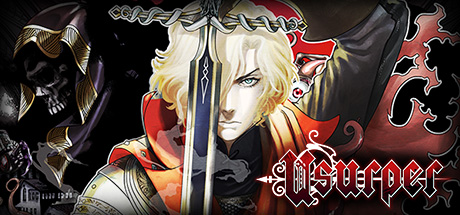
Skautfold: Usurper is a dark action RPG developed by Steve Gal and published by Pugware. Released on Steam in 2018, the game represents a significant evolution for the Skautfold series by shifting toward a more traditional Metroidvania structure while maintaining the franchise’s signature Lovecraftian tone and alternate-history setting. Combining exploration-heavy level design, challenging combat, and RPG progression systems, the game aims to deliver a gothic adventure that blends retro aesthetics with modern design sensibilities. The narrative unfolds in an alternate version of late nineteenth-century London, where the stability of the Angelic Empire of Britannia is shattered by a mysterious celestial event. A massive alien structure known as the Citadel suddenly descends upon the city, bringing with it an unnatural fog and a wave of monstrous creatures that begin spreading chaos through the streets. The government quickly loses control of the situation as the Citadel’s presence distorts reality itself. In response to the crisis, the imperial forces attempt to investigate the structure, but the expedition proves disastrous. Into this catastrophic scenario enters the protagonist Saragat, a fallen knight resurrected by a mysterious necromancer and sent into the Citadel to uncover the truth behind the catastrophe. The Citadel itself serves as the central environment of the game, functioning as a vast interconnected world rather than a series of isolated levels. Its interior contains a surprising variety of locations, from ruined city districts and arcane libraries to mechanical chambers and alien landscapes that feel completely detached from the London outside. As players explore deeper into the Citadel, the architecture becomes increasingly surreal, reinforcing the idea that the structure is not bound by normal physical laws. This shifting environment plays a crucial role in creating the game’s eerie atmosphere, making exploration both unsettling and fascinating. The world design follows the familiar structure of Metroidvania games, where progress depends on acquiring new abilities that unlock previously inaccessible areas. Throughout the Citadel, players encounter sealed passages, unreachable platforms, and hidden corridors that initially seem impossible to access. As new relics and abilities are discovered, these obstacles can be overcome, opening shortcuts and entirely new sections of the map. This layered design encourages players to revisit earlier areas and search carefully for hidden paths and secret items. Combat is built around the game’s distinctive Guard Point system, which adds an extra layer of strategy to encounters. Instead of taking damage directly from every enemy attack, Saragat possesses a guard meter that absorbs incoming damage first. As long as this guard meter remains intact, the player can withstand attacks without losing health. However, once the guard meter is depleted, the character becomes vulnerable to serious damage. Successfully dodging or timing defensive maneuvers can help restore guard points, turning combat into a careful balance between offense and defense. The variety of weapons available further expands the combat system. Players can equip multiple weapon types, including swords, spears, firearms, bows, and magical abilities. Each weapon category offers a different rhythm of combat, allowing players to adapt their playstyle depending on the situation. Heavy weapons deliver powerful strikes but require careful timing, while ranged weapons allow safer attacks from a distance. This flexibility gives players the freedom to experiment with different strategies when facing the Citadel’s many enemies. Character progression adds another layer to the experience. Enemies drop a resource called Vitae, which can be spent at specific checkpoints to increase the protagonist’s attributes. These attributes influence combat performance by improving aspects such as physical strength, dexterity, and magical abilities. Progression is deliberately measured, requiring players to collect special items before they can increase their level further. This system encourages exploration and rewards players who take the time to thoroughly investigate each area. The Citadel is filled with numerous secrets that reward curiosity. Hidden rooms, optional bosses, rare equipment, and mysterious relics can all be discovered throughout the environment. Some of these discoveries unlock powerful upgrades, while others reveal pieces of the game’s deeper lore. This design makes exploration feel meaningful and helps create a sense of discovery as players slowly unravel the mysteries surrounding the Citadel and the forces behind its appearance. Visually, the game uses a detailed pixel-art style that evokes the aesthetics of classic 2D action games while still maintaining a distinctive gothic identity. The environments are filled with dark corridors, ornate architecture, and grotesque creatures that reflect the influence of cosmic horror. As players descend deeper into the Citadel, the visual tone shifts from familiar urban environments to increasingly alien landscapes, reinforcing the narrative theme that the structure originates from somewhere far beyond human understanding. The sound design plays a significant role in reinforcing the atmosphere. The soundtrack blends haunting ambient music with dramatic compositions that intensify during combat encounters and boss battles. Subtle environmental audio effects—such as echoing footsteps or distant mechanical noises—help create the sensation that the Citadel is a living structure filled with hidden dangers. Boss battles represent some of the most memorable moments in the game. Each major encounter introduces unique mechanics and attack patterns that challenge the player’s mastery of the combat system. These battles often require careful observation and patience, rewarding players who learn enemy behavior and respond with precise timing. Despite its many strengths, the game does have certain weaknesses. Some of the RPG progression systems feel slightly underdeveloped compared to other titles in the genre, and the impact of certain stat upgrades can feel minimal. Additionally, the difficulty curve can be harsh at times, particularly for players unfamiliar with the Guard Point mechanic. Navigation through the Citadel may also become confusing due to the complexity of the map and the lack of detailed guidance. Even with these issues, Skautfold: Usurper remains an ambitious indie project that successfully combines several different gameplay styles into a cohesive experience. Its mixture of exploration, combat, and atmospheric storytelling creates a compelling adventure that stands out within the Metroidvania genre. Ultimately, the game succeeds by offering a dark and immersive world filled with mystery and challenge. Players willing to master its combat system and explore its labyrinthine environments will discover a richly detailed adventure that expands the lore of the Skautfold universe in meaningful ways. Rating: 7/10
ryo demişler de bana göre 2d sıradan platformun üstüne çıkmadı sarmaz
If you're REALLY into the genre I'd say give it a shot, the story is neat but it gets tedious later in the game there's no warping from save point to save point, just a one way warp back to the hub area and it makes backtracking the majority of what your playtime is gonna be other than that the game is alright, didn't feel too difficult for the most part once you get used to the guard mechanic I dumped half my stats into guard and hardly had much of a struggle the last boss was still pretty tough the game has a nice ost for the calmer moments but it felt lacking when it came to the more intense parts like boss fights I can't name a single boss fight in this game that had memorable music for me the weapon hotkeys are also always active, I've had too many moments where I navigate the menus and unpause to find that I've swapped weapons again without noticing I did like the story though, Waltham is an interesting character
Gloomy-toned metroidvania which suffers from incoherent plotting and excessive length, but is redeemed somewhat by reasonably fun movement abilities and managing to make soulslike-inspired mechanics bearable. The setting of the game is intriguing enough, but you have to work quite hard to piece it together because the story and worldbuilding are handled erratically and unclearly, leaving me at the end of the game with a kind of "wait, I'm not sure what half of that was about" feeling. There's also a kind of steampunk gothiness to the whole thing which works reasonably well. At first your abilities are quite limited but as you start to gain more movement options, the game really opens up. Backtracking to reach new nooks and crannies usually rewards you with something, and the levelling system gives you several ways of building your character (though how much functional difference results, I'm not sure - I suspect some nominally different builds are probably pretty similar in action). I mention that Usurper makes soulslike mechanics bearable and what I mean is this. I don't like soulslikes or the proliferation of the tedious bonfire/soul drop/stamina/dodge roll package that accompanies them - but here it's done in quite a forgiving way. Your Guard meter is both your shield (protecting a tiny health bar) and also your stamina - but it's easily restored in combat by successfully dodge rolling through an attack, which gives you a chunk of your Guard back. This makes it more forgiving than the soulslike norm, and also puts more control in the player's hands. I still rolled my eyes every time enemies respawned because I rested at a bonfire - sorry, sat on a throne - but it's a less abrasive implementation of these over-used tropes than most. I did start to tire of the game a few hours before it finished, though. It took me just under 13 hours to get through (and would have taken longer if I hadn't consulted a guide to rectify a bug which resulted in the game not giving me my next objective) and for the final 3-4 hours I was ready to be done with it. There's very little fast travel and few shortcuts, so you spend a LOT of the play time walking back and forth through the same areas over and over. On the whole, I did mostly enjoy my time with Usurper. I didn't love it, and I don't know that I liked it enough to actively recommend it, but if it appealed to you then I wouldn't warn you off it either. Good effort which flubs a few aspects too much to be great, but does enough things right to be a moderately decent game overall.
Slow and clunky. Button commands will decide not to work sometimes
The fonts are super small and unclear to read, really ruining my experience. The jumping, map design are not good too, I really wanna to continue this game but it's so bad that I couldnt play more.
https://youtu.be/W9YheqgkjU8 Heavily wrought systems with heavy forced lore and world building struggles to hook players due to upfront complexity.
Related
Related
Trends
Modeled estimate over time, reconstructed from Steam's monthly review histogram.
Momentum
Pace estimated from the game's recent review growth (our daily snapshots) at its own sales-per-review ratio — a momentum signal, not booked sales.
Audience
Estimated from the language of this game's reviews — a proxy for where players are, not official Steam demographics.
Related
| Burnin' Rubber 5 HD | $72.1K | 341 | 88% | $9.99 |
| fox soldier | $72.2K | 202 | 99% | $14.99 |
| Gun Metal | $72.2K | 1.1K | 81% | $2.99 |
| No Place for Bravery | $72.1K | 174 | 71% | $19.99 |
| Hydrofoil Generation | $72.1K | 116 | 86% | $19.99 |
| Cathodemer | $72.1K | 164 | 88% | $24.99 |
Related
| 7 Days to Die | $425.3M | 403.5K | 87% | $44.99 |
| Mount & Blade II: Bannerlord | $309.8M | 293.9K | 88% | $49.99 |
| Palworld | $279.6M | 445.8K | 94% | $20.99 |
| Clair Obscur: Expedition 33 | $263.7M | 178K | 95% | $47.99 |
| Terraria | $187.5M | 1.5M | 97% | $9.99 |
| Don't Starve Together | $130.6M | 373.1K | 95% | $14.99 |