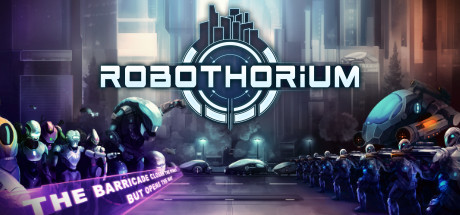
Robothorium, developed by Goblinz Studio and published by Goblinz Publishing together with Whisper Games, is a turn-based tactical RPG that blends cyberpunk storytelling with roguelike structure and squad-based strategy. Set in a future where sentient machines have begun to question their role under human control, the game casts the player as a guiding intelligence orchestrating a robotic rebellion. It’s an intriguing setup that leans into themes of autonomy, ideology, and revolution, and while the execution doesn’t always match its ambition, the foundation is undeniably compelling.
The narrative stands out as one of the game’s more engaging elements. Rather than presenting a straightforward uprising, the story introduces competing factions of robots, each with its own philosophy about how freedom should be achieved. Some favor diplomacy, others advocate for outright destruction, and many fall somewhere in between. The player’s choices influence these relationships, shaping both the direction of the rebellion and the outcome of the campaign. This branching approach adds weight to decisions and encourages replayability, as different paths reveal alternate perspectives and consequences. The writing isn’t flawless, but it does enough to make the world feel politically and ideologically layered.
Combat forms the backbone of the experience, built around turn-based encounters where positioning, ability usage, and team composition are key. Players assemble squads from a variety of robot classes, each offering distinct roles and playstyles. Some units specialize in damage output, others in support or control, and combining them effectively becomes central to success. There’s a satisfying tactical rhythm when everything clicks—coordinating abilities, managing cooldowns, and adapting to enemy formations can feel rewarding. However, this depth is occasionally undercut by inconsistency, as certain encounters rely heavily on chance-based outcomes, which can make even well-planned strategies feel unreliable.
Outside of combat, Robothorium expands into a broader management layer that includes crafting, upgrading units, and navigating faction relationships. This meta-structure reinforces the sense of leading a larger movement rather than simply progressing through isolated missions. There’s a clear attempt to give players multiple systems to engage with, but the sheer volume of mechanics can become overwhelming. Menus are dense, explanations are often lacking, and important details can be buried beneath layers of interface clutter. Instead of enhancing immersion, this complexity sometimes creates friction, particularly for players who are not already familiar with tactical RPG conventions.
The roguelike elements add both replayability and repetition. Missions are procedurally generated, which ensures that no two runs are exactly the same, but the variation isn’t always significant enough to keep the experience feeling fresh over long sessions. Enemy types and objectives don’t evolve dramatically, and the loop of deploying units, completing missions, and returning to the hub can begin to feel predictable. While the progression systems provide a sense of advancement, they don’t fully offset the repetitive structure that emerges over time.
Visually, the game adopts a stylized, slightly cartoonish aesthetic that contrasts with its more serious themes. The robot designs are varied and expressive, giving personality to each unit despite the mechanical setting. Environments are colorful and functional, though not particularly detailed, and they serve their purpose without becoming a focal point. The soundtrack complements the action adequately, maintaining a steady tone throughout, but like other aspects of the game, it can become repetitive during extended play.
Balance is another area where the game shows some rough edges. Certain builds or unit combinations can feel disproportionately effective, while others struggle to remain viable in later stages. Loot and upgrade systems, though extensive, don’t always feel well-tuned, leading to moments where progression either stalls or accelerates unevenly. These inconsistencies don’t break the game, but they do highlight a lack of refinement that prevents the systems from reaching their full potential.
Ultimately, Robothorium is a game defined by its ambition. It brings together narrative choice, tactical combat, and roguelike progression into a cohesive framework that offers genuine depth for those willing to engage with it. At the same time, its complexity, repetition, and uneven polish make it less accessible and occasionally frustrating. For players who enjoy experimenting with systems and exploring branching narratives, it can be a rewarding experience. For others, the friction may outweigh the appeal.
Rating: 7/10