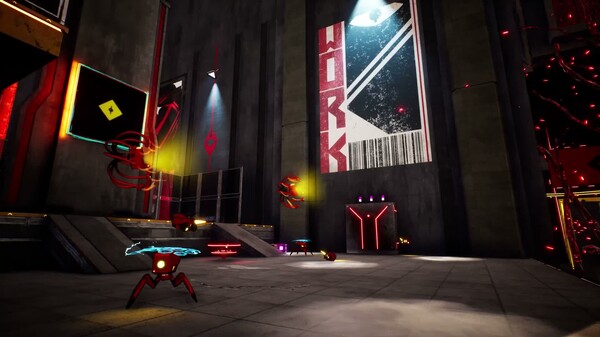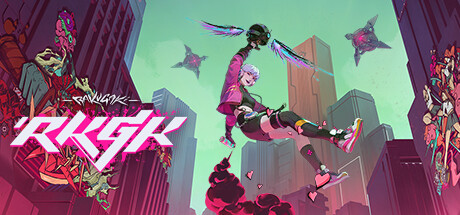
Turn heads. Drop jaws. Be bright. In this single-player 3D platformer, you’re the only one who can take down Mr. Buff and his lackies to restore color and life to the citizens of Cap City. Accompany Valah and the RKGK crew on their journey to take down the oppressive B Corp.
Modeled estimate, not a reported figure. How we estimate →
About

Genres
Stats
All-time low is the lowest price we've recorded for this game since we started tracking it.
Add-ons
Each DLC is estimated with the same model as a game, then summed — a modeled figure, not reported DLC sales.
Engagement
Reviews
Themes across 54 recent reviews and how positive each mention is. A keyword signal, not full sentiment analysis.
Reviews
Giving this a negative, but it really just belongs in the category of 'okay.' It feels like it goes back and forth between pretty fun to play with nice movement and speed and just visually appealing to look at, to a total slog with terrible camera angles and weirdly unfair bosses and confusing level design. If they just stuck to what made the game good it would be fine, speed, music and visuals. Instead every once and a while it becomes something noticeably less fun. I don't think it's a bad game. I wish steam would give a choice for an in between rating, but for now this game gets a negative from me because the final thoughts I had when playing it was. "I'm not enjoying this anymore and I stopped caring a while ago."
Brilliant but flawed platformer. Stylistically it feels like a mix between 3D sonic games and Jet Grind Radio. Movement is mostly fluid and can be quite fast. The camera angles are nearly always spot on too. When it's at its best it is amazing but it's not without its problems. - There are bugs where if you fall you will respawn and continue dying until you finally die. - The level 'Leap of Faith' uses a mechanic where solid surfaces only spawn from an orb under you but the orb moves really inconsistently and you are either waiting for it or dying because you can't keep up and it's not just in a specific point, it happens the whole way through the level. - If you are hit by an enemy in the air over a gap, you are stunned, lose 1 heart and then fall into the void, losing another heart. Most of the time this isn't an issue but in boss fights it can be really frustrating. - The mix between speed and collecting makes it feel a bit at odds with each other, like there's one level in chapter 5 with speed pads and stuff all leading to the end but a big screen half way through so unless you want to do the level multiple times you need to stop and go get the screen before finishing the speed ramp. It feels jarring compared to times where you're grinding rails and speeding along able to freely graffiti screens.
Media

Related
Related
Price dynamics, follower growth, revenue and sales trajectories with interactive tooltips
This and every other Pro feature is free until October 20, 2026. A free account is all it takes.
Languages: English*, Spanish - Latin America*, French, Italian, German, Portuguese - Brazil, Simplified Chinese, Japanese**languages with full audio support
Hours played at review time, across 54 reviews with recorded playtime.
positive critical· bar length = how often the theme comes up
[h1] Be warned [/h1] Objects will block your view. Since it's monochromatic, there will be moments were you can't tell if it's a hazardous ground or not. RKGK is a basic game, but it's fun. It's a nice balance between a hack and slash and a Sonic like. Movement is solid although it'll get you killed more often than not. Combat is just enough to keep you engaged. Dialog and story is alright, but it's not it's specialty. If you like weird simple PS2 games, you'll like this. [spoiler] Also, ♥♥♥♥ the "boss" of world 4 and the last boss is extreme bs. [/spoiler]
Мне искренне понравилась эта игра, но её сложность меня убила, в плохом смысле. Ты покупаешь её надеясь, что тут скейтерство и граффити как в подобных grind fiction творениях и игра тебе это дает, мне нравится её стиль, скорость и музыка, НО потом автор забывает о балансе в боях/боссах и начинается треш. Помните такой жанр, как shoot em up? Так вот, разработчик решил что будет гениальным решением добавить этот элемент в 3D платформер, где роботы буквально заsирают тебя своими сферами не давая увернуться. И ты траишь эти несчастные последние уровни, пытаясь закрыть целую локацию. Я искренне считаю, что проблема в том, что даже на обычном уровне сложности мне не дают насладится игрой, считая что я должна рвать жопу. Пока отложу прохождение в долгий ящик, потому что игра то достойная, но из-за причин описанных выше от неё все чаще при заходе хочется отдохнуть.
Good game, and good value considering the price point, especially if it's on sale. Enjoyable if you like 3D platformers with a good flowing moveset and replaying levels until you collect everything and beat the timed challenges. I really enjoyed the feel of the platforming, with a lot of ways to express yourself and navigate the levels. There are a good amount of levels and a lot of secrets and areas. Decent amount of variety in level mechanics and settings, although interesting choice for the virtual world levels, seems to be evil/hellish vibes as opposed to cyberspace or something. Surfing around while destroying everything and putting graffiti on screen feels amazing. It's not the fastest speed game like some of the visuals and mechanics might suggest, but the aesthetics are still enjoyable and fit the gameplay well. It uses the flow state as an actual game mechanic, with the music, sound effects, and visuals coming together when you combo enough moves together without getting hit. It abruptly stops when you mess up, so you need to earn the dopamine rush again. Story is pretty simple but works with the setting and mechanics of the game. Would have liked a bit more from all the characters. The side characters just end up being shop NPCs, and the dialogue can be a little cringe, but that's usually par for the course for 3D platformers. A bunch of little small quirks and annoyances though, some more noticeable when trying to get 100%. The auto-targeting can be too lenient and launches me towards the electrified enemies which I can't even hit anyway. There's a bug where sometimes you can't surf or attack until you jump or dash which is really annoying. Some levels crash, and you can't rebind the graffiti and reset camera buttons for some reason. I still enjoyed the game a lot. Couldn't get 100%, some of the speedrun challenges are too hard, I might be missing some shortcuts or techniques or something, and some of the coins and hidden ghosts I cannot find for the life of me.
Игра вдохнавоенная веселым лисенком, jet set radio, соник и сплатун. Уровни где вам нужно собрать все или заспидранить. Визуал норм, персонажи в комикс стилистике симпотичнее 3д моделек. Музыка средняя и ниже. Кому нравится платформеры с акцентом крэша и закраской уровней при передвижении и графити рекомендую попробовать.
Chilaquiles con mayonesa
El juego pinta bien hasta que lo juegas y es otro plataformero genérico. Solo lo recomendaria como la primera vez que juegas un juego de plataformas. Si no es así, sigue buscando
RKGK / Rakugaki by Wabisabi Games is a strikingly stylized 3D platformer that builds its identity around speed, expression, and rebellion, using graffiti as both a visual motif and a mechanical backbone. Set in a dystopian city drained of individuality by an oppressive corporate regime, the game casts you as Valah, a nimble and energetic protagonist determined to bring color and personality back into a sterile world. From the very beginning, the game establishes a strong sense of identity through its art direction and tone, presenting a world where every splash of paint feels like an act of defiance. It’s a concept that resonates visually and thematically, even if its narrative execution doesn’t always reach the same level of impact. At the heart of the experience is a movement system that prioritizes fluidity and momentum above all else. Valah’s abilities—ranging from double jumps and air dashes to grappling and paint-based traversal—are designed to be chained together in quick succession, encouraging players to think in terms of flow rather than isolated actions. When mastered, this system creates a satisfying rhythm where you glide through levels with speed and precision, seamlessly transitioning between platforming challenges and enemy encounters. The controls feel responsive, and the game rewards players who take the time to refine their timing and routes. This emphasis on movement is what defines the experience, turning each level into a playground for experimentation and skill expression. Level design supports this philosophy by offering a mix of straightforward progression and optional mastery challenges. Stages are filled with collectibles, hidden paths, and time-based objectives that encourage replayability. While the main campaign can be completed relatively quickly, the game clearly expects players to revisit levels in pursuit of better times and more efficient routes. This arcade-like structure gives the game a strong sense of longevity for those who enjoy optimization and mastery, as each run becomes an opportunity to improve performance and discover new shortcuts or techniques. Visually, the game is one of its strongest assets. Its graffiti-inspired aesthetic blends vibrant neon colors with a more muted industrial backdrop, creating a constant contrast between oppression and expression. As you progress and reclaim parts of the city, the environment becomes more colorful, reinforcing the idea that your actions are actively reshaping the world. Character designs are expressive and animated with energy, while the soundtrack complements the fast-paced gameplay with a mix of electronic and urban-inspired tracks that enhance the sense of momentum. Together, these elements create an experience that feels cohesive and visually memorable. However, beneath its strong presentation and movement mechanics, the game struggles with consistency in other areas. The narrative, while conceptually interesting, remains relatively underdeveloped. It introduces themes of control, rebellion, and identity but doesn’t explore them in depth, leaving the story feeling more like a backdrop than a driving force. Character interactions are serviceable but lack the nuance needed to create a lasting emotional connection, and the overall plot progresses in a fairly predictable manner. Combat and boss encounters are another area where the game feels less refined. While regular encounters can be integrated smoothly into the flow of movement, boss fights often disrupt that rhythm, relying on patterns or mechanics that don’t fully align with the game’s strengths. These moments can feel more restrictive and less dynamic, breaking the sense of freedom that defines the rest of the experience. Additionally, while the game introduces multiple environments, they tend to share similar structural elements, which can lead to a sense of repetition over time despite the vibrant visual design. Pacing is generally solid in the early stages, with new mechanics and challenges introduced at a steady rate, but it begins to plateau as the game progresses. The core loop remains enjoyable, but the lack of significant evolution in mechanics or level variety can make later sections feel less engaging compared to the initial experience. This is especially noticeable for players who are not invested in replaying levels for completion or optimization, as the game’s depth is closely tied to its replayability rather than its first-run progression. Despite these shortcomings, RKGK / Rakugaki succeeds in delivering a distinct and memorable experience. It’s a game that clearly prioritizes feel and style, and in those areas, it excels. The act of moving through its world—chaining abilities, maintaining momentum, and painting over its gray surfaces—is consistently satisfying, and it captures a sense of freedom that aligns perfectly with its themes. While it may not fully realize its narrative ambitions or provide the depth of a more mechanically complex platformer, it offers enough creativity and polish in its core systems to stand out. In the end, RKGK / Rakugaki is best appreciated as a movement-driven platformer with a strong artistic vision. It thrives on speed, expression, and replayability, even if it stumbles in areas like storytelling and variety. For players who value fluid gameplay and striking visuals, it provides a rewarding and engaging experience, while those looking for a deeper narrative or more diverse mechanics may find it somewhat limited. It’s a confident debut that showcases both the potential and the growing pains of its creators. Rating: 7/10
Fun game! The dialogue is absolutely terrible but it's very easy to ignore and the game itself is very fun
Players by region
Where this game's players are, estimated from review languages.
Players also reviewed
The games this title's players most often review too — audience affinity.
Related
| Game | Estimated lifetime revenue | Reviews | Review score | Price |
|---|---|---|---|---|
| — | 0 | — | — | |
| — | 0 | — | — | |
| — | 0 | — | — | |
| $0 | 72 | 81% | Free | |
| — | 0 | — | — | |
| $2.7M | 5.4K | 85% | $15.99 |
Related
| Game | Estimated lifetime revenue | Reviews | Review score | Price |
|---|---|---|---|---|
| $68K | 83 | 96% | $19.99 | |
| $68K | 229 | 76% | $12.99 | |
| $68K | 344 | 80% | $19.99 | |
| $68K | 190 | 88% | $13.99 | |
| $68K | 191 | 61% | $9.99 | |
| $68K | 215 | 77% | $14.99 |