Random Access Murder, developed and published by Team Murder, is an unconventional first-person arena shooter that feels less like a traditional competitive title and more like a raw experimental concept brought directly to market. Originally created as a short game-jam project, it carries that DNA openly: bold ideas, eccentric mechanics, and an unapologetically rough execution. Rather than aiming for balance or long-term progression, the game embraces chaos as its defining feature, asking players to enjoy the absurdity of malfunctioning robots, unstable arenas, and combat systems that intentionally blur the line between design and glitch.
The core concept revolves around robot-on-robot combat where health is replaced by memory. Instead of depleting hit points, players overwhelm opponents by flooding their RAM, causing visual corruption, intrusive pop-ups, and increasing disorientation until the enemy effectively crashes. This idea is clever on paper and thematically consistent with the game’s digital aesthetic, framing combat as a battle of data overload rather than physical destruction. In practice, however, this mechanic often results in overwhelming visual noise. Screens fill with distortion and interference so quickly that it becomes difficult to track enemies, read the environment, or make deliberate tactical decisions, turning firefights into frantic guessing games rather than skill-based duels.
Movement and gunplay are fast and deliberately slippery, with players controlling small wheeled robots that slide and pivot rapidly around enclosed arenas. Weapons are scattered throughout the maps and vary in how quickly they accelerate memory overload, encouraging constant motion and scavenging. While this keeps the pace energetic, the lack of fine-tuned balance means encounters can feel inconsistent, with some weapons dominating while others feel inconsequential. Combined with the unstable movement physics, combat often feels more accidental than intentional, which can either be entertaining or frustrating depending on a player’s tolerance for unpredictability.
Arena design reflects the game’s prototype origins. Maps are compact and clearly meant to facilitate short, high-intensity matches, but they often suffer from unpolished geometry and unintended exploits. Players may encounter clipping issues, awkward collision detection, or routes that undermine any sense of strategic positioning. Instead of feeling like carefully crafted competitive spaces, the arenas often resemble experimental sandboxes where unintended interactions are just as common as intended ones. For some, this reinforces the game’s anarchic charm; for others, it erodes any sense of fairness or mastery.
Multiplayer is positioned as the main attraction, with the promise of frantic online matches where chaos is amplified by human unpredictability. When played with friends who understand and embrace the game’s absurdity, Random Access Murder can deliver brief moments of genuine fun, laughter, and shared confusion. However, the lack of a sustained player base and limited matchmaking options make spontaneous online play difficult. Solo options exist but are minimal, and without meaningful AI behavior or progression systems, they fail to replicate the energy that multiplayer is meant to provide.
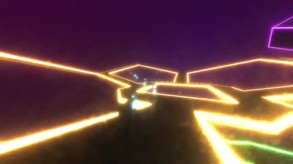
Visually, the game leans heavily into glitch aesthetics and low-budget sci-fi stylization. Robots, weapons, and environments are functional rather than expressive, serving primarily as vessels for the visual corruption effects that define the experience. Audio design follows a similar philosophy, emphasizing digital noise and exaggerated effects over clarity. While this reinforces the theme of malfunction and overload, it also contributes to sensory fatigue during longer sessions, further limiting the game’s longevity.
Reception to Random Access Murder has largely reflected its experimental nature. Players approaching it as a finished arena shooter often come away disappointed by its lack of polish, content, and balance. Those who view it instead as a playable prototype or art-driven experiment are more forgiving, appreciating its willingness to commit to an unusual idea without compromise. The game rarely attempts to guide, teach, or retain players; it simply presents its systems and lets the chaos unfold.
Ultimately, Random Access Murder is best understood as a snapshot of an idea rather than a fully realized product. It showcases creative thinking and a willingness to subvert shooter conventions, but it stops short of refining those ideas into a cohesive, lasting experience. For players who enjoy experimental indie projects and don’t mind instability or confusion in exchange for novelty, it can offer brief bursts of chaotic entertainment. For those seeking a polished, competitive, or content-rich arena shooter, it is more likely to feel like a curiosity than a destination.
Rating: 4/10