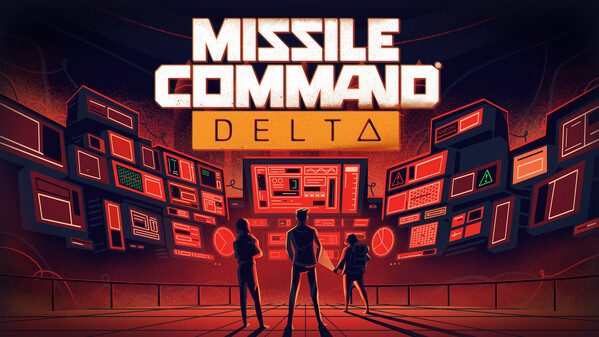
Missiles are incoming. The stakes are high. Only you can stop the destruction. Manage your pool of defenses strategically to survive rounds of incoming missiles in this high-pressure, tactical turn-based game. Will you be able to unravel the mystery in time?
Modeled estimate, not a reported figure. How we estimate →
Media

About
Missiles are incoming. The stakes are high. Only you can stop the destruction. The teams at Mighty Yell and 13AM Games have taken one of Atari’s most iconic titles and created a high-pressure, tactical turn-based game where players must manage their pool of defenses strategically to survive rounds of incoming missiles.
Missile Command Delta approaches gameplay in a completely new way, but it retains all the tension and suspense of the arcade original. You have to think strategically about every move you make because even one poor choice can have grave consequences. The turn-based strategy game is wrapped in a twisting, narrative thriller – great for mystery fans, completionists, and players that love to explore and solve puzzles.
Between inbound missile alerts, investigate the underground bunker to access locked rooms, uncover secrets, and strengthen your arsenal. Will you be able to unravel the mystery in time?
- Turn-Based Strategy: A totally unique strategy experience. New missile and enemy types are uncovered when you explore deeper into the bunker.
- Plan Your Defense: Every turn is critical, and one poor choice can spell disaster. Plan your next move, and map out a cascade of explosions that take out multiple enemy missiles to help conserve your resources.
- High-Stakes Mystery: The turn-based strategy game is wrapped in a high-stakes narrative puzzle. Read every document, watch your every step, and ace every puzzle if you want to [REDACTED].
- Experience the Cold War: A claustrophobic retro-future aesthetic of dusty command consoles and supercomputers place you deep into Cold War paranoia.
Stats
All-time low is the lowest price we've recorded for this game since we started tracking it.
Languages: English, French, German, Spanish - Spain
Engagement
Hours played at review time, across 32 reviews with recorded playtime.
Reviews
The game combines escape room type and puzzles during missle defence. Pros: The missle minigame is very good. The bunker feels good to explore. The story fells really good. Cons: There are bugs, especially an annoying one with shield placement in the minigame. The game rewards you for beating the missile minigame perfectly, however by the 5th hour of gameplay I got a feeling like I was missing something, because suddenly I couldn't get those perfect solutions anymore. It feels impossible to complete some perfectly with the cards I have.
A lovely blend of mystery and classic missile defence, the story segments help to pace out the strategy/puzzles. The navigation "escape room" portion has been fairly straightforward but still fairly satisfying. Hope it gets more visibility soon as it's a blast!
This was a really solid puzzle game, full of intrigue and character. While Missile Command originally was more real-time, the turn-based aspect of this adaptation was actually quite well done and stressful in it's own way. All in-between that though is the 'escape-room' portions, which helped shake things up, and played really well thematically on the paranoia and tension during the Cold War. I especially enjoyed the struggle of keeping the friendships you have with the three characters amidst everything, the secret notes and rooms you find, and the climax/ending of the game. All in all, this was a pretty satisfying recreation of the Missile Command IP!
the mechanics are great, albeit not well explained, the big problem with the game is that any part that isn't playing missile command is just boring, the characters are bland and full of less than dry humor, the story is boring and most of all the art direction is not great, buy this game on sale.
元祖はトラックボールでポチポチやってたアレですが 今作はウォーシュミレーション化したミサイルコマンドですね、 迎撃する側のミサイルも多種多様、果てにはシールドやレーザー?も有 ストーリーは謎解きパズル有りのアドベンチャー形式をとってますので ミサイルコマンドだけやりたい方は注意 当時の設定なら迎撃するミサイルも当然核弾頭なんで防衛に成功したとて決して無傷ではないんですねえ
Let’s start from the beginning. I’d never played the original version of “Missile Command,” which was released in 1980 for arcade machines and later on consoles. The only thing I knew about it, was that John Connor played it in the movie “Terminator 2.” So I had no expectations or demands regarding this game. According to the developers' vision, the game was supposed to be built on three main pillars: turn-based strategy, exploration, and story. Unfortunately, of these three elements, only one is capable of standing on its own. Turn-based strategy - this is where the game really shines. The developers took everything that made the original version unique and memorable, and then modernized those elements. It’s a solid strategy game, offering a variety of tactical options and a wide selection of available weaponry. I like that it forces the player to plan for both current and upcoming attacks in terms of response and combat tactics. I also appreciate that the game stays true to its rules and doesn’t try to bend or break them. Exploration – it’s pretty good for the first few hours, but it falls flat later on in the game. The puzzles aren’t complicated; they’re too easy and simplistic. The developers rely far too often on training terminals instead of puzzles based on cryptograms or complex but logical problems. It seems they ran out of ideas very quickly, which is painfully obvious. Story - it isn’t good. It’s not a top-notch thriller, but rather a run-of-the-mill TV filler. Unfortunately, the supporting characters are so dumb and naive that they don’t notice it, but the whole plot just doesn’t make sense. There are way too many holes in it to convince even a gullible kid, and yet everyone falls for it. Furthermore, making a group of high school students the protagonists instead of focusing on: e.g. a small military unit at a remote base, a TV crew filming a documentary about old military facilities, or even a group of urban explorers did not do the game any favors. This makes the game feel like a high school drama rather than a serious story. Would I recommend it? No. I enjoyed the game a little, but I can’t recommend it with a good conscience. It’s a decent turn-based strategy game set in the world of ‘Missile Commander’, but in every other respect it falls short of expectations. ✅[list] [*] Missile Command part is actually very good turn-based strategy. It offers plenty of variety, with a wealth of tactical options and a well-balanced level of difficulty. I like the fact that it forces the player to plan both for what’s currently visible on the screen and for threats that may only emerge in a few turns’ time. [*] Combat UI is well-designed, intuitive, and easy to use. It’s sophisticated enough to feel like a real radar display, yet fluid enough to make decision-making as easy as possible for the player. It works well with the game’s turn-based strategy component. [*] Ending is surprisingly good. If this level of quality had been maintained throughout the entire game - both in the main storyline and in the interactions between NPCs; I would have no hesitation in giving this game a “recommended”. [*] Tutorial is well-designed and maintains a high quality throughout the game. [*] I must admit that the sections devoted to exploring between terminals are a nice palette cleanser and give the player a moment’s respite. I get the feeling that without them, the game’s pace and tension would quickly wear most players out. [*] Soundtrack and sound effects are fine. They fit well with the atmosphere of an abandoned Cold War-era bunker and war that suddenly went hot. [/list] 😐 [list] [*] Location is just fine. It’s an old bunker, so its overall sturdiness and spartan decor are understandable. [*] Light deckbuilding fatigue (more noticeable towards the end of the game). [*] Lack of any voice acting.[/list] ❌[list] [*] Game pacing is off. Most of the interesting elements – both in terms of puzzles and exploration – appear within the first few hours of play. After that, the quality drops sharply and remains low right until the very end. If I were to be more cynical, I’d say it’s rather telling that they’re all crammed into that period, when you can still refund the game... [*] My problem with puzzles, riddles, and exploration is that the developers ran out of original ideas as early as the first level of the bunker. After that, the puzzles are either very simple - like: “draw a line between points A and B”; or they heavily rely on the use of training terminals. [*] This isn’t a thriller. It’s a B-movie that not only fails to appeal to the player, but also makes no sense. Player will quickly spot the illogicalities that simply don’t add up, yet the NPCs pretend not to notice. [*] Teenage protagonists who are hard to like, and even harder to care about their well-being or opinions. To top it all off, they’re an utterly stereotypical bunch of kids from all walks of life – the jock with a heart of gold, the nerdy and arrogant girl, the emo/alt trans girl with a bold attitude, and the MC who’s completely lacking in character. [*] Maps in ‘Missile Command’ aren’t random. Whether you’re playing for the first time or for the umpteenth time, you’ll always play the same maps in the same order. If they’d added some variety or an element of randomness to the map generation, they’d be much more interesting and engaging. [*] To be honest, this game should have a ‘Missile Command’ mode where players could simply play through procedurally generated maps. [*] Achievements are bugged. I managed to solve all of the available terminals, but the game didn’t record it, so I can’t unlock the associated achievements. Not to mention other achievements that also does not register properly. [*] A conversation with a friend who is sulking at me inevitably causes a CTD. [/list]
Missile Command Delta is one of the more unexpected retro revivals in recent years because it refuses to rely entirely on nostalgia. Rather than recreating the classic arcade experience shot for shot, the game transforms Atari’s legendary missile-defense concept into a slower, more methodical strategy thriller built around tactical combat, exploration, and mystery-driven storytelling. It is a bold reinterpretation that may initially surprise longtime fans of the original, but the developers deserve credit for attempting something more creative than a simple remake. The result is a game that feels both familiar and entirely different at the same time. The tactical gameplay forms the heart of the experience. Instead of frantic arcade reflexes, players are placed into tense turn-based encounters where incoming missile strikes must be carefully intercepted using limited defensive systems. Every action matters because resources are scarce and mistakes can quickly spiral into disaster. The game constantly forces players to think several steps ahead, studying attack patterns and prioritizing threats while managing the pressure of imminent destruction. Even though the mechanics are straightforward on the surface, the strategic depth grows steadily as new complications and enemy behaviors are introduced. One of the game’s strongest qualities is how effectively it creates tension despite its slower pace. Every turn feels important because survival depends entirely on planning and efficiency rather than raw reaction speed. The tactical battles become increasingly satisfying as players learn how to manage their defenses and adapt to more dangerous situations. There is a constant feeling of vulnerability throughout the missions, which captures the same sense of anxiety that made the original Missile Command memorable decades ago. Outside of combat, the game shifts into exploration and puzzle-solving within a mysterious underground bunker. Players spend time searching abandoned hallways, restoring systems, unlocking sealed rooms, and uncovering fragments of a larger narrative hidden beneath the military facility. This structure gives Missile Command Delta a unique identity because it blends tactical gameplay with elements of a science-fiction mystery adventure. The exploration segments help expand the atmosphere and world-building while offering breaks between intense strategic encounters. The setting itself is extremely effective. The bunker feels isolated, cold, and unsettling, filled with outdated technology, dim corridors, flickering monitors, and abandoned workstations that reinforce the game’s Cold War-inspired tone. The atmosphere consistently creates unease even during quieter moments. The sound design deserves particular praise because subtle ambient noises and mechanical effects maintain tension throughout the experience. The developers clearly wanted the environment to feel oppressive, and they succeed in making the bunker feel like a place trapped between paranoia and catastrophe. Visually, the game uses a clean and stylish presentation that combines retro influences with modern design sensibilities. The tactical screens are easy to read without sacrificing atmosphere, while the environmental design successfully evokes old military installations and classic science-fiction films. Rather than overwhelming the player with flashy effects, the visuals focus on mood and clarity, which suits the game’s slower and more thoughtful pacing. The restrained presentation actually helps strengthen the overall sense of tension. The narrative adds another layer to the experience by slowly revealing the history of the bunker and the events surrounding the missile crisis. Environmental storytelling plays a major role, with logs, terminals, and hidden clues gradually uncovering the truth behind the facility. While some story beats rely on familiar mystery tropes, the overall premise remains engaging because the game constantly encourages players to piece together what happened. The writing is strongest when it focuses on atmosphere and uncertainty rather than direct exposition. The exploration mechanics may not appeal equally to everyone, however. Players expecting nonstop tactical action could find some puzzle-solving sections slower than desired. Certain objectives involve searching for access codes, manipulating systems, or revisiting areas to unlock progression, which occasionally interrupts the momentum of the strategy gameplay. Fortunately, these moments rarely become frustrating, and they help establish the game’s identity as more than just a simple defense simulator. Another impressive aspect of Missile Command Delta is how well it modernizes the themes of the original arcade game. The classic Missile Command was heavily shaped by Cold War fears and nuclear anxiety, and Delta preserves those ideas through its atmosphere and storytelling. There is a constant sense of dread hanging over the experience, with the threat of annihilation always lingering in the background. The game uses its slower pacing to emphasize tension, isolation, and uncertainty rather than relying on nonstop explosions. The strategic encounters remain the highlight from beginning to end. As enemy attacks become more complicated, players are forced to adapt and refine their tactics constantly. Later missions require careful resource management and precise planning, making victories feel genuinely rewarding. The game trusts the player to learn through experimentation instead of overwhelming them with complexity, which makes the progression feel natural and satisfying. Missile Command Delta succeeds because it respects its source material without being trapped by it. Instead of treating the original arcade game as something untouchable, the developers reinterpret its core ideas into a completely new genre while still preserving the tension and fear that defined the franchise. Not every experiment works perfectly, and some players may wish for a more traditional arcade-focused experience, but the game’s creativity and atmosphere make it stand out among modern retro revivals. For players who enjoy tactical strategy games, science-fiction mysteries, and slow-burning atmospheric adventures, Missile Command Delta offers an experience that feels refreshingly different. It combines thoughtful gameplay with strong world-building and succeeds in turning a classic arcade property into something surprisingly ambitious. Rating: 8/10
A compelling story and great turn-based puzzles (reminiscent of Into the Breach or Tactical Breach Wizards) blended with an escape room mystery - what more do you need?!
Adel is my spirit... I honestly wasn't expecting to love the writing and environment design as much as I do, but the aesthetics and character dynamics (woohoo for unexpected yet well done rep!) plus all the interesting puzzles had me in love quickly. There's flaws (the green missiles dodging "heavy" explosions seems a bit much, the "quiz" keypad puzzles making you guess on whether there's multiple solutions by sight outright had me bruteforcing one or two) but the exploration and mystery are good components for this style of game by far.
On of the best game I've played in 2025. I don't want to spoil the game by saying too much, but overall the game is a turn-based "deckbuilding" game. You need to carefully pick the missiles that are the best to defend your country. Honestly what brings Missile Command Delta to my top games of 2025 is the story and all the secrets that are findable in the bunker.
Related
Related
Trends
Concurrent players on Steam, sampled daily since tracking started.
Momentum
Pace estimated from the game's recent review growth (our daily snapshots) at its own sales-per-review ratio — a momentum signal, not booked sales.
Audience
Estimated from the language of this game's reviews — a proxy for where players are, not official Steam demographics.
Related
| Midnight Scenes: From the Woods | $18.9K | 203 | 87% | $5.99 |
| Angelstruck | $18.9K | 137 | 95% | $5.99 |
| Whiskey-Four | $18.9K | 108 | 93% | $6.99 |
| Hunting Labyrinth | $18.9K | 57 | 75% | $15.99 |
| Underquest | $18.9K | 64 | 95% | $9.99 |
| 7 Sexy Sins | $18.9K | 513 | 88% | $1.99 |
Related
| 7 Days to Die | $425.3M | 403.6K | 87% | $44.99 |
| Mount & Blade II: Bannerlord | $309.8M | 294K | 88% | $49.99 |
| Don't Starve Together | $164.7M | 539.6K | 95% | $14.99 |
| Satisfactory | $164.4M | 275.9K | 97% | $27.99 |
| Kerbal Space Program | $154.7M | 144.8K | 96% | $39.99 |
| Raft | $144M | 375.8K | 93% | $19.99 |