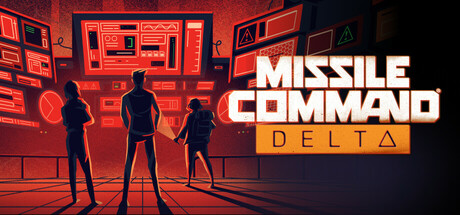
Missiles are incoming. The stakes are high. Only you can stop the destruction. Manage your pool of defenses strategically to survive rounds of incoming missiles in this high-pressure, tactical turn-based game. Will you be able to unravel the mystery in time?
Modeled estimate, not a reported figure. How we estimate →
Media

About
Missiles are incoming. The stakes are high. Only you can stop the destruction. The teams at Mighty Yell and 13AM Games have taken one of Atari’s most iconic titles and created a high-pressure, tactical turn-based game where players must manage their pool of defenses strategically to survive rounds of incoming missiles.
Missile Command Delta approaches gameplay in a completely new way, but it retains all the tension and suspense of the arcade original. You have to think strategically about every move you make because even one poor choice can have grave consequences. The turn-based strategy game is wrapped in a twisting, narrative thriller – great for mystery fans, completionists, and players that love to explore and solve puzzles.
Between inbound missile alerts, investigate the underground bunker to access locked rooms, uncover secrets, and strengthen your arsenal. Will you be able to unravel the mystery in time?
- Turn-Based Strategy: A totally unique strategy experience. New missile and enemy types are uncovered when you explore deeper into the bunker.
- Plan Your Defense: Every turn is critical, and one poor choice can spell disaster. Plan your next move, and map out a cascade of explosions that take out multiple enemy missiles to help conserve your resources.
- High-Stakes Mystery: The turn-based strategy game is wrapped in a high-stakes narrative puzzle. Read every document, watch your every step, and ace every puzzle if you want to [REDACTED].
- Experience the Cold War: A claustrophobic retro-future aesthetic of dusty command consoles and supercomputers place you deep into Cold War paranoia.
Stats
All-time low is the lowest price we've recorded for this game since we started tracking it.
Languages: English, French, German, Spanish - Spain
Engagement
Hours played at review time, across 32 reviews with recorded playtime.
Reviews
I have to say, I didn't go into my cold war turn-based tactics game expecting to be a high school girl in some jock guy's harem. I'm not complaining, but I am surprised. This is a game that, I feel, has a fairly good idea and a fairly 'meh' execution. I wouldn't say I *don't* recommend, but literally every review for this right now is positive, so I'd like to give the consumer my gripes with it so they can make a more balanced purchasing decision. Missile Command Delta is a combination of the tactical gameplay you'll see in the trailer (with light deckbuilding elements) and an exploration game with light visual novel elements. My opinion of the tactical gameplay is reasonably good, 7-ish out of ten, probably scratches a specific niche few mainstream titles do. I'm generally ambivalent or disappointed with everything that *isn't* that tactical gameplay. This sounds fairly harsh. But a lot of the game's quality, I feel, is kind of front-loaded. And a lot of the misgivings I had didn't really become apparent to me until about halfway through my playthrough. The more I played this game, the more comparisons I drew to Dangagnronpa, which is a game I think is arguably best-in-slot for a lot of the areas that this one flounders in. My first gripe regarding this turn-based tactics, choose-your-own-adventure, exploration game is the exploration. A lot of this game's environments are very samey. Very similary floorplans, very similar color pallet, lots of confined spaces and hallways. This sounds like a knitpick, but a core premise of the game is starting in a relatively confined space, unlocking new areas, and progressing deeper in this underground missile bunker you've found. This is kind of a bigger problem than you might think, because you'll be running around that small area a lot looking for clues and solving puzzles. You sprint fairly slowly, and you retrace the same ground a lot, and it all kinda blends together for me. Clover Pit, buckshot roulette, and Inscription are three games that take place almost entirely in a single room. But they're visually interesting and are built around maximizing the effect of that confined space. Danganronpa, like this game, starts in a fairly confined part of a building and slowly opens up. But each new area is visually distinct, which lends itself to a sense of progression solely through the environment. Missile Command doesn't feel like it tries to do either of this to me. The level design feels like it's solely there to break up the puzzles and the tactical gameplay. This would be fine if the game didn't make me spend so much time in it. We do finally start seeing some more interesting spaces in the climax of the game, but the other 95% of the time you're running through three floors that are remarkably similar or crawling through air vents. The game tries to amend this somewhat by having you move through those rooms with no power, or after they've been damaged, but it doesn't feel enough to make discovering new areas feel exciting to me. The third level has some elements of the environment tied to its puzzles, but it also makes you run around so much in that otherwise-samey area that the main character lampshades it. Level *transitions*, admittedly, are done reasonably well. There's multiple ways to traverse levels, and the game's plot makes you use different ones. I think puzzles are overused. There's a couple unique ones, but there's also two that I felt like repeated enough that it became annoying. The pacing for this game feels really weird to me. The beginning third feels like it had the most variety of puzzles, exploration, and things to do. Then it starts feeling like it's getting more dynamic and might be building up to something before absolutely dragging along. Then the climax comes and it's fun and somewhat intense again out of seemingly nowhere. Like, I didn't know I was about to enter the climax until the game explicitly told me this was the point of no return, because it didn't feel like I was building towards anything emotionally for me. Characters feel really weak. I'm honestly kind of surprised they included them at all. The storytelling is done through a combination of character dialogue, flashbacks/dream sequences, and random notes you find lying around (similar to the voicemail system in FEAR). I got an achievement for maxing the relationship with my goth-trans-girl best friend and the only thing I really knew about her by the end was that she was trans, had issues with her dad, and liked music. It's fine for characters to just be there as quest-givers, but the game tries to pretend like they aren't with these dialogue branches where you get to pick sides when they fight. There's a lot of these Evangelion-esque dream montages where the game tries to leverage some emotional weight, but it all feels really goofy and unearned to me. I was learning about who my friends were through a flashback montage at the end of the game, which feels like an unusual choice. The notes and such feel weird too. Like, not that they're purposely self-aware, but like the writers know there's supposed to be a story in the game so they're making game prose rather than creating breadcrumbs for an organic narrative. Music during setpiece moments is pretty good. Music during spooky moments is pretty good. Music during everything else is just okay. You spend a sizeable chunk of the game during 'everything else'. Outside a few brief segments, I never felt like there were any stakes in this game, or any real motivation to explore deeper, until the climax. Like, one moment you're sneaking around this guy's back because you think he's dangerous and the next moment you're opening an air vent and crawling into it right in front of him. One moment a suspected murder is freaking out at you calling you a traitor and the next you end the dialogue tree and just walk away. You're going to be playing training simulations around 4x as often as real missions, because that's what unlocks all your doors for some reason, so most of the combat has no real stakes. There's a mystery. I didn't find it very well-developed. I feel like I was kind of just told there was a mystery and was expected to speculate about it without any real interplay with the gameplay. The saucy elements I did like were resolved about halfway into my playthrough and was something of a letdown. There was a strong opportunity for a System Shock-style character deception or plot interplay with the fact that you're informed early on in the game that you're under surveillance, but the execution feels 'meh' to me. I got the true ending. The climax segment and the ending path I chose was fairly enjoyable, and the music and plot twist felt like it was an okay emotional resolution. It also felt kind of silly though once I stopped to think about it. I only encountered one bug during my playthrough. It didn't effect gameplay. This is praiseworthy. All told, I think i'd rate the tactical portion of the game 6-7/10, the puzzle elements 5/10, the exploration 4/10, and the plot 3-4/10. For a combined overall weighted score of about 5/10. I absolutely think credit should be awarded for trying to mix genres like this into something cohesive. I don't feel scammed or ripped off. But having finished my playthrough, I don't think I'll have a strong desire to play it again or get different endings, and I would have enjoyed playing something else more. 5/10, an okay game. I think the tactics game stands on its own. I don't think the puzzles, plot, or exploration stand on their own, and that's half the game. I see a lot of people claiming to enjoy the elements of the game I was less favorable towards. I do not think those opinions are *wrong*, and I can absolutely see some of these elements being weighted differently by other people. But I do think there is value in a potential buyer being able to weigh a dissenting opinion before purchasing, so here's mine.
Reviewing for visibility, will update later - NB that I've never played MC before so zero expectations on that front. All good for now, does what it says on the tin: Escape room and puzzle strategy. Escape room is on the easier side for now but scratches the itch and may pull it off well, puzzle strategy starts off exciting. Narration has a surprising amount of effort put in it and isn't half bad.
Just finished the game, and its been mostly great. The style of the game is fun and simple, the puzzles are pretty interesting, and the ability to 'ace' the missile defense puzzles to discover additional secrets was very appealing to me. My main gripes with the game are the controls within the terminal defense puzzles. I wish there was an undo button for a turn so that I didn't have to leave and re-enter the terminal, and then replay the entire puzzle just to undo a misclick. There also seems to be a weird bug in some of the terminal puzzles where placing shields does not place where you clicked, it instead gets placed a tile off. This does not occur every time you place a shield, but I've noticed its more frequent when placing shields diagonally. Finally, I got pretty irritated at the fact that pressing 'Esc' will completely take you out of the puzzle rather than get rid of the missile/item I'm currently holding, but that might just be a me problem. All in all, my complaints are fairly minor and the rest of the game is pretty good. I enjoyed it and will probably go back to find the last few secrets/different endings/achievements.
[url=https://bckl.gg/nphM]Backloggd Review[/url] [h3]Score:[/h3] ★★★★ I'm sure many of you, like me, have wondered why companies don't remaster or remake their classic games. The answer almost always involves "too much work" or "difficulty in finding a middle ground between the old and the new." [i]Atari[/i] basically set out to embrace that challenge with [b]Missile Command: Delta[/b], a bold reimagining of the namesake game released for the Atari console exactly 45 years ago. Where would you even start bringing something that [url=https://upload.wikimedia.org/wikipedia/en/8/86/A5200_Missile_Command.png] looks like this[/url] into the modern era? The cheap, easy, and creatively lazy solution would be a direct port with updated models, resolution, and textures. Or a 3D adaptation following the same gameplay logic. However, [i]Atari[/i] chose to hire the studio behind the indie game [b]The Big Con[/b] and gave them full creative freedom to make whatever game they wanted. The result was [b]Missile Command: Delta[/b]: a blend of puzzle and exploration that incorporates deck-building elements (like in [b]Inscryption[/b]) and turn-based strategy - all presented [url=https://www.digitaltrends.com/wp-content/uploads/2025/03/missile-command-delta-wave-battle.jpg?resize=1200%2C720&p=1]diegetically through analog terminals[/url] where you manage your arsenal to intercept enemy missiles on a grid, predicting their trajectory and preventing them from hitting your base. Similar to 1980's [b]Missile Command[/b], but with a strategic element replacing the old-school action. You play as Skye, a teenager who, along with her three high school friends, decides to explore an abandoned military bunker. As soon as they enter, the door locks behind them and, by a twist of fate, an alarm sounds throughout the facility. They soon realize an actual war has broken out outside the facility - and the installation they entered is actually a ballistic missile control center. However, you start to feel like something more is going on… The premise might sound silly. What's more, the first impression is extremely negative. Your teenage friends are incredibly stereotypical: the idealistic nerd, the gym bro with a heart of gold and the anxious goth girl with an attitude problem. You'll roll your eyes more than once at the painfully cringe dialogue. But as the plot progresses, their personalities are explored in creative and interesting ways - and the narrative is surprisingly responsive to your dialogue choices. The story is wrapped in intrigue and mystery and, without spoiling anything, it's one of the very few games where the true ending - aside from being excellent - completely caught me off guard. Gameplay revolves around completing combat simulations, collecting arsenal floppy disks (which let you use specific missiles in emergencies), solving puzzles and gathering clues to uncover secret rooms and documents. The turn-based combat is fun, dynamic and constantly introduces new variations and modifiers to challenge you. The game has a pleasant difficulty curve and becomes genuinely cerebral as it progresses. Even if [b]Missile Command: Delta[/b] were bad - which it’s far from being - [i]Atari[/i] would still deserve my respect and praise for the initiative to reimagine its classic franchises into modern times. I've already added [b]Yars Rising[/b] to my purchase list: another game that was transformed from a shoot-'em-up into a metroidvania by the studio responsible for the [b]Shantae[/b] games! [b]Disclaimer[/b]: I've played Missile Command: Delta on my Xbox. You can check my playthrough time (8h45) and achievements on my profile. I felt I owed the developers (and Atari) and bought a copy on Steam just so I could write this review. This game certainly deserves the attention.
So far, so good. I am enjoying my time with Missile Command Delta although I am not the biggest MC fan (I'm terrible at the original and recharged versions) but I am having a good time with MCD.
while I personally think the story could have been told better overall I think this is a sleeper hit of a game. Love the turn based mechanics
The best game since ET. Great job, Atari!
The missile command part of the game is decent enough but lacks any replayability. However the story and social game is far too shallow.
Missile Command Delta is a strategy game mixed with a 3D adventure game. During "missile commanding" parts, you will be tasked with selecting a number of missiles appropriate for the mission, and then playing them from the appropriate silos. Those parts play like a turn-based version of MC, although you can only launch the missiles in 1 of 3 fixed angles. You'll need to strategically (not just tactically, as you need to account for future turns) fire your missiles to make sure you can take out all incoming IBMs without running out of missiles. Other aspects of the game have you moving around in a 3D environment in an escape room/adventure style as you get items to progress the story further. As someone not very good with strategies, I'm currently stuck at one of the terminals, but I really loved the concept of bringing MC to a turn-based strategy game. It really does a good job at translating the MC experience into a board game with decent atmosphere.
While the puzzle elements were a bit easier for me personally, I was very engaged with the story, characters, and environment it built around itself. I found myself, more often than not, really tiptoeing my answers around everyone else before I realized how in-character I was. Had a really good time with this and I'd love to see more from the devs involved.
Related
Related
Trends
Concurrent players on Steam, sampled daily since tracking started.
Momentum
Pace estimated from the game's recent review growth (our daily snapshots) at its own sales-per-review ratio — a momentum signal, not booked sales.
Audience
Estimated from the language of this game's reviews — a proxy for where players are, not official Steam demographics.
Related
| Midnight Scenes: From the Woods | $18.9K | 203 | 87% | $5.99 |
| Angelstruck | $18.9K | 137 | 95% | $5.99 |
| Whiskey-Four | $18.9K | 108 | 93% | $6.99 |
| Hunting Labyrinth | $18.9K | 57 | 75% | $15.99 |
| Underquest | $18.9K | 64 | 95% | $9.99 |
| 7 Sexy Sins | $18.9K | 513 | 88% | $1.99 |
Related
| 7 Days to Die | $425.3M | 403.6K | 87% | $44.99 |
| Mount & Blade II: Bannerlord | $309.8M | 294K | 88% | $49.99 |
| Don't Starve Together | $164.7M | 539.6K | 95% | $14.99 |
| Satisfactory | $164.4M | 275.9K | 97% | $27.99 |
| Kerbal Space Program | $154.7M | 144.8K | 96% | $39.99 |
| Raft | $144M | 375.8K | 93% | $19.99 |