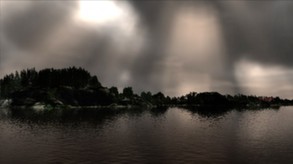
Miasmata is a first-person survival/adventure game, developed from the ground-up by brothers Joe and Bob Johnson. You play as Robert Hughes, a plague-stricken scientist on a journey to discover a cure. Your adventure begins on the shores of a remote and mysterious island.
Modeled estimate, not a reported figure. How we estimate →
Media

About
Miasmata is a first-person survival/adventure game, developed from the ground-up by brothers Joe and Bob Johnson. You play as Robert Hughes, a plague-stricken scientist on a journey to discover a cure. Your adventure begins on the shores of a remote and mysterious island. Long ago, the island was inhabited by a group of indigenous people, whose extant monuments still decorate the island landscape. The island is now home to a scientific research outpost and it is your hope to reunite with your colleagues working there. Unfortunately, you'll soon discover that something has gone terribly wrong.
During your adventure, you will encounter a mysterious and deadly creature. This creature can stalk you for miles, lurking behind grasses and vegetative cover. By treading carefully and with stealth, you may be able to elude the creature. If you are careless, however, you will be forced to confront the creature head-on.
Genres
Stats
All-time low is the lowest price we've recorded for this game since we started tracking it.
Languages: English**languages with full audio support
Engagement
Hours played at review time, across 40 reviews with recorded playtime.
Reviews
Themes across 40 recent reviews and how positive each mention is. A keyword signal, not full sentiment analysis.
positive critical· bar length = how often the theme comes up
Reviews
This is my first review ever, and I've been building up to it for over a decade, and I now realize that this should without a doubt be the game to gets that first review. You see, this game does something so utterly unique and magical, and it has provided me a wealth of inspiration over many years. I've returned to it many times and each time, it's like coming back to some magical place where I feel at peace (also dread, because it's a slow-burn horror/thriller after all). The music, the world, the objective, the beast and the protagonist... everything weaves together and envelops you in an immersion I've tried to find in other games ever since, but nothing really gets all the way there. As a professional game developer myself, I think this game is able to do this because it's developed by two persons in a custom game engine(!) They got to do (at least I think so) exactly what they wanted, and created this intuintive masterpiece that's unlike everything else. I guess The Forest attempts to do something similar, but in my opinion, it's not the same. Apart from that... I can't think of any other such games. But yes, it's not everyone's cup of tea. It's a slow burn with a bit aged (but still really beautiful and unique) graphics. On top of this, the somber music, the lighting, the quiet struggle and desperation of the protagonist, creates this amazingly beautiful world that, if you give it some time, will stay with you forever. Don't expect a cool, fast-paced FPS with vaulting, micro-transactions, auto-aim, x-ray vision, and attention-grabbing effects. This is a quiet, somber, and thoughtful adventure that just keeps on giving. If you like anything even remotely related to Robinson Crusoe (Lost, the Martian, I Am Legend etc), this is for you. Just allow the game to fully immerse you, and it'll never leave you.
Miasmata is a distinctive and quietly ambitious survival adventure that stands apart from most games in the genre by trusting the player to learn, observe, and endure rather than follow explicit instructions. Developed by IonFx and published by IonFX Studios, the game casts you as a lone scientist shipwrecked on the remote island of Eden while suffering from a mysterious and steadily worsening disease. From the opening moments, the experience establishes a tone of isolation and urgency, emphasizing vulnerability over power and curiosity over combat. Miasmata is less about conquering an environment and more about understanding it, turning survival into an exercise in patience and thoughtful exploration. The island itself is the game’s defining feature. Eden is a large, continuous landmass filled with forests, cliffs, rivers, abandoned research facilities, and long-forgotten structures that hint at a tragic past. Unlike most open-world games, Miasmata refuses to provide a pre-drawn map or navigational assistance. Instead, players must construct their own map through triangulation, using visible landmarks and compass bearings to chart territory piece by piece. This cartography system is one of the game’s most inspired mechanics, forcing players to think spatially and treat navigation as a meaningful challenge. Getting lost has real consequences, as time spent wandering drains stamina, worsens illness, and increases the risk of encountering danger. Survival mechanics are grounded in realism and restraint. There is no hunger meter or crafting tree overflowing with recipes; instead, the primary threat is the illness consuming the protagonist’s body. To slow its progress, players must find and study plant life scattered across the island. Each plant has unknown properties that can only be revealed through experimentation at research stations, turning botany into a process of trial, analysis, and deduction. Discovering which combinations produce useful compounds and which are ineffective or harmful becomes a core loop, giving exploration a strong scientific flavor. Progress is marked not by leveling up, but by gaining knowledge and applying it intelligently. Tension in Miasmata is amplified by the presence of a mysterious creature that stalks parts of the island. The game never frames this threat as something to be defeated; instead, it exists as a reminder that you are not alone and not safe. Encounters are unpredictable and often terrifying, especially because the game offers limited means of defense. Fleeing is usually the only viable option, and the terrain itself becomes a secondary adversary. Steep slopes can cause dangerous falls, uneven ground affects movement speed, and exhaustion can turn a narrow escape into a fatal mistake. This combination of environmental hazards and persistent threat creates an atmosphere of constant unease without relying on scripted scares. Movement and physicality play an important role in reinforcing immersion. Traversing the island feels deliberately grounded, with momentum, incline, and fatigue all affecting how you move through the world. Running downhill too quickly can result in injury, while climbing steep terrain demands careful pacing. These systems can initially feel cumbersome, especially to players accustomed to fluid, forgiving movement in modern games, but they contribute significantly to the sense of inhabiting a fragile human body struggling against nature. Over time, learning how to move efficiently becomes as important as knowing where to go. Visually, Miasmata shows its age but remains effective in its presentation. The island’s landscapes are often striking, with sweeping vistas, dense foliage, and subtle lighting that gives Eden a haunting beauty. While textures and character models are modest by modern standards, the environmental design carries the experience, making exploration feel purposeful and rewarding. Sound design further enhances the atmosphere, using ambient noises, wind, wildlife, and long stretches of silence to emphasize solitude. Music is sparse, allowing the environment itself to set the emotional tone. Narratively, the game is understated and environmental. Story elements are uncovered through scattered notes, abandoned labs, and the gradual understanding of what happened to previous inhabitants of the island. There are no lengthy cutscenes or exposition dumps; instead, the narrative unfolds organically as you piece together clues during your search for a cure. This approach reinforces the feeling that you are uncovering a forgotten tragedy rather than participating in a scripted plot, and it allows players to engage with the story at their own pace. Miasmata is not without rough edges. Its interface can feel unintuitive at times, and the lack of guidance may frustrate players who prefer clear objectives and constant feedback. The game demands patience and a willingness to fail, sometimes repeatedly, before its systems fully click. However, these frustrations are closely tied to what makes the experience memorable. It is a game that respects the player’s intelligence and curiosity, even if that respect comes with moments of confusion or struggle. Overall, Miasmata remains a rare example of a survival game that prioritizes immersion, discovery, and realism over spectacle or convenience. Its innovative mapping system, thoughtful use of scientific mechanics, and haunting sense of isolation create an experience that feels deeply personal and earned. While it may not appeal to everyone, especially those seeking action-driven gameplay or guided progression, it offers a rewarding and atmospheric journey for players who enjoy slow-burn exploration and survival grounded in observation and understanding. Rating: 7/10
Tense exploration game. Make potions with mushrooms to power up and stave off hunger and sickness. Stay quiet to avoid what may be lurking out there. Watch your footing or you run the real risk of tumbling down a cliff and doing damage. Fill in the map by navigating with a real-world compass triangulation system. You really feel like you're discovering the environment.
It's a great game with a beautiful hand-crafted map. A lot of love went into this one. I especially like the triangulation mechanic and the momentum-based player control that is frustrating to suck at but satisfying to master. 8/10 would recommend.
Played this many years, near release. A fun and interesting cartography/triangulation game; I remember getting frustrated occasionally with the monster and some of the achievements weren't working at the time- but managed to map everything and finish the game. Might play it again when I have the chance.
I dropped this because the mechanics are a lil bit slow.... even if it's not a bad idea entirely 5/10
I can't even beat the game. It just randomly crashes when I try to use the canteen, refill canteen, try to science, falling off of cliffs, getting raked by kitty, picking up components of the cure, and applying the cure. After several attempts though I was able to reach the boat but it ends up crashing there too.
There was so much potential, but... It's about survival, but you don't need to build, eat, sleep, and can't defend. It's about exploration, but you can't find sh*t without walking along a road. It's about herbalism, but with the depth of hack'n'slash game. It's like being in Kilimanjaro, but you can't go against 15 degree slope. It's like having GTA SA map size, but you only can run as fast as CJ crouching. It's like playing ARMA3, but much less eventful per unit of time.
Um dos jogos mais interessantes que joguei recentemente. Porém, admito que o jogo não é para todos. A jogabilidade, às vezes, é bem massante, travada e, principalmente, escorregadia. Entretanto, a exploração e a mecânica de fazer remédios são bem interessantes. Infelizmente, o jogo não envelheceu nada bem. Porém, levando em conta que é um jogo de 2012, feito por apenas duas pessoas, é de se admirar que conseguiram criar algo tão único.
A fascinating concept. The monsters spooked me, but learning how to draw a map and then locate yourself on it with no compass, is just a great experience, and really well done.
Related
Related
Trends
Modeled estimate over time, reconstructed from Steam's monthly review histogram.
Momentum
Pace estimated from the game's recent review growth (our daily snapshots) at its own sales-per-review ratio — a momentum signal, not booked sales.
Audience
Estimated from the language of this game's reviews — a proxy for where players are, not official Steam demographics.
Related
| Iris and the Giant | $486.4K | 1.3K | 88% | $17.99 |
| Dungeons of Blood and Dream | $486.5K | 1.2K | 94% | $18.99 |
| Knightica | $486.6K | 1.2K | 75% | $14.99 |
| School Bus Driver Simulator | $485.8K | 71 | 66% | $199.99 |
| Primitive Society Simulator | $485.8K | 748 | 84% | $19.99 |
| Bee Island | $486.9K | 1.7K | 87% | $9.99 |