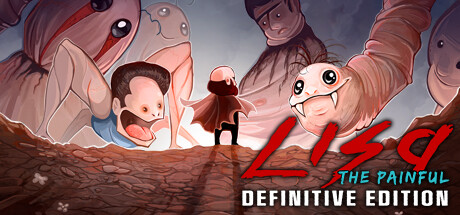
The miserable journey of a broken man...
Modeled estimate, not a reported figure. How we estimate →
Prices
Each in the currency that store quoted — not converted: the gap between two rows is the publisher's pricing, not an exchange rate.
Every market we collect.
Discounts
Every price cut of more than 20% we have observed, in each market that quoted one, with this game's chart position on either side of it. These are episodes, not a model: a sale is one event, and one event cannot tell you what the next one will do.
About


Add-ons
Each DLC is estimated with the same model as a game, then summed — a modeled figure, not reported DLC sales.
Updates
Build ids and update times come straight from Steam's PICS — the same source SteamDB reads. Patch history grows as we record new builds.
Engagement
Reviews
Themes across 871 recent reviews and how positive each mention is. A keyword signal, not full sentiment analysis.
Reviews
[h1]El juego favorito de mi hermano[/h1] No creo que esta sea una reseña completamente objetiva. De hecho, probablemente sea la reseña más personal que voy a escribir. [b]LISA: The Painful[/b] es el juego favorito de mi hermano. Mi hermano y yo siempre fuimos muy unidos. Nos llevamos poco más de un año de diferencia, así que durante gran parte de nuestra vida crecimos prácticamente juntos. Este ha sido su juego favorito desde que tenía unos 8 años, y durante años intentó convencerme de jugarlo. Me lo pedía, casi me lo suplicaba, pero yo siempre lo postergaba sacando alguna excusa. La razón era simple, sentía que ya me sabía el juego de memoria. Aunque nunca lo había jugado, mi hermano me habló tantas veces de LISA que yo ya conocía gran parte de su historia, sus personajes, sus momentos importantes, sus curiosidades, sus secretos e incluso fanmades como [b]LISA: The Pointless[/b] o [b]LISA: The Hopeful[/b]. Para mí, jugarlo parecía no tener sentido. ¿Para qué iba a jugar un juego si ya sabía cómo terminaba? Pero el tiempo pasa, antes de irme de mi país por temas universitarios, mi relación con mi hermano ya no era exactamente la misma de antes. No porque nos lleváramos mal, ni porque hubiese indiferencia, sino porque simplemente crecimos. Tomamos caminos distintos. Las conversaciones cambiaron, las rutinas cambiaron, y esa cercanía diaria que antes parecía eterna empezó a sentirse cada vez más lejana. Ahora llevo viviendo en Corea del Sur desde hace tres meses, y hoy, finalmente me terminé [b]LISA: The Painful[/b]. Para obligarme a hacerlo, decidí comprar mi propia copia en Steam, incluso teniendo el juego disponible en la biblioteca familiar. No sé por qué, pero necesitaba que fuera mío. Necesitaba tenerlo ahí, en mi propia biblioteca, como una forma de decirme: “ya está, ahora sí te toca jugarlo”. Y qué puedo decir, el juego me atrapó. Su historia, sus personajes, su mundo roto, su violencia absurda, su humor oscuro y cruel, su música bizarra y extraña, sus decisiones, [b]LISA: The Painful[/b] tiene argumentos de sobra para defenderse como uno de los RPG más únicos que he jugado. Es grotesco, triste, ridículo, humano y devastador. Pero lo que más me hizo quedarme hasta el final no fue solo el juego. Mientras jugaba, sentía como si estuviera jugando con él. Por un rato, los 18.350 kilómetros de distancia entre [i]Corea y Chile[/i] dejaban de existir. Cada vez que pasaba algo importante, mi cabeza no solo veía la escena del juego: también proyectaba a mi hermano años atrás explicándome esa misma parte, de cosas que en ese entonces yo escuchaba sin entender del todo cuánto significaban para él. Había momentos en que no estaba pensando “qué buena escena", sino que pensando en él. En cómo me habría mirado si hubiera estado al lado mío. En cómo habría esperado mi reacción. En cómo seguramente me habría dicho “te dije que era bueno” o “ya estaba bueno”. Y cuando terminé el juego, no pude hacer otra cosa más que llorar. Lloré porque por un momento quise cerrar los ojos, taparme la cara con las manos y, al volver a abrirlos, ver a mi hermano sentado a mi lado. Pero no estaba. Y ahí entendí algo que me dolió más que cualquier escena del juego. me arrepiento profundamente de no haberlo jugado antes, cuando todavía estaba a su lado, no haber valorado los mas de 18 años de vida que pase a su lado para poder jugar un videojuego. Porque quizás [b]LISA: The Painful[/b] siempre fue su juego favorito, pero ahora también es una parte de mi relación con él. Una parte de nuestra infancia, de nuestras conversaciones, de los años en que él intentaba compartir conmigo algo que amaba y yo, sin darme cuenta, lo dejaba para después. [b]LISA: The Painful[/b] es un RPG increíble. Es extraño, incómodo, cruel, gracioso, imperfecto pero profundamente humano. Pero para mí, desde hoy, también es algo más. Es un recordatorio de mi hermano. De la distancia, del tiempo, de las cosas que uno posterga pensando que siempre habrá otra oportunidad. Y de cómo, a veces, un videojuego puede hacer que alguien que está a 18.350 kilómetros vuelva a sentirse a solo 2 metros de ti. Perdón por no haberlo jugado antes.
Media

Related
Related
Price dynamics, follower growth, revenue and sales trajectories with interactive tooltips
This and every other Pro feature is free until October 20, 2026. A free account is all it takes.
Reviews, worldwide (the counter carries no country): 1.13/day in the week to Aug 3 → 2.71/day in the week after.
For scale, across Steam · Top Sellers · Brazil over the last 30 days: the 25 chart moves that followed a price cut of more than 20% went a median of 10 places towards #1, and the 2,413 moves with no price cut behind them went 2 away. One store, one chart, one country — it is the only place we have enough observations to say even that.
Prices outside the United States have been collected since 6 August 2026 and chart positions since 19 July 2026, so a cut older than that has no market to compare and a market that joined later has no history yet. Nothing here is converted between currencies.
Genres
Stats
All-time low is the lowest price we've recorded for this game since we started tracking it.
Languages: English, French, Italian, German, Spanish - Spain, Portuguese - Brazil, Russian, Spanish - Latin America, Japanese, Korean, Simplified Chinese, Traditional Chinese
Hours played at review time, across 874 reviews with recorded playtime.
positive critical· bar length = how often the theme comes up
这是一个关于“剥夺”的故事。有一个著名的理论叫“损失厌恶”——人们对于损失的感受,通常比对等量收益带来的愉悦更强烈。在这个游戏中,你将不止一次体验——“获得……被剥夺……获得……被剥夺……”——的痛苦。而这,大概就是该游戏名称《LISA: The Painful》里面“painful”的涵义(不过这并不是我给出红拇指的原因)。 如果世界上只剩下最后一个女婴,在一个到处是流氓无赖、奉行丛林法则的社会中会发生什么事?不用想都知道她的命运将多么坎坷。还好,这个弃婴被我们的主角——一位颓废但内心善良之人——捡到并偷偷抚养,一直平安成长至豆蔻年华。主角自己从小就生活在一个充满暴力的单亲家庭里,同龄人也霸凌他,可以说,他从来就不知什么叫温暖。当他捡到了这个女婴之时,他知道她将是他世界的全部。他发誓要用自己的一辈子去保护她。他在人生中第一次获得了一种他梦寐以求的东西:亲情。 可是有一天,消息泄露了。主角生活的地方惨遭血洗,而他的女儿则生死未卜——这就是玩家第一次体会到“被剥夺”的时刻。为了寻找女儿,主角踏上漫长的征途,一路上招募队友,与整个世界为敌。 他失去了亲情,但亲情绝不是他失去的最后一样东西。 我无意将在steam上的玩家当成内心脆弱需要呵护的小朋友;可是,这个游戏最残酷的地方不仅在于“得而复失”的剥夺感,还在于反复逼迫玩家面对“二选一”甚至是“电车难题”的道德困境。换言之,在很多时候,你不仅会失去一些珍贵的东西,你还要亲手作出这些选择。 “选择割下你的手臂(因而丧失诸多技能和属性),或者葬送你挚友的性命”——这种选择对于玩家来说已属仁慈。 “选择你的一位同伴去死,否则你的游戏将到此为止”——这并非游戏中最丧心病狂的部分。 甚至我怀疑,游戏中那最令人窒息的一幕,依然不是作者的底线;只不过steam的审核机制,阻止了作者想表达的那些更可怕的想法。 这个游戏有太多的道德困境,太多的无能为力。我并不赞成滥用这种手法来表现痛苦,因为这种批发的道德困境似乎有些粗暴和廉价了。 诚然,我个人极度厌恶那种“人质被胁迫,主角大发神威把坏人全部拍死”的皆大欢喜的套路——世界上哪来那么多“天降救世主”?哪来那么多“千钧一发时刻”?更多的是无力回天以及永远的悔恨。然而,若说世间真有这么多极端的、接二连三的道德困境,那同样也是不现实的。 可能有人无法理解我为什么要在一个虚拟的游戏中强调“过多的道德困境不符合实际”;我相信大家多少也听过“A和B同时落水先救哪个”的问题,不知道大家是如何看待这类问题的?无论你选择救哪个,你都会感到痛苦,良心都会受到谴责吧。但在我看来这就是个弱智问题,它假想了一种发生概率不比外星人攻打地球要高的事件,然后逼迫你作出选择——可我为什么要假想一种根本不存在的事情让我自己痛苦呢?所以我选择回避这个问题,并把提问的人丢到水里。 现在,这种弱智问题换了一个包装,来到了这个游戏中。它出现一次还不够,还变着花样儿反反复复出现,生怕没人注意到这种小概率事件的发生频率过高。那你觉得该不该批判呢?能让玩家体会到痛苦不是本事(毕竟这个世界上能让观众寄刀片的法子实在太多了);能让剧情符合逻辑,这才是本事。 在游戏中,主角团不止一次在某帮派胁迫之下,面对道德困境作出痛苦的选择;明明该帮派的实力足以灭掉主角团一万次,可帮派老大却不厌其烦地以折磨主角为乐;既不怕主角报复,也不贪图主角团的身家;让主角活着离开,仅仅是为了下一次能设置一个更残忍的道德困境来折磨他。 这么做,图什么呢?我们发现,作者并没有很好地解释帮派老大这样做的动机,仿佛这位老大纯粹只是一个布置道德困境的工具人。我其实并不十分排斥所谓的道德困境,但是,我希望这种困境是有铺垫的,是渐进的,是势不可挡的、必然的,是积重难返的……我希望看到,本来有无数个选择,却因为各种因缘巧合,有意或无意,一步步恶化,最后只剩下唯二的选择;这个时候的道德困境,才是真正的道德困境,而不是陷入伪两难谬误之中的假象。 该游戏的剥夺感不仅体现在剧情杀上,还体现在其他一些方面。游戏中一直有一样非常具有象征意义的物品,最能反映这种“剥夺”的主题——快乐丸。它是一种毒品,服用后能短期内大幅增加主角的能力,戒断时则会产生持续的负面效果——这不就是“获得……被剥夺”的最好诠释吗?但这样的诠释可能还不够生动,于是作者又设计了一些更加刺激的机制让玩家体验被剥夺的痛苦:有不少敌人会随机触发对我方友军的“致死技”,并且死亡的队友会永久消失、连装备都不剩下;主角团在篝火露营时,第二天醒来,有极大概率丢失道具,丢失金钱,甚至丢失队友——既有被绑架的,也有自己主动离开的……我得说,这些机制就是狗屎。没有玩家可以忍受这种程度的剥夺,结果只有一种——S/L。你必须做好准备,在这个游戏上浪费大量时间S/L的准备。 这游戏到了最后的最后都还在刀玩家(但并不包括我)。其实我在测评开头所说的主角在抚养女儿时感受到的“亲情”只是单方面的——根据女儿的发言,主角并不是一个好父亲,从来没有关心和尊重过她的想法。[spoiler]因此,当主角最终找到了女儿时,两人并没有重逢的喜悦,相反,女儿哭着逃离了主角,因为她认为主角对她的过度保护,是一种对她自由的束缚[/spoiler]。说实话,如果说这个游戏有什么我真正认同的地方,那就是最后这一段父女的对质了。或许主角认为,在这样一个险象环生的世界里,一个被到处通缉的十几岁的少女没有自保的能力,也不具备成年人的心智,无法意识到这个世界的险恶,因此粗暴地认为“全世界只有我才能保护她”;可是,他忘了她的女儿也遭受过不亚于他断臂的痛苦,也在快速地成长——最直接的证据就是,[spoiler]她竟然能从那个数次逼迫主角陷入道德困境的反派老大手中溜走[/spoiler]。她有自己思考,有自己的计划;有权利对过度的保护说“不”,有权利选择属于自己的人生——这大概也是作者想表达的观点——我想,对于“我都是为了你好”的厌恶,大概是不分地域,不分文化,不分种族的吧(笑)。 我不想像主角那样,打着“为了你好”的旗号说“这个游戏好多道德困境,速速避雷”;但我依然认为,一个醒目的差评,告诉人们为什么这个游戏令人痛苦,是有必要的。剩下的都由你自己判断,我尊重你的一切选择。如果你M属性爆发,看完我全文描述后觉得“我的生活太顺遂了,我要求虐求侮辱求终身回忆”,那么偷偷告诉你一个秘密:该游戏在steampy和淘宝上有十分便宜的key!
Original Price of this game was 10$ I purchased it in 2015 @ 75% off at that for 2.50$. New price is 20$. Games are not supposed to go up in price like that,
lisa the painful esta traducido hasta en italiano y undertale ni llega al español
I’ve disliked games before but I’ve never hated one as much as this, especially how it goes out of its way to say ‘♥♥♥♥ you’ to the player. [b]It’ll deliberately waste your time and then laugh at you for wasting it.[/b] For instance, one area has a sign that says there’s something important high above. You climb up a rope for a very long time only to find a statue of someone giving you the middle finger. You want to jump off a cliff, die and quickly reload your last save? Nope, the game doesn’t let you do that and tells you to ‘just’ climb back down. Speaking of cliffs, the dev put tons of them in the game (usually right next to something you need to climb up) so that you can easily fall to death by accident and lose all your unsaved progress. It also loves to throw waves of annoying, easily killable enemies in your path. One area is literally just you fighting a dozen spiders one by one. None of this in the game to add to its gameplay, story or ‘dark and gritty tone’. [u]No, it’s there because the dev wanted to mock players who spent money on his game and waste their time.[/u] The combat is very difficult, not helped by the fact that the game doesn’t tell you a lot of its mechanics. A skill’s description doesn’t tell you whether it hits all enemies or just one—you have to preview it in combat to find out. You can recruit someone and focus on levelling him up and buying him equipment, only to realise later on that he’s a drug addict whose attack drops significantly whenever he gets withdrawal symptoms. (There’s no prior indication in the story that he’s a drug addict.) The game will also at one point force you to play Russian Roulette with your party members, and you have to win 3 times if you want to progress the story. The thing is, the Roulette isn’t completely random; it depends on your character’s Luck stat (but of course it doesn’t tell you this), so if you didn’t recruit a character with high Luck, you’re just going to see the game over screen over and over again. You have limited amounts of money and heals and even less revives, but many enemies can K.O. a party member with one hit, so eventually you’ll run out. Once you do, you’ll be forced to rest at campsites, where random negative events can occur, like party members getting kidnapped. If you’re already out of money and can’t pay the ransom, that party member gets killed! I haven’t even gotten to the worst part yet: [u]A LOT of enemies can instantly permakill your party members.[/u] These aren’t the scripted story choices advertised on the game’s steam page. They’re completely up to RNG. Yes, [b]RNG-based permakills. It’s as dumb as it sounds.[/b] You could have all your best characters permanently die in a single battle. Even if you do end up winning the fight, you’re going to have to reload your last save because you’re not recovering from that loss. And this is something you’ll be doing A LOT. Most of my time was spent reloading fights with bosses until I lucked out and didn’t have my characters permakilled. You either constantly save scum or the game actually becomes unwinnable (or you follow someone’s guide from start to finish, but at that point, why even play the game? Just watch a playthrough of it online.) The controls and UI aren’t great either, which makes the whole experience even more frustrating. For a game that needs you to save scum so much, there isn’t a button to quickly reload saves. You need to open the menu, go to options, return to the title screen, press continue, and [I]then[/I] load your save file. Often it’s faster to just jump off a cliff to reload your save. The font also makes it hard to differentiate between a 6 and an 8; checking your characters’ stats & swapping their equipment is also a pain. For me, I powered through the first two areas because I thought, “[I]9,000+ reviews and Overwhelmingly Positive? Surely the game will get better.[/I]” Instead, it just became more and more of a slog the longer I played. The save scumming was still bearable at the start, but after reaching Area 3, fighting the bosses became way too much work. I just gave up and watched a video of the ending, which was frankly pretty underwhelming. I [I]really[/I] regret not asking for a refund within the first two hours. As for the plot, which seems to receive a lot of praise, I honestly don’t get what’s so great about it. I don’t get how anyone could think it’s good. It feels like something written by a teenage edgelord. It’s meandering, full of holes and just plain bad. Take how it handles the antagonists, for example: of the two main villains you get introduced to early on in the game, one (the protagonist’s childhood bully) just randomly [spoiler]kills himself[/spoiler] after giving a half-assed apology about how he bullied him out of jealousy. The other is a psycho whose backstory isn’t explained, appears out of nowhere, feeds the protagonist drugs, and then disappears from the plot entirely. The final boss is someone who only appears in two brief scenes in the game. The game (and by extension, the dev) also likes to lecture you on its moral high horse about what a horrible person you are when its idea of a good joke is running over random people with a bulldozer (the upbeat music that plays and the ‘mini-game’ of smashing your spacebar for 1 minute tell you it’s supposed to be funny). The ‘morally difficult choices’ in the game (one of its main selling points) don’t carry any emotional weight at all. Most of your party members only have one line, get zero character development, don’t feel like people and are completely irrelevant to the plot, so there’s zero emotional attachment, something that’s [I]necessary[/I] if these choices are to have any kind of emotional impact. In fact, none of these choices matter [I]at all[/I] to the plot. Do you get different endings based on how selfless you are? No. Someone who sacrificed both their arms to save their party members will get the same ending as someone who let them die, which just goes to show how meaningless these choices are. The only real impact they have is on combat, so really you’ll be choosing who or what to sacrifice based [I]entirely[/I] on how much you need them to finish the game. Because again, this game is actually unwinnable if you make the wrong choices or get bad RNG. [b]To sum up how I feel about this game: I feel scammed.[/b] This game is, all things considered, absolute trash. A lot of people shower it with praise and talk about how profound it is. It is not. It’s shallow and pretentious. It’s poorly balanced and full of bad design choices but sells it as ‘part of the experience’. And it got away with it. I honestly have no idea how it’s Overwhelmingly Positive. It’s an objectively bad game with cringe jokes, a shoddy plot and zero respect for the player’s time. For me, it was not a “life-ruining gaming experience” as it claimed it would be, but it did steal many hours of my life (and my money!) The only pain I felt was from save scumming nonstop. So why do so many people still leave it positive reviews? I don’t know. Maybe they’re edgy teenagers with lots of time on their hands and the same mental age as the dev when he made this game. Maybe they’re masochists who enjoy paying to get flipped off. These are the only people I can think of who would like this game. If you don’t belong to either category, stay far, far away from this game so you don’t line the pockets of a scammer who should have taken a crash course on basic game design and storytelling principles.
LISA: The Painful is a singular and deeply unsettling role-playing game developed by Dingaling Productions and published by Serenity Forge that stands apart from most of its genre through sheer emotional intensity and thematic boldness. What initially appears to be a retro-inspired 2D RPG quickly reveals itself as a harrowing exploration of trauma, obsession, addiction, and moral decay, wrapped in a world that oscillates between grotesque absurdity and genuine despair. It is a game that deliberately resists comfort, using its mechanics, tone, and narrative to place the player in a constant state of unease. The setting, a desolate wasteland known as Olathe, establishes the game’s bleak identity immediately. Civilization has collapsed, women have vanished from the world, and what remains is a population of broken men clinging to survival through violence, delusion, and dependency on a drug called Joy. This world is presented with crude humor and surreal imagery, but beneath the jokes lies a pervasive sense of hopelessness. Towns feel more like refuges of temporary distraction than places of safety, and every journey into the wasteland reinforces the idea that this is a world beyond redemption, merely enduring in a prolonged state of rot. At the center of the experience is Brad Armstrong, a deeply flawed protagonist whose personal history is inseparable from the game’s emotional core. Brad is not portrayed as a traditional hero, but as a man defined by unresolved trauma, self-loathing, and an overwhelming fear of loss. His decision to raise Buddy, the only known girl in the world, becomes both his reason to live and the source of his most destructive behavior. As the story unfolds, Brad’s quest to rescue her transforms from a noble mission into a disturbing examination of control, entitlement, and the damage caused by love twisted by fear. The game rarely offers clear moral validation, instead forcing players to sit with the consequences of Brad’s actions and question their own complicity. Gameplay blends side-scrolling exploration with turn-based combat that is deceptively traditional on the surface. Battles rely on party composition, timing-based inputs, and a heavy emphasis on status effects, making encounters more tactical than they first appear. Party members are numerous and wildly varied, each with unique abilities and personalities, and the constant threat of permanent loss gives every fight weight. The Joy system is one of the game’s most effective mechanical metaphors, offering immense combat advantages at the cost of long-term consequences that alter characters permanently. Using Joy feels powerful, tempting, and deeply wrong, reinforcing the game’s themes through mechanics rather than exposition. Exploration is intentionally uncomfortable, often involving long stretches of barren terrain, awkward climbs, and minimal guidance. These design choices can feel punishing, but they are clearly deliberate, reinforcing the exhaustion and monotony of Brad’s journey. The game frequently presents players with choices that are cruel, unfair, or seemingly pointless, asking them to sacrifice companions, items, or even parts of Brad himself. These moments are rarely framed as puzzles with correct solutions; instead, they serve as emotional tests that highlight how survival in Olathe always comes at a cost. Visually, LISA: The Painful uses a rough, distorted pixel art style that enhances its unsettling tone. Character designs range from comical to horrifying, often blending the two in ways that make encounters unpredictable and memorable. The soundtrack is equally vital to the experience, using minimalist, often off-kilter compositions that heighten tension and melancholy. Music fades in and out at key moments, sometimes leaving scenes eerily silent, forcing players to confront events without emotional cushioning. Narratively, the game excels at lingering impact rather than conventional storytelling payoff. Dialogue is sharp, often darkly funny, and frequently uncomfortable, refusing to soften its portrayal of abuse, addiction, and moral failure. The story does not aim to redeem its characters or provide neat resolutions, instead leaving players with unresolved questions and emotional scars. This approach has made the game divisive, but it is also the reason it remains so widely discussed years after release. Taken as a whole, LISA: The Painful is not a game designed to be enjoyed in a traditional sense. It is meant to be endured, reflected upon, and remembered. Its mechanics, writing, and presentation work together to create an experience that challenges the player emotionally as much as mechanically. While its rough edges, bleak tone, and confrontational themes will not resonate with everyone, those willing to engage with it on its own terms will find one of the most haunting and thought-provoking RPGs ever created, a game that lingers long after the screen fades to black. Rating: 9/10
Te cag*n encima, te viol**, te roban tus cosas, matan a tus seres queridos, te destroza el alma, te genera crisis existencial y depresión. Recomendado 10/10.
This game is what people tell you Undertale is.
[b]Lisa the Painful[/b] is a certified classic, that is aging like the finest of wines as time passes. I wholeheartedly believe it's one of those games EVERYONE has to experience in this lifetime and it's honestly a one in a million perfect story in my books. Being a direct followup of [b]Lisa the First[/b], a game that you have to at least watch a youtube breakdown so you understand what you're getting into, Lisa the painful deals with some very sensitive and disturbing topics such as, [spoiler] Child Rape, Child Abuse, Drug/Alcohol Addiction, Depression etc [/spoiler], so be warned. I really want to push people trying Lisa out, without describing anything story-wise. Just do know that the game revolves around a middle aged man, Brad Armstrong, trying to raise and protect the last girl, in a lawless post apocalyptic world. The story is again, for me personally, perfect. It might seem abstract at times, but as you unlock different endings and post credit scenes you slowly gain knowledge about past events and character relationships, as well as experience sliiight finale alterations. This is one of those games, that are not afraid to leave you with questions rather that straight answers, and this is where Lisa's story telling really shines, you have to do your OWN INTERPRETATION about certain choices throughout the game and really take your time after completion to think things through. Gameplay-wise Lisa The painful is really up there with the best RpgMaker games. It's very impressive mechanically, probably one of the best, along with Fear and Hunger, Omori, OFF and Yume Nikki. It is intentionally very punishing, but fair, absolutely respecting the players time and cutting off useless grind, which jrps and rpgmaker games are infamous for. This "punishment" is very well made and perfectly captures the theme of the game - Pain, Life's Uncertainty, Vanity and an Endless Search for Meaning. Oh be sure to play the Definitive Edition for both Painful and the Joyful standalone dlc, as they have some excellent qol additions, fights and character lore. While I, (THANK GOD), haven't dealt with severe trauma, of any short in my life, Lisa really resonated with me and helped me grow on a personal level. Brad has infinite layers of complexity and has earned his spot to my all time favorite characters! Day after day I appreciate this one more and more, as I think about it and spend time watching the excellent video essays passionate people, put out on youtube, giving me extra perspective and deepening my understanding of Lisa's Story. The allegories in Lisa's combat, interactions and overall story are endless and that depth is a first for me, in my 2 decade long gaming journey. You can even say it reaches philosophical levels at times, in its themes. I will forever be grateful to Dingaling Productions for this masterpiece and I am really excited to try out the amazing fan made games, such as Lisa the Pointless, Lisa the Hopeful, LIsa the Timeless and Lisa the Unbreakable. Lisa gets a flawless 10/10 from me.
I've been dead for 35 years. Today is the day I live. Genuinely my favorite game of all time, I don't know what else to say besides its extremely beautiful as it is stupid, and that's what makes it so great.
Active players
Estimated daily and monthly active players (DAU/MAU) modeled from peak concurrency.
Players by region
Where this game's players are, estimated from review languages.
Players also reviewed
The games this title's players most often review too — audience affinity.
Related
| Game | Estimated lifetime revenue | Reviews | Review score | Price |
|---|---|---|---|---|
| — | 0 | — | — | |
| $1.3M | 5.8K | 98% | $14.99 | |
| $880.1K | 5.6K | 94% | $9.99 | |
| $777.4K | 3.7K | 53% | $9.99 | |
| $11K | 29 | 79% | $14.99 | |
| $11.1M | 307.4K | 97% | $2.49 |
Related
| Game | Estimated lifetime revenue | Reviews | Review score | Price |
|---|---|---|---|---|
| $4M | 21.8K | 90% | $6.99 | |
| $4M | 7.5K | 96% | $19.99 | |
| $4M | 3.3K | 82% | $29.99 | |
| $4M | 8.6K | 92% | $19.99 | |
| $4M | 7.6K | 78% | $17.99 | |
| $3.9M | 10.9K | 94% | $19.99 |