
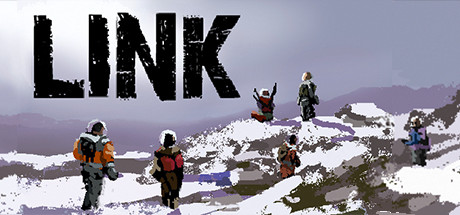
Link is a strategy game with roguelike elements. Take control over group of soldiers trying to survive on the hostile, arctic planet. Can you survive until someone will come for rescue?
Modeled estimate, not a reported figure. How we estimate →
Media

About
Stats
All-time low is the lowest price we've recorded for this game since we started tracking it.
Languages: English
Engagement
Reviews
Themes across 40 recent reviews and how positive each mention is. A keyword signal, not full sentiment analysis.
Reviews
отбитая муть
If low resolution graphics ruin a game for you, then don't buy this game. Otherwise it is a fun turn based resource management/tactics game. + lots of characters to unlock, which enable new strategies to try out + nice low res graphics + high replay value + low price - resolution is fixed at 800x600,
Unfinished, so because of this, I can not recommend!
Related
Related
Trends
Modeled estimate over time, reconstructed from Steam's monthly review histogram.
Hours played at review time, across 40 reviews with recorded playtime.
positive critical· bar length = how often the theme comes up
I'm pleasantly reminded of FTL, among others, and the game mechanics are fantastic. TLDR, Buy it. Main differences between Link and FTL: - Space combat -> squad combat, - Dialogue-tree missions with narrative text -> Squad combat missions, trying not to die of exposure or raiders - Journeying through space -> Protecting your base, and gathering resources from nearby - Brave Spaceman Seeking Danger On An Adventure -> Tired Spacemen Trying Not To Freeze Or Starve Or Get Murdered By Snow Jawas And Their Stompy Robot Spiders - New game : Choose what ship to play each game with -> New Game : Choose team-members and victory conditions - Unlock new team members instead of new ship types You start with three people in your base / crashed ship. You build different rooms in the space available, which can passively gather resources, or perform useful tasks when you have a person spend their turn there. Your team members can level up and gain abilities from a skill tree, and if they have the right ones they're better at using some buildings than others, or have bonuses in combat. There's a surprising amount of deep and well-balanced resource-balancing strategy here, only some of which I've uncovered. Your main resources are fuel, food, tools, and knowledge. You also have characters, which spend stamina and heat to perform tasks, health and heat on away missions, and can die if mismanaged, or be rescued and added to your team on some missions. Food is used when characters rest to regenerate stamina, tools and knowledge are used to make buildings and equippable items, fuel is used to heat the furnace room (or the entire base, if you upgrade that room enough). You can upgrade rooms to higher tiers, and some of the higher tiers require access to power, which requires building a power generator next to them and keeping it running via having someone spend their time there every turn. Away missions seem to fall into three groups -- 1) scavenging for items without freezing to death or getting mauled by bandits, 2) hunting various tiers of badguys to make them less likely to storm your base, 3) trying to escort characters from the wrong side of a map over to the exit zone, so they can join your team. Available missions change slightly over time, so it's worth checking every once in a while. The stamina system takes getting used to, though. Every combat turn, you regenerate as much stamina as you had left at the end of last turn -- so sure, you can technically do four things in a turn if you want, but if you do you'll be limited to doing one a turn until you take a few turns to sit still and breathe and let your stamina regenerate. Meanwhile, everyone who paced themselves is doing two things a turn all fight, because they paced themselves... ...but sometimes, if an enemy has just one hit left, it's worth it to spend the extra stamina just to kill them before they can attack you again. Or is it? Combat also involves an armor stat, melee and ranged attacks, weapons and armor and trinkets that you have to figure out how to craft all by yourself, and of course various special abilities you can spend XP on when characters level up. And then there's the laboratory building, where you can research all kind of things that give you special benefits to any of the above systems -- like having your heat meters all go down half as fast, or having all buildings produce twice as much of their resource type. What I'm trying to say is that they did a very good job of keeping the core number of variables simple (food, fuel, tools, knowledge, buildings, and characters that can do stuff at buildings), and then adding all kinds of very reasonable upgrades and complications for people who know how to make it work. The only thing in between me and the very difficult victory conditions is my own lack of knowledge of the game -- but I'm learning and improving every time, and every loss I've had is because of a choice I made, and not bad luck. The unlockables provide a nice goal to reach too -- someday, I'll have unlocked every character, and done every victory condition at least once.
very good game, with two seperate types of gameplay. The neat thing is though, at the start of each playthrough you get to set your own objectives from a list. The game ends when you meet the objectives, so you can design your own level of difficulty. In the base-building section you construct buildings. You have to worry about production, adjacency bonuses, and the balance between teching up and using what you have to produce items useful in the short term. Fun and interesting system with a couple little quirks, what gives it replayability is that you pick a crew of 3 people from a list of 20ish, and each has a special bonus. a number of the bonuses give a different room type which changes up optimal layouts, and presents interesting new design choices. In the exploration/combat portion of the game you move around and fight hostile aliens. The system uses action points. Moving a square, attacking, and using a skill all simply cost 1 AP (although one or two skills cost 2 AP). The interesting wrinkle here is that you regenerate AP equal to your leftover AP from last turn (minimum 1) For example a starting character has a standard 5 AP. He can use two, and then refill to full. if he has to do something important he can use 3 (down to 2), and then refill back to 4. from there it is easy for him to just take one the next turn, or keep using 2 a turn at 4 instead of 5, so that first extra was just kinda borrowing. if something really bad happens and you need to use all 5, then you end up spending 3 turns recovering before you can do anything. Lord help you if something else attacks you while you recover. The tutorial doesn't cover enough (you level up by clicking the character's empty skill slot), the game sometimes crashes when loading a mission, I ran out of objectives to complete before I unlocked all the characters, and there are still a couple little typos, but overall I highly recomend this game
Have had my fun. And on that part I recommend it. As it was fun to play for a few hours. The price isn't high. So I think it's worth it's money. Clearly I'm also somewhat dissapointed. That's mainly because it's to short. Also if you find out the right way to play, it kinda gets easy. I'm looking forward to this game getting bigger and getting more and harder challenges.
Quick, clever, and exceptionally brutal, this is a roguelike done right. Its interface is a bit cumbersome, showing its rpgmaker roots, and I'm pretty sure I heard a sound bite straight out of Chrono Trigger in the prologue, but the mechanical crunch is just as good as Endless Dungeon - only on a shoestring budget. If you're determined to explore the rpgmaker ghetto, this is one of the games that makes it worth the trip. Be prepared to spend your first few runs not really knowing why you failed. Don't sweat it. The learning curve is deep. Once you've got a handle on it, you'll feel like a genius. In the meantime, there is rather a lot of frozen tundra to die in and only a single oil drum fire to huddle around, so be prepared for a bit of a bumpy ride.
kötü
This game was a pleasent surprise for me. The game was alot more nuanced than alot of the people give it credit for. Now, I paid about a buck for this game, and it was very worth it. Is it worth $5? Eeh.... maybe? This game plays as a series of short campaigns. You build, you manage resources and you send characters on tactical missions, but before long you either succeed or fail the campaign. If you succeed you get points to unlock new characters for the next campaign. It's unforgiving, but if you lose, you aren't losing much because the games are short. Either way, you notice things you could improve in your next game. The tactical element is not immediately intuitive but is interesting. The stamina system lets you overexert your characters at the cost of future actions, and does it very smoothly. Mistakes here can get characters killed in a hurry. The system is complex without being cumbersome. The base-building is surprisingly nuanced as well. You start off with practically nothing and there's a very sharp growth curve that you have to keep up with, or you get overwhelmed. Rogue-likes this unforgiving are usually too stressful to be fun for me, but since the length is short it's much less frustrating than losing a run of, say, ToME or Don't Starve. It feels like a fun challenge, rather than a game that makes you scared to take risks. I think Desktop Dungeons is the only other game to really pull that off. Not a huge amount of content, but definately worth a couple bucks. No bells and whistles on the presentation, but if you can see past the graphics the game itself is solid.
An initial learning curve will curb quite a few players but if one is resilient enough to keep playing the game, they will find a good amount of depth in the gameplay. Besides the obvious detracting factors of the game, I think it is still worth giving a try if you like a challenge.
Momentum
Pace estimated from the game's recent review growth (our daily snapshots) at its own sales-per-review ratio — a momentum signal, not booked sales.
Audience
Estimated from the language of this game's reviews — a proxy for where players are, not official Steam demographics.
Related
| In Vitra - JRPG Adventure | $6.4K | 63 | 65% | $4.99 |
| Tick Tock Bang Bang | $6.4K | 56 | 77% | $4.99 |
| SOK MAX | $6.4K | 84 | 86% | $4.99 |
| Odium to the Core | $6.4K | 63 | 78% | $4.99 |
| Achievement Lurker: We Give Up! | $6.4K | 158 | 82% | $1.99 |
| Oriko Days | $6.4K | 185 | 93% | $0.99 |
Related
| 7 Days to Die | $425.3M | 398.5K | 87% | $44.99 |
| Mount & Blade II: Bannerlord | $309.8M | 294.6K | 88% | $49.99 |
| Don't Starve Together | $164.7M | 540.3K | 95% | $14.99 |
| Mount & Blade: Warband | $102M | 171.7K | 98% | $19.99 |
| Darkest Dungeon® | $83.5M | 160.9K | 92% | $24.99 |
| Slay the Spire | $80.1M | 216.9K | 97% | $6.24 |