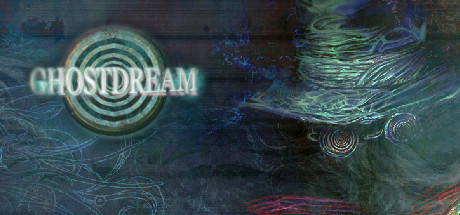
When you die, you normally have only one simple wish - to return and tell them - "Hey, guys - it's OK" But returning is not easy...
Modeled estimate, not a reported figure. How we estimate →
Media

About
Stats
All-time low is the lowest price we've recorded for this game since we started tracking it.
Languages: English**languages with full audio support
Engagement
Hours played at review time, across 40 reviews with recorded playtime.
Reviews
Themes across 40 recent reviews and how positive each mention is. A keyword signal, not full sentiment analysis.
positive critical· bar length = how often the theme comes up
Reviews
I love the art style
The game looked really cool when I first bought it but can't even play it. It just stops at the main menu and after that I can't click anything or even start it up. Not even shut it down. Not without alt+f4 anyways. Broken game.
Ghostdream, developed by ArkHouse and published by Forever Entertainment S. A., is a point-and-click adventure that places atmosphere and interpretation at the center of its design. Rather than guiding players through a clearly defined narrative, it presents a fragmented, dreamlike journey through a surreal afterlife, where meaning is implied rather than explained. It’s a game that asks for patience and curiosity, rewarding those willing to engage with its ambiguity while offering little in the way of traditional structure. The story revolves around a character known as the Reader, a soul caught in a strange in-between state where memories are incomplete and identity feels uncertain. Instead of a straightforward plot, the narrative unfolds through scattered encounters, symbolic dialogue, and interactions with strange, often enigmatic figures. Conversations frequently feel philosophical or abstract, touching on themes of regret, memory, and the process of letting go. The game avoids clear answers, encouraging players to interpret events for themselves, which gives the experience a reflective quality but can also make it feel distant or difficult to grasp at times. Gameplay follows the familiar framework of point-and-click exploration, with players moving through interconnected environments, examining objects, and solving puzzles to progress. However, the structure is intentionally loose. Rather than presenting clearly defined objectives, the game often relies on environmental cues and player intuition. Many puzzles are tied to understanding the layout of the world or recognizing subtle connections between locations, creating a sense that the environment itself is part of the puzzle. This approach reinforces the dreamlike tone, but it can also lead to moments where progression feels unclear, especially when the game offers little direct guidance. The pacing reflects this design philosophy, unfolding slowly and allowing players to absorb each area at their own pace. There is little urgency, and much of the experience is built around exploration and observation rather than action. For some, this creates a calming, almost meditative rhythm; for others, it may feel aimless, particularly when combined with puzzles that are not immediately intuitive. The game occasionally leans into trial-and-error, which can interrupt the otherwise immersive atmosphere. One of Ghostdream’s strongest elements is its atmosphere. The world is filled with unusual, often haunting environments that feel disconnected from conventional logic. Locations shift in tone and structure, sometimes appearing familiar, other times entirely abstract. Despite the presence of ghostly or demonic figures, the game avoids traditional horror, instead creating a mood that is more melancholic than frightening. There is a constant sense of quiet unease, as if the player is navigating a place shaped by fragmented thoughts and emotions rather than physical rules. The visual style complements this tone, using a retro-inspired aesthetic that emphasizes mood over detail. Environments are animated and stylized, often relying on color and movement to convey emotion rather than realism. While this approach gives the game a distinct identity, it can also make certain areas feel visually sparse or repetitive. The simplicity of the visuals occasionally impacts clarity, particularly when trying to identify interactive elements within more abstract scenes. Sound design plays a crucial role in bringing the world to life. The game features a substantial original soundtrack that shifts in tone depending on the environment, helping to reinforce the emotional atmosphere of each area. Voice acting is also a significant component, adding personality and texture to the otherwise minimalist presentation. Together, these elements elevate the experience, making it feel more immersive and cohesive despite its abstract nature. As an indie project, Ghostdream does show some rough edges. Interface design can feel clunky, and navigation is not always as smooth as it could be. Certain puzzles rely on interactions that are not immediately obvious, which can lead to frustration. These issues do not overshadow the experience entirely, but they do highlight the game’s experimental approach, where clarity is sometimes sacrificed in favor of artistic intent. In terms of content, the game offers a reasonably substantial journey, with numerous locations to explore and a variety of characters to encounter. However, its value lies less in quantity and more in how players engage with its themes. Much of the experience is interpretive, meaning that its impact depends heavily on the player’s willingness to reflect on what they see and hear. For those who connect with its style, it can leave a lasting impression; for others, it may feel too abstract to fully appreciate. Ultimately, Ghostdream is not a conventional adventure game. It is less about solving puzzles in the traditional sense and more about experiencing a mood and piecing together meaning from fragments. It trades clarity for atmosphere and structure for interpretation, resulting in a journey that feels personal and unconventional. While its lack of guidance and occasional design frustrations may limit its appeal, it succeeds in creating a distinct and memorable experience for players open to its approach. Rating: 6/10
I am 32 years old. My ex-wife and I have a daughter together, and we adopted our son together. Both are now 4 years old. When we were going through our separation, I felt lost and unhappy. I was self-destructive. One day, I was so angry with everything spiraling out of control that I punched a concrete wall in a moment of overwhelming emotion. This resulted in breaking my fifth metacarpal in my right hand—the hand I worked with, played games with, and used to carry my children to bed—the hand I desperately needed to ensure I could continue providing. Upon learning the severity of the self-inflicted damage, I became almost suicidal. Keep in mind that just a few months before this, I was the happiest man, with no history of depression or anxiety. I had never experienced anger outbursts, nor was I the type to break down and cry, but I was in a tough situation that truly prevented me from seeing the light on the other side. With nothing better to do, I looked for a game I could play WITH ONE HAND while recovering. Somehow, I stumbled upon this game and read some of the comments. I decided it was worth a try... I must admit I didn't beat the game, nor did I play as much as some of you. In fact, I may have played this game for only a day or two. That being said, after doing so, I had a new joy and hope for life. I managed to leave behind the pain and suffering that had been thrust upon me. I could experience the joy and happiness of other people. I relaxed for 5 ♥♥♥♥ minutes listening to this music, long enough to realize that I would be okay. After realizing this, I turned off the game and went back to work. My hand hurt a lot, but I was motivated. I stopped feeling so sorry for myself and became the father I needed to be at that moment, not the weak boy I was behaving like. Today, I am close friends with the mother of my children. We don't fight, argue, or say hurtful things to each other. We are parents and friends. Now I have 3 children. My third child is, wait, ALSO 4 YEARS OLD. The woman I am with was going through a very similar situation at the time of my separation, and we just unexpectedly stumbled into each other's lives. We have been dating for a year and are very happy together. Moral of the story: you never know what life has in store for you, and if I had given up when all odds were against me, I wouldn't be where I am today. This silly little game helped me realize that. Thank you.
Good game, cool art If I were to make any suggestions it would be - Make the "hidden lights" puzzle suck less (maybe add a bigger area? pixel hunting is annoying and makes it hard to be sure youre on the right track) - maybe add an option to turn off the voice acting because apparently a lot of people dont like it (i thought it was fine) Overall I found the puzzles to be good, they definitely make you think and I really like the art style
Nice soundtrack, beautiful artwork, weird characters and story. Puzzles of hell. A total nonsense I wanted to like but I didn't. You need the manual and even then it's quite an uncomfortable playing. It had good intentions and ideas but that's it. Juego raro bizarro que tenía buena pinta. El concepto básico es bueno, los personajes son curiosos y tienen un diseño que es una maravilla. La banda sonora no está nada mal. Pero los puzles son una peste, la jugabilidad es mala (ni con el manual acabas de entender cómo funciona) . En definitiva, muy buena idea muy mal implementada. Lamentablemente, no lo recominedo.
very unique art style, so cool!
Ghostdream — это специфическая игра для тех, кто ценит сюрреализм без чрезмерного упора на скримеры. Она предлагает уникальный взгляд на тему загробной жизни и понравится поклонникам «странных» квестов с сильным авторским видением. Дайте мне уже награду сообщества, я уже устал эти обзоры клепать.
☀️
Ghostdream is basically what happens if Tim Burton and a heavy dose of surrealism had a baby. You play as a ghost, and the whole game feels like a beautiful, trippy fever dream. The music is an absolute vibe, though some puzzles might make you want to haunt the developers for a hint. If you liked Fran Bow, just grab this and thank me later. It’s weird, it’s sad, and it’s a total hidden gem.
Related
Related
Trends
Modeled estimate over time, reconstructed from Steam's monthly review histogram.
Momentum
Pace estimated from the game's recent review growth (our daily snapshots) at its own sales-per-review ratio — a momentum signal, not booked sales.
Audience
Estimated from the language of this game's reviews — a proxy for where players are, not official Steam demographics.
Related
| Bonfire And Tail | $7.6K | 61 | 79% | $5.99 |
| 家屋探索 -Japanese House Exploration- | $7.6K | 130 | 96% | $2.99 |
| 蜜汁女孩 Juice Girl | $7.6K | 137 | 76% | $1.99 |
| Dungeon Dev | $7.6K | 65 | 86% | $3.99 |
| It's Spring Again | $7.6K | 907 | 92% | $0.49 |
| Xmas Apocalypse | $7.6K | 103 | 75% | $4.19 |