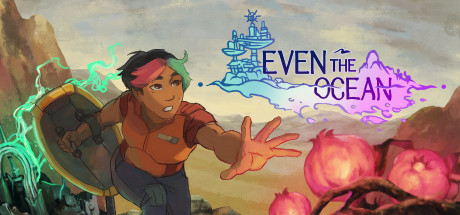
A story-rich 2D platformer where you'll delve into dangerous power plants and massive creatures, while uncovering the truth of your world. Explore towns and cities, and help a world thrown out of balance!
Modeled estimate, not a reported figure. How we estimate →
About
A story-rich 2D platformer where you'll delve into dangerous power plants and massive creatures, while uncovering the truth of your world. Explore towns and cities, and help a world thrown out of balance!
Run into Light and Dark Energy-infused hazards to shift your movement physics to conquer each challenge. Use Dark Energy to run faster - and use Light Energy to jump higher - traverse each level in your own way!

Aliph, a lowly technician, finds her world turned upside-down after a workplace accident. Now, working directly with the government to fight an unknown menace, Aliph is tasked with traveling the countryside to repair hazardous power plants and restore balance to the world.

Balance your energy bar with Light and Dark energies to overcome diverse obstacles and stabilize the city, through large puzzle-filled platforming levels. Use your 4-directional shield to ward off - or utilize - all sorts of hazards!
Meet and talk with new friends, powerful allies, and enigmatic travellers, in a story-heavy experience about what it is to be human in a world troubled by environmental despair.
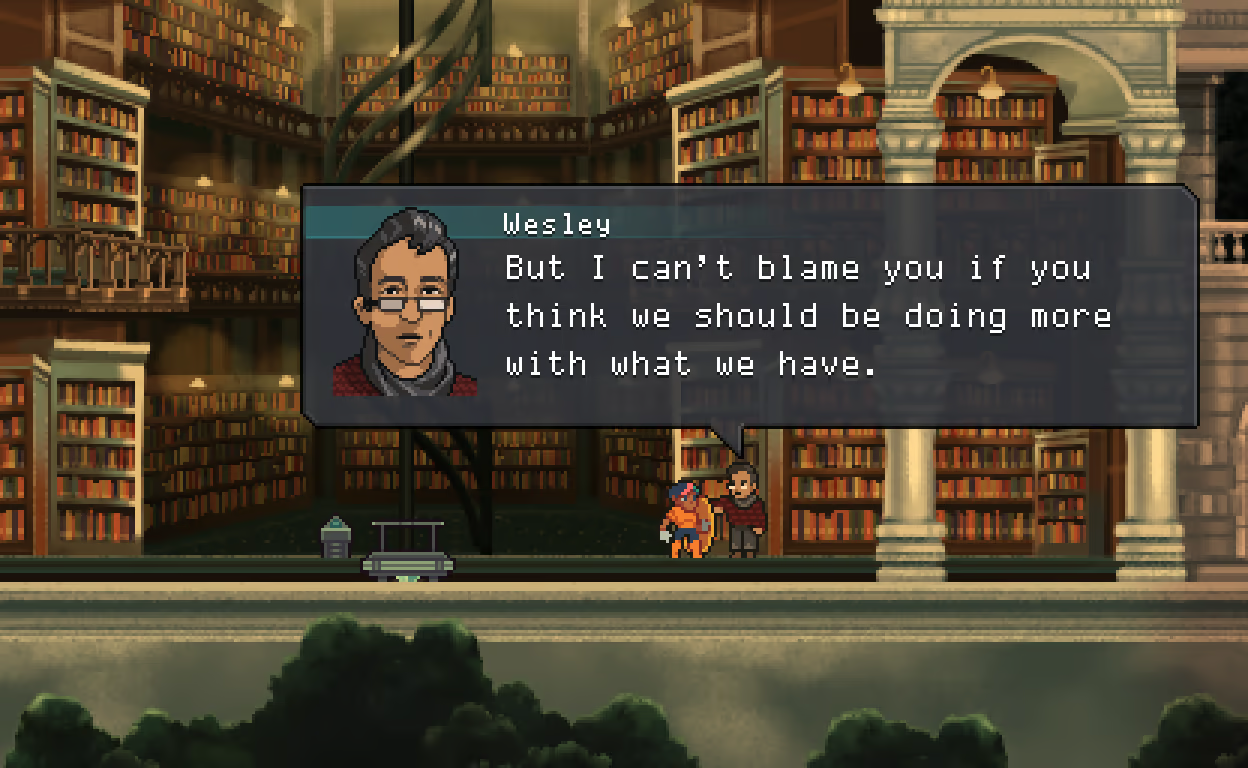
Explore the beautiful and strange geography in the overworld, towns, and environments surrounding Whiteforge City
Super customizable difficulties and play styles: choose between Complete, Story-only, or Gameplay-only options to make your experience your own!
An 6-8+ hour experience.
From the creators of Anodyne and Angeline Era!

Stats
All-time low is the lowest price we've recorded for this game since we started tracking it.
Languages: English*, Simplified Chinese*, German*, Russian*, Spanish - Spain**languages with full audio support
Engagement
Hours played at review time, across 40 reviews with recorded playtime.
Reviews
Themes across 40 recent reviews and how positive each mention is. A keyword signal, not full sentiment analysis.
positive critical· bar length = how often the theme comes up
Reviews
Even the Ocean contains some of the most creative 2D puzzle platforming levels I've ever played (enough that I hope Analgesic will revisit side-scrollers in the future). While I found the ending too didactic and sentimental, the story has its heart in the right place and offers plenty of emotional and intellectual depth throughout. And as is typical with Analgesic Productions' titles, Even the Ocean feels generous: in addition to accommodating many playstyles/preferences, the devs take great pleasure in drawing back the curtain and revealing their behind-the-scenes process. Great game.
Wish there was a "mixed" button, because I love some aspects of the game, such as the puzzles and the platforming, which felt really natural. And some aspects I don't like so much, such as the story which is quite... boring, predictable, and felt really forced at some point. My advice would be to play with the "only plants" that you can select at the start of the game.
Very unique platformer where you can change the properties of your character to go faster or jump higher by collecting dark and light energy in the environment, but if you get too much of either type you die. Creates lots of fun puzzles based on strategically avoiding/collecting certain kinds of energy. It takes a while to ramp up in difficulty, but the end has some decently challenging bits; wish there were some harder post-game levels since the mechanics are really cool and I'd like to see them stretched farther. The narrative integrates well with the mechanics, also involving trying to balance energy in the world. It's nice when gameplay and story can be so harmonious.
great game
oi, bit of a snooze innit?
平台跳跃部分质量还不错,建议一开始就选择平台模式,因为剧情感觉没什么必要看,跑图又累又繁琐,而且人物是真丑,好久没见到这么纯粹的DEI作品了,生动地诠释了安能辨我是雄雌,不仅长得歪瓜裂枣,男女也都分不清
I have played several of Analgesic Production games already, so I am coming to this one a bit late. What appears at first glance to be a simple puzzle platformer, ended up being a delightful story-driven experience with plenty of the love and surprises that I have come to expect from Melos and Marina's games.
Even the Ocean is a thoughtful and quietly ambitious action-platformer developed by Melos Han-Tani and Marina Kittaka and published by Analgesic Productions, standing out as a game that treats its mechanics, narrative, and themes as inseparable parts of a single cohesive vision. At a glance, it presents itself as a familiar 2D platformer with pixel-art visuals and precise movement, but it quickly reveals a more unusual identity—one built around balance, consequence, and the idea that progress is rarely linear or purely heroic. Rather than focusing on combat or traditional health systems, the game places its emphasis on managing opposing forces, both mechanically and narratively, creating an experience that feels introspective without sacrificing challenge or momentum. You play as Aliph, a young technician whose life is upended after a disastrous accident at a power plant in the industrial city of Whiteforge. What begins as a seemingly straightforward task—traveling across the region to stabilize malfunctioning power facilities—gradually unfolds into a broader examination of how technology, governance, and social structures affect ordinary people. The story is delivered through a mix of dialogue-heavy town sections, environmental details, and quieter character moments, allowing relationships and worldbuilding to develop naturally rather than through exposition dumps. Aliph herself is not portrayed as a chosen savior or legendary warrior, but as a capable yet uncertain individual navigating responsibility, institutional pressure, and the emotional toll of being placed at the center of systemic problems. The defining gameplay mechanic in Even the Ocean is its light-and-dark energy balance system, which replaces a conventional health bar with something far more nuanced. As Aliph interacts with hazards, checkpoints, and environmental elements, she accumulates either light or dark energy. This balance directly affects her movement: lighter energy allows higher jumps and floatier control, while darker energy increases horizontal speed and weight. The result is a platforming system that constantly asks the player to think ahead, not just about where to jump, but about what state they need to be in to make that jump viable. Mistakes don’t simply cost health; they alter the way Aliph moves, often forcing players to adapt on the fly rather than reset and try again with identical conditions. Level design takes full advantage of this system, especially within the game’s power plant segments, which act as self-contained platforming gauntlets. These areas are dense with hazards, switches, and traversal challenges that can often be solved in multiple ways depending on how you manage your energy balance. Rather than demanding perfect execution, the game encourages experimentation and recovery, letting players lean into altered movement states to find alternative paths forward. This flexibility makes the platforming feel organic and expressive, rewarding understanding over rote memorization. The difficulty ramps up steadily, but it remains fair, especially with the inclusion of accessibility options that allow players to adjust challenge levels or bypass particularly demanding sequences without breaking narrative continuity. Outside of these intense platforming sections, the game slows its pace with overworld exploration and city hubs presented in a top-down perspective. These areas prioritize conversation, atmosphere, and context, offering insight into the lives of people affected by the energy crisis Aliph is trying to contain. While these sections are mechanically simpler, they play a crucial role in grounding the experience, reinforcing the idea that the consequences of your actions extend beyond abstract objectives. The writing shines here, striking a balance between personal introspection and broader social commentary, touching on themes like labor, environmental risk, and emotional burnout without ever turning the game into a didactic lecture. Visually, Even the Ocean uses pixel art with restraint and purpose. The platforming sections are clean and readable, ensuring that energy hazards and environmental cues are always clear, while the overworld and narrative moments feature more detailed backgrounds and expressive character portraits. This contrast reinforces the game’s dual structure: the mechanical precision of power plants versus the messy, human complexity of the world outside them. The soundtrack, composed by Melos Han-Tani, complements this structure beautifully, shifting between calm, reflective pieces during exploration and more focused, rhythmic tracks during platforming challenges, subtly guiding the player’s emotional state without overwhelming the experience. What ultimately makes Even the Ocean memorable is how well its themes are reflected in its systems. Balance is not just a story concept or a gameplay gimmick—it’s the core lens through which every challenge is framed. Success often comes not from eliminating danger, but from learning how to live within it, adapting rather than overpowering. This design philosophy gives the game a distinct voice among indie platformers, one that values thoughtfulness and empathy alongside skill and precision. In the end, Even the Ocean is a deeply considered platformer that rewards patience, curiosity, and reflection as much as technical mastery. Its inventive mechanics, strong character writing, and cohesive artistic direction create an experience that feels quietly powerful rather than overtly dramatic. For players who appreciate games that challenge not only their reflexes but also their perspective, it stands as a compelling example of how interactive systems and storytelling can work in harmony to say something meaningful without ever losing sight of play. Rating: 8/10
I'm writing this review a month or so later, so take it with a grain of salt because I don't remember everything there is to say. This game is from Analgesic Production, a small independent studio that I tend to revere after playing Anodyne 1 and 2. Expectations and curiosity for ETO were high, but they weren't entirely fulfilled. The game's gameplay revolves around a brilliant idea with great potential. I liked the protagonist's design, the fairly original and not overly difficult platforming, the game's visuals (not always), and I appreciated the desire to create something new compared to Anodyne. I didn't like the dialogue dynamics (which I think is a bit of a problem they often have), which were too redundant and long, as well as some of the movement dynamics between one area and another, which were unnecessarily slow and unclear (from my point of view). The game isn't very long; I noticed that I unlocked a small number of achievements, but honestly, after a month, I don't care to reopen it. In short, this is the game I liked less than Analgesic so far, but it's still a must-know for any wannabe fan of this developer duo, given the curiosity and respect I have for them. Scrivo questa recensione un mesetto dopo per cui prendetela un po' con le pinze perchè non ricordo bene tutto quello che ci sarebbe da dire. Gioco della Analgesic Production, piccola casa indipendente che io tendenzialmente venero dopo aver giocato Anodyne 1 e 2. Le aspettative e la curiosità per ETO erano alte, e non proprio pienamente soddisfatte. Il funzionamento del gioco ruota attorno ad un'idea geniale e dall'alto potenziale. Mi è piaciuto il design della protagonista, il platforming abbastanza originale e non super difficile, il visual del gioco (non sempre) e ho apprezzato il voler creare qualcosa di nuovo rispetto ad Anodyne. Mi è piaciuto meno la dinamica dei dialoghi (che secondo me è un po' un problema che loro hanno spesso) troppo ridondanti e lunghi, così come alcune dinamiche di movimento tra una zona ed un altra, inutilmente lente e poco chiare (dal mio punto di vista). Il gioco dura poco, ho visto che che ho sbloccato una piccola quantità di achievements ma onestamente a distanza di un mese non mi interessa riaprirlo. Insomma in breve il gioco finora che mi è piaciuto meno della Analgesic, ma che comunque per un wannabe cultore di questo duo di sviluppatori è necessario conoscere per la curiosità e stima che provo nei loro confronti.
i liked it :>
Related
Related
Trends
Modeled estimate over time, reconstructed from Steam's monthly review histogram.
Audience
Estimated from the language of this game's reviews — a proxy for where players are, not official Steam demographics.
Related
| Sinner Maker | $143.5K | 390 | 90% | $9.66 |
| Silicon Zeroes | $143.5K | 284 | 87% | $14.99 |
| ABYSS OF THE SACRIFICE | $143.5K | 272 | 83% | $39.99 |
| Cat in the Box | $143.5K | 1.6K | 94% | $6.99 |
| Neyasnoe | $143.6K | 465 | 94% | $9.99 |
| Cirno! Lifts a Boulder | $143.6K | 935 | 98% | $5.39 |