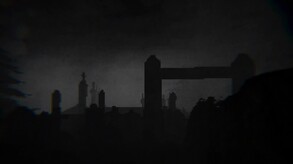
Eschaton is a short, experimental, surreal first-person exploration game. Explore the 'aftermath' of a cult ritual in the grounds of a manor in the remote and picturesque Scottish Highlands.
Modeled estimate, not a reported figure. How we estimate →
Media

About
"I have come to tell you that you are free. Many ages ago, My consciousness left man, that he might develop himself. I return to find this development approaching completion, but hindered by fear and by misunderstanding."
Your final gift to humanity, stolen in its final moments. An unheard of conspiracy spanning millennia snuffed in it's final act, only to be reborn.
It's the 23rd of May, 2023 and you are about to end the world.
You don't remember. A crashed van at the gates of a manor, a dead driver. A cold chilling fog pushes you towards the entrance where the door is curiously open. Reality ends here.
Presented in a late 90's low-poly style inspired by the fifth generation of games consoles, Eschaton is a short, surreal, first person exploration game set in the Scottish Highlands. Explore the grounds of an abandoned manor, analyse the environment, talk to beings who don't quite make sense, experience a short surreal trip that lasts until midnight.
Headphones are recommended; Eschaton uses binaural beats to instil fear / tension / aid focus and change your state of mind at certain points of the game.
Best Audio - Scottish Game Awards 2023
Simple gameplay with a experimental, surreal story
A short experience - 15-30 minutes.
A meticulously recreated world presented in a low-poly aesthetic
Atmospheric audio including binaural beats as an experimental game mechanic
Surreal conspiracy themed lore that definitely doesn't include any hidden symbology or secrets
Stats
All-time low is the lowest price we've recorded for this game since we started tracking it.
Languages: English**languages with full audio support
Engagement
Hours played at review time, across 40 reviews with recorded playtime.
Reviews
Themes across 40 recent reviews and how positive each mention is. A keyword signal, not full sentiment analysis.
positive critical· bar length = how often the theme comes up
Reviews
The aesthetics are cool and all and I don't wanna do a negative review, but the kabbalistic inspiration feels pretty surface level in a bit of a jarring way. I'm sure this dev can do better and I'll be there to see it tho.
I really enjoyed this game, and it’s really well made, but god it made me sick as hell
Eschaton impressed me with its surreal atmosphere. The actual complex and abstract story is told / visualized with a qualitative retro like low poly artstyle and greatly animated visuals. A story about a doomsday cult, mysticism or just a dream? The encounter in the finale might give you the answer. Overall it was a cool experience. I recommend to play this game with lower fps if you like the retro feel.
Strange low poly game, a lot like paratopic and no one lives under the lighthouse. You explore a homestead where an automobile accident happened. Then you well, can't spoil it but things get very trippy. Ending is pretty weird and spectacular for what it is. Graphics have a real silent hill feel to them. Can't elaborate to much cause of spoilers but it is an interesting game. No inventory, no items or rpg elements, no game overs or enemies. Its just a walk around, explore, and unravel the secrets game. And for what it does its not bad, just kinda short.
👁
– son, come over for dinner. – i can't mom, i'm eliminating the limitations of my corporeal form
BY THE NINE I'M TWEAKING!!!
A hazy waltz sewing together the scraps of an ancient song
I would love to see more of this videogame design philosophy. Very interesting indeed.
Eschaton is a surreal psychological horror experience that focuses almost entirely on atmosphere, ambiguity, and emotional discomfort rather than traditional gameplay systems. Despite its extremely short runtime, the game manages to create a deeply unsettling experience through experimental sound design, cryptic storytelling, and dreamlike exploration. Instead of relying on conventional horror tropes such as combat, chase sequences, or constant jump scares, it slowly builds tension through environmental detail, distorted audio, and the growing feeling that reality itself is becoming unstable. The result is a strange and haunting indie horror title that feels more like an interactive nightmare than a traditional game. The story begins with the player awakening near a crashed vehicle outside an isolated manor hidden within the Scottish Highlands. From the opening moments, the game establishes a sense of confusion and unease. Very little is explained directly, and players are left to piece together fragments of narrative through exploration, environmental clues, cryptic dialogue, and surreal imagery. The game intentionally avoids giving straightforward answers, allowing mystery and uncertainty to dominate the experience from beginning to end. Atmosphere is unquestionably the strongest part of Eschaton. Every environment feels cold, abandoned, and emotionally oppressive. The remote landscapes, fog-covered forests, dark hallways, ritualistic locations, and increasingly distorted spaces all contribute to a constant feeling of discomfort. The horror rarely comes from direct threats. Instead, it emerges from the overwhelming sense that something is deeply wrong beneath the surface of the world. The game excels at making ordinary spaces feel unnatural simply through lighting, sound, and pacing. The retro-inspired visual presentation works remarkably well for the psychological horror themes. Using low-poly environments and visuals reminiscent of late 1990s console games, Eschaton creates a surreal and uncanny atmosphere that often feels more disturbing than realistic graphics would have been. Jagged geometry, pixelated textures, and strange environmental lighting give the world a fragmented dreamlike quality. The simplistic visuals leave room for imagination, allowing certain moments to become psychologically unsettling in subtle ways. Sound design is easily the most impressive element of the experience. The game heavily relies on ambient noise, distorted audio, whispers, drones, and binaural effects to create emotional tension and disorientation. Playing with headphones dramatically improves the experience because much of the horror comes from how sound is manipulated throughout exploration. Certain audio sequences genuinely create feelings of paranoia and psychological pressure even during moments where very little is happening visually. The soundtrack and environmental audio work together to make the entire experience feel unstable and emotionally draining in a deliberate way. As the game progresses, the surrealism becomes increasingly intense. Strange entities appear, conversations become more cryptic, and the environments gradually shift from grounded realism into abstract psychological spaces filled with cult imagery, conspiracy themes, and existential dread. The narrative constantly blurs the line between symbolism and literal events, leaving players uncertain whether they are witnessing supernatural phenomena, hallucinations, or fragmented memories. This ambiguity gives the experience much of its lasting impact. The writing also contributes heavily to the unsettling atmosphere. Dialogue often feels detached, philosophical, and emotionally unnatural, reinforcing the sensation that players are interacting with something beyond ordinary human understanding. Characters speak in fragmented and cryptic ways that rarely provide direct explanations, making the narrative feel intentionally disorienting. Players looking for a clear and structured story may find this approach frustrating, but those who enjoy interpretive psychological horror will likely appreciate the game’s refusal to fully explain itself. Gameplay is intentionally minimalistic. Most of the experience involves walking through environments, observing details, and interacting with occasional objects or scripted sequences. There are no complex puzzles, combat systems, or survival mechanics. Eschaton functions primarily as a narrative and atmospheric exploration experience where mood and emotional immersion are prioritized above gameplay depth. Players expecting traditional horror mechanics may find the interactivity limited, but the simplicity allows the atmosphere to remain the central focus. The game’s short runtime will likely divide players. The entire experience can usually be completed within half an hour, making it feel closer to an experimental horror short film than a full-length game. Some players may feel disappointed by the lack of content, especially considering how intriguing the world and themes become during the brief journey. However, the short duration also prevents the surreal concept from losing momentum or becoming repetitive. The experience leaves a strong impression precisely because it ends before the atmosphere loses its intensity. One of the most interesting aspects of Eschaton is how committed it remains to emotional and psychological immersion over traditional storytelling. The game never attempts to guide players clearly or provide comfortable explanations. Instead, it focuses entirely on creating feelings of confusion, dread, curiosity, and emotional isolation. The horror feels abstract and philosophical rather than purely physical, which gives the experience a unique identity compared to more conventional indie horror titles. What ultimately makes Eschaton memorable is its ability to create genuine unease through atmosphere alone. The game proves that horror does not require constant danger or graphic imagery to leave an impact. Through carefully crafted sound design, surreal visuals, and fragmented storytelling, it creates an experience that feels deeply unsettling despite its simplicity and brevity. For players who enjoy atmospheric horror, surreal exploration games, and psychologically driven storytelling, Eschaton delivers a haunting and uniquely immersive experience. Its cryptic narrative and minimalist gameplay will not appeal to everyone, but its oppressive atmosphere, experimental audio work, and dreamlike horror presentation make it one of the more memorable short-form horror experiences available on Steam. Rating: 8/10
Related
Related
Trends
Modeled estimate over time, reconstructed from Steam's monthly review histogram.
Momentum
Pace estimated from the game's recent review growth (our daily snapshots) at its own sales-per-review ratio — a momentum signal, not booked sales.
Audience
Estimated from the language of this game's reviews — a proxy for where players are, not official Steam demographics.
Related
| One Deck Galaxy | $6.2K | 55 | 73% | $4.93 |
| Gunkid 99 | $6.2K | 50 | 92% | $5.99 |
| Destructivator 2 | $6.2K | 55 | 96% | $5.99 |
| Glory to Ukraine! | $6.2K | 159 | 85% | $1.99 |
| Dreadlands | $6.2K | 224 | 59% | $1.49 |
| Unclaimed World | $6.2K | 215 | 51% | $0.84 |
Related
| Human Fall Flat | $109.3M | 225.6K | 95% | $19.99 |
| DAVE THE DIVER | $90.8M | 139.6K | 97% | $19.99 |
| Slime Rancher | $73.8M | 155.4K | 98% | $19.99 |
| House Flipper | $65.8M | 110.8K | 94% | $24.99 |
| Slime Rancher 2 | $45.9M | 49.2K | 95% | $29.99 |
| Castle Crashers® | $41.4M | 139.7K | 96% | $14.99 |