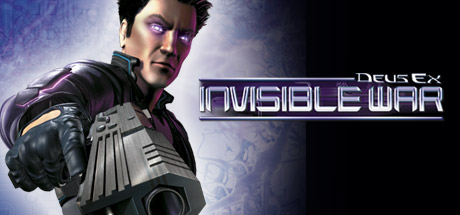
Approximately 20 years after Deus Ex, the world is only beginning to recover from a catastrophic worldwide depression. In this techno-nightmare, take part in the dark struggle to raise the world from its own ashes.
Modeled estimate, not a reported figure. How we estimate →
Media
About
Approximately 20 years after the events depicted in Deus Ex, the world is only beginning to recover from a Catastrophic worldwide depression. In the Chaotic period of recovery, several religious and political factions see an opportunity to re-shape a worldwide government to their agendas, understanding that the right moves now could determine the shape of human society for decades - even centuries - to come. In this techno-nightmare, take part in the dark struggle to raise the world from its own ashes.
Dynamic and innovative 1st person-action/adventure brings a level of reality unprecedented in a videogame.
Biotech modifications allow players to see through walls, leap 40 feet into the air, regenerate critical body damage or render yourself radar invisible.
Globe-hop to real world locations such as Seattle, Antarctica, and Cairo.
Cunning stealth gameplay, with darkness and sound affecting enemy awareness.
Variable gameplay offers multiple solutions to problems and support for varying stylistic approaches.
Non-lethal, non-violent resolution to conflict, allowing players to make ethical statements through their actions.
The player's progress through the game is supported by an unprecedented freedom of action by a dynamic, non-linear story with responsive plot branches.
Genres
Stats
All-time low is the lowest price we've recorded for this game since we started tracking it.
Languages: English
Engagement
Hours played at review time, across 41 reviews with recorded playtime.
Reviews
Themes across 41 recent reviews and how positive each mention is. A keyword signal, not full sentiment analysis.
positive critical· bar length = how often the theme comes up
Reviews
I understand the universal ammo was a lame idea and that there are other issues with the linearity of the game compared to the original. However, I do urge you to look past all that and enjoy a genuinely good story experience with philosophical depth in its dialogue and even in the hidden data you find around. The political commentary and ideological conflicts reflect a lot of the real world and you can leave this game with a ton of new books to read, ideas to research and explore. Plus I did find it quite fun once you accept the mechanics for what they are.
I'm unsure why my playtime is listed as being so low (perhaps its because I got the "Visible Upgrade" fan-patch for the game and that messed with how it interacts with Steam?). I got to about midway through the second visit to Cairo before throwing in the towel. I've played some rough gems in the past, and sequels that lived in the shadow of astounding first games. That's not uncommon, after all. DE:IW is, unfortunately, all rough and no gem. Even with the fan-patch it ran terribly, with stuttering, audio/visual glitches, and atrocious load times despite being on an SSD. I experienced frequent crashes as well, often during loading. Maps are tiny and bland, and have almost none of the branching routes you'd expect from an immersive sim. With side quests requiring you to go back and forth between these tiny zones, I soon gave up on doing them because more loading means more chances to crash. That, and the rewards were laughably pitiful. Augmentations have obvious 'best in slot' choices thanks to the level design and mechanics, so there's zero point in having unique builds beyond hacking/strength/speed. They throw so many black market upgrade canisters at you that you wonder why they even delineated between regular and black market upgrades in the first place (and let's be honest, the only black market upgrade worth getting is the hacking one). The "universal ammo" system might work in games like Mass Effect, but DE:IW's bland weapons and 'meh' upgrades mean you mainly just stick with one or two weapons -- all I ever needed was a silenced pistol to mow down enemies with headshots and the SMG with the EMP upgrade to take out bots. Stealth really isn't a necessity unless you're on harder difficulties, and there's barely a penalty to going loud anyways. I played on Normal and never felt threatened by any combat at all, and once I realized there was no reason to sneak beyond challenging myself... I just started blasting through the game like a shooter. In the original Deus Ex, you're not really tanky, specific ammo types beyond basic 10mm can be hard to find at first, your weapon skills limit how much you can run-and-gun for a few hours at least, and you sometimes get better rewards for going sneaky and nonlethal. But here? I can go bombastically loud immediately, with near-perfect aim and plentiful ammo, against enemies with terrible AI, with no narrative or mechanical penalties against me. It was a point-and-click adventure with people's heads. [SPOILERS AHEAD] And the story is just... frustrating. Characters are cardboard cutouts of personality, and they move through the plot WAY too fast. They wanted a dramatic Deus Ex 1-style "character goes turncoat against the organization you're in" style reveal, but they do it almost immediately (like 10 minutes into the game) with a character that I know barely anything about! Dialogue hasn't always been the strong suit of the Deus Ex series, but this game's dialogue sounds like an elementary school stage play. It's like the writers felt that the player was going to be the world's biggest numbskull and decided to have every character state the most obvious things ever, repeatedly. The major factions are constantly trying to tell you what to do but there are zero consequences at all for going against them. You can literally gun down their allies, and the leaders will contact you saying "How dare you! You slaughtered all of our operatives!" ... before following it up with "... And you can get back on our good side by doing a fetch quest for us!" I killed a major faction NPC on accident during a firefight and over comms they berated me for killing her, then did a total 180 and said "try not to get on our bad side in the future, we hope to have more missions with you". Literally what is the point of having warring factions trying to control you if all of them are all bark no bite? Not even no bite, *negative* bite. Out of curiosity, I looked up the endings for the game, and much like Deus Ex 1, they are completely decoupled from the rest of the game. However, DE 1 didn't try to set up multiple story paths from the very beginning, and while I'm not a fan of it suddenly foisting multiple endings on you, it at least tried to be like "you've experienced the game so far and met all the characters, how do you respond?". DE:IW, however, tries to set up twisting plotlines from the start but then makes them utterly detached from how the game ends. You could, for example, be absolutely belligerent towards the Templar faction, defying all their orders and killing every one that you see, but at the very end you could decide to side with them, and there's not a lick of pushback. Ludonarrative dissonance, eat your heart out. [END OF SPOILERS] So yeah, even as a stand-alone game, not taking into account the other excellent entries of the Deus Ex series, this is a bland, linear shooter trying to wear the trappings of a complex immersive sim RPG. It's frustratingly unstable to play even with fan-made patches that try to limit the crashing, with an insultingly dull plot and meaningless game mechanics. Even on sale for less than two dollars, it wasn't worth finishing.
DX: IW is a shoddy fanfic of the first Deus Ex that somehow got promoted to an official sequel. If you ever want to know why PC gamers hate consoles, look no further – DX: IW is just as disappointing as everyone says it is. Everyone blames the console limitations, but I’d argue DX: IW’s problems go much deeper than small levels and frequent loading screens. DX: IW isn’t a total failure; it retains fragments of the best parts of the first game: tons of expertly-crafted dungeons with multiple paths to your goals; a large toolkit for overcoming these challenges including weapons, stealth, hacking, augmentations, socializing, or diligent exploration; a huge variety of ways to solve each problem; and lots of exciting places to explore and characters to meet in the hub worlds. There are improvements here and there: you can mantle up ledges like in Thief 1 + 2; the moving light sources still look fantastic; climbing ladders is easier; you can take manual control of cameras and robots; different food items now stack; you can play as a female protagonist; the ragdolls are excellent; and all invincibility flags are removed. The shooting is better (or at least you don’t start with the aim of a drunken sailor like in the first game); each gun has an alt-fire; the weapon modding is expanded; and you can still destroy doors and locked containers with explosives. There are more branches in the story (that unfortunately do converge later), and there are plenty of factions with contradicting (albeit basic and underdeveloped) beliefs that you can side with or against. There are more quests to solve, and many require helping one faction at the expense of another, such as the Coffee Shop wars [spoiler]or killing/saving Paul Denton[/spoiler]. But holy crap, these changes came with MAJOR compromises, resulting in a sequel that takes a few steps forward and many gigantic leaps backwards from the first game. I don’t even know where to begin with the flaws…. The most obvious issue is the inferior level design: levels are ridiculously tiny due to console limitations and most of your time is spent traversing unremarkable alleyways and painfully narrow corridors (at least there is less backtracking, I guess?). Dungeons are way too short and end just as they get interesting, and most fights devolve into a corridor shooter since the compact levels prevent more creative encounters. Key locations and rival factions are absurdly close together (why is the Templar recruiting booth right next to the Tarsus Academy school in the Cairo Arcology?), and there are loading screens every time you want to enter/exit any building. There is also too much vent-crawling: it’s a series-wide problem, but it’s especially bad here – seemingly every other room has an easily accessible vent nearby that completely bypasses or trivializes the challenge ahead. Water and swimming are also cut. So many other systems have lost depth. The UI is much worse: the circular HUD occupies too much of the screen, navigating menus requires too many button presses, and several excellent features from the first game such as the conversation log and taking your own notes are gone. Lockpicks are gone and only multitools remain, the toughest locks require at most just 3 multitools to bypass, and multitools are so abundant that you are never in danger of running out. The limb-based health system is replaced with a standard health bar, and armor/wearables are completely absent. Worst of all, there is now a universal ammo system – all guns draw from a single shared ammo pool, and if one gun runs out of ammo, all your other weapons will be empty too. Combined with the high ammo consumption and poor drops from enemies, you must play with perfect accuracy – if you miss even a few shots, you won’t have enough ammo to continue shooting. Guns have lost alternate ammo types and don’t need to be reloaded – every gun effectively has an infinite clip size, and you can spam the rocket launcher to your heart’s content. The augmentation system is simpler: biomods can install/upgrade any augmentation you want, only 5 augments (outside of the flashlight) may be installed simultaneously, the max level is 3, and there are fewer options to choose from. None of the augmentations boost your HP/damage resistance either, so have fun surviving the rocket launcher + mag rail spam in the late game. By far my biggest issue with DX: IW is the lack of character progression. For some reason SKILLS ARE REMOVED – every player is equally capable of shooting/melee/healing/bypassing locks/solving problems as every other, which drastically reduces build variety, harms replay value, and flattens growth past a certain point. As a result, the difficulty is uneven: the early game is trivial since your combat abilities are already superb, while the late game is non-stop bullet sponge spam that you fight with since you cannot enhance your combat (at least you can still sneak past with cloaking). Your character reaches full potential too soon: most strong weapons are available too early; weapon customization is limited to 2 unique mods per weapon; and biomods are so plentiful that you can easily max out all augmentations by the midpoint. You even get 3 biomod canisters in the tutorial level, so you can install regeneration immediately (or worse, grab 3 arm strengths and start 1-shotting everyone with the baton in the first 30 minutes lmao). Moreover, since biomods are too abundant and can overwrite/upgrade any augmentation slot, you can radically respec your character and switch to a completely new build with minimal costs or sacrifices, removing most of the opportunity costs the first game is famous for. The presentation is also worse this time around. The first game had a grounded and believable near-future art style like [i]Robocop[/i]; the sequel has a tacky and cartoony art style straight out of [i]The Fifth Element[/i] (which you won’t notice due to the tiny levels). The OST is generic and has fewer tracks than the first game, and the voice acting is drab and forgettable with few exceptions. The NPC models look lifeless and uncanny, and some models like the Omar and WTO soldiers look horribly out of place. The in-game text and conversations are much briefer and lack world-building and depth compared to the first game. Holy crap did the quality of the world-building take a hit. This game is only ~15 hours long (about 1/3 of the length of the first game) and is way too short to properly develop its characters or explore its themes. The new characters and factions are shallow and forgettable (the Templars are just cartoonishly evil villain-of-the-week antagonists); the references to real-world conspiracies are mostly gone; the plot relies too heavily on characters from the previous game; and the story leans too much into campy sci-fi nonsense. [spoiler](Am I the only one who finds the teleporters and flashback sequences in JC Denton’s Sanctuary to be completely ridiculous?). The final level is disappointing – not only can you join any faction regardless of past actions, but also the final dungeon (the old UNATCO HQ) is packed with forced callbacks to the first game and ends with selecting who receives the Aquinas Protocol files from a simple drop-down menu (which are stored on Alex Jacobson’s computer for some reason).[/spoiler] DX: IW is far from a bad game, but its mixed reputation is warranted – as a sequel to the first game, it is terrible, and by its own merits, it is just a decent-at-best FPS-CRPG that has been done so much better before and since. If you are looking for a proper First-Person CRPG, just replay the first game (with mods like Revision or GMDX if necessary), or check out [url=https://store.steampowered.com/app/2600/]Vampire: The Masquerade – Bloodlines[/url] if you somehow haven’t already – DX: IW really comes off as a prototype for VTMB. 6/10, it is taking all my willpower to not give this Steam review a thumbs down.
This game is not exactly a Deus Ex game, it has a lot of similarities but it changed a lot of core mechanics. While I wish they stuck to the mechanics of the first game, I do like most of the changes this game brings. First, all guns use the same ammo. This helps prevent stacking tons of ammo types and dropping stuff you don't use which is nice. I found it annoying to have to open my items menu and drop stuff constantly. I also like that ammo is not an inventory item so you can always pick up ammo without fear of filling your limited inventory space. Speaking of limited inventory space, the new system is a bit jumbled. I like that every weapon takes up one slot out of 10. Meaning you can carry so many weapons and play around with them. It's also helpful that you don't need to upgrade your weapon skills to use any weapon so it allows you to find out what guns you like the most. Or to hold on to a bunch of weapons for unique situations. I like playing stealthily, but I always kept a shotgun handy just in case. In the old game I wouldn't be able to do that, so I like that I can do that in this game. The downside is that literally everything takes up one of those 10 slots. Bio-cells, grenades, multitools, food, etc. While smaller items stack, your inventory fills up faster than in the first game, but the trade off is you have a wider array of tools at your disposal instead of in the first game where you can only really manage one play style at a time. I also love the variety of weapon modifications. While the same mods appear from the first game, you can do unique things with guns like add a mod to disable alarms on windows. This adds so much to the game because it makes stealth more viable. It is also a way to replace hacking if you don't want to invest in that body modification. Or you can add an EMP modification so you don't need to collect EMP grenades. I also like this because it means you can carry 2 of the same weapons for different reasons. For instance I always carried two pistols. One with a silencer and a mod do disable alarms so I could stealth my way into areas. Then I had a pistol that had increased damage and rapid refire for more combat centric situations. Modifications are more limited in how many you can use in this game, but you can sub them out or level the upgrade multiple times for more effect. Or you can use passive modifications that help your character without utilizing your energy. This allows for a lot of unique combinations of play that you can always change since modification canisters are all over the place. My favorite combo was a melee strength build combined with a mod that turns robots into allies when you strike them with an energy weapon. This combo basically turned dangerous areas full of mechs into an army that I could control. I like that I have more control over the modifications I want and I can do them in any order I want. There were a few mods in the first game that I never used. I don't think this system is better or worse than the first game, but I do enjoy it. Lastly the story is a bit of a mess, but I liked it. A lot of side quests involve choosing between smaller and weaker groups vs powerful groups or corporations. This has been done to death but there is an interesting twist on the formula that I really liked. It pissed me off when I learned about what was happening because it made me feel like a pawn and a fool. It fueled my anger towards this hostile world and guided me to the end which was a bit lackluster, much like the first game story wise. It was annoying that only your decisions from the last level affect the ending in the first game and the same can be said here, although they do explain why your choices don't matter in a way that was clever. Overall, I would say it's a 7/10. It just has the misfortune of following one of the best games of all time.
Dialogue and story are terrible (scientist says "sure random guy who broke in, I'll let the shields down so you can play with this unique and priceless gun, just cause"). The endings, all 4, are terrible. Tarnishes J.C. and Tracer Tong's characters quite a bit. Visual's are finicky to get to work and the character models stand in awkward positions. With that said, the gameplay is fun as long as you don't compare it to the other games' gameplay. It's also pretty short. If you like Deus Ex games and want to see what the future looked like, then get this, otherwise I would look elsewhere.
The rise, the epic fall, and the brief survival of Ion Storm has given us Deus Ex, a game that has set the standard for narration, plot, and atmosphere among others in gaming. It was followed by an ambitious sequel that was destined to learn from the earlier mistakes and advance the lore of the franchise even further. It was named Deus Ex Invisible War. Very often this game is described as the “weakest entry in the Deus Ex franchise”, a verdict that has been echoed a lot over the years almost as a quote whenever the game is brought up and that is almost all that is said about this game since 2010 and onwards. It’s hard to disagree, but it hardly tells the full story for such a controversial game. Below the bad design choices lies the bad technical performance. But below that lies an interesting, though brief, story that is at times deeper and more atmospheric than in the prequel. By far the biggest issue of the game is the level design, which divided the maps into many cramped sections. This, as well as many other detrimental design choices, were apparently done to accommodate console ports natively, which had very low memory at the time, though some other contemporary console games don’t seem to have this problem. This really hurt the atmosphere as the game becomes almost linear with such tight map geometry that is also reused. This also naturally meant that the depth of the game environment was damaged, as there were not even that many NPCs or things to do. The addition of universal ammo may seem interesting, but in reality this game shows why it is a bad idea. There is very little of it towards the end of the game and heavier weapons are practically a non-starter after a point. Simply put, having a lot of universal ammo is not the same as having a lot of various types of ammo, funnily enough. The setting was also kinda squandered, as you never see that much of what makes this world post-apocalyptic really, other than the VersaLife facility and Liberty Island, not to mention the relative absence and fleshing out of any lore post the original game. Plot-wise, the endings were very vague as well, except for the Omar one; they don’t tell you what happens to your character and they skimp out on the actual effects of your choice. While this adds to the uncertainty of whether your choice was correct, it also means that there is practically no epilogue or idea of what happens next to the world, which is unsatisfying. Some of the characters were misused; Billie Adams, Dr. Nassif, or the other characters that you meet later could have made such charismatic allies or opponents, but that never came to be. Also, practically no boss fights. Not that they were great in DX. No water segments either, if you were a fan of that. The game is also much shorter than the prequel, which is why the plot feels rushed and also why there is hardly any consequence to choices made earlier in the game with respect to the ending or the overarching plot. Whether this is due to time or console considerations is unknown, but the lack of too much cut content would seem to indicate that the plot was planned like this from the start. Lastly, the technical state of the game is surprisingly bad, once again due to the console ports. It is unbelievable that a game needs to open a new window to load into a new tiny area. Cinematics were also used too sparingly even if they were not amazing and look bad in 2k. Getting the game to run is also a chore and crashes liberally. I should also add that the actual gunplay is nothing special at all, though it is somewhat better than in DX, which is much harder to play without laser sights. With that being said, the game has some value that, subjectively, may make it enjoyable. I know it did for me eventually. This game got a lot of criticism for trying to go into too much sci-fi as opposed to the more grounded setting of DX, but I actually really liked this part, as it raised somewhat newer questions and gave off a totally unique atmosphere that is not present in any of the other games in the series. This atmosphere, aided by the late-game bgm, is much more mysterious and heavy. For fans of the series in general, this game and its setting is a serious contrast to the other games, especially the ones that followed DXIW. While the story was at times lackluster, it shows an interesting take on sci fi and the direction that the franchise was supposed to take, though it would seem that Ion Storm had trouble with this direction, judging from the failed sequels/prequels and spin offs as well as the plot of this game. Stealth is probably better and more nuanced than in the original (though you can mostly just run the entire last mission through with optic camo). Most importantly, the narrative freedom of the game creates a rare opportunity for actual moral choices with pretty heavy (even if not varied) in game effects, be it to burn down a man’s livelihood simply because it is expedient or to choose the lesser of two evils. In later years, this has come to be known as “grey morality”, but the choices are somewhat beyond even that COD marketing term; at the start the choices are spoon fed to you, but at the end, you are simply choosing between the most morally corrupt French couple alive, a genocidal maniac, and infodumping expert extraordinaire. You can also simply not choose and the game will punish you even more decisively. Either way you sell yourself. Perhaps the only thing you can’t explicitly do is turn into an Omar. These choices are not particularly complex, nor does one choice affect the next necessarily, but they build up to a pretty dark and unforgiving allegory as well as commentary on sociopolitical problems. This aspect of the game has aged very well. Maybe only Cyberpunk is of a vaguely similar caliber, setting, and uses similar narrative structures, even if almost exclusively in the end game, and it mostly focuses on the personal allegory part, not the social commentary with respect to the choices made. Compare this to the DX endings, where there was only one singular evil in the face of Bob Page, with Helios, Everett, and Tong not yet having shown their flaws nor have they given too much reason to not trust them. They were more like salesman, whereas the leaders here are all creepy in their own way and would have killed you a long time ago if they did not need you. It is a shame that such a promising game was marred by problems of contemporary games as well as a relatively underwhelming plot. The game came, got decent sales and ratings, and was forgotten, with Ion Storm following it into damnation, and the franchise coming close to following suit. It was forgotten quickly enough that even the dedicated wiki pages are quite a bit thin as compared to any other game in the series. I can only recommend this game to fans of the franchise who have played at least the previous game, if not the Eidos-Montreal ones as well. They may enjoy this game (if they can get it to work) for its atmosphere and setting that is very different to the other DX games, even if the graphics and the map design are pretty dated and look simply odd 20 years later. It doesn’t take much time to play through and can cost very little on sale. I know it will never happen, but I almost wish for some kind of a reboot of this game or perhaps a loose adaptation of it as a tv series or something. In the very least the premise and the narration had the potential for this. Also, weirdly the steam page only has what appear to be pre-release screenshots and artwork, not the versions one will actually find in game. Finally, it is somewhat curious that some covers had the motto “The Future War on Terror” which hardly applies to this game, but certainly fits the 2003 political climate. Yet another Ion Storm marketing W.
Wenn ich lese, "das Spiel war damals schon schlecht" könnt ich kotzen, warst wohl damals noch in den Windeln was? Dieses Spiel war damals ein Meilenstein seiner Zeit ihr Clowns
Entertaining enough, considering it's age. DX (2000) really set a high bar,
Absolute scam. It doesn't work on modern PCs and all the guides are like 'download this dodgy piece of software from this sketchy site'. Shouldn't be on the store page. I downloaded it with other games to play later but because I waited more than 14 days to actually install it and play it, probably won't get a refund. Steam has become so scammy lately with non-functioning games like this. Absolute scam artists.
Ironically, this game is a time capsule. I might be biased due to nostalgia, but this game was great, especially for its time. Sure, it wasn't like the original Deus Ex, but this game delivered. It didn't really have any bugs, the graphics haven't aged badly (in the time period it came out in, it was one of the games with the best graphics for a few years) The story was good, it didn't butcher anything from the previous game, I just wish it included more. Gameplay wise, it is good with nothing to write home about. As a game, it does start out slow, but it picks up during the mid point, and man does it actually pick up when it does. I suggest that people shouldn't be too harsh on it. My only criticism is that Alex Denton isn't wearing shades, like the rest of the Deus Ex protagonists.
Related
Related
Trends
Modeled estimate over time, reconstructed from Steam's monthly review histogram.
Momentum
Pace estimated from the game's recent review growth (our daily snapshots) at its own sales-per-review ratio — a momentum signal, not booked sales.
Audience
Estimated from the language of this game's reviews — a proxy for where players are, not official Steam demographics.
Related
| Panzer War : Definitive Edition | $458.3K | 1.3K | 85% | $10.79 |
| LET IT DIE: INFERNO | $458.4K | 770 | 52% | $24.99 |
| Headsnatchers | $458.2K | 1.6K | 51% | $14.99 |
| Fish Game | $458.1K | 627 | 93% | $24.99 |
| Spirittea | $458.8K | 785 | 84% | $19.99 |
| The TakeOver | $457.7K | 1.2K | 84% | $19.99 |