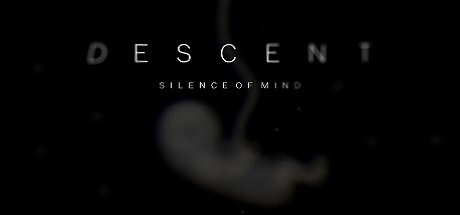
Descent - Silence of Mind is an atmospheric first-person horror experience developed by Labory and published by SA Industry that places mood, symbolism, and psychological unease above conventional pacing or mechanical complexity. Rather than presenting a traditional horror narrative driven by monsters or combat, the game frames itself as an inward journey, pulling the player into a fractured mental landscape where fear, memory, and subconscious imagery blend together. From the opening moments, it establishes an oppressive tone built on silence, darkness, and disorientation, signaling clearly that this is meant to be a slow descent into the mind rather than a fast-moving scare fest.
The premise centers on a protagonist suffering from a severe sleep disorder who submits to hypnosis in the hope of finding relief. Instead of calm or clarity, the session plunges him into a nightmarish internal world where forgotten memories and suppressed anxieties manifest as distorted environments. Storytelling is intentionally abstract, communicated through visual cues, environmental changes, and unsettling transitions rather than explicit dialogue or exposition. This approach encourages players to interpret meaning for themselves, piecing together fragments of narrative as they move deeper into the experience. For players who enjoy psychological horror rooted in ambiguity and suggestion, this restraint can be compelling, though it may feel opaque to those expecting a clearer narrative arc.
Gameplay is largely focused on exploration and environmental interaction, with light puzzle-solving woven into the progression. Players move through a series of eerie locations—corridors, rooms, and dreamlike spaces that often shift unexpectedly—searching for clues and triggers that allow them to advance. The puzzles are generally simple in concept, but their presentation can be deliberately unclear, requiring close observation of the environment rather than reliance on explicit prompts. This design reinforces the feeling of being lost within a subconscious maze, though it can also lead to moments of frustration when the path forward is not immediately apparent.
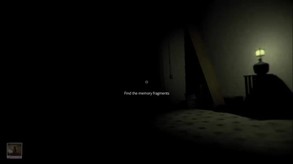
Horror in Descent - Silence of Mind is driven primarily by atmosphere rather than constant jump scares. Sound design plays a crucial role, using distant noises, sudden silences, and distorted audio cues to create unease. Lighting is sparse and deliberate, with shadows obscuring details and forcing players to rely on instinct as much as sight. When jump scares do occur, they are brief and sharp, punctuating longer stretches of tension rather than dominating the experience. The result is a game that aims to unsettle gradually, cultivating discomfort through anticipation rather than shock alone.
Visually, the game reflects its indie roots and modest budget, but it makes effective use of its resources. Environments are detailed enough to convey mood without becoming visually cluttered, and the restrained color palette reinforces the bleak, dreamlike quality of the world. Transitions between areas often feel abrupt or surreal, contributing to the sense that reality itself is unstable. While character models and animations are minimal, the focus on environmental storytelling ensures that the lack of visual spectacle does not undermine the intended atmosphere.
That said, the experience is not without rough edges. Controls can feel stiff or imprecise, particularly when navigating tight spaces or interacting with objects, which can momentarily break immersion. Some players may find the pacing uneven, with certain sections lingering longer than necessary while others move too quickly to leave a lasting impression. These issues, combined with a lack of guidance, can make the game feel unpolished at times, reinforcing the impression of an ambitious concept that may not have been fully refined.
Reception to Descent - Silence of Mind reflects this balance of strengths and weaknesses. Players drawn to experimental, psychological horror often appreciate its commitment to atmosphere and its refusal to overexplain, while others criticize its vague objectives and mechanical shortcomings. It is very much a niche experience, best suited to those willing to tolerate ambiguity and technical imperfections in exchange for a haunting mood and introspective themes.
Ultimately, Descent - Silence of Mind is less about delivering conventional horror thrills and more about immersing the player in a slow, uneasy exploration of the subconscious. Its abstract storytelling, oppressive atmosphere, and reliance on environmental cues create a distinctive experience that lingers more in feeling than in concrete plot points. While it may not satisfy players looking for polished mechanics or tightly structured scares, it offers a memorable journey for those who appreciate psychological horror that prioritizes mood, symbolism, and the unsettling power of what is left unsaid.
Rating: 5/10